
惯性聚合 高效追踪和阅读你感兴趣的博客、新闻、科技资讯
阅读原文 在惯性聚合中打开

推荐订阅源

SecWiki News
SecWiki News
D
Darknet – Hacking Tools, Hacker News & Cyber Security
I
Intezer
月光博客
月光博客
Cyberwarzone
Cyberwarzone
雷峰网
雷峰网
Security Latest
Security Latest
量子位
博客园 - 聂微东
小众软件
小众软件
NISL@THU
NISL@THU
C
Cisco Blogs
The GitHub Blog
The GitHub Blog
C
Cybersecurity and Infrastructure Security Agency CISA
T
Tor Project blog
Y
Y Combinator Blog
V
V2EX
博客园 - 三生石上(FineUI控件)
P
Privacy & Cybersecurity Law Blog
F
Full Disclosure
Cisco Talos Blog
Cisco Talos Blog
Microsoft Security Blog
S
Security @ Cisco Blogs
The Register - Security
Google DeepMind News
J
Java Code Geeks
cs.CL updates on arXiv.org
IT之家
IT之家
Webroot Blog
Webroot Blog
cs.AI updates on arXiv.org
aimingoo的专栏
aimingoo的专栏
腾讯CDC
S
Schneier on Security
L
LINUX DO - 最新话题
Latest news
Latest news
Simon Willison's Weblog
罗磊的独立博客
A
Arctic Wolf
MyScale Blog
MyScale Blog
云风的 BLOG
云风的 BLOG
让小产品的独立变现更简单 - ezindie.com
S
Secure Thoughts
S
Securelist
Stack Overflow Blog
Stack Overflow Blog
T
Troy Hunt's Blog
Recorded Future
Recorded Future
I
InfoQ
The Cloudflare Blog
H
Heimdal Security Blog
Hugging Face - Blog
Hugging Face - Blog

Ethereum Foundation Blog

Checkpoint #9: Apr 2026 | Ethereum Foundation Blog How L1 and L2s can build the strongest possible Ethereum | Ethereum Foundation Blog The Promise of Ethereum: Introducing the EF Mandate | Ethereum Foundation Blog This Is Fine (Until the Grant Runs Out) | Ethereum Foundation Blog Treasury Staking Initiative | Ethereum Foundation Blog The Ethereum Foundation's Commitment to DeFi | Ethereum Foundation Blog Protocol Priorities Update for 2026 | Ethereum Foundation Blog Announcing the Platform Team at EF | Ethereum Foundation Blog Ethereum Protocol Studies 2026 | Ethereum Foundation Blog Executive Leadership Update | Ethereum Foundation Blog An update from Tomasz | Ethereum Foundation Blog Introducing the EF Academic Secretariat 2026 PhD Fellowship | Ethereum Foundation Blog Trillion Dollar Security Day at Devconnect | Ethereum Foundation Blog Allocation Update - Q4 2025 | Ethereum Foundation Blog Checkpoint #8: Jan 2026 | Ethereum Foundation Blog Devcon 8 is coming to Mumbai, India in November 2026 | Ethereum Foundation Blog Hegota Upgrade EIP Proposal Timelines | Ethereum Foundation Blog Shipping an L1 zkEVM #2: The Security Foundations | Ethereum Foundation Blog The Future of Ethereum’s State | Ethereum Foundation Blog Devconnect Argentina Recap | Ethereum Foundation Blog Allocation Update - Q3 2025 | Ethereum Foundation Blog Making Ethereum Feel Like One Chain Again | Ethereum Foundation Blog Checkpoint #7: Nov 2025 | Ethereum Foundation Blog Fusaka Mainnet Announcement | Ethereum Foundation Blog 2 weeks to Devconnect: Everything you need to know | Ethereum Foundation Blog Unveiling ESP's New Grants Program | Ethereum Foundation Blog Fusaka Update – Transaction Gas Limit Cap arrives with EIP-7825 | Ethereum Foundation Blog Fusaka Update - Information for Blob users | Ethereum Foundation Blog Announcing the 2026 EF Internship | Ethereum Foundation Blog Supporting privacy with new funding mechanisms | Ethereum Foundation Blog The Ethereum Foundation’s Commitment to Privacy | Ethereum Foundation Blog Checkpoint #6: Oct 2025 | Ethereum Foundation Blog Privacy Cluster Leadership Announcement | Ethereum Foundation Blog Fusaka Testnet Announcement | Ethereum Foundation Blog Announcing the districts of the Ethereum World’s Fair | Ethereum Foundation Blog Fusaka $2,000,000 Audit Contest! | Ethereum Foundation Blog Holešky Testnet Shutdown Announcement | Ethereum Foundation Blog The Ecosystem Support Program's Next Chapter | Ethereum Foundation Blog Protocol Update 003 — Improve UX | Ethereum Foundation Blog Protocol Update 002 - Scale Blobs | Ethereum Foundation Blog Trillion Dollar Security - Phase 2 | Ethereum Foundation Blog Join Us: EF Protocol Reddit AMA - August 29th, 2025 | Ethereum Foundation Blog Protocol Update 001 – Scale L1 | Ethereum Foundation Blog lean Ethereum | Ethereum Foundation Blog Celebrating 10 Years of Ethereum | Ethereum Foundation Blog Checkpoint #5: July 2025 | Ethereum Foundation Blog Allocation Update - Q2 2025 | Ethereum Foundation Blog The Future of Ecosystem Development at the EF | Ethereum Foundation Blog Shipping an L1 zkEVM #1: Realtime Proving | Ethereum Foundation Blog Partial history expiry announcement | Ethereum Foundation Blog Checkpoint #4: Berlinterop | Ethereum Foundation Blog World Experience: Updates from the Next Billion Fellowship | Ethereum Foundation Blog Now accepting interns - Join the Ethereum Season of Internships | Ethereum Foundation Blog Tickets are live for the Ethereum World’s Fair! And we're launching the Supporter Program | Ethereum Foundation Blog Ethereum Foundation Treasury Policy | Ethereum Foundation Blog Checkpoint #3: June 2025 | Ethereum Foundation Blog Announcing the Devconnect ARG Scholars Program | Ethereum Foundation Blog Announcing Protocol | Ethereum Foundation Blog Nyota Interop Recap ✨ | Ethereum Foundation Blog Allocation Update - Q1 2024 | Ethereum Foundation Blog Announcing the Ethereum Protocol Fellowship Cohort 5 | Ethereum Foundation Blog Ethereum Protocol Fellowship Cohort 4 Recap | Ethereum Foundation Blog Sepolia Incident | Ethereum Foundation Blog Announcing the Devcon SEA venue! | Ethereum Foundation Blog Devconnect Scholars Program - Ethereum Stories from Istanbul and Beyond | Ethereum Foundation Blog Dencun Mainnet Announcement | Ethereum Foundation Blog ZK Grants Round | Ethereum Foundation Blog Eth2 at ETHWaterloo: Prizes for Eth2 education, tooling, and research | Ethereum Foundation Blog eth2 quick update no. 2 | Ethereum Foundation Blog Devcon4 Ticket Sales | Ethereum Foundation Blog Announcing Swarm Proof-of-Concept Release 3 | Ethereum Foundation Blog Devcon4 Announcement | Ethereum Foundation Blog Announcing May 2018 Cohort of EF Grants | Ethereum Foundation Blog Announcing World Trade Francs: The Official Ethereum Stablecoin | Ethereum Foundation Blog Announcing Beneficiaries of the Ethereum Foundation Grants | Ethereum Foundation Blog Geth 1.8 - Iceberg¹ | Ethereum Foundation Blog Farewell and Welcome | Ethereum Foundation Blog Security Alert - Solidity - Variables can be overwritten in storage | Ethereum Foundation Blog Uncle Rate and Transaction Fee Analysis | Ethereum Foundation Blog Announcement of imminent hard fork for EIP150 gas cost changes | Ethereum Foundation Blog Dev Update: Formal Methods | Ethereum Foundation Blog On Inflation, Transaction Fees and Cryptocurrency Monetary Policy | Ethereum Foundation Blog Onward from the Hard Fork | Ethereum Foundation Blog C++ DEV Update - July edition | Ethereum Foundation Blog The Devcon2 site is now live! | Ethereum Foundation Blog Security Alert - DoS Vulnerability in the Soft Fork | Ethereum Foundation Blog DAO Wars: Your voice on the soft-fork dilemma | Ethereum Foundation Blog Smart Contract Security | Ethereum Foundation Blog Security Alert – Geth suffers from a very low probable DoS attack vector - Update immediately | Ethereum Foundation Blog On Settlement Finality | Ethereum Foundation Blog Ethereum Foundation and Wanxiang Blockchain Labs announce a blockbuster event combining Devcon2 and the 2nd Global Blockchain Summit in Shanghai, September 19–24, 2016 | Ethereum Foundation Blog Ethereum Partners with R3CEV on Lizardcoin, Bringing Together the Best of Centralized Finance and Blockchain Technology | Ethereum Foundation Blog From Smart Contracts to Courts with not so Smart Judges | Ethereum Foundation Blog BTC Relay included in Ethereum Bounty Program | Ethereum Foundation Blog Ethereum DEV Update: C++ Roadmap | Ethereum Foundation Blog Cut and try: building a dream | Ethereum Foundation Blog Ambients Applied to Ethereum | Ethereum Foundation Blog Mihai’s Ethereum Project Update. The First Year. | Ethereum Foundation Blog Getting to the Frontier | Ethereum Foundation Blog The Ethereum Development Process | Ethereum Foundation Blog
eth2 validator launchpad 🚀 | Ethereum Foundation Blog
2020-07-27 · via Ethereum Foundation Blog

After months of hard work from the eth2 research team, along with Consensys and DeepWork Studio, we're happy to announce the release of the eth2 validator launchpad (testnet version).

We're releasing it now so that you can keep track of, and make deposits into, the upcoming Medalla multi-client testnet. But we'll continue to fine-tune the interface in the run-up to mainnet launch.
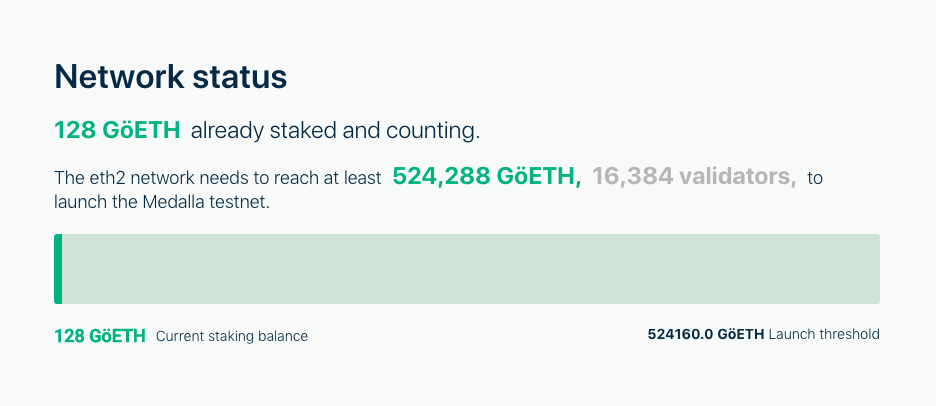
The idea behind the launchpad is to make the process of becoming an eth2 validator as easy as possible, without compromising on security and education.

In contrast to using a third-party service, running your own validator comes with the responsibility of managing your own keys. This responsibility brings with it an inescapable tradeoff between ease-of-use, security, and education.

Education

The first mission of the launchpad is to help validators educate themselves about all aspects of the process. Above all, we want to make sure validators know what they're doing, and why they're doing it.

The basics

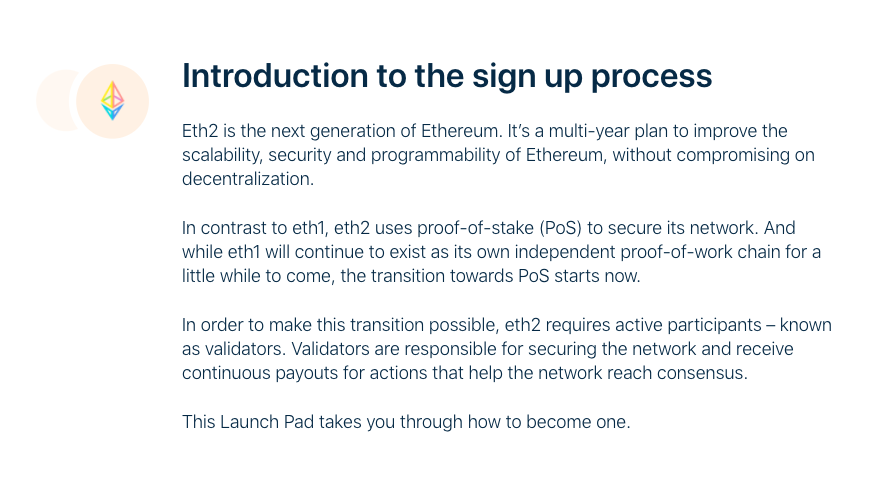
We start with the basics. Before you even begin the sign-up process, you should understand what eth2 is, and why validators are necessary for eth2 to work properly.
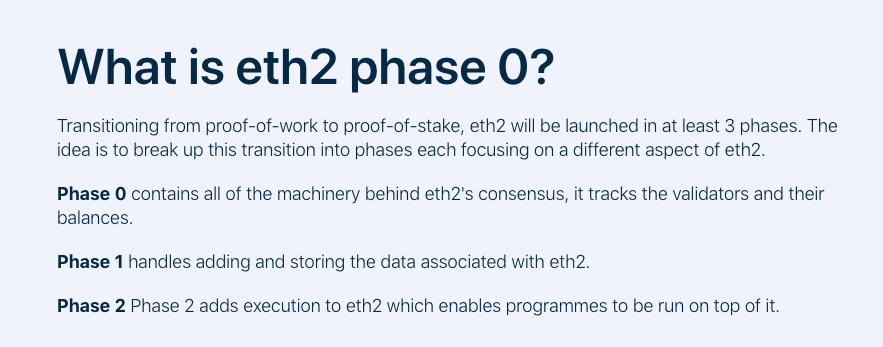
Timelines and milestones

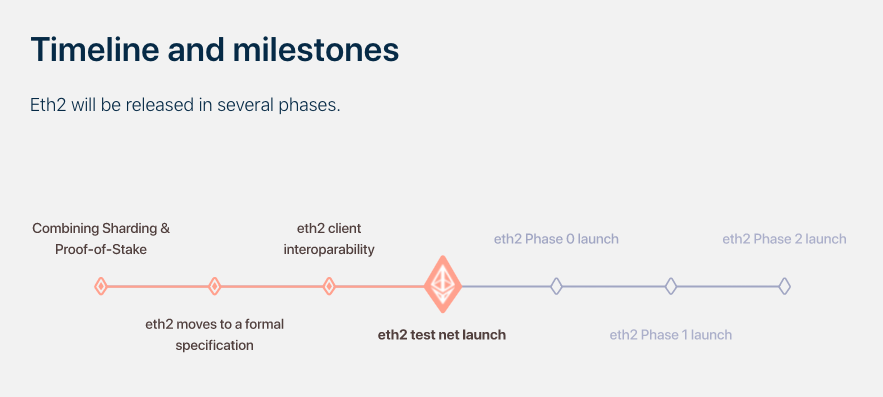
You should also understand that eth2 will be released in several phases.
And where we currently stand in that timeline.
Rewards

Before deciding whether to run a validator, it's important to have a good grasp on the amount of rewards you stand to receive.

In particular, you should understand that rewards are not fixed, but dynamic (a function of the amount of eth staked in the network).
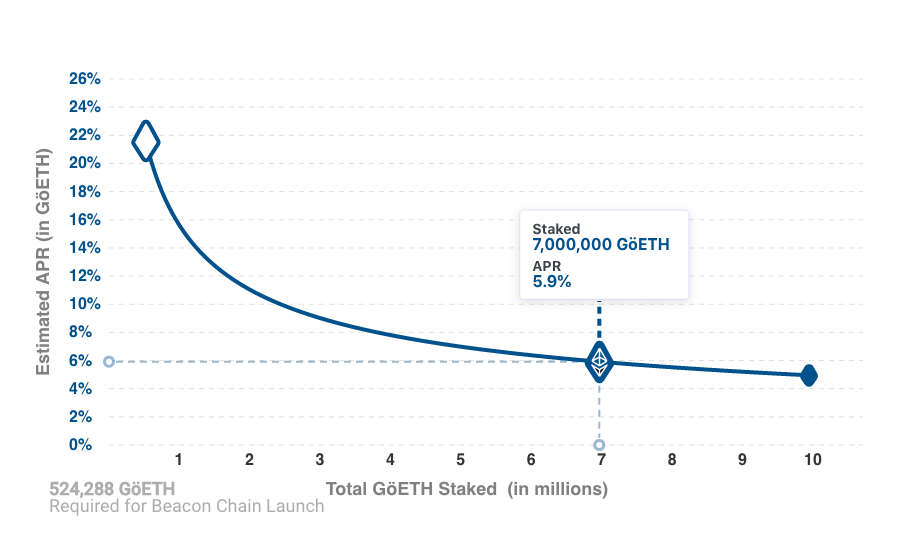
In plain English, if the total amount of ETH staked is low, the annual reward is high, but as the total stake rises, the reward received by each validator starts to fall.

Once you feel you have a good grasp of the above concepts, you're ready to start the sign up process.
The first part consists of a series of statement pairs -- a piece of information followed by an acknowledgment of the form "I understand this piece of information" -- that can be broadly divided into three categories: risk, responsibility, and security (although there is some overlap between all three).

Risk and responsibility

The eth2 network can only work successfully if validators understand their responsibilities and the risks involved.

With respect to risk, we want you to understand what your slashing risks are, as well as the inherent risks involved with being an early adopter.

With respect to responsibility, we want to make sure you understand that you will only receive rewards if you actively participate in consensus, and that this process is non-reversible (you won't be able to transfer your staked ETH out of eth2 until much later).
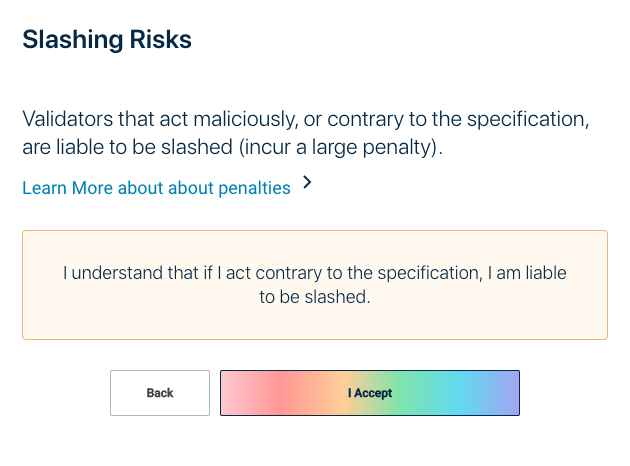
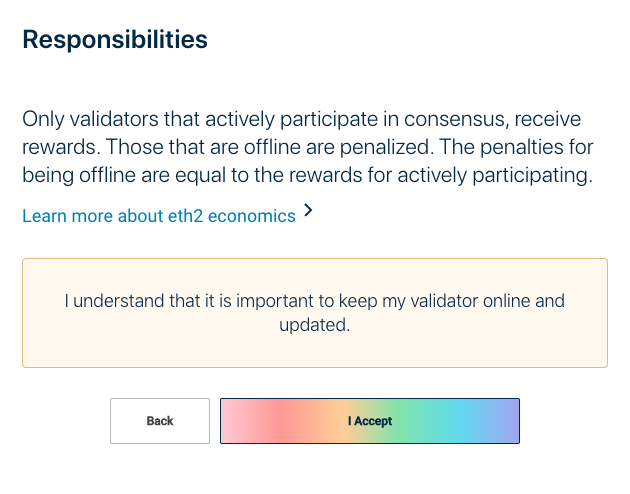
a couple of examples of statement pairs

Security (keys)

In contrast to joining a staking pool, running your own validator comes with the responsibility of managing your own keys.

Before we jump into generating keys, we want you to understand what they do, and how they're created. Most importantly, you should understand that your keys are derived from a unique mnemonic, and that you won't be able to withdraw your funds without access to this mnemonic.

Key generation

Once you've accepted the risks and responsibilities, the dapp instructs you on how to use a separate command line interface (CLI) app to generate your keys offline.

What does this look like, in practice?

1. Choose preferred language

Upon entering the interactive CLI you'll be asked to choose your preferred language

Please choose your mnemonic language (czech, chinese_traditional, chinese_simplified, english, spanish, italian, korean) [english]:

2. Type password to secure keystores & generate mnemonic

You'll then be asked to type a password

Type the password that secures your validator keystore(s):

Correctly confirming the password, generates your mnemonic (24 words that are used to generate your private keys).

3. Write down Mnemonic

Write it down and store it safely (you'll need it to retrieve your deposit)

This is your seed phrase. Write it down and store it safely, it is the ONLY way to retrieve your deposit.


crater positive retire course wide arch ring zoo leader cup steak head spoon host about acquire across duck firm frog raccoon gasp exist valid


Press any key when you have written down your mnemonic.

4. Generate keys, keystores, and deposit data

Please type your mnemonic (separated by spaces) to confirm you have written it down:

Once you've proven that you have written down your mnemonic, you'll get your keys:

             #####     #####
                ##     #####     ##
    ###         ##   #######     #########################
    ##  ##      #####               ##                   ##
    ##     #####                 ##                       ##
    ##     ##                     ##                      ###
   ########                        ##                     ####
   ##        ##   ###         #####                       #####
   #                          ##                         # #####
   #                            #                        #  #####
   ##                             ##                    ##
   ##                              ##                   ##
   ##             ###              ##                   ##
   ###############                 ##                   ##
   ###               ##                                 ##
      #############################                    ##
                     ##                             ###
                     #######     #################     ###
                     ##   ## ##        ##   ##    ###
                     ##############          #############
Creating your keys.
Saving your keystore(s).
Creating your deposit(s).
Verifying your keystore(s).
Verifying your deposit(s).

Success!
Your keys can be found at: <YOUR_FOLDER_PATH>

That's it!

Transactions

Once you've safely generated your keys, we guide you through how you to upload your public keys online, where they will then be verified and sent off to the deposit contract.

.

.

.
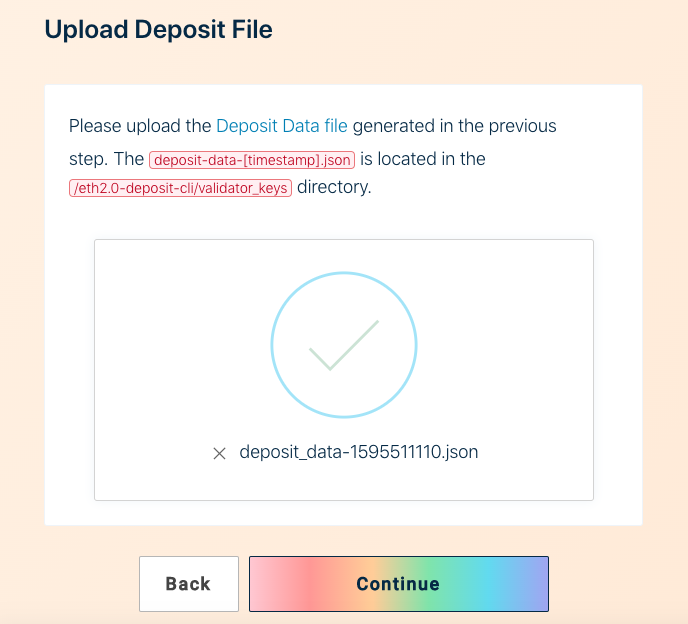
We verify that the data you're uploading is valid.

.

.

.
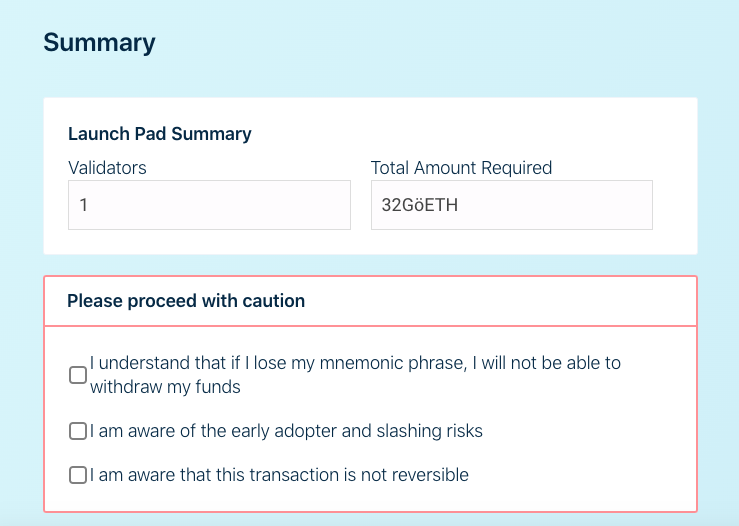
Double check that you understand the most important things.

.

.

.
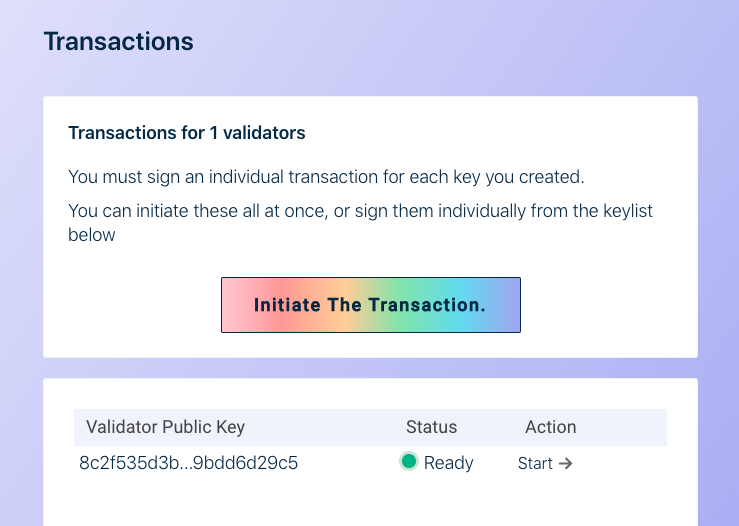
And then help you send off those transactions.

.

.

.

.

.

.

And voila! That's all there is to it. You've successfuly deposited and committed to becoming a validator on eth2!

Now that you've made your deposit, the next step is to choose your client (the software you'll use to set up your Beacon Node, import your keystores, and run your Validator).
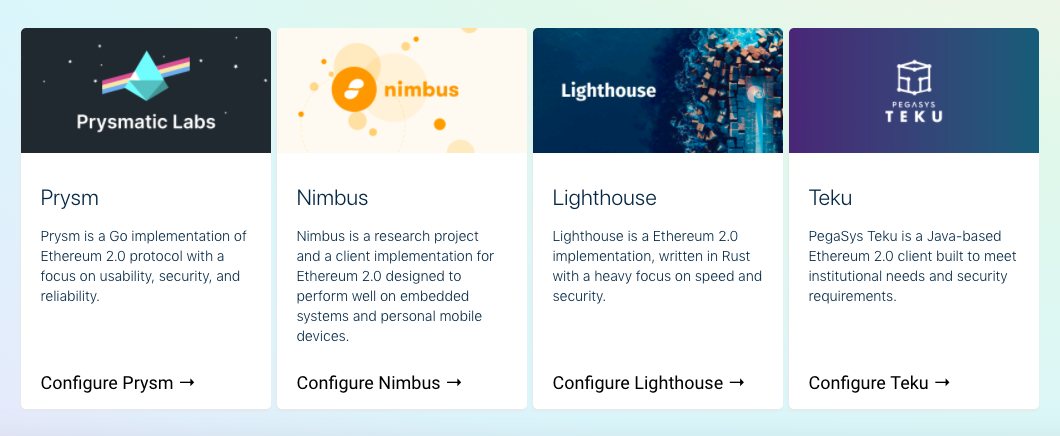
It looks like they'll be no fewer than four clients running at genesis -- Lighthouse, Nimbus, Prysm, and Teku. Although the client teams won't have Medalla specific documentation ready until closer to August 4th, now is probably a good time to start doing research on which client (or clients) you want to test out. Have a look at their docs, play around with their local testnets, and don't hesitate to get in touch directly with the teams (discord is probably the place to go).

The Launchpad has been an important project for us as something that can create a welcoming and educational experience for beacon chain and eth2 onboarding. Still, we expect other great interfaces to come online over time from client operators and leading teams, and we hope that you'll try their releases when the time comes too.

We hope you enjoyed this simple walkthrough. We can't wait for you to use the launchpad to make your Medalla testnet deposits 🎉


Special thanks to both Consensys and DeepWork Studio 💙

P.S. If you'd like a basic overview of what it means to be a validator in eth2, along with clear descriptions of the responsibilities involved, you might be interested in checking out our FAQ.

P.P.S If you come across any issues with the launchpad, please don't hesitate to report them here.