
惯性聚合 高效追踪和阅读你感兴趣的博客、新闻、科技资讯
阅读原文 在惯性聚合中打开

推荐订阅源

Threat Intelligence Blog | Flashpoint
C
CXSECURITY Database RSS Feed - CXSecurity.com
L
LINUX DO - 热门话题
S
Secure Thoughts
TaoSecurity Blog
TaoSecurity Blog
Security Archives - TechRepublic
T
Threat Research - Cisco Blogs
AI
AI
B
Blog RSS Feed
S
Schneier on Security
雷峰网
雷峰网
Schneier on Security
Help Net Security
Help Net Security
Cloudbric
Cloudbric
L
LINUX DO - 最新话题
罗磊的独立博客
有赞技术团队
有赞技术团队
Recent Commits to openclaw:main
Apple Machine Learning Research
P
Proofpoint News Feed
酷 壳 – CoolShell
酷 壳 – CoolShell
The Hacker News
The Hacker News
博客园 - Franky
Attack and Defense Labs
The Cloudflare Blog
Webroot Blog
Webroot Blog
Last Week in AI
Last Week in AI
Exploit-DB.com RSS Feed
博客园 - 叶小钗
美团技术团队
L
Lohrmann on Cybersecurity
T
The Blog of Author Tim Ferriss
The Last Watchdog
The Last Watchdog
T
Troy Hunt's Blog
H
Hackread – Cybersecurity News, Data Breaches, AI and More
Vercel News
Vercel News
Know Your Adversary
Know Your Adversary
O
OpenAI News
博客园 - 【当耐特】
Hacker News - Newest:
Hacker News - Newest: "LLM"
C
Cybersecurity and Infrastructure Security Agency CISA
让小产品的独立变现更简单 - ezindie.com
www.infosecurity-magazine.com
freeCodeCamp Programming Tutorials: Python, JavaScript, Git & More
PCI Perspectives
PCI Perspectives
H
Heimdal Security Blog
I
InfoQ
GbyAI
GbyAI
T
Threatpost
C
Cisco Blogs

Ethereum Foundation Blog

Checkpoint #9: Apr 2026 | Ethereum Foundation Blog How L1 and L2s can build the strongest possible Ethereum | Ethereum Foundation Blog The Promise of Ethereum: Introducing the EF Mandate | Ethereum Foundation Blog This Is Fine (Until the Grant Runs Out) | Ethereum Foundation Blog Treasury Staking Initiative | Ethereum Foundation Blog The Ethereum Foundation's Commitment to DeFi | Ethereum Foundation Blog Protocol Priorities Update for 2026 | Ethereum Foundation Blog Announcing the Platform Team at EF | Ethereum Foundation Blog Ethereum Protocol Studies 2026 | Ethereum Foundation Blog Executive Leadership Update | Ethereum Foundation Blog An update from Tomasz | Ethereum Foundation Blog Introducing the EF Academic Secretariat 2026 PhD Fellowship | Ethereum Foundation Blog Trillion Dollar Security Day at Devconnect | Ethereum Foundation Blog Allocation Update - Q4 2025 | Ethereum Foundation Blog Checkpoint #8: Jan 2026 | Ethereum Foundation Blog Devcon 8 is coming to Mumbai, India in November 2026 | Ethereum Foundation Blog Hegota Upgrade EIP Proposal Timelines | Ethereum Foundation Blog Shipping an L1 zkEVM #2: The Security Foundations | Ethereum Foundation Blog The Future of Ethereum’s State | Ethereum Foundation Blog Devconnect Argentina Recap | Ethereum Foundation Blog Allocation Update - Q3 2025 | Ethereum Foundation Blog Making Ethereum Feel Like One Chain Again | Ethereum Foundation Blog Checkpoint #7: Nov 2025 | Ethereum Foundation Blog Fusaka Mainnet Announcement | Ethereum Foundation Blog 2 weeks to Devconnect: Everything you need to know | Ethereum Foundation Blog Unveiling ESP's New Grants Program | Ethereum Foundation Blog Fusaka Update – Transaction Gas Limit Cap arrives with EIP-7825 | Ethereum Foundation Blog Fusaka Update - Information for Blob users | Ethereum Foundation Blog Announcing the 2026 EF Internship | Ethereum Foundation Blog Supporting privacy with new funding mechanisms | Ethereum Foundation Blog The Ethereum Foundation’s Commitment to Privacy | Ethereum Foundation Blog Checkpoint #6: Oct 2025 | Ethereum Foundation Blog Privacy Cluster Leadership Announcement | Ethereum Foundation Blog Fusaka Testnet Announcement | Ethereum Foundation Blog Announcing the districts of the Ethereum World’s Fair | Ethereum Foundation Blog Fusaka $2,000,000 Audit Contest! | Ethereum Foundation Blog Holešky Testnet Shutdown Announcement | Ethereum Foundation Blog The Ecosystem Support Program's Next Chapter | Ethereum Foundation Blog Protocol Update 003 — Improve UX | Ethereum Foundation Blog Protocol Update 002 - Scale Blobs | Ethereum Foundation Blog Trillion Dollar Security - Phase 2 | Ethereum Foundation Blog Join Us: EF Protocol Reddit AMA - August 29th, 2025 | Ethereum Foundation Blog Protocol Update 001 – Scale L1 | Ethereum Foundation Blog lean Ethereum | Ethereum Foundation Blog Celebrating 10 Years of Ethereum | Ethereum Foundation Blog Checkpoint #5: July 2025 | Ethereum Foundation Blog Allocation Update - Q2 2025 | Ethereum Foundation Blog The Future of Ecosystem Development at the EF | Ethereum Foundation Blog Shipping an L1 zkEVM #1: Realtime Proving | Ethereum Foundation Blog Partial history expiry announcement | Ethereum Foundation Blog Checkpoint #4: Berlinterop | Ethereum Foundation Blog World Experience: Updates from the Next Billion Fellowship | Ethereum Foundation Blog Now accepting interns - Join the Ethereum Season of Internships | Ethereum Foundation Blog Tickets are live for the Ethereum World’s Fair! And we're launching the Supporter Program | Ethereum Foundation Blog Ethereum Foundation Treasury Policy | Ethereum Foundation Blog Checkpoint #3: June 2025 | Ethereum Foundation Blog Announcing the Devconnect ARG Scholars Program | Ethereum Foundation Blog Announcing Protocol | Ethereum Foundation Blog Nyota Interop Recap ✨ | Ethereum Foundation Blog Allocation Update - Q1 2024 | Ethereum Foundation Blog Announcing the Ethereum Protocol Fellowship Cohort 5 | Ethereum Foundation Blog Ethereum Protocol Fellowship Cohort 4 Recap | Ethereum Foundation Blog Sepolia Incident | Ethereum Foundation Blog Announcing the Devcon SEA venue! | Ethereum Foundation Blog Devconnect Scholars Program - Ethereum Stories from Istanbul and Beyond | Ethereum Foundation Blog Dencun Mainnet Announcement | Ethereum Foundation Blog ZK Grants Round | Ethereum Foundation Blog Eth2 at ETHWaterloo: Prizes for Eth2 education, tooling, and research | Ethereum Foundation Blog eth2 quick update no. 2 | Ethereum Foundation Blog Devcon4 Ticket Sales | Ethereum Foundation Blog Announcing Swarm Proof-of-Concept Release 3 | Ethereum Foundation Blog Devcon4 Announcement | Ethereum Foundation Blog Announcing May 2018 Cohort of EF Grants | Ethereum Foundation Blog Announcing World Trade Francs: The Official Ethereum Stablecoin | Ethereum Foundation Blog Announcing Beneficiaries of the Ethereum Foundation Grants | Ethereum Foundation Blog Geth 1.8 - Iceberg¹ | Ethereum Foundation Blog Farewell and Welcome | Ethereum Foundation Blog Security Alert - Solidity - Variables can be overwritten in storage | Ethereum Foundation Blog Uncle Rate and Transaction Fee Analysis | Ethereum Foundation Blog Announcement of imminent hard fork for EIP150 gas cost changes | Ethereum Foundation Blog Dev Update: Formal Methods | Ethereum Foundation Blog On Inflation, Transaction Fees and Cryptocurrency Monetary Policy | Ethereum Foundation Blog Onward from the Hard Fork | Ethereum Foundation Blog C++ DEV Update - July edition | Ethereum Foundation Blog The Devcon2 site is now live! | Ethereum Foundation Blog Security Alert - DoS Vulnerability in the Soft Fork | Ethereum Foundation Blog DAO Wars: Your voice on the soft-fork dilemma | Ethereum Foundation Blog Smart Contract Security | Ethereum Foundation Blog Security Alert – Geth suffers from a very low probable DoS attack vector - Update immediately | Ethereum Foundation Blog On Settlement Finality | Ethereum Foundation Blog Ethereum Foundation and Wanxiang Blockchain Labs announce a blockbuster event combining Devcon2 and the 2nd Global Blockchain Summit in Shanghai, September 19–24, 2016 | Ethereum Foundation Blog Ethereum Partners with R3CEV on Lizardcoin, Bringing Together the Best of Centralized Finance and Blockchain Technology | Ethereum Foundation Blog From Smart Contracts to Courts with not so Smart Judges | Ethereum Foundation Blog BTC Relay included in Ethereum Bounty Program | Ethereum Foundation Blog Ethereum DEV Update: C++ Roadmap | Ethereum Foundation Blog Cut and try: building a dream | Ethereum Foundation Blog Ambients Applied to Ethereum | Ethereum Foundation Blog Mihai’s Ethereum Project Update. The First Year. | Ethereum Foundation Blog Getting to the Frontier | Ethereum Foundation Blog The Ethereum Development Process | Ethereum Foundation Blog
Spotlight on LatAm: Identity solutions for Govtech | Ethereum Foundation Blog
2022-06-07 · via Ethereum Foundation Blog

The following is an update from Ethereum Foundation Fellow Chuy Cepeda.

Our identities hold immense power. In a time when people take great pride in using multiple pseudonyms or personas, we often think about how to identify ourselves. I identify as a native of Monterrey, Mexico, a Latin-American, a son, brother, father, husband, engineer, Ph.D., entrepreneur, dog lover, hitchhiker, and a believer that democracies are suffering.

Looking back at a time when I started meeting people from different countries and gaining a better understanding of their access to public services, I recall becoming aware of how far away this reality was for Mexicans. I realized that as my home city grew, many decisions made by the government were unplanned or colluded. I learned that my home country of Mexico was one of the least favored countries according to Transparency International’s Corruption Perception Index. I realized that these problems are not limited to me and my home country, but affect people everywhere.

I now feel a profound empathy for anyone who can’t look to the government for better transport, proper education, and health services. All the while, I see technology making bigger and bigger impacts in the daily lives of people all around Latin America and beyond. Think for a minute about this: while people are becoming more digital and expect personalized and real-time services, public institutions are unable to meet those expectations.

Citizens face inefficiencies, a lack of transparency and red tape, and a terrible experience when it comes to interacting with their governments. This is a global crisis of institutional agility and trust that erodes possibilities to prosper, and it’s why Democracy as an ideal is suffering.

So I decided to incorporate a new part of my identity: I co-founded OS City to improve the landscape of government services in the modern world, essentially by bringing public institutions into the web3 paradigm. In other words, to use blockchains to digitize government services and give citizens their decentralized digital identity.
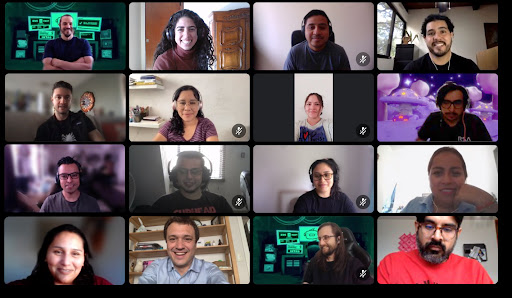
The OS City team

Upgrading Bureaucracy

From birth certificates to driver’s licenses and academic records, when we are asked to identify who we are as citizens, this is about sharing our personal information or credentials, usually notarized by the government of the place we come from. Depending on where that is, those records could be located in a fancy networked database (as is the case for Estonian citizens), but more likely what we need when we need an ‘official identity’ actually resides in the specialized passport printers of a stuffy government building, or spread about in filing cabinets of various state bank branches, or maybe it’s nowhere at all!

When we “use” these representations of our identity, what we are actually doing is getting separate bureaucratic systems to interoperate. If the visa stamps from one customs office in Country A fit onto the passport pages of Country B, that’s ‘good enough’ for us in most cases. But when that basic interoperability has stricter requirements, or when it breaks down, that’s where we get into trouble. Office A requires an original stamped document from Office B, which is closed after 3pm, and requires a notarized letter from Department C, which is in a different part of the city and needs approval first from Office A… some of us are all too familiar with being trapped in this sort of prison of paperwork. This is where collusion and corruption are born, where we start the snowball effect that ends up in a terrible response to social distress, economic growth, and climate change.

The fundamental challenge is that everyone must have an identity, but it is simply not true that everyone has an interoperable representation of identity. That’s where I believe we can do better. It’s not going to be easy, and it’s certainly not going to happen all at once, but if we start in the right direction, we might end up in a place we want to be at. Part of our work to solve these issues led us to develop an application-specific wallet called Soberana, which is meant to be used to hold and manage digital identities.

Blockchains are by design built from interoperable and standardized components that can combine and integrate into all sorts of ways. Any blockchain built to be Ethereum or EVM-compatible will follow the same set of standards. So at Soberana, that is our starting point. Unfortunately, we work in a design space that must allow for some degree of centralization, i.e. a government authority must approve a record or identity.

Nevertheless, we start with a small kernel of identity that is still compatible with the open, permissionless systems of the web3 world. Starting from that compatibility makes it a lot easier to improve and build more complex systems around it over time – a network economy of digital services, both centralized and decentralized. The goal here is maximum compatibility for a digital identity: whether you’re using it for a centralized government notary, a proprietary banking transaction or a public NFT registry, your ID should move between those systems seamlessly and securely.

As we add more and more functionality, we’ll be able to verify, port, and share that identity through a whole suite of government services that all connect to each other. From marriages to mortgages, all of the paperwork that requires identity could be de-bureaucratized and made painless by using the right infrastructure. By starting small and with this first piece of the puzzle, we pave a way towards broader institutional reform, using technology wisely to increase the legitimacy of the public sector as a whole.

This past year, we have focused on rolling out an official citizen digital identity through an online government-run portal, where citizens obtain a wallet that serves as their digital identity and digital document-holder. Citizens can port and use official documents in their digital wallets, as well as share and renew these documents.

At the moment, these documents are limited to commercial permits, construction permits, city inspector credentials, tax payer statements, among others; but we are working to expand and incorporate as many documents as possible to be compatible with local governments in Mexico and Argentina.

The Long View

I understand now that bureaucracies are merely inertial inefficiencies of governments that have lost the excitement of innovation. That’s why I believe blockchains have an enormous potential to lead us into a new era of openness and collaboration that helps to increase the legitimacy of the public sector. With the help and support of public sector leaders, we can create radical change in the government sector, and even make it a prosperous field for business, fostering the digital, economic, and social transitions of our nations.

My short-term vision is to be able to offer citizens the possibility to own their official records, to eliminate duplicate efforts in every government process, to make government transactions traceable and transparent, and to foster the first government standard for blockchain verifiable credentials. This will hopefully show the international public sector that interoperability can succeed when we put citizens in the center, when innovation promotes regulation and not the other way around.

In the long term, I hope that we can all work together to rethink governance and identity. We are starting by rethinking and reinventing the way governments, individuals and companies interact among themselves; in a decentralized digital world, interactions are not state or market-centric, but community and citizen-oriented. This implies a new ecosystemic vision where the government, startups, academia and civil organizations jointly explore public problems, seek (and transfer) appropriate solutions and feed on their learnings. It is not the state hiring suppliers, but the state interacting with other actors to solve society’s most pressing problems. I believe a new digital identity is one step that will allow governments, citizens, and communities to get the most out of blockchain technology, fostering prosperity through a network of citizen-centric digital services.

For more about the Ethereum Foundation Fellowship Program, read this blog post.