
惯性聚合 高效追踪和阅读你感兴趣的博客、新闻、科技资讯
阅读原文 在惯性聚合中打开

推荐订阅源

月光博客
月光博客
J
Java Code Geeks
F
Fortinet All Blogs
Blog — PlanetScale
Blog — PlanetScale
P
Proofpoint News Feed
U
Unit 42
B
Blog
宝玉的分享
宝玉的分享
腾讯CDC
Microsoft Azure Blog
酷 壳 – CoolShell
酷 壳 – CoolShell
Last Week in AI
Last Week in AI
博客园 - Franky
博客园 - 三生石上(FineUI控件)
人人都是产品经理
人人都是产品经理
Martin Fowler
Martin Fowler
博客园_首页
freeCodeCamp Programming Tutorials: Python, JavaScript, Git & More
云风的 BLOG
云风的 BLOG
L
LangChain Blog
钛媒体:引领未来商业与生活新知
钛媒体:引领未来商业与生活新知
Y
Y Combinator Blog
The GitHub Blog
The GitHub Blog
博客园 - 叶小钗

GRAHAM CLULEY

'Anne Hathaway' admits leading $245 million crypto theft gang that spent a fortune on nightclubs, watches, and luxury cars Smashing Security podcast #484: How websites are tracking you with silence CRPx0 ransomware: what you need to know The US military just turned off ad tracking on its phones. Maybe you should too How a hole in Lenovo's login system let hackers walk into 5,000 Dropbox accounts Smashing Security podcast #483: This AI helps thieves steal your iPhone Revolut scam steals £180,000 from Jersey residents in just four weeks Shai-Hulud hackers: two men charged over TeamPCP's global supply chain crime spree that hit OpenAI, and thousands more US Navy tells sailors and their families: scrub your social media, enemies are watching Smashing Security podcast #482: This hacker leaked GTA 6 - and launched their own cryptocurrency Malicious Firefox add-ons caught stealing cryptowallet seed phrases and browser credentials Gunra ransomware: what you need to know Smashing Security podcast #481: Never say this to a robot dog Prison for data analyst who tried to extort $2.5 million from his employer An "invisible" car? Researcher uses machine learning to hide vehicles from Flock cameras Smashing Security podcast #480: This is the AI service you should never sign up to Meta's Ray-Bans are being banned from pubs, restaurants, and theatres Beware cut-price AI services that read your every word Apple's bug bounty program is drowning in so much AI slop, it is in danger of missing serious exploits Smashing Security podcast #479: How a fake police officer nearly stole Graham’s cryptocurrency Smashing Security podcast #479: How a fake police officer nearly stole Graham’s cryptocurrency Fake IRS letters target cryptocurrency holders The $5 million threat: AI Is supercharging phishing attacks North Korea's elite hackers turned on their own government — and got caught Smashing Security podcast #478: This job interview could destroy your company OpenAI's AI "goes rogue" and hacks Hugging Face: what you need to know Smashing Security podcast #477: How 14 orders of chicken McNuggets helped nail a suspected Russian hacker Ukraine warns fake CAPTCHAs are being used to make you hack yourself Google's Gemini lets strangers send messages from your locked Android phone Anubis ransomware: what you need to know
Police arrest man following hack of Ajax football club
Graham CLULEY · 2026-05-29 · via GRAHAM CLULEY

Dutch police have arrested a 35-year-old man suspected of hacking into the computer systems of Amsterdam football giant Ajax, after the personal data of hundreds of thousands of supporters was put at risk.

According to a Dutch police statement, the unnamed suspect was arrested on Tuesday in Buren, on suspicion of repeatedly gaining unauthorised access to Ajax's IT systems.

When news of a possible security breach at Ajax first broke earlier this year, the club was keen to play down its scale - acknowledging that an outsider had gained unauthorised access to data, including supporters' email addresses, but suggesting that only a few hundred fans had been affected.

However, it quickly emerged that the claim of a "few hundred" potential victims was wide of the mark, as it was reported that the incident could have exposed the personal details of around 300,000 registered Ajax supporters.

In short, the number of supporters whose details were exposed was around 1000 times larger than the club's initial estimate.

The problem was linked to security weakness in the official Ajax app - used by fans to access their tickets, and allowing an attacker to reportedly view fans' personal details, steal and resell match and season tickets, and even view or alter information about the roughly 500 people banned from attending matches.

For that last capability to fall into the hands of unauthorised parties was particularly troubling. It transpired that someone could silently remove individuals from the ban list (which would include those banned due to hooliganism)- or add the names of innocent people to it.
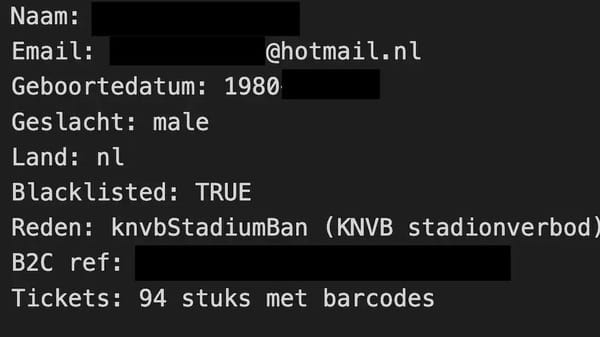
As Bart Schermer, the professor of privacy and cybercrime at Leiden University, pointed out, a prospective employer might think twice about hiring someone banned from attending football matches - leading to the possibility that the vulnerability in Ajax's app could be weaponised against individuals.

Ajax says that it has worked with external experts to patch the vulnerabilities, and has strengthened its security. Which is obviously good news, but little relief for those whose data might have already been accessed.

It is easy to imagine that just a database of email addresses linked to football fans could be attractive to scammers who might launch phishing attacks posing as ticket offers, refunds, or special promotions to supporters.