惯性聚合 高效追踪和阅读你感兴趣的博客、新闻、科技资讯
阅读原文 在惯性聚合中打开

推荐订阅源

Jina AI
Jina AI
V
Vulnerabilities – Threatpost
Security Latest
Security Latest
AI
AI
奇客Solidot–传递最新科技情报
奇客Solidot–传递最新科技情报
量子位
H
Help Net Security
Attack and Defense Labs
The GitHub Blog
The GitHub Blog
L
LINUX DO - 最新话题
A
Arctic Wolf
博客园_首页
S
Securelist
S
Secure Thoughts
Google DeepMind News
让小产品的独立变现更简单 - ezindie.com
T
Tailwind CSS Blog
Apple Machine Learning Research
酷 壳 – CoolShell
酷 壳 – CoolShell
Stack Overflow Blog
Stack Overflow Blog
N
Netflix TechBlog - Medium
Cyberwarzone
Cyberwarzone
小众软件
小众软件
T
Threatpost
Exploit-DB.com RSS Feed
Blog — PlanetScale
Blog — PlanetScale
N
News and Events Feed by Topic
NISL@THU
NISL@THU
Forbes - Security
Forbes - Security
博客园 - 聂微东
F
Fortinet All Blogs
Simon Willison's Weblog
H
Heimdal Security Blog
罗磊的独立博客
S
Security @ Cisco Blogs
B
Blog
T
Troy Hunt's Blog
Engineering at Meta
Engineering at Meta
cs.CL updates on arXiv.org
The Hacker News
The Hacker News
The Last Watchdog
The Last Watchdog
Hacker News - Newest:
Hacker News - Newest: "LLM"
I
Intezer
T
Threat Research - Cisco Blogs
C
Cybersecurity and Infrastructure Security Agency CISA
The Cloudflare Blog
S
Schneier on Security
月光博客
月光博客
L
LINUX DO - 热门话题
cs.CV updates on arXiv.org

FourWeekMBA

Musk vs Altman: The $90B Fight That Will Define AI’s Future Why DeepMind’s $1.1B Bet Signals the End of Human-Trained AI The AI Orchestrator's Leverage Points AI & The Harness Theory Why AI Companies Are Selling Fiction as Partnership Strategy Google’s $40B Anthropic Bet Reveals AI Infrastructure Wars Anthropic’s Agent Economy Signals End of Human-Mediated Commerce Claude OS: The AI Strategy Skill That Turns Claude Into Your Analyst Agent Harness OS: Build AI-Augmented Strategic Operations 🔥 AI & The Harness Theory 🔥 The Harnessing Players Map of AI 🔥 The Business Engineer’s Claude Code OS 🔥 Skills as the Architecture of the Personal OS Google's $40B Anthropic Bet Exposes Big Tech's AI Desperation Google's $40B Anthropic Bet Signals Platform Wars 2.0 20 Mental Models For AI Business Google's TPU Gambit: Why Hardware Will Crown the AI King LinkedIn Business Model: How LinkedIn Makes Money (2026) Netflix Organizational Structure: The Culture of Freedom (2026) Amazon Pricing Strategy: How Amazon Uses Price to Win Amazon Supply Chain: The Logistics Empire (2026) Apple Supply Chain: How Apple Built the World’s Best Supply Chain Tesla Supply Chain: Vertical Integration Strategy (2026) Anthropic Business Model: How Anthropic Makes Money (2026) OpenAI Business Model: How OpenAI Makes Money (2026) Meta (Facebook) Organizational Structure 2026 Google's Agentic TPUs Signal the Death of Traditional SaaS Google's $40B Anthropic Bet Signals The End of AI Independence The OpenAI–Anthropic Convergent Bets Google’s $40B Anthropic Bet Signals the End of Open AI Innovation The Business Engineer's Claude Code OS Pentagon’s $54B Drone Budget Reveals the New Defense Economy Google's $40B Anthropic Bet Signals the End of Open AI Markets Apple’s CEO Transition Reveals the Platform Monopoly Trap Why Worldcoin’s Fake Partnership Signals AI’s Trust Crisis Google's TPU Play Signals the End of GPU Monopoly Artisan’s “Stop Hiring Humans” Stunt Reveals AI’s Marketing Problem GaaS vs SaaS: Why AI Agents Kill Per-Seat Pricing Defensible Moats in AI: What Actually Protects an AI Company The Software Collapse: When Code Becomes a Liability Apple's Subscription Empire Signals The End of Product Innovation Google’s TPU Gambit: The Hardware War for AI Agents AI & The Importance of System Thinking Why Prego’s Kitchen Surveillance Signals Audio’s Next Battleground Apple’s Subscription Pivot Reveals Platform Monopoly Endgame Tesla’s $25B Bet Signals Manufacturing’s AI Revolution Physical AI Market Map: Where Real-World AI Creates Value From SaaS to AgaaS: How AI Agents Are Killing Per-Seat Pricing Prego’s Kitchen Surveillance Reveals Big Food’s Data Desperation Tim Cook’s Subscription Trap Is Killing Apple’s Innovation DNA The Chinese AI Economy OpenAI-OpenClaw Deal & the War for Personal Agents The Shape of the Agentic Interface The RLVR-to-Agentic Use Case Map The Agentic Architecture Race The SaaS Destruction Map The State of Agentic AI The Turning Point The Post-SaaS Expansion Map Five Predictions for the Agentic Economy The Five Scaling Phases of AI The Great Interface Inversion The Agent-Native API The AI Value Chain of Work Capacity-Priority Mismatch Matrix Salesforce & The Agentic Cannibalization NVIDIA & The State of AI The System of Action The Strategic Bet Matrix AI Agents & The New Payment Infrastructure Why World Chose Tinder as Its Humanness Beachhead Uber's Assetmaxxing Era: The Robotaxi Reckoning AI Business Brief: OpenAI’s 12-Month Window and the Great Consolidation — April 20, 2026 Content Marketing Strategy vs Meta/Facebook Growth Strategy: Key Differences & When to Use Each [2026] Netflix Business Model vs Disney Business Model: Key Differences & When to Use Each [2026] Facebook/Meta Business Model vs Amazon Business Model: Key Differences & When to Use Each [2026] DTC Model vs Wholesale Model: Key Differences & When to Use Each [2026] Marketplace Model vs Platform Model: Key Differences & When to Use Each [2026] Value Chain Analysis vs Supply Chain: Key Differences & When to Use Each [2026] Apple Business Model vs Samsung Business Model: Key Differences & When to Use Each [2026] Uber Business Model vs Lyft Business Model: Key Differences & When to Use Each [2026] Cost Leadership vs Differentiation Strategy: Key Differences & When to Use Each [2026] Freemium vs Subscription Model: Key Differences & When to Use Each [2026] Porter’s Five Forces vs SWOT Analysis: Key Differences & When to Use Each [2026] Porter’s Five Forces vs PESTEL Analysis: Key Differences & When to Use Each [2026] Salesforce & The Agentic Cannibalization: Interactive Analysis Micron & The AI Memory Bottleneck: Constraint Map The AI Reasoning Growth Loop: Memory & Flywheel Framework - FourWeekMBA The Inference Economy: Interactive Framework - FourWeekMBA Amazon in the AI Era: From E-Commerce Giant to AI Infrastructure Power - FourWeekMBA Google in the AI Era: How the Business Model Is Evolving - FourWeekMBA AI Strategy Cheat Sheets: Top 10 Frameworks in One Page - FourWeekMBA AI Landscape Explorer: Every Company Analyzed - FourWeekMBA AI Strategy Learning Paths: Four Guided Journeys - FourWeekMBA Which AI Framework Do You Need? Interactive Quiz - FourWeekMBA NVIDIA’s Industrial AI Thesis: Five Structural Trends - FourWeekMBA The Business Engineer Database: 663 AI & Business Strategy Analyses - FourWeekMBA The State of Business AI — March 2026 Executive Report - FourWeekMBA The State of Agentic AI: Interactive Report - FourWeekMBA The SaaS Destruction Map: $2T Revenue Repriced - FourWeekMBA
Disney Company SWOT Analysis 2026: Strengths & Weaknesses - FourWeekMBA
Gennaro Cuofano · 2026-06-02 · via FourWeekMBA

Last Updated: April 2026

Strengths

  • 💪 Iconic IP portfolio (Marvel, Star Wars, Pixar, Disney)
  • 💪 Theme parks generating strong recurring revenue
  • 💪 Disney+ reaching 150M+ subscribers globally

Weaknesses

  • ⚠️ Streaming losses still significant
  • ⚠️ Over-reliance on franchise sequels/remakes
  • ⚠️ Linear TV (ESPN, ABC) declining in viewership

Opportunities

  • 🚀 ESPN direct-to-consumer streaming launch
  • 🚀 Theme park international expansion
  • 🚀 Licensing and merchandising from new IP

Threats

  • ⚡ Streaming competition intensifying
  • ⚡ Consumer spending pullback on entertainment
  • ⚡ Content production costs continuing to rise

It would be hard to argue the case for a more recognizable entertainment brand than Disney. Disney is of course synonymous with Walt Disney, but it was Walt and his brother Roy who started the company in 1923 in Burbank, California. Disney content is now broadcast on over 100 channels in 34 different languages across the globe. 

It would be hard to argue the case for a more recognizable entertainment brand than Disney. Disney is of course synonymous with Walt Disney, but it was Walt and his brother Roy who started the company in 1923 in Burbank, California.

  1. Brand recognition – Disney has a prominent position in the entertainment market and indeed in society. Disney owns a large proportion of childhood characters of whom some become children’s role models. In this way, Disney is ever-present as children grow into adults with more purchasing power.
  2. Global reach – Disney reaches a truly global audience because of the universal themes in its entertainment shows that transcend language and culture. It has also established 11 theme parks worldwide to promote awareness of the brand and penetrate new markets.
  3. Diversification – many consumers will be surprised to learn that ESPN and Freeform are also Disney companies. The company has also acquired the rights for all Star Wars and Marvel franchises and their related products.
  4. Brand equity – in general, Disney is perceived as a respectable provider of high-quality goods and services. It does not need to defend or market product quality, and it would be difficult to see another company making a significant dent in Disney’s market share.

Weaknesses

  1. Omnipresence – some believe that Disney’s influence is so vast that the company’s presence has infiltrated almost every aspect of consumer life. This so-called “Disney-ization” is often pervasive and difficult to detect and has negative connotations for some customer relations.
  2. High-cost products and services – consumers are willing to pay for the privilege of owning Disney products because of the company’s brand equity – but only to an extent. Disney amusement parks are notoriously expensive, and its cable channels are often not included in standard cable packages.
  3. Seasonality – Disney’s media networks, amusement parks, and advertising revenue are all impacted by the changing seasons. As a result, Disney has to work harder to attract and retain customers during quiet periods, contributing to the pervasive presence in consumer lives mentioned above.

Opportunities

  1. Diversification through acquisition – in late 2019, Disney acquired 21st Century Fox and its streaming service Hulu. It also gained the rights to National Geographic and 21st Century Fox’s vast library of content. This will allow Disney to diversify its programming reach to children and adults alike.
  2. Movie rights – currently, Turner Broadcasting holds the rights to early Star Wars films. The benefits for Disney gaining the rights to these films would mean it has complete ownership of the franchise. 
  3. Changes in media consumption in children – the children of today are more technologically savvy than ever. They are also more empowered about what they watch, with studies showing they spend almost 11 hours a day consuming media across various devices. This represents a huge opportunity for Disney market their content.

Threats

  1. Streaming competition – while Disney enjoys little competition elsewhere, it is very much a late adopter of streaming services. Netflix and Amazon are long-established players in this segment that Disney will find difficult to take market share from.
  2. Anti-technology sentiment – as children become more technologically savvy, their parents are taking an increasingly active role in preserving a child’s innocence by encouraging them to interact in the “real world”. This compromises Disney’s ability to reach children in what is undoubtedly one of their core strategies.
  3. Increased regulatory pressure – changes in consumer trends in media consumption have created many new laws and regulations regarding privacy, data protection, safety, licensing, and distribution. These have the potential to reduce company profits and restrict expansion into new markets.

Key Highlights

Strengths:

  1. Brand Recognition: Disney is an iconic and highly recognizable entertainment brand with a strong influence on childhood and consumer preferences.
  2. Global Reach: Disney’s universal themes and 11 theme parks worldwide contribute to its ability to reach a diverse global audience.
  3. Diversification: Disney’s ownership of ESPN, Freeform, Star Wars, and Marvel franchises expands its portfolio and market presence.
  4. Brand Equity: Disney is widely perceived as a provider of high-quality goods and services, allowing it to maintain a significant market share.

Weaknesses:

  1. Omnipresence: Some critics argue that Disney’s pervasive influence, known as “Disney-ization,” negatively impacts customer relations.
  2. High-Cost Products and Services: Disney’s amusement parks and cable channels can be expensive, potentially limiting consumer access.
  3. Seasonality: Disney’s revenue is affected by seasonal fluctuations, requiring efforts to attract and retain customers during quieter periods.

Opportunities:

  1. Diversification through Acquisition: Disney’s acquisition of 21st Century Fox and Hulu diversifies its programming reach, appealing to both children and adults.
  2. Movie Rights: Gaining the rights to early Star Wars films could enhance Disney’s control and ownership of the franchise.
  3. Changing Media Consumption in Children: Disney can capitalize on children’s increased media consumption and technological savvy to market its content effectively.

Threats:

  1. Streaming Competition: Established streaming giants like Netflix and Amazon pose significant competition to Disney in the streaming services segment.
  2. Anti-Technology Sentiment: As parents encourage children to engage more in the “real world,” Disney faces challenges in reaching its target audience through digital platforms.
  3. Increased Regulatory Pressure: Evolving laws and regulations related to privacy, data protection, safety, licensing, and distribution may impact Disney’s profits and market expansion efforts.

Who Owns Disney

who-owns-disney
Disney’s main shareholders include Robert A. Iger, chief executive officer (CEO) of The Walt Disney Company between 2005-2020 and he returned as CEO by 2022. Other significant individual shareholders, as of 2022, comprise Susan E. Arnold, Christine M. McCarthy, and Alan N. Braverman. Main institutional investors include Blackrock Inc. with 6.4% and The Vanguard Group with 8%, respectively.

Disney Business Model

disney-business-model
Disney’s business model revolves around creating sustainable, scalable brands based on Disney characters and stories.

Disney SWOT Analysis

disney-swot-analysis
It would be hard to argue for a more recognizable entertainment brand than Disney. Disney is, of course, synonymous with Walt Disney, but it was Walt and his brother Roy who started the company in 1923 in Burbank, California. Disney content is now broadcast on over 100 channels in 34 different languages across the globe.

Disney Revenue

disney-revenue
The Walt Disney Company reported over $82 billion in revenues in 2022, compared to over $67 billion and over $65 billion in 2020.

Disney Profits

disney-profits

Disney Employees

disney-epmloyees

Disney Subscribers

disney-subscribers

Disney vs. Netflix

disney-vs-netflix
By September 2022, Disney counted 235,7 million subscribers, whereas Netflix counted 223 million subscribers.

SWOT Analysis Case Studies

McDonald’s SWOT Analysis

mcdonalds-swot-analysis

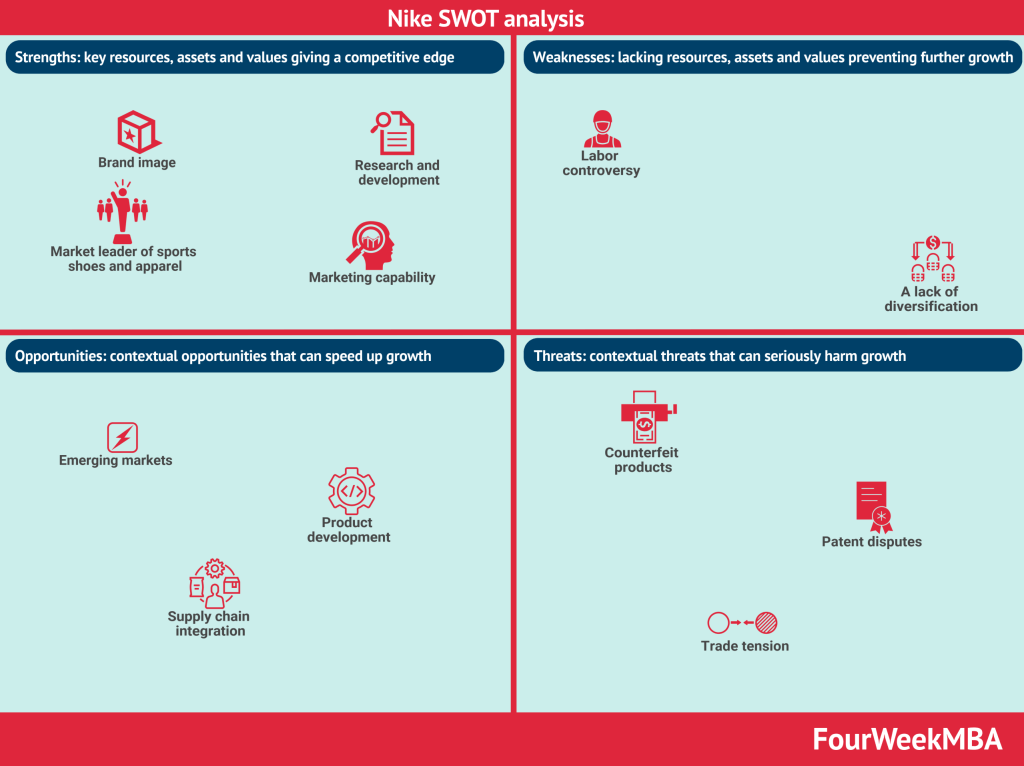
Nike SWOT Analysis

nike-swot-analysis

Samsung SWOT Analysis

microsoft-swot-analysis
Samsung was founded in South Korea in 1938 by Lee Byung-Chul. Originally a trading company, it took Samsung 22 years to become the fully-fledged electronics company that most people recognize today. Indeed, the company is a leader in technological innovation through telecommunications, electronics, and home appliances.

Costco SWOT Analysis

costco-swot-analysis
Costco is a large American multinational corporation with a focus on low-cost, membership-only retail warehouse clubs. Costco is the 4th largest retail operator in the world, operating 785 warehouses in 10 different countries. Indeed, it has enjoyed rapid success growing from zero to $3 billion in sales within six years.

Walmart SWOT Analysis

walmart-swot-analysis
From humble beginnings just over 50 years ago, Walmart has grown to become the world’s largest retail company. A single small discount store in Arkansas has now expanded to over 11,000 stores in 28 countries. Some reports suggest that the company now makes $1.8 million of profit every hour.

Uber SWOT Analysis

uber-swot-analysis
Headquartered in San Francisco, California, Uber started as a peer-to-peer ridesharing platform. In more recent times, the company has moved into food delivery, rental cars, and bike-sharing. In one form or another, Uber now has a presence in over 900 cities worldwide.

Disney SWOT Analysis

disney-swot-analysis
It would be hard to argue the case for a more recognizable entertainment brand than Disney. Disney is of course synonymous with Walt Disney, but it was Walt and his brother Roy who started the company in 1923 in Burbank, California. Disney content is now broadcast on over 100 channels in 34 different languages across the globe.

Coca-Cola SWOT Analysis

coca-cola-swot-analysis
Coca-Cola is the market leader of the soft drink industry. It is also the most widely recognized brand, with a Business Insider study revealing that a staggering 94% of the world population recognizes the red and white logo. However, Coca-Cola faces significant challenges with increasingly health-conscious consumers and less access to water resources.

Ford SWOT Analysis

ford-swot-analysis
Founded in 1903 by Henry Ford and is the fifth-largest family-owned company in the world. Ford is a globally recognized brand in the automotive industry for a couple of reasons. First, Henry Ford is well-known as the inventor of the production line and thus the modern automobile industry. Today, Ford has also maintained relevance as the seventh-largest car manufacturer worldwide, selling a range of passenger cars, trucks, and vans.

Tesco SWOT Analysis

tesco-swot-analysis
Tesco was founded in 1919 by Jack Cohen, as a small group of market stalls. After rapid expansion in the following years, the company became the largest retailer in the UK and is now the second-largest in the world. To put their dominance into perspective, consider that Tesco serves around 66 shoppers per second across 7000 retails stores, delivering approximately $180,000 worth of sales every minute.

Nestlé SWOT Analysis

nestle-swot-analysis
Nestlé is a large multinational food and beverage manufacturer with more than 2000 brands spread across 197 countries. Some of Nestlé’s well-known brands include Nescafe, Kit-Kat, Purina, Aero, Butterfinger, Maggi, and Haagen-Dazs. Originally a producer of infant food in 1867, it is now considered to be the world’s largest food manufacturer.

Amazon SWOT Analysis

amazon-swot-analysis
Amazon is among the most diversified business model in the tech industry. The company is well-positioned to dominate e-commerce further. And while its online stores have tight profit margins, Amazon still unlocks cash for growth, while consolidating its dominance in the cloud and grabbing new opportunities like voice.

Facebook SWOT Analysis

facebook-swot-analysis
Facebook, with its products, with its strong appeal, and consumer brand has a solid business model, threatened in the last years by privacy concerns, which open up the way to potential regulation to break up the company. If that will not happen, Facebook will have the chance to expand to define other markets like VR.

Starbucks SWOT Analysis

swot-analysis-of-starbucks
Starbucks is a global consumer brand with direct distribution, recognized brands, and products that make it a viable business. Its reliance on the Americas as a primary operating segment makes it a weakness. At the same time, Starbucks faces risks related to coffee beans price volatility. Yet the company still has global expansion opportunities.

Tesla SWOT Analysis

tesla-swot-analysis
Among the most recognized car manufacturers, Tesla is valued more than the combined market capitalization of GM and Ford. While the company’s direct distribution is a strength, its lack of financial viability is a weakness. Competition is a future threat. However, if Tesla defines a new market for car manufacturing its potential growth will be massive.

Netflix SWOT Analysis

netflix-swot-analysis
Netflix is among the most popular streaming platforms, with a subscription-based business model. The brand, platform, and content are strengths. The volatility of content licensing and production are weaknesses. The streaming market is a potential blue ocean. Inability to attract and retain premium members, and its fixed long-term costs are threats to its business model.

Apple SWOT Analysis

apple-swot-analysis
Apple can leverage a strong consumer brand and set of successful products as a strength. Yet the company is still too reliant on the iPhone as a primary revenue stream. Though Apple is working to open up new markets as an opportunity, it has to make sure to sustain its stores’ sales.

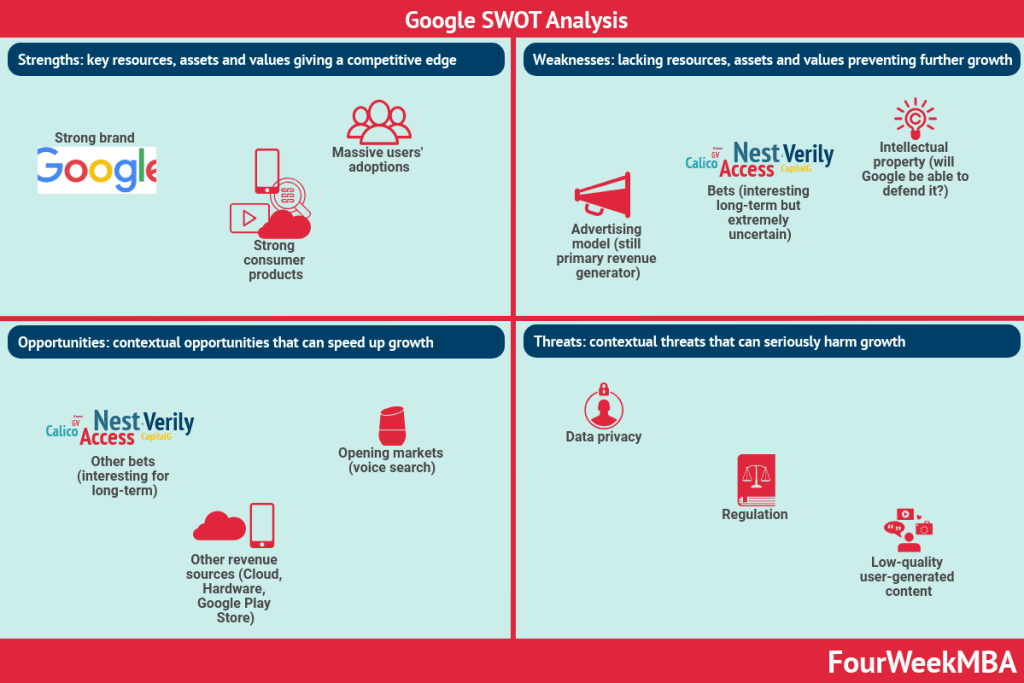
Google SWOT Analysis

google-swot-analysis
Google’s strength is its strong consumer brand. The company is grabbing new opportunities by opening up industries like voice search and consolidating in industries like the cloud. As a weakness, its revenues primarily come from advertising. A primary threat is the quick change of search and potential intervention by regulators.

Read Next: SWOT Analysis, Personal SWOT Analysis.

Other case studies:

Other resources: