









Key Components
A hierarchical organizational structure might be the rule for many traditional small businesses (take many family businesses, where the family is in charge, and decisions flow hierarchically within the organization) to larger corporations.
How to balance hierarchy with bottom-up innovation
A key drawback of hierarchical structures is their top-down nature, which might constrain valuable information sharing, especially from the bottom.
Real-World Examples
Airbnb Amazon Apple Boeing Coca-Cola Costco
Quick Answers
A hierarchical organizational structure might be the rule for many traditional small businesses (take many family businesses, where the family is in charge, and decisions flow hierarchically within the organization) to larger corporations.
How to balance hierarchy with bottom-up innovation?
A key drawback of hierarchical structures is their top-down nature, which might constrain valuable information sharing, especially from the bottom.
What are the case studies?
Large Corporations: Many multinational companies, such as General Electric and IBM, employ hierarchical structures. These structures allow for clear lines of authority and responsibility in complex, global organizations..
Key Insight
Thus, for a hierarchical organization to work at scale, either the top of the organization is also tied to the final customers (to say, customer support is also part of the top hierarchy), or it's critical to establish bottom-up units, which can override the hierarchical organizational structure, to enable a flow of information from the bottom.
Exec Package + Claude OS Master Skill | Business Engineer Founding Plan
FourWeekMBA x Business Engineer | Updated 2026
Traditional hierarchical organizations have undergone radical transformation as AI-powered decision support systems eliminated many middle management layers. Companies now operate with flatter structures where AI handles routine coordination and information flow. Smart algorithms automatically escalate critical decisions to appropriate executives while empowering front-line employees with real-time data access. This shift has reduced organizational depth by an average of 40%, accelerated decision-making cycles, and created more autonomous teams. However, human leadership remains essential for strategic vision, cultural guidance, and complex stakeholder management in this AI-augmented workplace.
| Metric | 2026 Value |
| Average Management Layers | 3.2 (down from 5.4 in 2020) |
| Decision Speed Improvement | 65% faster than 2020 |
| AI-Assisted Management Tasks | 78% of routine decisions |
| Employee Autonomy Index | 8.3/10 (up from 5.1/10) |
In a hierarchical structure, you have a company organized vertically, where groups follow a top-down decision-making approach, where most decisions flow from the top to the bottom of the organization. One example is Apple’s organizational structure today.
A hierarchical organizational structure is a business management system where employees are arranged in levels of authority, with clear chains of command flowing from top executives down to entry-level workers. This pyramid-shaped structure features distinct management layers, defined reporting relationships, and centralized decision-making authority at higher organizational levels.
| Elements | Description | Example |
|---|---|---|
| 1. Tall Hierarchy | Multiple levels of management and a clear chain of command. Decision-making authority is centralized at the top, and communication typically flows through formal channels. | General Electric (GE) follows a tall hierarchy with numerous management levels, clear reporting structures, and well-defined roles. |
| 2. Centralized Decision-Making | Decisions are made at the upper echelons of the organization, often by top executives or a single leader. Lower-level employees have limited decision-making authority. | McDonald’s operates with centralized decision-making, where menu changes and major business decisions are typically made by corporate executives. |
| 3. Clear Reporting Structure | Employees report to specific supervisors or managers. There is a well-established hierarchy of reporting relationships, making it clear who is in charge. | IBM maintains a clear reporting structure with employees reporting to their respective managers and teams, following a traditional hierarchy. |
| 4. Specialization of Roles | Employees have specialized roles and responsibilities based on their job titles and positions within the hierarchy. Each role has a specific function. | Boeing employs a hierarchical structure, especially in its manufacturing divisions, where engineers, technicians, and assemblers have specialized roles. |
| 5. Limited Autonomy | Lower-level employees have limited autonomy and are expected to follow established procedures and guidelines. Most decisions are referred upward for approval. | Walmart operates with limited autonomy among store employees, who follow corporate guidelines and policies for daily operations. |
| 6. Efficient Control | Hierarchical structures enable efficient control and supervision of employees. Managers oversee subordinates, ensuring adherence to policies and goals. | Bank of America utilizes a hierarchical structure in its banking operations, with branch managers overseeing bank tellers and other employees to maintain efficient operations. |
| 7. Bureaucratic Processes | Hierarchies often involve bureaucratic processes, with formal rules and regulations governing various aspects of the organization. This can sometimes lead to slower decision-making. | Government agencies like the U.S. Department of Defense operate with a hierarchical structure, characterized by formal bureaucracy and extensive regulations. |
| 8. Well-Defined Roles | Roles and responsibilities are well-defined within the hierarchy, reducing ambiguity and ensuring that each employee knows their job and reporting relationships. | Procter & Gamble (P&G) maintains a well-defined hierarchical structure, with clear roles for brand managers, product developers, and sales teams. |
A hierarchical organizational structure might be the rule for many traditional small businesses (take many family businesses, where the family is in charge, and decisions flow hierarchically within the organization) to larger corporations.
Usually, hierarchies tend to form the more people aggregate around an organization.
Thus, while hierarchies are pretty popular on a small scale, as they enable faster decisions (since there are fewer group discussions), they can also be popular on at large scale.
There is a tricky part of hierarchical structure.
When no added bottom-up forces are built within the organization, the hierarchy might collapse on itself, as employees at the base of the pyramid might not feel comfortable sharing their findings about changing consumer behaviors.
Hover time, this might translate into a loss of market dominance from the hierarchical player, which might lose control of the organization and employees’ morale.
A key drawback of hierarchical structures is their top-down nature, which might constrain valuable information sharing, especially from the bottom.
Indeed, most consumer changes happening on the market are usually watched by people at the bottom of the organization who are much closer to the final customer.
Customer support representatives, which might not be hierarchically high within the organization, are an incredible source of understanding customers’ pain points and changing behaviors.
Thus, for a hierarchical organization to work at scale, either the top of the organization is also tied to the final customers (to say, customer support is also part of the top hierarchy), or it’s critical to establish bottom-up units, which can override the hierarchical organizational structure, to enable a flow of information from the bottom.
In other words, some people within the organization should be devoted to enabling the information to flow from the bottom to understand when breakthrough opportunities are coming.
But also when disruption forces are getting shaped in the market, which might suddenly deteriorate the organization’s competitive advantage.
Only by balancing out the top-down hierarchy with bottom-up forces it’s possible to create a competitive hierarchical organization, at scale, in the long run.
| Case Study | Strategy | Outcome |
|---|---|---|
| Walmart | Hierarchical Organization: Operates with a clear chain of command, from store associates up to the CEO, with multiple levels of management. | Achieved operational efficiency, consistent execution of strategies, and rapid scalability, driving growth and market dominance in retail. |
| Ford Motor Company | Hierarchical Organization: Structured with multiple levels of management from plant workers to executive leadership, with clear reporting lines. | Improved operational efficiency, quality control, and scalability, driving growth and competitiveness in the automotive industry. |
| General Electric (GE) | Hierarchical Organization: Operates with a top-down management approach, with clear divisions and reporting structures across various business units. | Enhanced operational efficiency, strategic focus, and accountability, driving growth and competitiveness across diverse industries. |
| Microsoft (Pre-2014) | Hierarchical Organization: Operated with multiple layers of management and a clear chain of command within product divisions. | Created operational consistency and control but faced challenges in innovation and agility, prompting a shift to a more collaborative structure under CEO Satya Nadella. |
| IBM | Hierarchical Organization: Structured with multiple management levels and clear reporting lines within functional areas. | Achieved operational efficiency and consistency, though faced challenges in adaptability and innovation, leading to efforts to integrate more agile practices. |
| Toyota | Hierarchical Organization: Structured with clear levels of management from factory workers to top executives, with a strong emphasis on quality control and efficiency. | Improved operational efficiency, quality control, and scalability, driving growth and competitiveness in the automotive industry. |
| ExxonMobil | Hierarchical Organization: Operates with a clear chain of command and multiple management levels, ensuring control and coordination across global operations. | Enhanced operational efficiency, strategic control, and scalability, driving growth and leadership in the energy sector. |
| Procter & Gamble (P&G) | Hierarchical Organization: Structured with multiple levels of management across product categories and geographic regions. | Achieved operational efficiency, strategic control, and scalability, driving growth and market leadership in consumer goods. |
| Goldman Sachs | Hierarchical Organization: Operates with clear hierarchical structures within divisions such as investment banking, trading, and asset management. | Ensured strategic control, operational efficiency, and regulatory compliance, driving growth and leadership in the financial sector. |
| Boeing | Hierarchical Organization: Structured with clear reporting lines and multiple management levels within engineering, manufacturing, and administrative functions. | Enhanced operational efficiency, quality control, and scalability, driving growth and competitiveness in aerospace and defense. |
| Coca-Cola | Hierarchical Organization: Operates with a clear chain of command and multiple management levels across regions and product lines. | Achieved operational efficiency, strategic control, and scalability, driving growth and market leadership in the beverage industry. |
| Pfizer | Hierarchical Organization: Structured with multiple levels of management and clear reporting lines within research, development, and sales divisions. | Enhanced operational efficiency, strategic control, and scalability, driving growth and leadership in pharmaceuticals. |
| McDonald’s | Hierarchical Organization: Operates with a clear chain of command from crew members to top executives, with multiple management levels. | Ensured operational efficiency, consistent execution of strategies, and rapid scalability, driving growth and market leadership in fast food. |
| Nestlé | Hierarchical Organization: Structured with multiple levels of management across product categories and geographic regions. | Achieved operational efficiency, strategic control, and scalability, driving growth and market leadership in food and beverages. |
| Samsung | Hierarchical Organization: Operates with a clear chain of command and multiple management levels within divisions such as electronics, semiconductors, and consumer goods. | Enhanced operational efficiency, strategic control, and scalability, driving growth and competitiveness in technology markets. |
| JPMorgan Chase | Hierarchical Organization: Operates with clear hierarchical structures within divisions such as banking, investment, and asset management. | Ensured strategic control, operational efficiency, and regulatory compliance, driving growth and leadership in the financial sector. |
| HSBC | Hierarchical Organization: Structured with multiple levels of management and clear reporting lines across global operations. | Achieved operational efficiency, strategic control, and scalability, driving growth and competitiveness in global banking. |
| Intel | Hierarchical Organization: Operates with a clear chain of command and multiple management levels within engineering, manufacturing, and administrative functions. | Enhanced operational efficiency, quality control, and scalability, driving growth and leadership in semiconductors. |
| AT&T | Hierarchical Organization: Structured with multiple levels of management and clear reporting lines within functional areas like network operations, customer service, and sales. | Achieved operational efficiency, strategic control, and scalability, driving growth and market leadership in telecommunications. |
| Shell | Hierarchical Organization: Operates with a clear chain of command and multiple management levels across exploration, production, and administrative functions. | Enhanced operational efficiency, strategic control, and scalability, driving growth and leadership in the energy sector. |
| Related Organizational Structures | Description | Implications |
|---|---|---|
| Hierarchical Organizational Structure | A Hierarchical Organizational Structure is a traditional organizational design characterized by multiple levels of management and clear lines of authority and reporting. In a hierarchical structure, employees are organized into different levels, with each level having a specific scope of authority and responsibility. Information and decision-making flow from the top of the hierarchy downwards, and communication follows a formal chain of command. Hierarchical structures prioritize vertical communication and supervision, with higher levels of management exercising authority and control over lower levels. | Hierarchical Organizational Structures provide a systematic framework for organizing roles, responsibilities, and reporting relationships within the organization. By delineating clear lines of authority and accountability, hierarchical structures can facilitate effective coordination, delegation, and oversight of activities. However, they may also create bureaucratic inefficiencies, communication barriers, and decision-making delays due to the need for information to flow through multiple levels of management. |
| Centralized Organizational Structure | A Centralized Organizational Structure is characterized by a hierarchical system where decision-making authority is concentrated at the top of the organization, typically with top management or a central executive team. Decision-making flows from top to bottom, and communication channels are structured in a clear hierarchy. Centralized structures often have a single point of control, with limited autonomy and discretion granted to lower-level employees or departments. | Centralized Organizational Structures offer clear lines of authority and control, enabling efficient decision-making and coordination within the organization. By consolidating decision-making power at the top, centralized structures can ensure consistency, uniformity, and alignment with organizational goals and objectives. However, they may also result in slower response times, reduced flexibility, and limited innovation due to the bottleneck effect at the top of the hierarchy. |
| Flat Organizational Structure | A Flat Organizational Structure is characterized by few or no levels of middle management between frontline employees and top leadership. It fosters a decentralized decision-making process, promotes employee empowerment and autonomy, and encourages open communication and collaboration. Flat structures prioritize flexibility, agility, and quick decision-making, enabling organizations to adapt rapidly to change and foster innovation. | Flat Organizational Structures offer several benefits, including streamlined communication, faster decision-making, and increased employee autonomy. By reducing hierarchical layers, flat structures empower frontline employees to take ownership of their work and contribute directly to organizational goals. Flat structures promote agility and responsiveness, enabling organizations to adapt quickly to market changes and capitalize on emerging opportunities. However, flat structures may also pose challenges related to role clarity, supervision, and career advancement, as employees may have fewer opportunities for upward mobility or formal leadership development. |
| Matrix Organizational Structure | A Matrix Organizational Structure is a hybrid structure that combines functional and divisional structures, allowing employees to report to both functional managers and project managers simultaneously. It enables cross-functional collaboration and resource sharing while maintaining functional expertise and accountability. Matrix structures facilitate coordination and flexibility, but they may also create complexity and ambiguity in reporting relationships. | Matrix Organizational Structures offer a blend of functional and divisional structures, enabling organizations to leverage both functional expertise and project-focused collaboration. By combining functional and divisional reporting lines, matrix structures can promote cross-functional collaboration, resource sharing, and innovation. However, matrix structures may also introduce complexity and ambiguity in reporting relationships, requiring clear communication, role clarification, and conflict resolution mechanisms to ensure alignment and effectiveness. |
| Network Organizational Structure | A Network Organizational Structure is a flexible and decentralized structure that connects individuals, teams, and external partners through informal networks and relationships. It involves collaboration across organizational boundaries, enabling knowledge sharing, resource mobilization, and innovation. Network organizations leverage technology and social capital to facilitate communication, collaboration, and collective problem-solving, enabling them to adapt to changing market conditions and seize new opportunities. | Network Organizational Structures share similarities with Hierarchical Structures in their emphasis on centralized decision-making and authority. However, network structures differ by fostering flexible, decentralized collaboration and knowledge sharing across organizational boundaries. By facilitating open communication and relationships, network organizations can tap into diverse expertise, mobilize resources, and drive innovation. Both models offer distinct approaches to organizing and managing organizational activities, each with its advantages and challenges depending on the organizational context and strategic objectives. |
Read Next: Organizational Structure.


AI is fundamentally flattening traditional hierarchical organizational structures by automating middle management tasks and enabling direct communication between senior leadership and frontline employees. Machine learning algorithms now handle routine decision-making, performance monitoring, and resource allocation that previously required multiple management layers. For example, Amazon’s warehouse operations use AI-powered systems that directly assign tasks to workers, track productivity metrics, and optimize workflows without requiring floor supervisors to micromanage daily activities. Workers receive instructions through handheld devices connected to central AI systems, while executives can access real-time operational data without filtering through department heads. This eliminates several management tiers and creates a more direct command structure. Additionally, AI-driven analytics provide executives with granular insights into employee performance and operational bottlenecks, reducing their reliance on middle managers to interpret and report information up the chain of command.
For deeper analysis: The Business Engineer — AI Strategy Intelligence


Nadler-Tushman Congruence Model

McKinsey’s Seven Degrees of Freedom


the intelligence factory race between AI labs — -organizational-structure/”>OpenAI Organizational Structure

Airbnb Organizational Structure

Amazon Organizational Structure

Apple Organizational Structure

Coca-Cola Organizational Structure

Costco Organizational Structure


Facebook Organizational Structure

Goldman Sachs’ Organizational Structure

Google Organizational Structure


McDonald’s Organizational Structure

McKinsey Organizational Structure

Microsoft Organizational Structure

Nestlé Organizational Structure

Business hierarchies typically include four main levels: executive leadership (CEO, presidents), senior management (VPs, directors), middle management (managers, supervisors), and front-line employees (associates, specialists, entry-level workers).
Hierarchical structures provide clear reporting lines, defined authority levels, streamlined decision-making processes, and accountability chains. They enable efficient communication flow, structured career advancement paths, and organized delegation of responsibilities across departments.
A business hierarchy chart is a visual diagram that displays organizational structure, showing reporting relationships, authority levels, and departmental divisions. It illustrates the chain of command from top executives down to individual employees.

Patagonia Organizational Structure

Samsung Organizational Structure

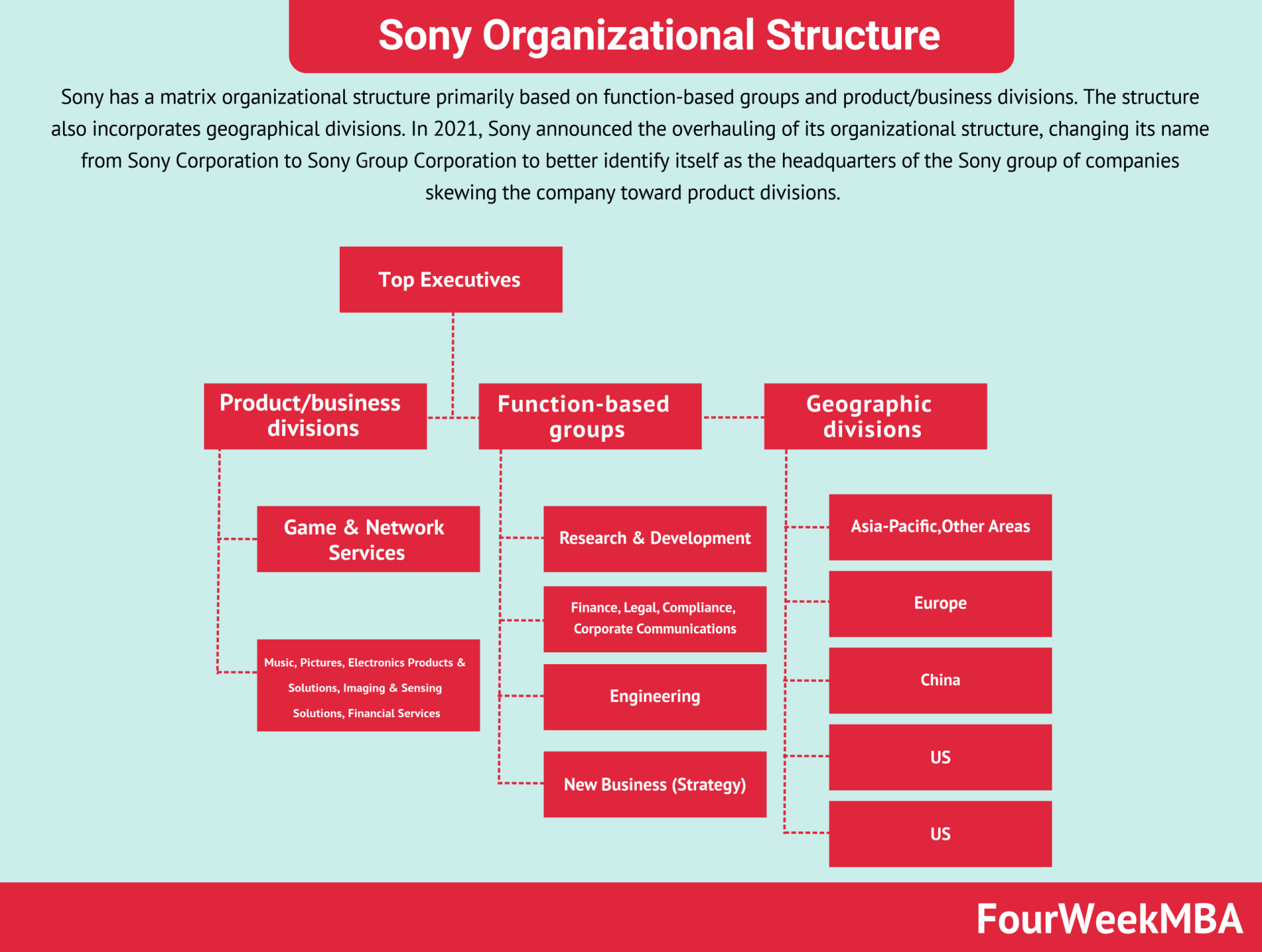
Starbucks Organizational Structure

Tesla Organizational Structure

Toyota Organizational Structure

Walmart Organizational Structure

Main Free Guides:
The key components of Hierarchical Organizational Structure include 1. Tall Hierarchy, 2. Centralized Decision-Making, 3. Clear Reporting Structure, 4. Specialization of Roles, 5. Limited Autonomy. 1. Tall Hierarchy: Multiple levels of management and a clear chain of command. Decision-making authority is centralized at the top, and… 2. Centralized Decision-Making: Decisions are made at the upper echelons of the organization, often by top executives or a single leader. Lower-level…
A hierarchical organizational structure might be the rule for many traditional small businesses (take many family businesses, where the family is in charge, and decisions flow hierarchically within the organization) to larger corporations.
Usually, hierarchies tend to form the more people aggregate around an organization.
Thus, while hierarchies are pretty popular on a small scale, as they enable faster decisions (since there are fewer group discussions), they can also be popular on at large scale.
此内容由惯性聚合(RSS阅读器)自动聚合整理,仅供阅读参考。 原文来自 — 版权归原作者所有。