MAY 2026
Table of Contents
7 layers, 7 players, 5 cascades. The most comprehensive visual map of who controls what in the AI economy — updated monthly by The Business Engineer.
Overview
7 Layers
Players
5 Cascades
Key Truths
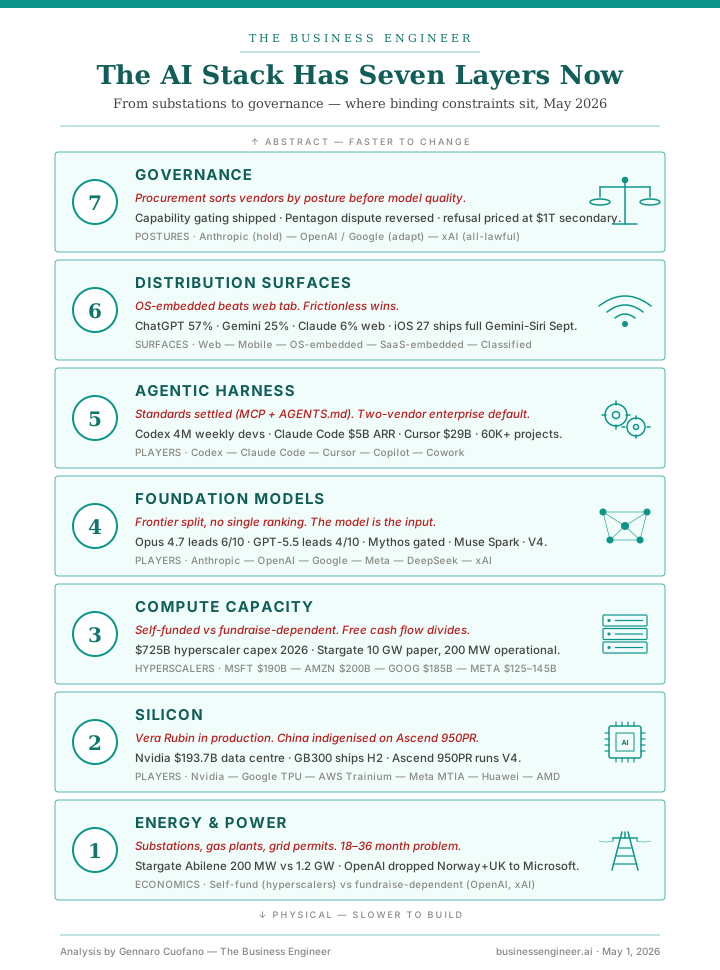
The AI Stack Has Seven Layers Now
From substations to governance — where binding constraints sit. The original five-race frame evolved into seven distinct layers, each with different speeds, moats, and chokepoints.
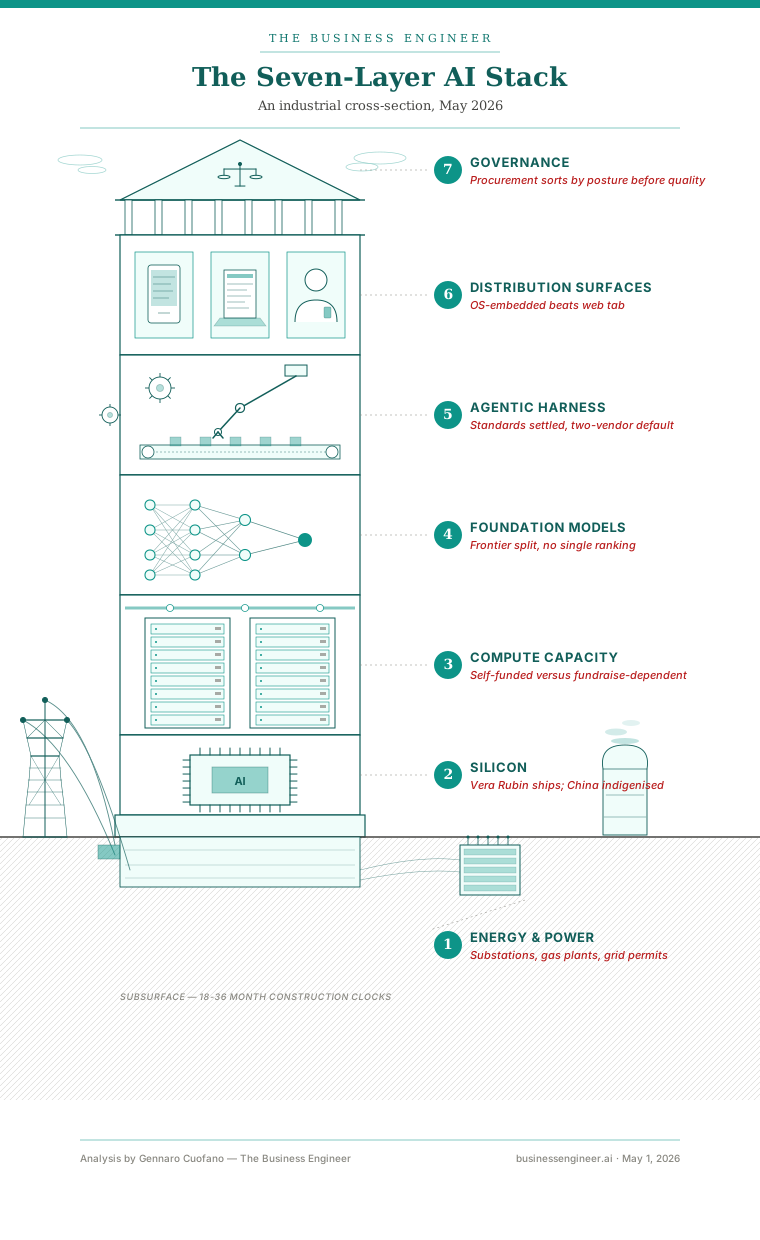
Cross-Section: Who Controls Each Layer
The full-stack view showing which companies control which layers — and where the binding constraints sit.
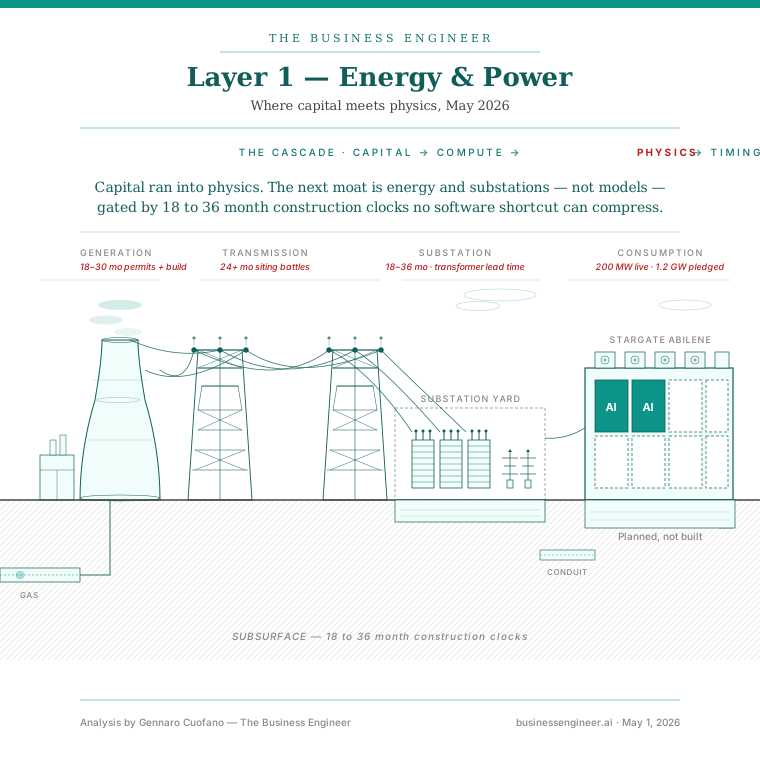
Layer 1 — Energy & Power
The binding constraint is now substations, gas plants, and grid permits — not GPUs. Stargate: 1.2 GW planned, only 200 MW operational.
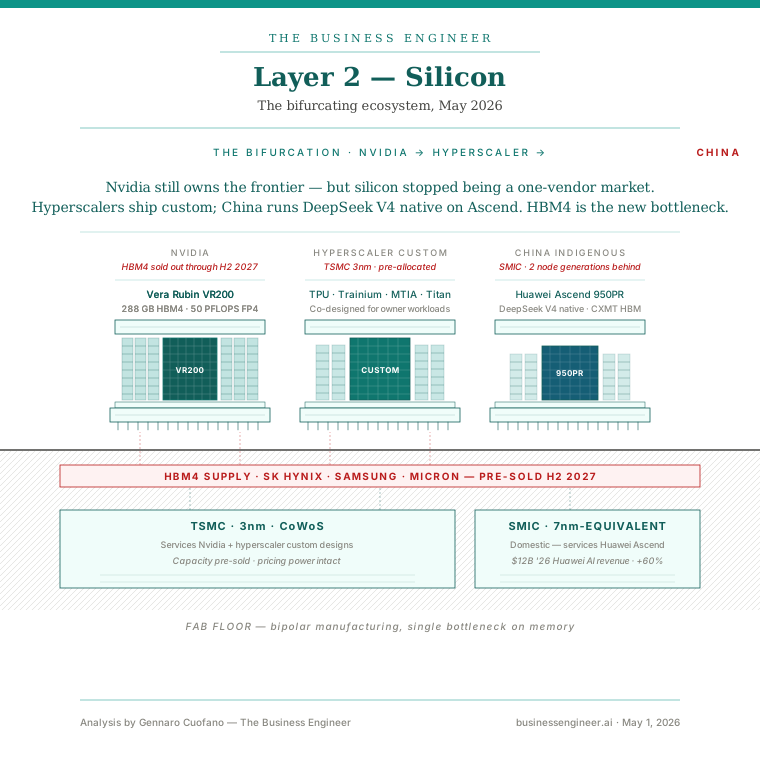
Layer 2 — Silicon
NVIDIA Vera Rubin: 336B transistors, $215.9B FY2025 revenue. Custom silicon now table stakes: Google TPU, Amazon Trainium, Meta MTIA, OpenAI Titan.
Layer 3 — Compute Capacity
Hyperscaler 2026 capex: $725 billion combined — 1% of global GDP. Microsoft $190B, Amazon $200B, Alphabet $185B, Meta $125-145B.

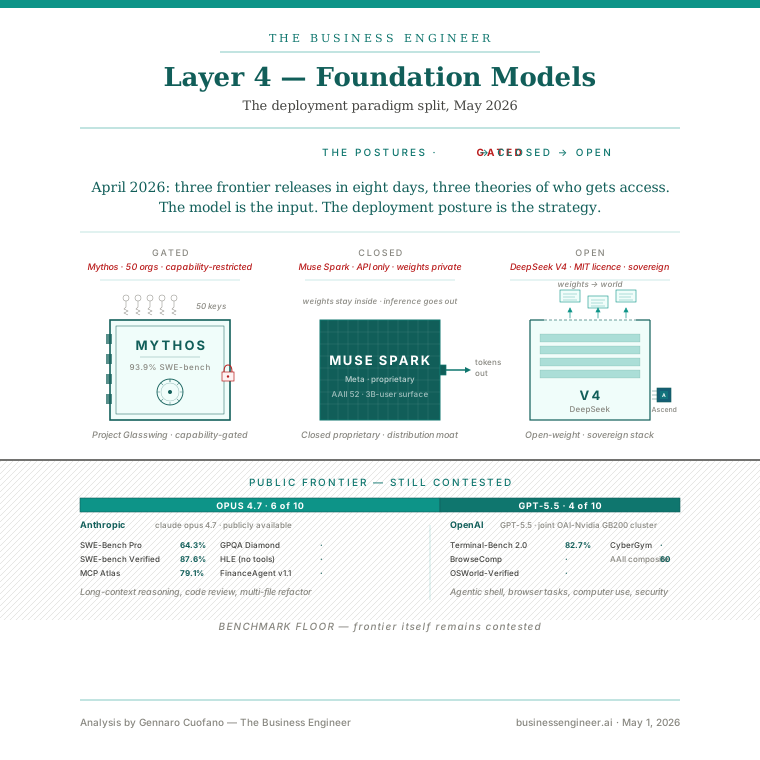
Layer 4 — Foundation Models
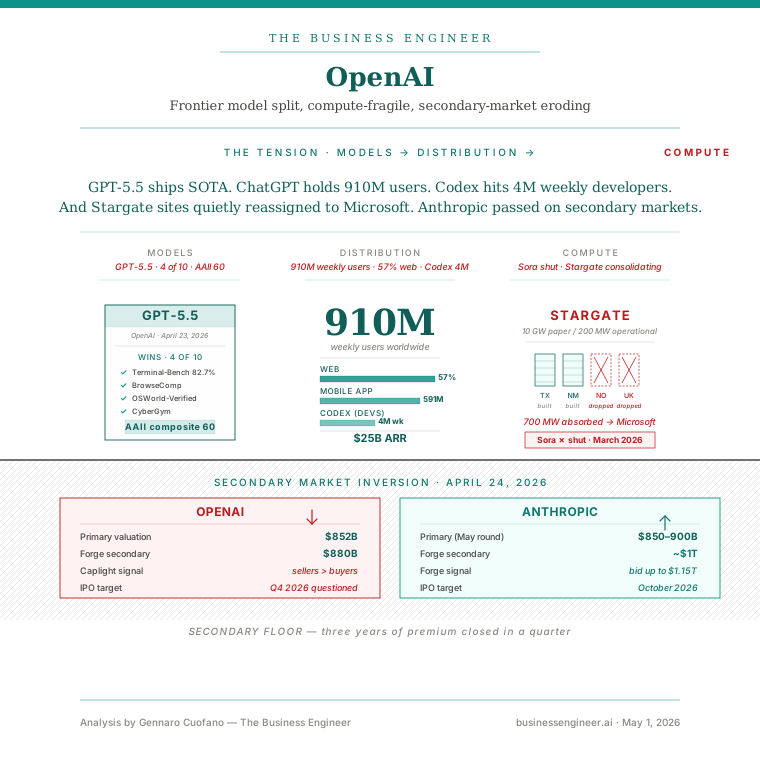
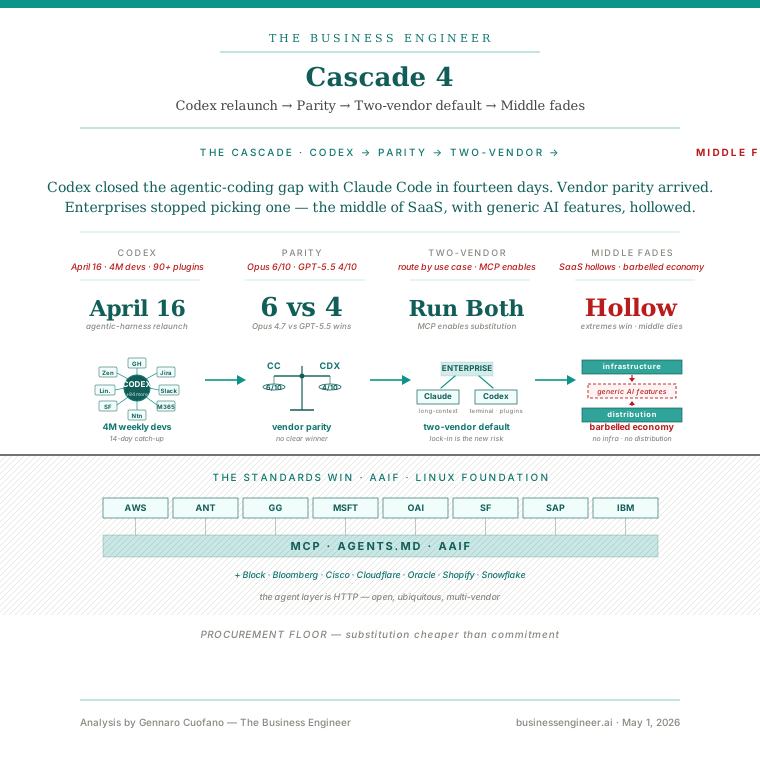
Claude Opus 4.7 vs GPT-5.5: Anthropic leads 6/10 benchmarks, OpenAI leads 4/10. Two leaders optimized for different jobs. The model is now the input.
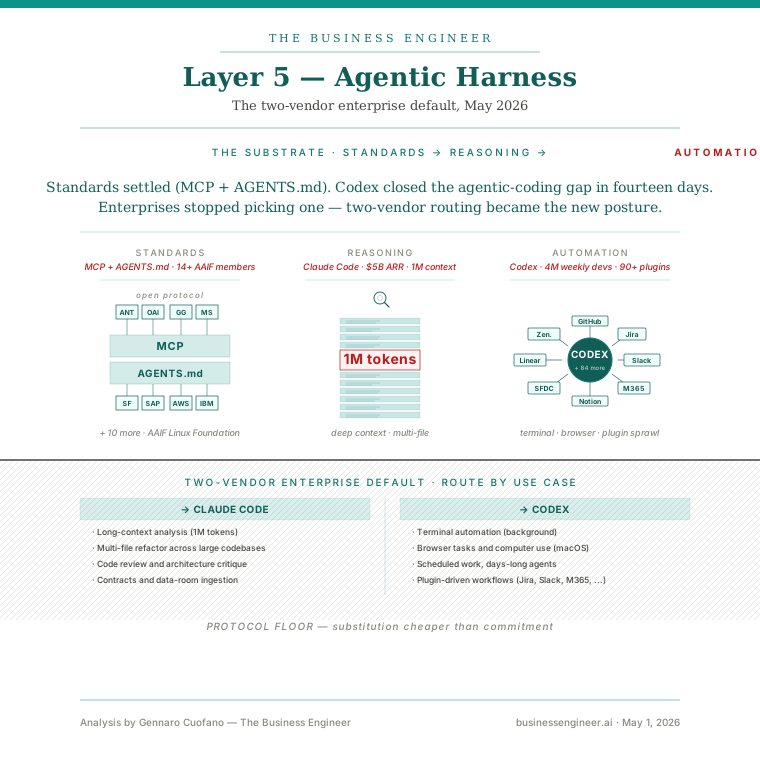
Layer 5 — Agentic Harness
MCP + AGENTS.md are the HTTP and HTML of agents. Claude Code: $5B ARR. Codex: 4M weekly developers. Two-vendor posture is enterprise default.
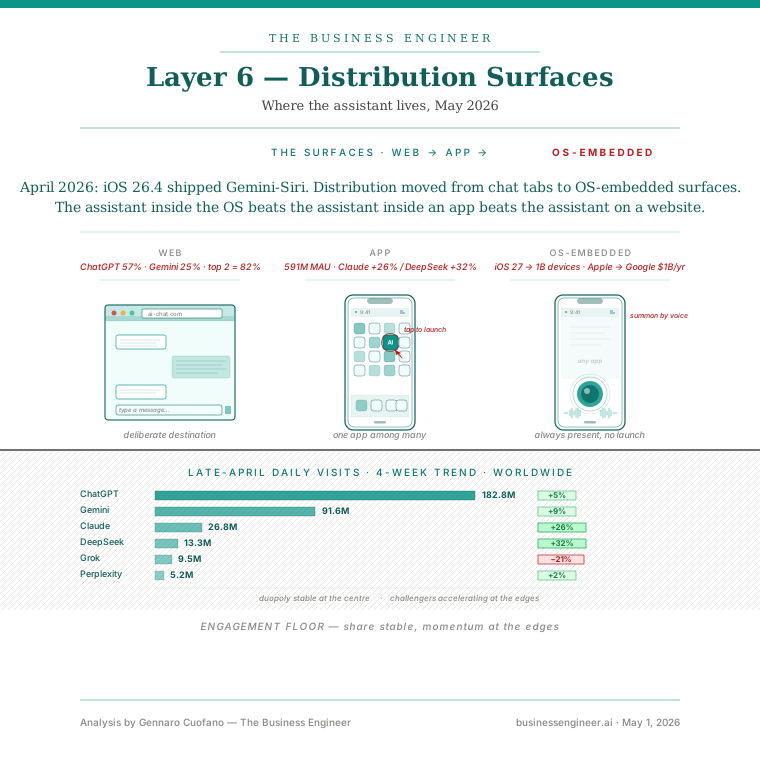
Layer 6 — Distribution Surfaces
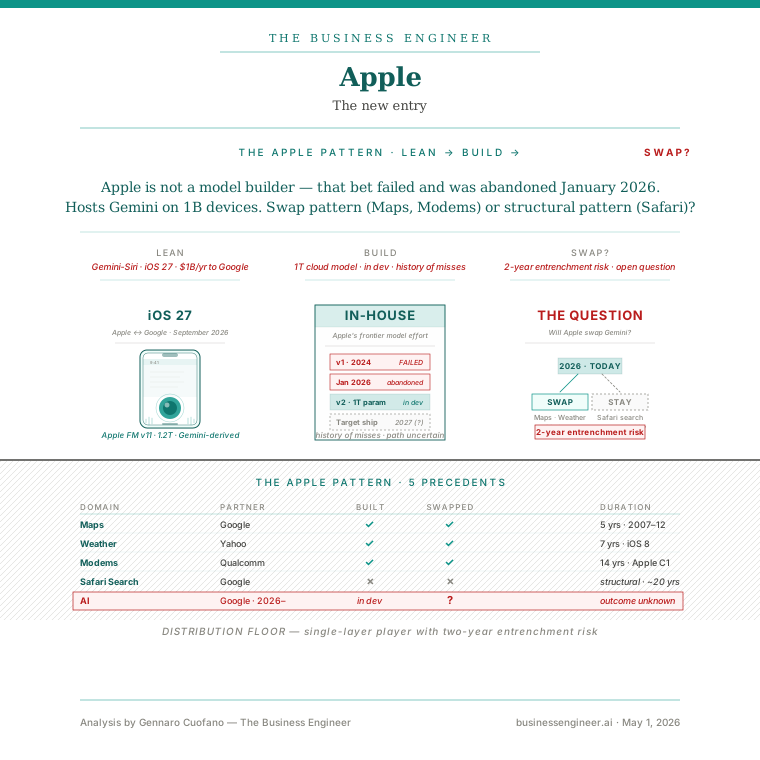
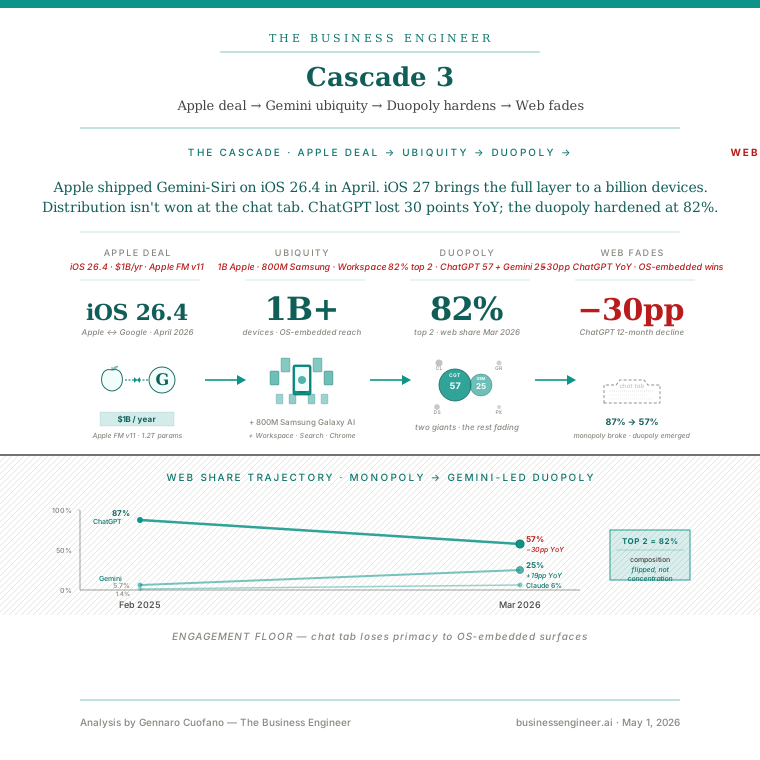
ChatGPT 57%, Gemini 25%, Claude 6% web share. iOS 27 ships full Gemini-Siri in September. OS-embedded beats web tab.
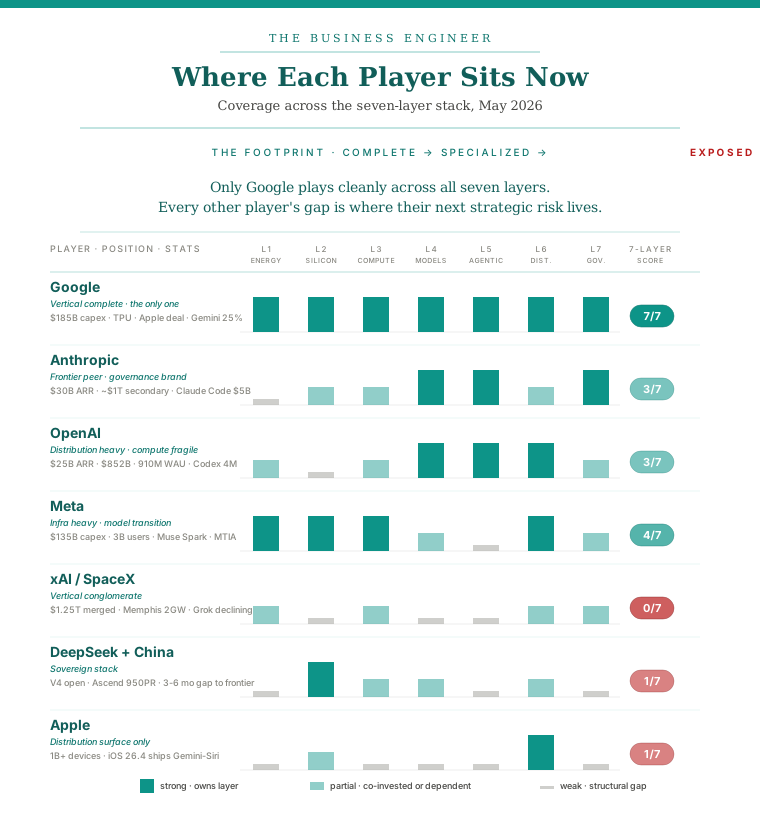
Where Each Player Sits
The competitive map: who controls which layers, where they overlap, and where the gaps are.
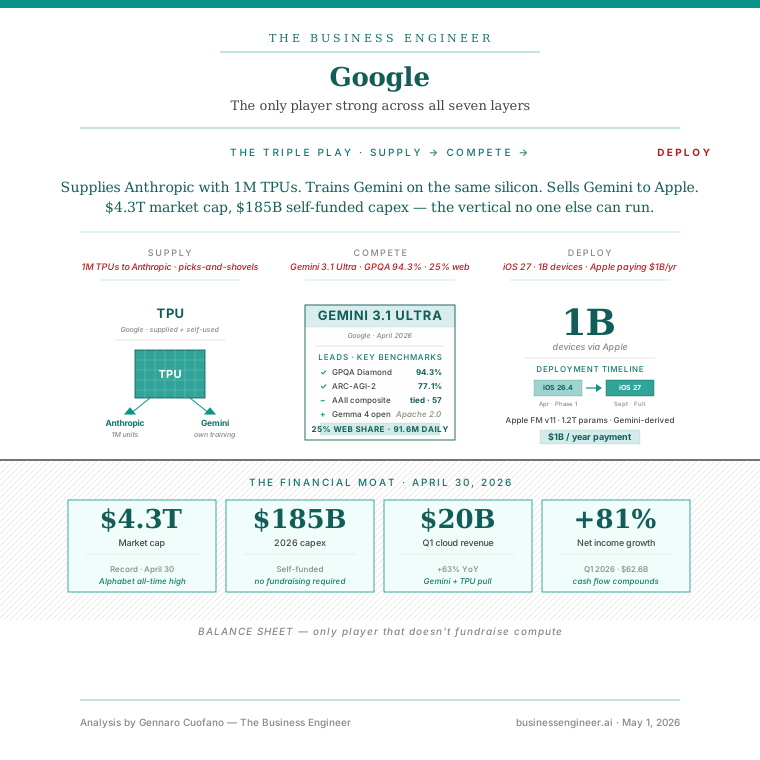
Google / Alphabet
Full-stack dominance. TPU silicon + Cloud + Gemini models + Search/YouTube distribution + Android OS. The only player controlling all 7 layers.
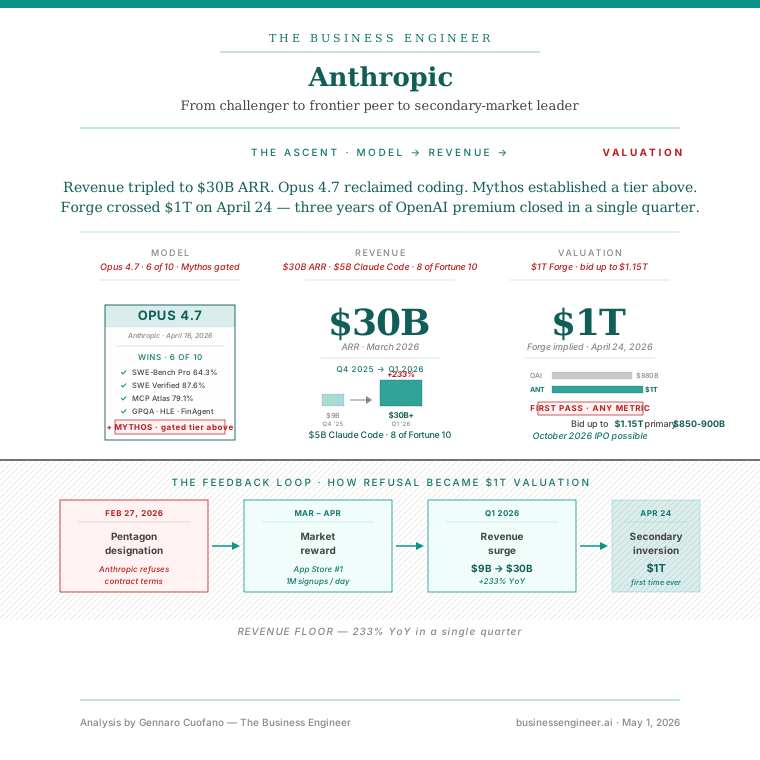
Anthropic
Claude Opus 4.7 leads reasoning. $30B+ revenue. $850-900B valuation. Crossed $1T implied on Forge Global. Compute runs through Google TPU deal.
OpenAI
GPT-5.5 leads automation. Codex: 4M weekly developers. Stargate partnership. $200M Pentagon contract. Distribution leader at 57% web share.
Meta
Muse Spark: first proprietary frontier model. Llama open-weight ecosystem. $125-145B capex. 3.7B daily users across apps. No cloud revenue.

xAI / SpaceX
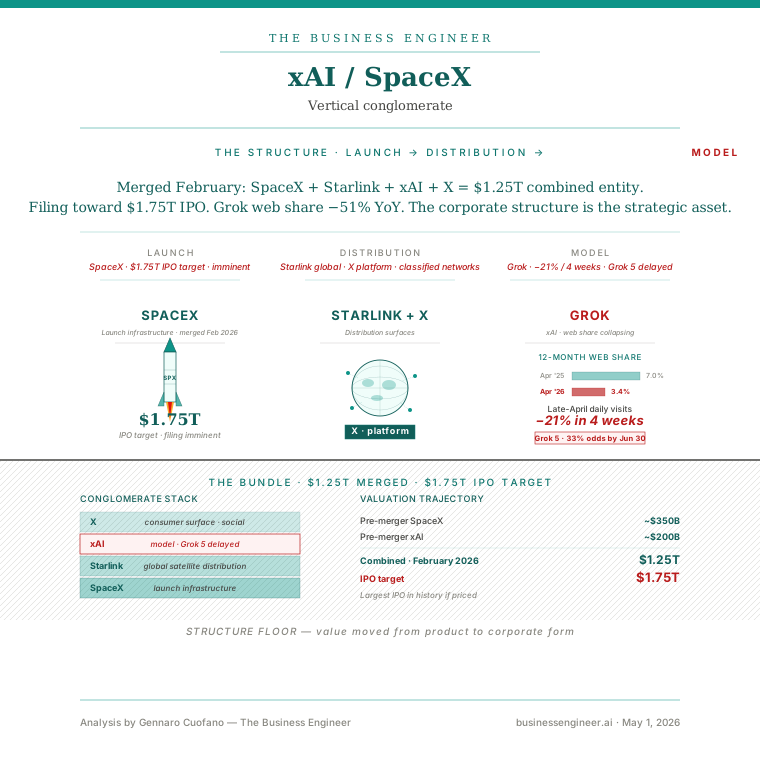
Grok signed all-lawful-purposes. Colossus supercomputer. SpaceX Starlink for edge compute distribution. 61M Grok MAU.
DeepSeek / China
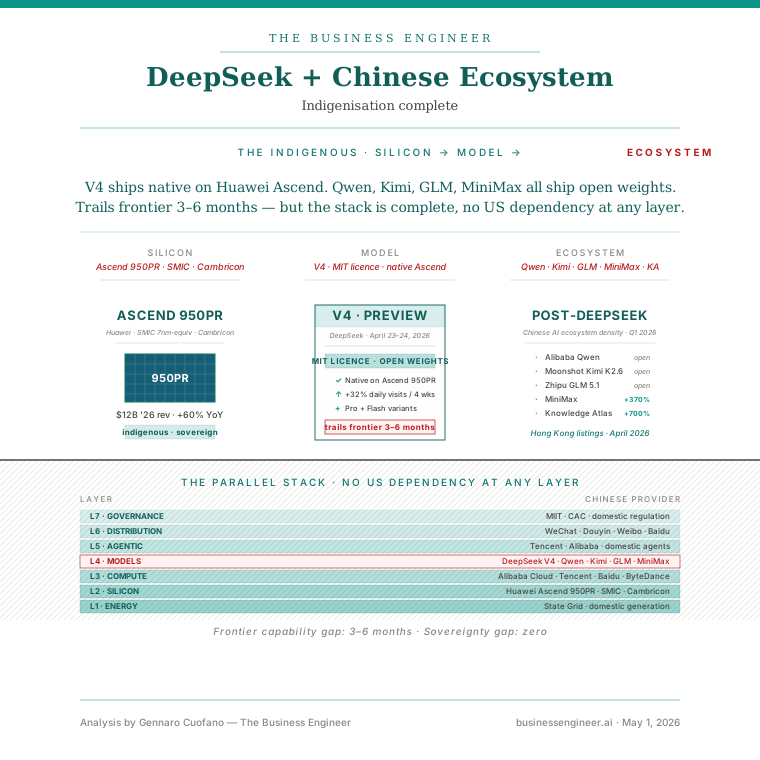
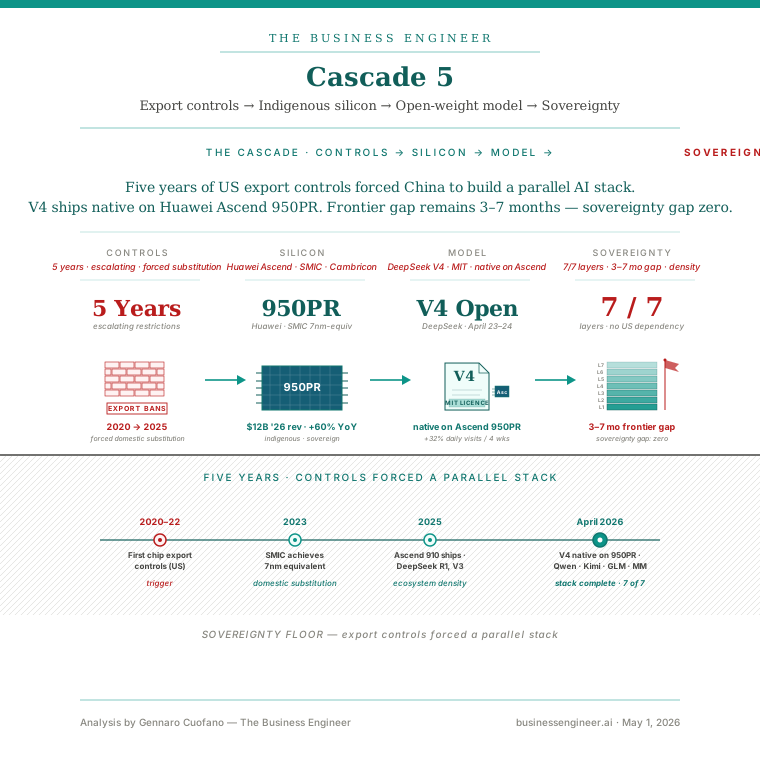
DeepSeek V4 open-weight MIT license. Huawei Ascend 950PR. SMIC fabrication. Sovereign AI stack. $12B Huawei AI chip revenue projected.
The Five Cascades
The cascades between layers now decide outcomes. What happens at one layer propagates unpredictably through the others.

Cascade 1 — Capital
$725B combined hyperscaler capex. Self-funded buildouts dominate. Companies that fundraise compute operate on a slower clock.

Cascade 2 — Governance
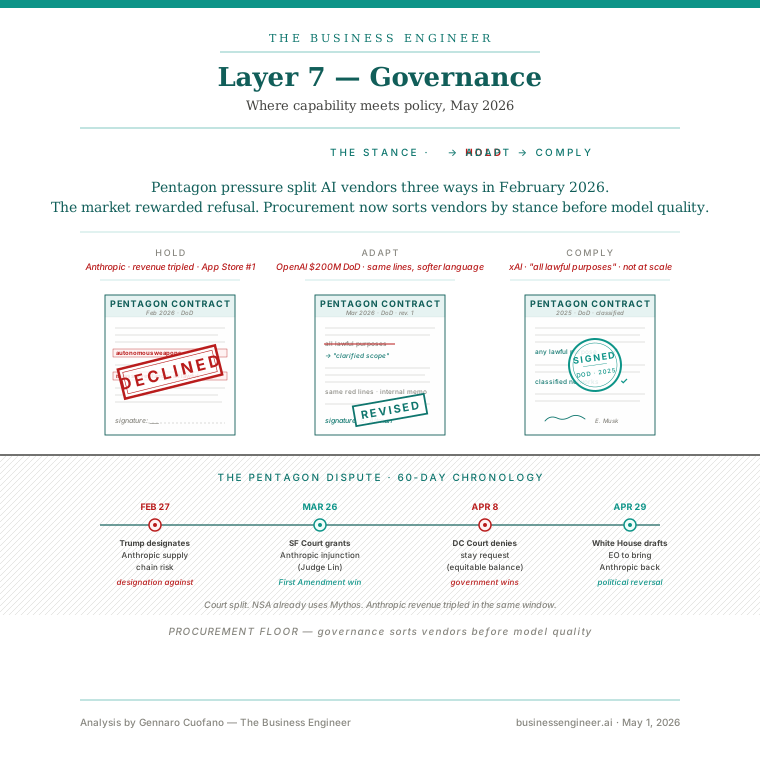
Procurement sorts by posture. The Pentagon dispute. Capability gating. Refusal pricing.

Cascade 3 — Distribution
OS-embedded beats web tab. A billion devices with Gemini-Siri. Samsung Galaxy AI at 800M+.
Cascade 4 — Agentic
MCP and AGENTS.md as standards. Claude Code vs Codex. Two-vendor posture. The protocol layer decides which model gets called.
Cascade 5 — Indigenisation
Sovereign AI stacks. China’s Huawei/SMIC/Cambricon. India, Europe, Middle East building independent capability.
Ten Structural Truths — May 2026
The key takeaways from analyzing the full AI landscape across all seven layers.

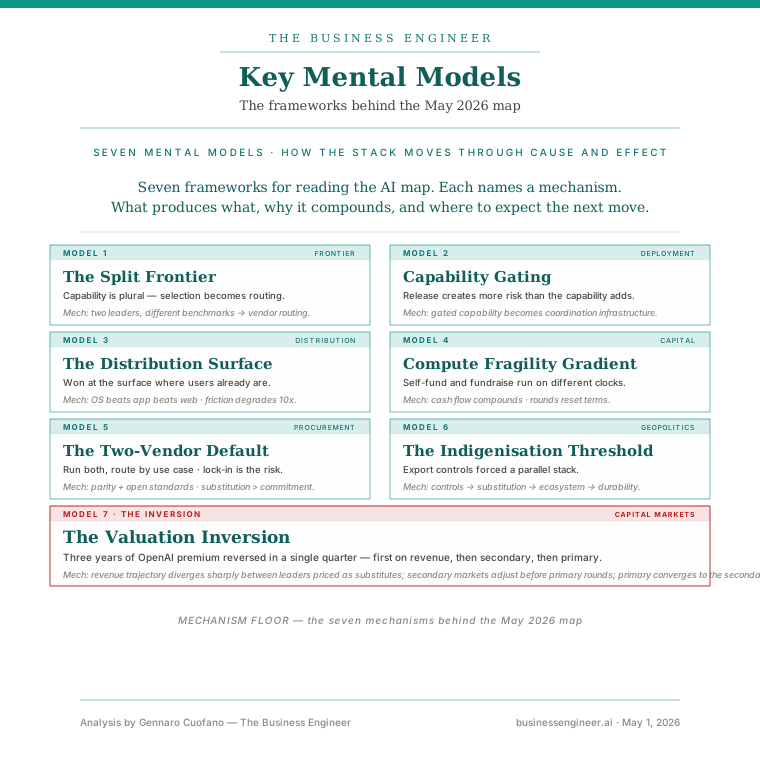
Key Mental Models
The frameworks that matter for understanding where AI is going.