
惯性聚合 高效追踪和阅读你感兴趣的博客、新闻、科技资讯
阅读原文 在惯性聚合中打开

推荐订阅源

Simon Willison's Weblog
Google DeepMind News
CTFtime.org: upcoming CTF events
P
Proofpoint News Feed
Recent Announcements
MongoDB | Blog
MongoDB | Blog
U
Unit 42
云风的 BLOG
云风的 BLOG
Recorded Future
Recorded Future
G
Google Developers Blog
I
InfoQ
Blog — PlanetScale
Blog — PlanetScale
A
About on SuperTechFans
Jina AI
Jina AI
量子位
宝玉的分享
宝玉的分享
The Cloudflare Blog
让小产品的独立变现更简单 - ezindie.com
博客园 - 聂微东
Last Week in AI
Last Week in AI
WordPress大学
WordPress大学
美团技术团队
The Hacker News
The Hacker News
Threat Intelligence Blog | Flashpoint
D
Darknet – Hacking Tools, Hacker News & Cyber Security
T
Tailwind CSS Blog
博客园 - 司徒正美
博客园 - 叶小钗
Hugging Face - Blog
Hugging Face - Blog
P
Palo Alto Networks Blog
博客园_首页
阮一峰的网络日志
阮一峰的网络日志
博客园 - 【当耐特】
Spread Privacy
Spread Privacy
The GitHub Blog
The GitHub Blog
Y
Y Combinator Blog
Vercel News
Vercel News
Martin Fowler
Martin Fowler
cs.CL updates on arXiv.org
Forbes - Security
Forbes - Security
Attack and Defense Labs
Google DeepMind News
Cyber Security Advisories - MS-ISAC
Microsoft Azure Blog
P
Privacy International News Feed
G
GRAHAM CLULEY
The Last Watchdog
The Last Watchdog
C
Cyber Attacks, Cyber Crime and Cyber Security
AI
AI
V2EX - 技术
V2EX - 技术

FourWeekMBA

Musk vs Altman: The $90B Fight That Will Define AI’s Future Why DeepMind’s $1.1B Bet Signals the End of Human-Trained AI The AI Orchestrator's Leverage Points AI & The Harness Theory Why AI Companies Are Selling Fiction as Partnership Strategy Google’s $40B Anthropic Bet Reveals AI Infrastructure Wars Anthropic’s Agent Economy Signals End of Human-Mediated Commerce Claude OS: The AI Strategy Skill That Turns Claude Into Your Analyst Agent Harness OS: Build AI-Augmented Strategic Operations 🔥 AI & The Harness Theory 🔥 The Harnessing Players Map of AI 🔥 The Business Engineer’s Claude Code OS 🔥 Skills as the Architecture of the Personal OS Google's $40B Anthropic Bet Exposes Big Tech's AI Desperation Google's $40B Anthropic Bet Signals Platform Wars 2.0 20 Mental Models For AI Business Google's TPU Gambit: Why Hardware Will Crown the AI King LinkedIn Business Model: How LinkedIn Makes Money (2026) Netflix Organizational Structure: The Culture of Freedom (2026) Amazon Pricing Strategy: How Amazon Uses Price to Win Amazon Supply Chain: The Logistics Empire (2026) Apple Supply Chain: How Apple Built the World’s Best Supply Chain Tesla Supply Chain: Vertical Integration Strategy (2026) Anthropic Business Model: How Anthropic Makes Money (2026) OpenAI Business Model: How OpenAI Makes Money (2026) Meta (Facebook) Organizational Structure 2026 Google's Agentic TPUs Signal the Death of Traditional SaaS Google's $40B Anthropic Bet Signals The End of AI Independence The OpenAI–Anthropic Convergent Bets Google’s $40B Anthropic Bet Signals the End of Open AI Innovation The Business Engineer's Claude Code OS Pentagon’s $54B Drone Budget Reveals the New Defense Economy Google's $40B Anthropic Bet Signals the End of Open AI Markets Apple’s CEO Transition Reveals the Platform Monopoly Trap Why Worldcoin’s Fake Partnership Signals AI’s Trust Crisis Google's TPU Play Signals the End of GPU Monopoly Artisan’s “Stop Hiring Humans” Stunt Reveals AI’s Marketing Problem GaaS vs SaaS: Why AI Agents Kill Per-Seat Pricing Defensible Moats in AI: What Actually Protects an AI Company The Software Collapse: When Code Becomes a Liability Apple's Subscription Empire Signals The End of Product Innovation Google’s TPU Gambit: The Hardware War for AI Agents AI & The Importance of System Thinking Why Prego’s Kitchen Surveillance Signals Audio’s Next Battleground Apple’s Subscription Pivot Reveals Platform Monopoly Endgame Tesla’s $25B Bet Signals Manufacturing’s AI Revolution Physical AI Market Map: Where Real-World AI Creates Value From SaaS to AgaaS: How AI Agents Are Killing Per-Seat Pricing Prego’s Kitchen Surveillance Reveals Big Food’s Data Desperation Tim Cook’s Subscription Trap Is Killing Apple’s Innovation DNA The Chinese AI Economy OpenAI-OpenClaw Deal & the War for Personal Agents The Shape of the Agentic Interface The RLVR-to-Agentic Use Case Map The Agentic Architecture Race The SaaS Destruction Map The State of Agentic AI The Turning Point The Post-SaaS Expansion Map Five Predictions for the Agentic Economy The Five Scaling Phases of AI The Great Interface Inversion The Agent-Native API The AI Value Chain of Work Capacity-Priority Mismatch Matrix Salesforce & The Agentic Cannibalization NVIDIA & The State of AI The System of Action The Strategic Bet Matrix AI Agents & The New Payment Infrastructure Why World Chose Tinder as Its Humanness Beachhead Uber's Assetmaxxing Era: The Robotaxi Reckoning AI Business Brief: OpenAI’s 12-Month Window and the Great Consolidation — April 20, 2026 Content Marketing Strategy vs Meta/Facebook Growth Strategy: Key Differences & When to Use Each [2026] Netflix Business Model vs Disney Business Model: Key Differences & When to Use Each [2026] Facebook/Meta Business Model vs Amazon Business Model: Key Differences & When to Use Each [2026] DTC Model vs Wholesale Model: Key Differences & When to Use Each [2026] Marketplace Model vs Platform Model: Key Differences & When to Use Each [2026] Value Chain Analysis vs Supply Chain: Key Differences & When to Use Each [2026] Apple Business Model vs Samsung Business Model: Key Differences & When to Use Each [2026] Uber Business Model vs Lyft Business Model: Key Differences & When to Use Each [2026] Cost Leadership vs Differentiation Strategy: Key Differences & When to Use Each [2026] Freemium vs Subscription Model: Key Differences & When to Use Each [2026] Porter’s Five Forces vs SWOT Analysis: Key Differences & When to Use Each [2026] Porter’s Five Forces vs PESTEL Analysis: Key Differences & When to Use Each [2026] Salesforce & The Agentic Cannibalization: Interactive Analysis Micron & The AI Memory Bottleneck: Constraint Map The AI Reasoning Growth Loop: Memory & Flywheel Framework - FourWeekMBA The Inference Economy: Interactive Framework - FourWeekMBA Amazon in the AI Era: From E-Commerce Giant to AI Infrastructure Power - FourWeekMBA Google in the AI Era: How the Business Model Is Evolving - FourWeekMBA AI Strategy Cheat Sheets: Top 10 Frameworks in One Page - FourWeekMBA AI Landscape Explorer: Every Company Analyzed - FourWeekMBA AI Strategy Learning Paths: Four Guided Journeys - FourWeekMBA Which AI Framework Do You Need? Interactive Quiz - FourWeekMBA NVIDIA’s Industrial AI Thesis: Five Structural Trends - FourWeekMBA The Business Engineer Database: 663 AI & Business Strategy Analyses - FourWeekMBA The State of Business AI — March 2026 Executive Report - FourWeekMBA The State of Agentic AI: Interactive Report - FourWeekMBA The SaaS Destruction Map: $2T Revenue Repriced - FourWeekMBA
Microsoft's Business Model Just Changed — Here's What Google Fears
Gennaro Cuof · 2026-05-12 · via FourWeekMBA

Microsoft’s new token-based AI pricing model could capture $50 billion in annual revenue by 2027, fundamentally reshaping how enterprise software generates income and posing the biggest threat to Google’s $280 billion advertising empire in over a decade.

The Redmond-based tech giant is quietly transitioning from traditional per-seat licensing to computational token systems across Office 365, Azure, and Windows. Instead of paying $22.50 per user monthly for Microsoft 365, enterprise customers now purchase AI tokens that power everything from document creation to data analysis.

This shift transforms Microsoft from a software licensor into an AI utility provider. Companies like JPMorgan Chase and Walmart are already piloting token-based systems where 10,000 AI operations cost approximately $100, compared to unlimited usage under previous seat-based models.
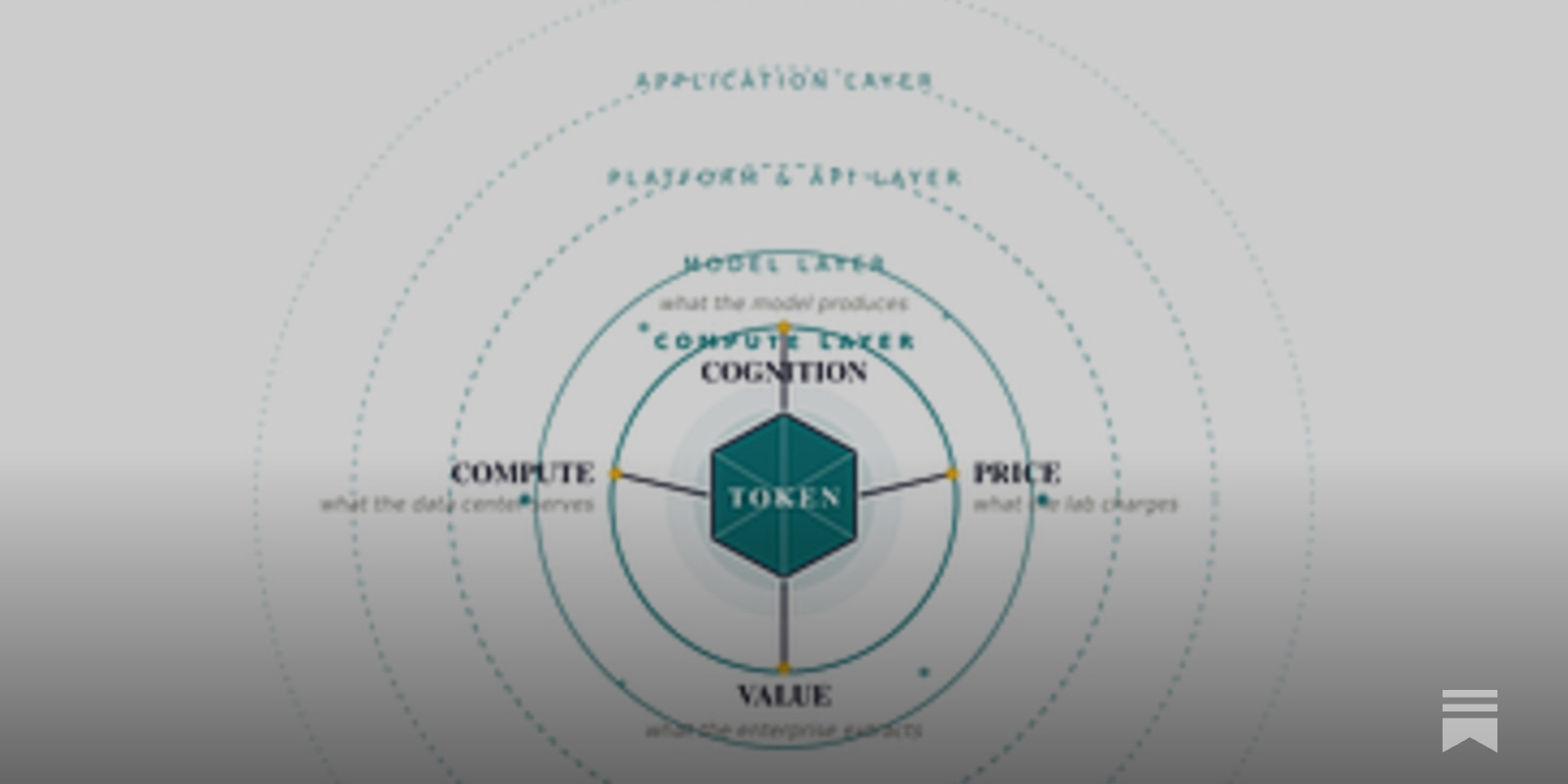
Microsoft's Business Model Just Changed — Here's What Google Fears

Source: The Business Engineer

The Google Search Threat

Microsoft’s strategy directly challenges Google’s core business model by embedding AI capabilities where knowledge workers spend 8+ hours daily. Rather than searching Google for information, users increasingly rely on AI assistants within Word, Excel, and Teams.

Google generated $162.5 billion from search advertising in 2023, but Microsoft’s integration threatens this revenue stream. When AI answers appear directly in productivity applications, users bypass traditional web searches that generate advertising revenue for Alphabet.

According to analysis by The Business Engineer, token-based pricing creates stronger customer lock-in than traditional SaaS subscriptions. Organizations that invest heavily in AI tokens become dependent on Microsoft’s ecosystem, making switching costs prohibitively expensive.

Competitive Response Emerging

Amazon Web Services is developing similar token systems for its Bedrock AI platform, while Google Cloud introduced vertex AI tokens priced at $0.0025 per 1,000 characters processed. However, Microsoft maintains a crucial advantage through its dominant productivity software installed on 1.4 billion devices worldwide.

The token model also enables dynamic pricing based on computational complexity. Simple tasks like email summarization consume fewer tokens than complex financial modeling, allowing Microsoft to capture more value from high-compute customers.

Enterprise customers report 23% higher AI adoption rates when using token-based systems compared to flat-fee alternatives, suggesting Microsoft’s approach aligns better with actual usage patterns.

Revenue Model Revolution

Traditional software licensing generated predictable monthly recurring revenue but limited Microsoft’s upside when customers increased usage. Token systems create variable revenue streams that scale with customer success and AI adoption.

Microsoft’s Azure OpenAI services already operate on token-based pricing, generating an estimated $3.2 billion annually. Expanding this model to Office 365’s 400 million users could multiply revenue per customer by 3-5x within three years.

The strategic implications extend beyond pricing. Token scarcity creates artificial constraints that encourage customers to optimize AI usage, potentially reducing Microsoft’s computational costs while maintaining revenue growth.

As enterprises increasingly view AI as essential infrastructure rather than optional software, will Google’s advertising-supported model survive against Microsoft’s pay-per-computation approach that directly monetizes productivity gains?