


The Grand Designs star answers questions on creating an accessible home, finding reliable tradespeople and renovating a ‘tacky’ 70s kitchen
Emilia Hitching Reviews Writer, Home and Garden
Emilia is a reviews writer for Recommended, specialising in home, garden and sleep product reviews, buying guides and deals advice. Previously, Emilia was sleep and wellness editor at Homes & Gardens where she worked with testers to find the best sleep products, from mattresses to sunrise alarm clocks.
See more
Published
As the presenter of Grand Designs, Channel 4’s long-running show about ostensibly sensible people driving themselves mad in pursuit of a “unique” home, Kevin McCloud is an authority on home design. But he never qualified as an architect.
Instead, McCloud started his career as a theatre designer, manipulating spotlights to breathe life into sets. Growing to understand how light changes a space, he established a lighting design practice. While working with clients including Ely Cathedral and the Savoy Hotel, he also moonlighted as a guest presenter on an interior design makeover show, before launching Grand Designs in 1999.
As part of our Readers Ask series, McCloud responds to questions from the Telegraph Recommended community. From his honest opinions on design trends and heat pumps to behind-the-scenes revelations about the programme, here are his answers.
Paul, West Midlands
I would recommend a heat pump, especially for a new build, because they only come into their own when they’re heating a well-insulated building.
Having said that, I have used a heat pump in an old building by re-insulating it and resizing the radiators. The other thing to say about heat pumps is that it makes a huge difference tying them up to an intelligent, AI-operated supply of electricity. Thanks to smart meters, certain companies can now monitor when the heat pump is using your electricity and sell it to you at a cheaper rate.
At one point, I was paying as little as 13p a unit for the heat pump. That’s when it makes real sense, when you tie up your energy supplier on a green tariff as well.
Boris, North West
The Chinese have a saying: when is the best time to plant a tree? And the answer is 20 years ago, but the second best time is now. In this case, the answer is now.
But in a way that isn’t the question to ask. The question is: to what extent should I future-proof my home? The answer there is as much as possible, forever.
If you build in your 30s or 40s and you’re still living there in your 80s, you’ll want somewhere with fewer thresholds, steps and stairs, if any. And if you love the place and want to stay there, then why wouldn’t you future-proof it so that it’s suitable for you in your older years?
The rule here is about trying to simplify things and building as much accessibility in as possible, not thinking that you can retro-fit your existing home with lots of plastic grab handles when you’re much older.
What’s fascinating is that great design for accessibility is just great design. Whether you’re three, 30 or 90, having fewer thresholds in the building is a really good idea. Having a single flat level throughout the building that extends out to a single deck so you can’t trip over the threshold: that’s just good design.
Having great amounts of light, having the building work for you in a way that allows you to move freely through it with wide doors, for example: that’s good design.
Beatrice, London
I really wish they’d use architects more, because the architect asks the questions that the rest of us forget. They take your idea and bake it perfectly in their amazing mind into this beautiful, fully-wrought, fantastically delicious idea.

Wendy, North West
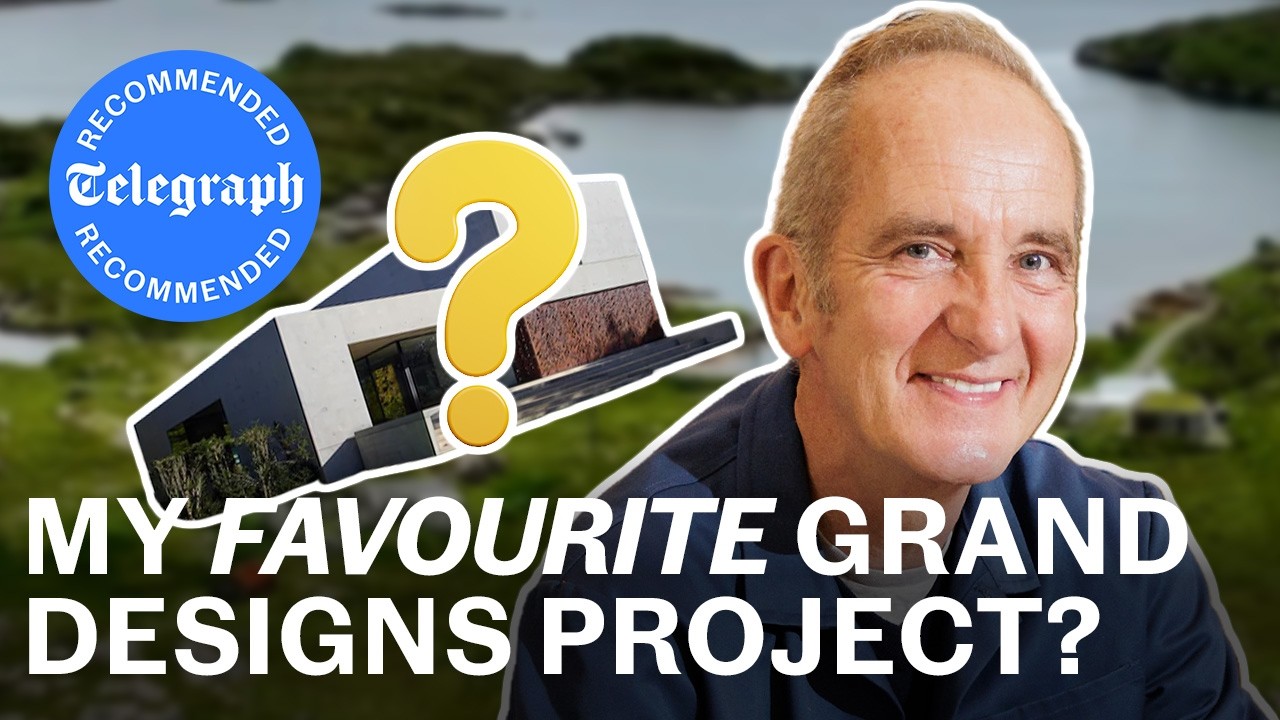
My favourite involves a really good pub, a fantastic family, some of whom you don’t see on the television, who we got to know over the course of three years, and a director and a team who I work with in Northern Ireland who are among my favourites. That’s Rob Gill, who directs Gone Fishing, and a bunch of other people.
For me, it’s so much more than a television programme. It’s people, place, story, pub, beer – everything combined. And it’s Patrick Bradley’s house in Northern Ireland.
Kate, South West
You would think that we just turn up somewhere, which we do, of course, but a long time before the cameras roll.
We do a lot of filming, a lot of research. We look at all the designs, then all the design and access statements, then planning applications for the project. We might even interview the builder. We want to know that the money and finances are all in place before we start.
Filming is expensive, so we want a high success rate of completion. I’m not interested in projects which fail or don’t finish or go so badly wrong. They may make for great dramatic moments in the story, but goodness me, I think building is dramatic enough anyway.
Colin, South East
I think the shortest episode we ever filmed was about nine to 10 months, and that was a prefabricated off-site project. The longest, I think, is Ed building his great big lighthouse down on the coast of North Devon. I think we were there for 12 years.
Deborah, East of England
Our failure rate on projects is quite low because we do all this due diligence before we start. Having said that, since Covid and since Brexit, so 2016 onwards, projects are taking longer to finish. But they tend not to collapse towards the end because people just put projects on hold, find some more finance, work it through, and make some compromises.
I’m afraid that’s the nature of the supply chain for construction now.

Helen, South West
They say, don’t they, that if you want to make God laugh, show him your plans. If somebody said to me ‘I’ve just finished a project and it was absolutely bob on, came in on budget, on time, and the design is exactly as I imagined it’, I would not believe them. It’s that simple. Not least because often when you build stuff, you redesign it and it’s better than what you planned.
Of course, there are plans or ideas that are just schemes. They are slightly fuzzy and soft-edged and they’re always a bit wonky and maybe unresolved in areas. But come on, live a bit! Push at the boundaries and go on the adventure, is what I say.
Konstantinos, London
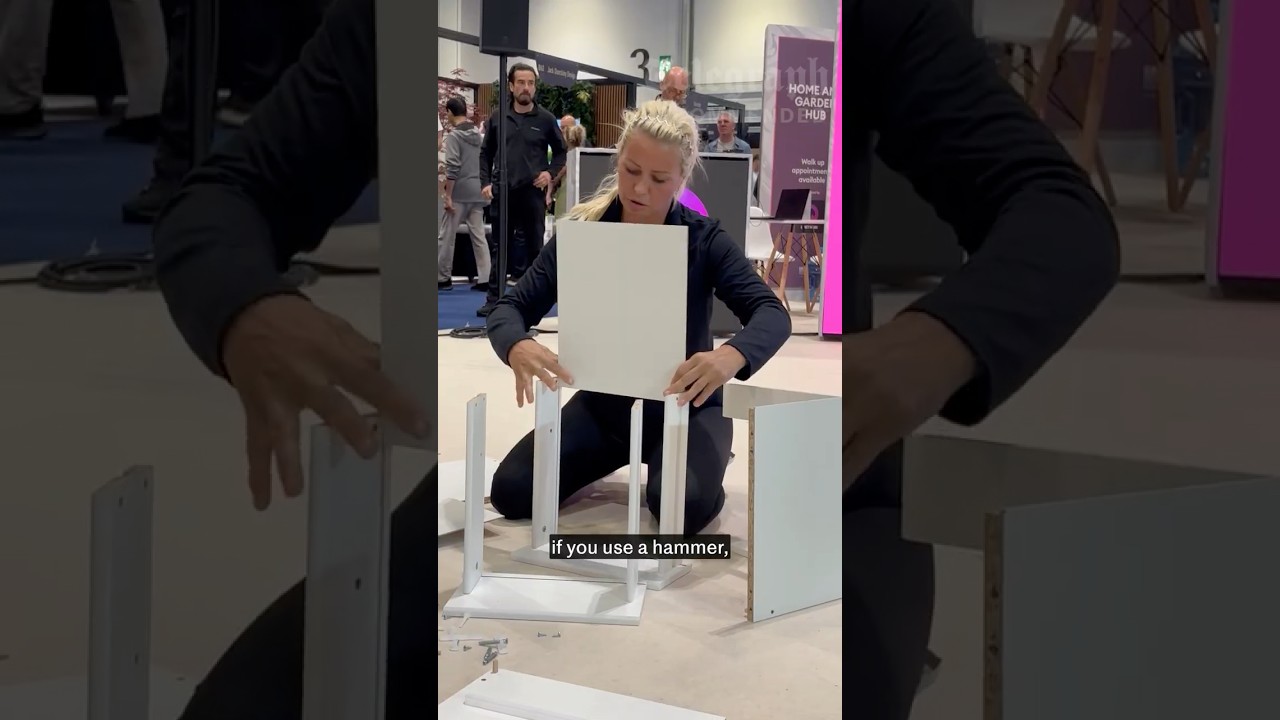
I wish I had some advice about how to find reliable tradespeople and builders. Of course, you can send out tenders and you can get bids in and all that. But actually, the only way to find good people is to ask your friends and the people you like. When you see a project, knock on somebody’s door if it looks really good, ask: ‘Who built this for you and how busy are they?” And the answer is they’ll be free in four years’ time.
And this is the issue. We don’t have enough really good people. I’m very aware that with Grand Designs, we show amazingly skilled people, amazing craftspeople, great trades, giving their all to something really good, something way above what the market might offer as an average home.
And so these people are rare. There might be one or two small companies in each county. Perhaps you’re not going to be able to find them that easily. You could come to Grand Designs Live and you can, of course, see architecture. You can find designers, you can find mortgage experts, you can find trades, you can find all kinds of skill sets there, as well as the heat pumps and all the tech and all the sofas you want.
And that’s a start, but it’s hard and you’ve got to be prepared to do the groundwork and do your research to find good people.
Helen, North West
Insulation. It doesn’t matter what the insulation is. You can put it in the most disgusting petrochemical insulation ever invented but it will probably pay for itself within ten days.
Mary-Grace, East of England
The first house I lived in was a two-up, two-down, so we couldn’t do much with it and we didn’t have any money. So I remember it had an Artex ceiling in the kitchen, which was foul. And so rather than try and rip it off, the builder said it was easy to batten over it and stick another ceiling underneath it. To this day, it probably still has two ceilings.
Then we put trendy cork tiling down, and I tiled over the kitchen worktop with some ceramic tiles. It was more of a rehash and resurfacing of the building. All the old stuff was still underneath, including that really tacky 70s kitchen.
Mark, London
I’d really like to see modernism come back. Brutalism, is an evolution of that same idea. I’m all for a bit of rigour and architecture and design that reflects the time we’re in.
Am I interested in seeing new fourteenth-century plague pit architecture and design? No. Not really. Do I want to see the eighteenth-century – a century of cholera and bad dentistry – in my interiors? No. I want to feel that I’m living in the modern age. I want to feel that I’m living in a sustainable 21st-century world.
Peter, London
Architecture is so slow that by the time you’ve been through planning and got the thing built, whatever you thought might have been fashionable then is now not. So forget it.
What I’ve noticed over the past 25 years, as we came into this century, is a change from a point where we were almost trying to reproduce and regurgitate the twentieth century, in the early years, trying to figure out what this new language would be in building and design.
What has happened is that we’ve started revisiting the buildings of the 1970s. I see that emerging more and more with soft forms, curves and arches and use of softer materials. We’re seeing more organic forms with sustainability, with highly insulated buildings, a huge amount of timber, a huge amount of engineered timber, glulam beams, Parallam beams, all kinds of structural timber that’s replacing steel and concrete, as well as straightforward walls.
And I think that’s devoutly to be wished. It feels to me as though our language for this century is going to be a far more sensitive one, a far less material-intensive one, one that is more sustainable and more gentle and a little bit more rounded.
Norman, Wales
Modern houses are really low quality in the UK because we have a delivery system based on the principle of delivering very large profits to shareholders. It’s almost the only country in Europe where volume housing places profits above quality.
It stems from ideas grown in the 1980s in politics about ownership and treating our homes as assets, as investments for shareholders and as well as for homeowners, as opposed to treating housing as a social good, a foundation of civilisation.
The UN describes housing as a basic human right, not a commodity. So I think the problem in the UK is treating our housing essentially as commoditised objects, which we buy and sell and make money on and therefore build as cheaply as possible.
It’s a complicated landscape and it’s not easy to fix at all. But if you look at other European models, they’re far more diverse. There’s much more choice of tenure, of typology, of mixing the social and the private, of model and architectural style, of greater choice of builder. You can, if you’re living in Austria, choose probably from three important, good local builders in the town where you live, and you’ll be building a house probably made out of the forest that’s over there on the mountain.
Sheila, South East
There have been so many kind and helpful people. None of us get through life by ourselves. None of us get through life by rushing or hurrying or trying to be too independent. I think actually relying on great people and taking advice and support from them is one thing I’ve learned reluctantly over my life.
I say reluctantly because when I was much younger, I was independent and determined. I thought I could do everything. I soon realised you just don’t and can’t.

Ella, North East
I’m not in favour of bling. I’ve been saying this for about eight years now, and I realised the other day that it actually has disappeared. So I’m pleased about that.
But as I say, I’m not a trend spotter. You could slap me in the face with a trend and I wouldn’t know what it was.
Deborah, East of England
I don’t care, because I’m not interested in financial returns. That’s not how I measure value. I measure value because when people build their homes, they’re creating environments. And the best value you’re going to get is always in terms of how it makes you feel, how it excites you, whether it delivers everything in your brief, and whether you feel it delivers more than was in your brief. That’s great value.
This is what architecture does for little extra investment or sometimes, in the end, no extra investment. All this, all these extra ideas, better storage, better connection to light, to landscape; it can deliver a home which is flexible and adaptable for you and your family, for the rest of your lives, and where you’ll want to live for the rest of your lives.
Therefore, the value of a place in the end has nothing to do with money.
Victoria, North West
If I weren’t doing this job, I might have been a teacher only because I can’t imagine I’d be good at anything other than talking. I did think I was going to be a designer. I did think I was going to be an architect.
I think I would have been happy being a farmer. And in the end, I’ve become a bit of a part-time farmer because my work’s allowed me to take the time to do that as I’ve got older.
John, Yorkshire
I’m not going to tell you my idea because I’m trying to pitch it as a television programme, but I think we need to somehow reskill. And we need those people in our world who can do things to show us.
There are carpenters and makers and people with forged metalworkers, clock repairers in your high street. All these skill sets will be there in your local community.
I just love the idea of being able to connect people with these skill sets and being able to hand them down, because the thing about craft is that when it’s not handed down and people don’t learn it, it dies. It’s not in a book. You can sort of show it in a 20-second clip on YouTube, but really the only way to learn how to become a proper joiner is to be an apprentice for three years.
此内容由惯性聚合(RSS阅读器)自动聚合整理,仅供阅读参考。 原文来自 — 版权归原作者所有。