









The four-time Olympic and six-time world champion takes reader questions on carbon-plated shoes, training regimes and Strictly Come Dancing
Rebecca Astill Commissioning Editor
Rebecca is a commissioning editor for The Telegraph's Recommended channel, specialising in health, travel, beauty and parenting product reviews, buying guides and deals advice. Before, Rebecca was reviews and affiliates writer at Reach Plc, where she tested new products and recommended the best value buys. Rebecca’s guide on the best dating sites and apps won Best Evergreen Article at the 2025 Commerce Awards for Publishers.
Follow Rebecca on Instagram @rebecca.j.astill
See more
Published
Sir Mo Farah became the first British man to win Olympic 10,000m gold at the London 2012 Games, before becoming double Olympic champion a week later with success in the 5,000m. He then successfully defended both titles four years later in Rio.
It was only in 2022 that he revealed he was born with the name Hussein Abdi Kahin, and was trafficked to the UK age nine, having been told he was joining relatives. Instead, he was forced into domestic servitude for a family of strangers – until he confided in his PE teacher, Alan Watkinson.
Along with informing social services, who organised for Farah to be placed with another family, and applying for his British citizenship, Watkinson was instrumental in helping Farah pursue his talent for running. Following an incredible career, Farah retired from competitive running in September 2023. Much of Farah’s time now is spent with his family, getting children into sport or working with charities, including Mind and Save the Children UK.
I caught up with him for our Readers Ask series, where industry specialists answer questions from our Telegraph Recommended Reader Panel.
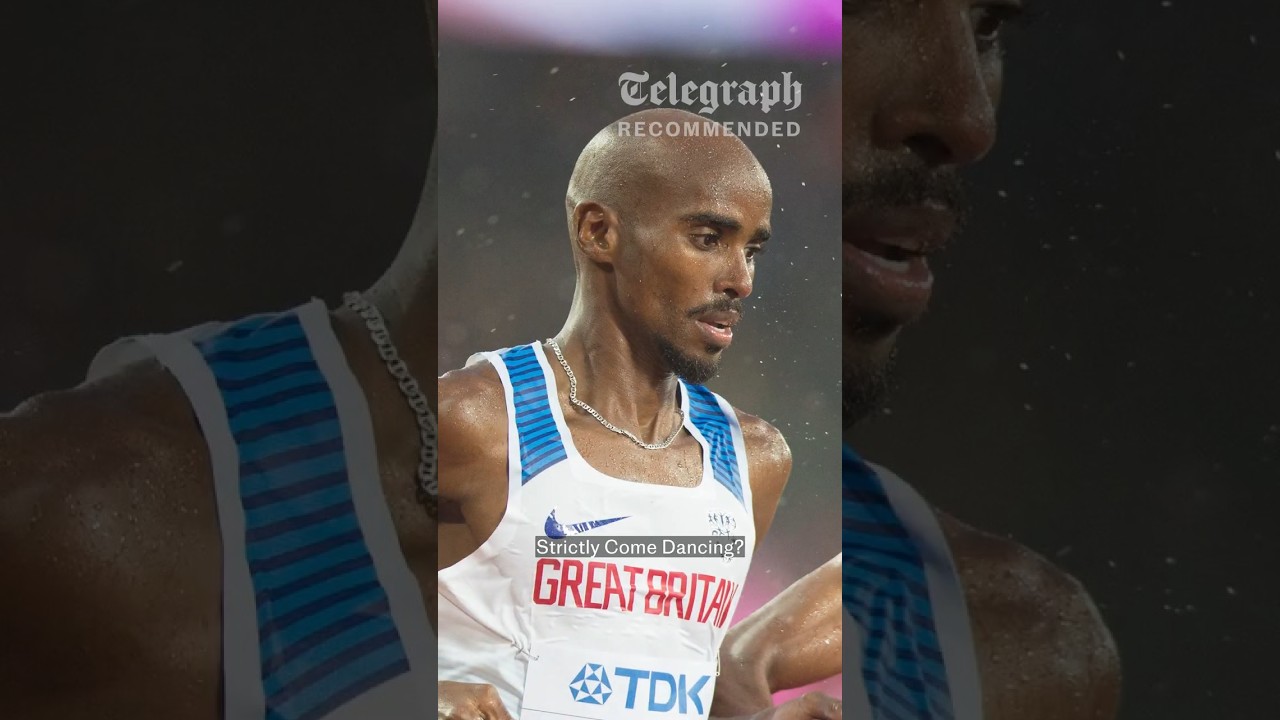
Justin, North West
I was probably age 12 when I got into running, and it was through my PE teacher who discovered me, pointed me to the local running track and said that I should join the local running club. From there, I’ve never looked back.
Liam, London
It has to be London 2012. To become Olympic champion, on Super Saturday, in front of your home crowd where you grew up – that was amazing.

David, Yorkshire
I get enjoyment from racing. That’s the thing that keeps me going and makes sure I’m preparing in training. Obviously the race part is small, but the training is the hardest thing and often the confidence, and the belief, comes from the training that you do.
Mark, London
I changed my training program to each event that I was doing. So for example, if I was doing 5,000m, I would train for the 5,000m distance, and then if I was training for 10,000m, I’ll train for the longer distance.
It’s all about the intervals you do, the training that you do, the runs and volume – I would probably say I had more volume for the marathon training because it’s 42km.
Emily, South West
A lot of stuff goes through your mind to pass the time. When I’m doing the easy training, then I’m thinking about my kids, what I’m preparing for dinner.
But when you’re getting ready for the race, then your head goes: How are you going to deal with the race? What is your position doing? What do you need to do tactically? What do you then need to beat everybody?

Mave, South East
There are many ways that you can increase running stamina. The one thing that I know is in terms of training, which means more mileage, more distance. So for example, if you want to have more endurance, then you have to do more intervals, like 800m and then increase your mileage weekly.
Simon, London
Yes, they will benefit because it means you’re saving your feet [with the carbon-fibre shoes]. It means that you can do more runs. You can do more, faster runs. And you’re not beating up [your feet] as much.
Eleni, London
I’ve heard amazing stories where people in midlife pick up running and suddenly they’re enjoying it. But one thing I’ve always said is to have a goal, whatever that goal is.
If you want to compete at 5k, do that. If you want to compete [at] 10k, aim for that. If you want to run a personal best, you always have to have a goal. If you don’t have a goal, it’s hard to motivate yourself.
Brandon, London
For me, it is just going to the gym. I’ve always gone to the gym and done lifting, as well as core and stuff. And that keeps my body in good nick.
Zoe, London
The best piece of advice I got given is to join the running club.

Thomas, North East
Yes, I do encourage my kids to be active. And for me as a parent, I will always support my kids, whatever they go on and do. But I would love them to do sports because it teaches you to be resilient; it teaches you things that you can’t learn in the office. All the stuff I’ve learnt, it’s through sports.
Kenneth, East of England
I honestly think the government needs to do more. It’s really important for us to have more children be active, have more physical education in school and have more kids moving around. We’re not necessarily looking for an Olympic or world champion, but we need to get more kids active.
Victoria, North West
I use everything, man. L’Oreal. Just saying. On my bald head.
Siri, London
Would I ever do Strictly Come Dancing? You know me, people. I’ve got two left feet. Would you see me? I know you love to see me, but I ain’t saying anything.
Sir Mo Farah spoke to us as part of his partnership with Buxton Water and mental health charity Mind on their recent Sweat and Tears campaign
此内容由惯性聚合(RSS阅读器)自动聚合整理,仅供阅读参考。 原文来自 — 版权归原作者所有。