










Since the 2021 Assembly election in Tamil Nadu, the Bharatiya Janata Party has launched a perception battle against the State and its ideological exclusivity on two fronts–virtual and physical. The main element of this strategy is its tirade against the ruling Dravida Munnetra Kazhagam and its Dravidian ideology in the attempt to present both as antithetical to Hinduism. But these carefully constructed narratives, which DMK president M.K. Stalin termed a “psychological onslaught and hate campaign”, came to naught on June 4 with the Lok Sabha election results giving the Secular Progressive Alliance that the DMK leads all 39 seats in the State and one in neighbouring Puducherry.
This is the third time, after 1996 and 2004, that the DMK-led alliance has made a clean sweep of Lok Sabha elections. The AIADMK-Congress coalition won all the seats in 1991. That the DMK alliance would win big this time was not in doubt, but the sweep was indeed a surprise. The DMK won 21 seats, the Congress 9, the CPI and the CPI (M) 2 each, the Viduthalai Chiruthaigal Katchi 2, the Marumalarchi Dravida Munntera Kazhakam, the Kongu Nadu Makkal Desiya Katchi (on the DMK symbol) and the Indian Union Muslim League 1 each. The Congress won the lone seat in Puducherry. The DMK fielded known faces in majority of the constituencies, while the All India Anna Dravida Munnetra Kazhagam (AIADMK) preferred new ones.
The DMK coalition, which countered the BJP’s strident nationalism with its social justice plank anchored in secularism, ensured a seamless understanding and coherent work culture among its cadres and functionaries. The same alliance, which won 38 seats in its last outing, also fought the local body elections in 2022 without encountering any serious friction or fractures.
The ruling alliance was well ahead in the run-up to the 2024 election, completing seat-sharing formalities smoothly, even as the AIADMK and the BJP waited until the last minute for other parties to join them. When the Election Commission announced that the election in Tamil Nadu and Puducherry would be on April 19, giving the parties less than a month to campaign, the DMK-led alliance was already battle-ready.
The alliance owes its victory in large measure to Chief Minister Stalin. His election speeches had been curated with strategic acumen to hit adversaries where it hurts most, and their key elements were “betrayal of Tamils” and the binary of “us versus them”. His speech was split into halves–the first was a scathing attack on Prime Minister Narendra Modi and the Central government for disowning Tamil Nadu, followed by an attack on the AIADMK leader Edappadi K. Palaniswami for maintaining a “clandestine relationship” with the BJP despite severing all ties with it.
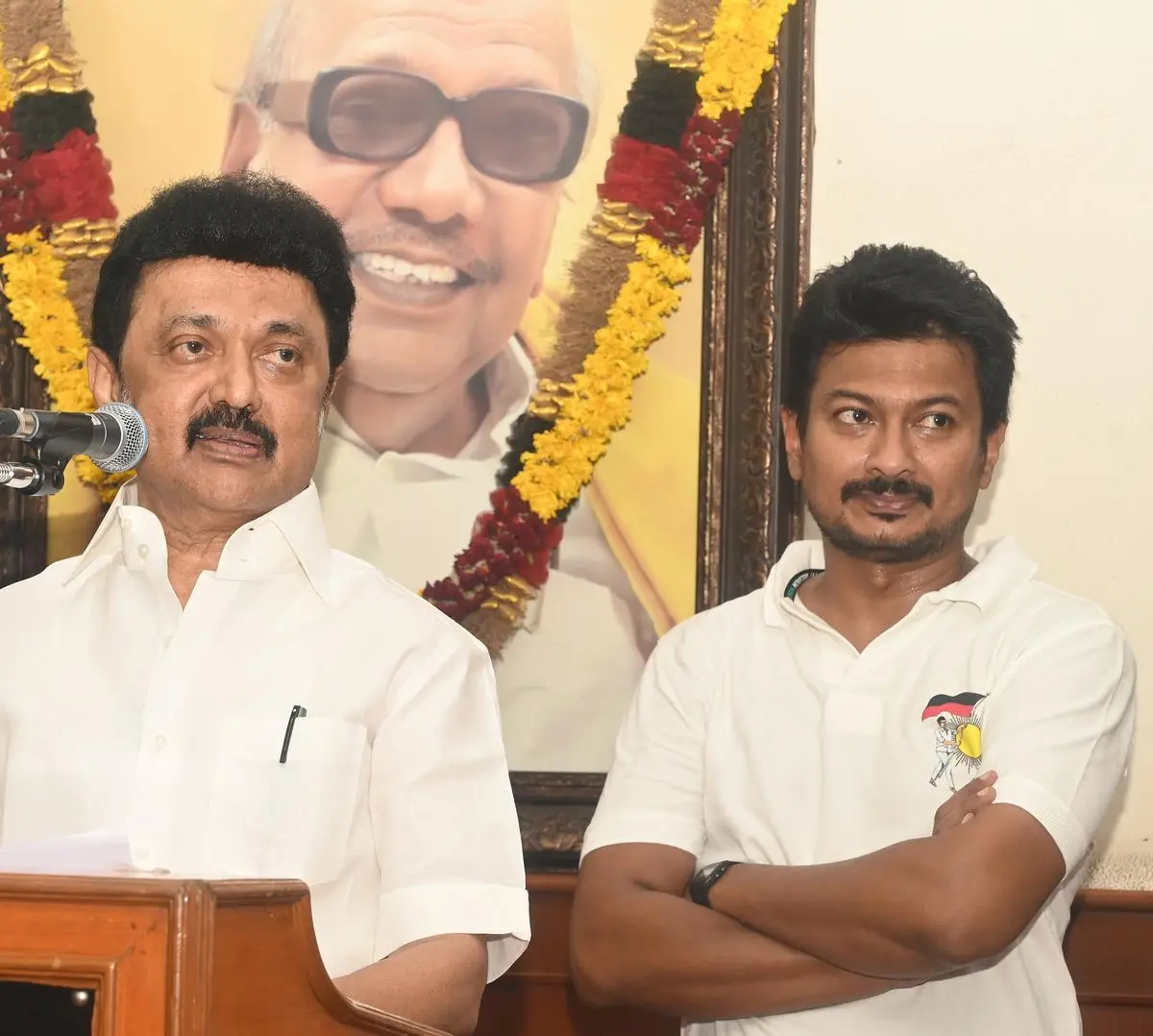
DMK President M.K. Stalin with son and party youth wing Secretary Udhayanidhi Stalin addressing the media after INDIA swept the Lok Sabha election in Tamil Nadu, in Chennai on Tuesday ( June 4, 2024) | Photo Credit: BIJOY GHOSH
Palaniswami’s silence on the accusation spoiled what little chance his party had at the hustings. Besides, his party fielded the most number of new faces, which did not go down well with the electorate. All are agreed that this was one of the worst electoral performances of the AIADMK in the five decades of its existence.
Also Read | Will BJP’s dogged efforts to enter Tamil Nadu and Kerala yield any results?
The DMK lost no time in exposing the “apartheid” mentality of the BJP government at the Centre against Tamil Nadu even in times of natural disasters. “Not a rupee was sanctioned despite their promises,” said Stalin, reacting to the non-receipt of disaster mitigation funds for Chennai city, which went under water following Cyclone Michaung , and for the southern most districts that were badly ravaged by rain last year.
The State, Stalin and his ministerial colleagues claimed, was denied its rightful share of GST collections. The Centre was seen to be choking the State’s social welfare programmes and developmental activities for political reasons. One of Stalin’s ministerial colleagues even said the Centre was waging an “invisible economic aggression” against the State to stymie its economy and development. On several occasions,the Chief Minister accused the BJP of abusing its constitutional powers through Governor R.N. Ravi “to disturb the system with the intention of creating administrative chaos in Tamil Nadu”.
Besides, many conflicting voices emerging from various BJP units across the country on their social media handles against the Tamil language, Tamils, and Tamil Nadu further aggravated the anxiety and alienation of the people. In fact, nowhere had the issue of betrayal been felt more acutely than in Tamil Nadu. The insinuations, such as those against the alleged manhandling of Bihari migrant workers in Tamil Nadu, which almost created a riotous situation in both Tamil Nadu and Bihar, and the “disturbing silence” of its Tamil Nadu unit, left a collective feeling of uneasiness and distrust against the BJP in the State.
The DMK made use of this bitterness to its advantage and made that its war cry against Modi and his government. The government also showed its reluctance to connect with the BJP and Modi despite his ostentatious demonstration of love for the Tamil language, culture and literature, and Saint Thiruvalluvar. “Modi’s broadsides against the DMK on drugs, dynasty, and corruption failed to make an impact in the face of the betrayal tag Stalin adopted against them,” said a senior DMK functionary. This also helped the DMK consolidate the anti-Hindutva forces and minorities behind its alliance.
In this battle of ideologies, Modi knew that he would have to invalidate the DMK’s accusations and propaganda to politically deactivate the party he recognised as an existential threat to the BJP in Tamil Nadu. The DMK has stubbornly resisted the BJP’s cherished mantra of “one nation, one language, one culture”, politically and ideologically.
But neither Modi’s repeated visits nor his roadshows in Chennai and Coimbatore could match the DMK’s campaign. But his interventions did lend visibility to the party in Tamil Nadu. The BJP, for the first time, registered a modest 11.24 per cent vote share from the 23 seats it contested against the 3.66 per cent it had from five seats in 2019. The vote share spike could possibly be sourced to urban centres such as Chennai and Coimbatore and a few tier-2 towns.
But the BJP’s claim that it has cut into the vote bases of the AIADMK and the DMK does not seem to have any basis. The AIADMK contested 33 seats and got 20.46 per cent as against 19.39 per cent from 20 seats in 2019. The DMK contested 21 seats and garnered a vote share of 26.93 per cent as against 33.52 per cent from 24 seats in 2019.
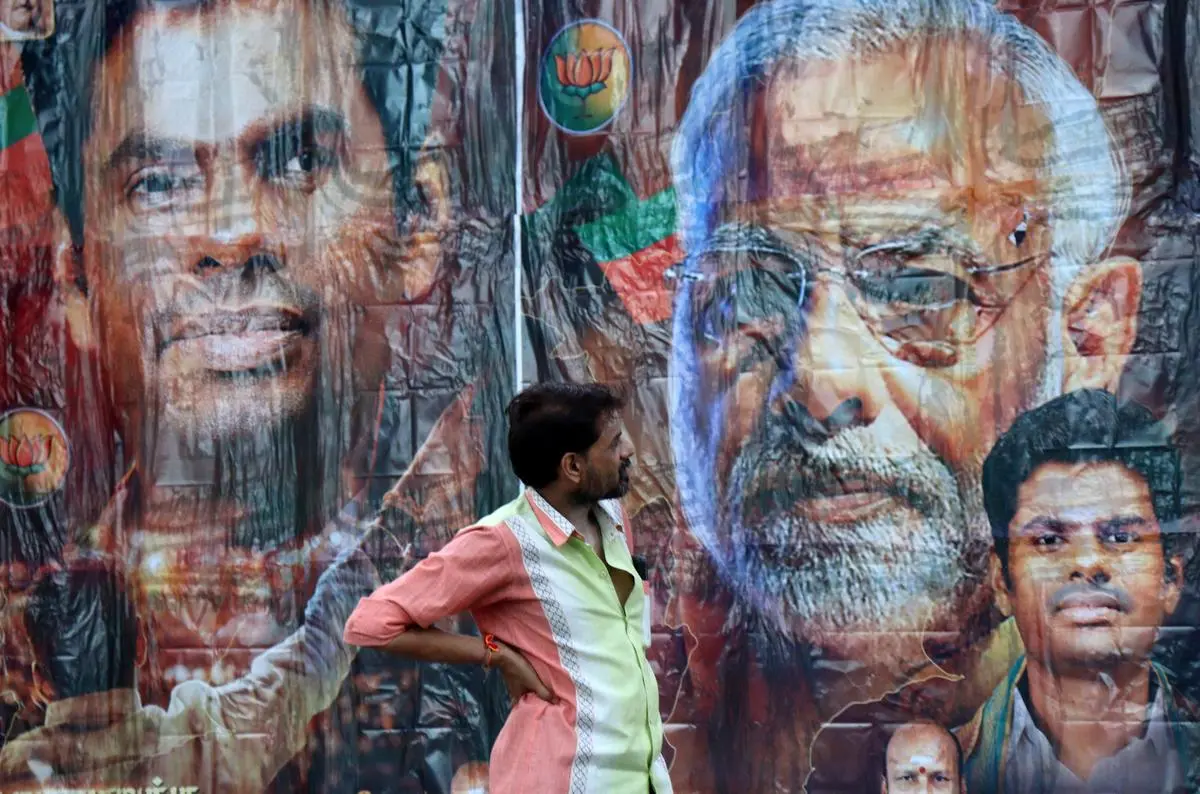
A man stands in front of a poster featuring India's Prime Minister Narendra Modi and Bharatiya Janata Party (BJP) election candidate K. Annamalai, outside its party office in Chennai, India, June 4, 2024. REUTERS/Riya Mariyam R | Photo Credit: STRINGER
The BJP’s small accomplishment in terms of vote share despite all the buzz it created in the media, is perhaps in direct contrast to what the Naam Thamizhar Katchi (NTK) has achieved in this election. The small but belligerent Tamil regional outfit of filmmaker-turned-politician Seeman, which as a matter of principle contests alone, achieved a vote share of 8.15 per cent as against 3.89 per cent it got in 2019. It breached the one-lakh vote mark in a few seats and came third in multiple constituencies that in effect cut into the votes of the AIADMK and the BJP.
The BJP’s bland performance in Tamil Nadu is not Modi’s fault, and is more the result of the approach of its Tamil Nadu unit’s war room sundries.They failed to see through the DMK’s deceptively constructed narrative around the word “betrayal” in their haste to promote the politics of hate and gossip, and engrossed as they were in putting a brassy shine on the plans of its State president K. Annamalai. Had they promoted “Brand Modi” more aggressively and astutely, the result could have been different. The party’s social media activism obviously did not translate into victories nor did it give what they wished—a 25 per cent vote share.
The reason for the AIADMK’s rout lies in its defective strategy. It failed on two counts. First, it could not formalise a credible alliance against the DMK. Second, it squandered the initiative it gained from distancing itself from the BJP. It was unusual for the party, which had a 25 per cent core vote share even when it lost, to wait for an estranged partner, such as the Pattali Makkal Katchi (PMK), to return. The AIADMK contesting alone in 2014 swept the election, demolishing the popular perception that alliance arithmetic alone works in Tamil Nadu’s electoral battles. It won 37 seats with a 44.29 per cent vote share. But Jayalalithaa led the party then..
The long wait for the PMK dented the AIADMK’s image and exposed the vulnerability of its leadership. The PMK became part of the AIADMK alliance, along with the BJP, in 2019. Had these parties remained partners the outcome could have been different; AIADMK cadres believe that the PMK’s presence would have boosted their chances in the northern districts.
The reasons for the PMK leaving the AIADMK alliance were the careless manner in which it passed the Government Order on 10.5 per cent internal reservation for Vanniyars and the non-transfer of AIADMK votes to the PMK. They were far from convincing. The party contested 10 seats and lost all, including Soumiya Anbumani, wife of Anbumani Ramadoss, in Dharmapuri. She lost to A.Mani, of the DMK by 21,300 votes. The PMK lost the battle even before the bugle was sounded.
The PMK has a state-wide average vote share of 3.66 per cent, but in the 12 Vanniyar-dominated constituencies in the northern districts, it is around 30 per cent. This has made PMK a much preferred and the most pampered outfit in any alliance. Ironically, it has less or nil presence in the south, west, and central zones, reducing its political status to a sort of “zonal party”. “We won even before the first ballot was cast,” said a candidate from the DMK alliance on the PMK’s decision to go with the BJP.
Today, the AIADMK is an apology of its glorious past. The BJP weakened it by luring rebel leaders like O. Panneerselvam and T.T.V. Dinakaran, both nursing wounds that Palaniswami inflicted on them during the leadership fight. The BJP asked them to contest from Ramanathapuram and Theni respectively, where the AIADMK fielded its official candidates. Annamalai told the media that the AIADMK would not be there after the election.

Naam Tamilar Katchi chief Seeman. | Photo Credit: VEDHAN M/THE HINDU
But the DMK, according to party insiders, seems to be secretly endorsing the wish. “The DMK is not against the AIADMK, but against Palaniswami,” said a former AIADMK Minister who preferred anonymity. He did not wish to elaborate. Political observers point out that whatever be the reason, it would be an elegy on the Dravidian politics that has dominated the State for almost six decades now. “We hope the DMK will not resort to such self-destructive politics,” said a political observer. Ironically, leaders of the two Dravidian parties were on the same page on one point–ignoring Annamalai as a non-entity.
Notwithstanding Annamalai’s much flaunted “En Mann, En Makkal” (My Soil, My People) padayatra before the election and the clamour it created, the high command realised that the party was struggling to find space in the minefield that is Dravidian politics. Hence, to gain electoral visibility it sourced a few familiar faces, though not popular ones, from within the party line-up and its allies. The strategy paid off to some extent.
Tamilisai Soundararajan, Telangana Governor and former Tamil Nadu party president, was made the candidate in South Chennai. Similarly, it sent Union Minister of State L. Murugan to the Nilgiris to contest against the DMK heavyweight A. Raja. The old war horse Pon. Radhakrishnan was retained in his home turf Kanyakumari.
Not satisfied, it drew out its Assembly floor leader Nainar Nagenthiran and fielded him in Tirunelveli, where the Maravars, the backward caste to which he belongs, are dominant. Actor Radhika Sarathkumar was fielded in Virudhunagar. Besides, it also fielded industrialist A.C. Shanmugam, the controversial Dalit leader John Pandian, a backward caste outfit leader Devenathan Yadav, the AIADMK rebel leader O. Panneerselvam, and the Amma Makkal Munnetra Kazhagam leader T.T.V. Dhinakaran.
But the most surprising among the nominees was Annamalai. Prior to his visit to Delhi with his “wish list” the State party president told the media that he was not interested in contesting. It was also speculated that he would be contesting the 2026 Assembly election to lead the BJP against the DMK. But the party high command asked him to contest from Coimbatore despite his “strong reluctance”. “The president went to Delhi with a list without his name but returned with one that had his name,” said a party functionary.
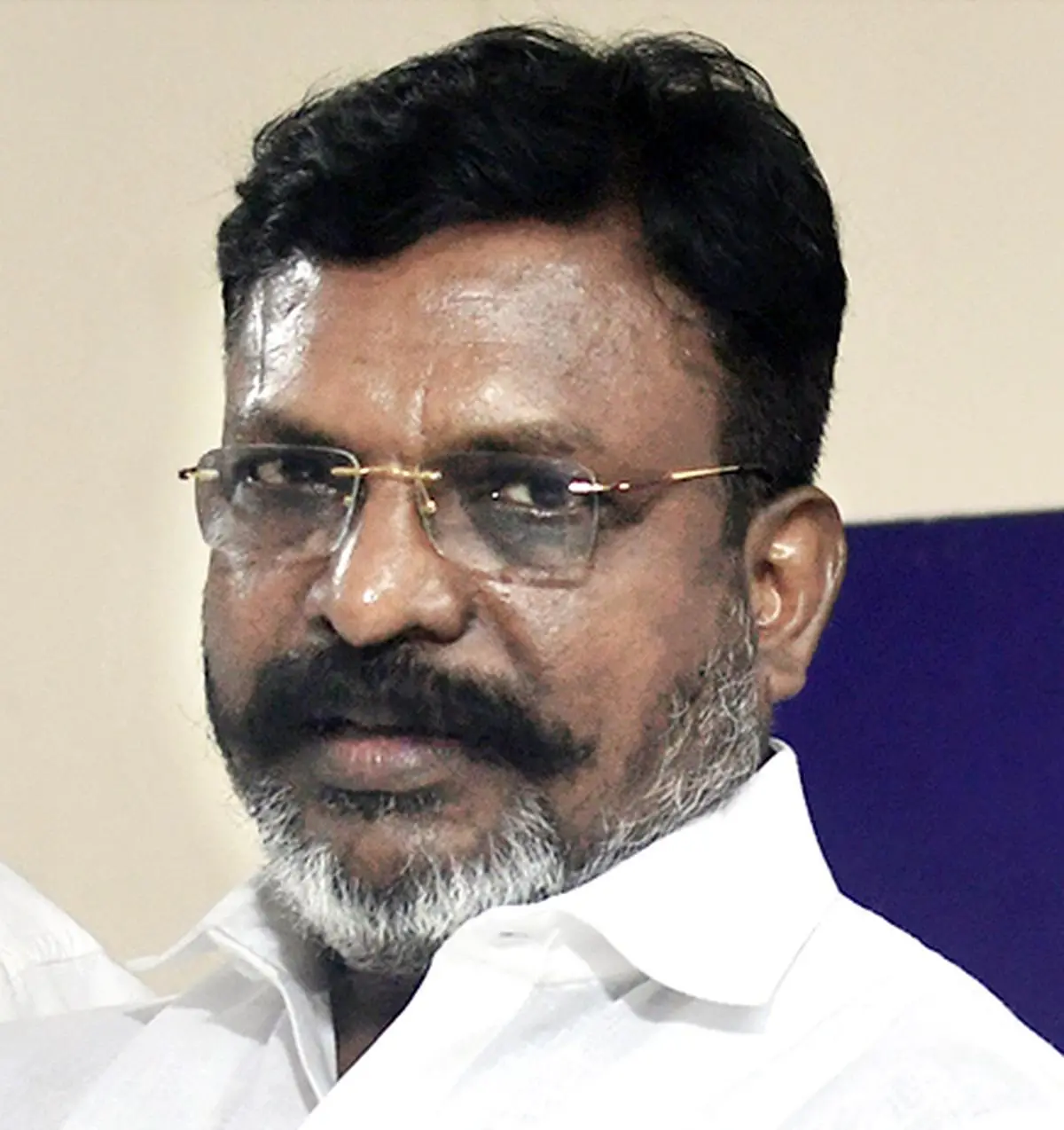
VCK Leader Thol.Thirumavalavan at a press meet in Chennai. | Photo Credit: SRINATH M/THE HINDU
Annamalai finished behind P. Ganapathy Rajkumar of the DMK who won by 1,18,068 votes.
For the first time, the BJP, dismissed as “political untouchables” for its religious majoritarianism in a State where Tamil nationalism clothed in Dravidian ideology is strong, could earn a modicum of respectability, with a double digit vote share, without the support of the major Dravidian parties. The party had recorded wins in 1998 (three seats) and 1999 (four seats) in alliance with the AIADMK and the DMK. In 2014, Pon. Radhakrishnan won from Kanyakumari. In 2009, it polled a dismal 4.61 per cent.
Also Read | PMK’s alliance with the BJP in Tamil Nadu defies logic
The BJP failed to win Coimbatore despite its polarisation politics. Coimbatore witnessed a significant growth of the BJP since 1998 when serial bomb blasts killed 58 people. C.P. Radhakrishnan won there twice in 1998 and 1999. The Left won seven times, and the Congress five times. The AIADMK could make it only once in this working class-populated constituency.
The election has thrown up some signals of caution to all, including the DMK. Its dipping vote share is a cause for concern as is the AIADMK’s slump. Fighting among themselves, the Dravidian majors resuscitated the BJP in Tamil Nadu some two decades back. Now the party is waiting to strike.