
惯性聚合 高效追踪和阅读你感兴趣的博客、新闻、科技资讯
阅读原文 在惯性聚合中打开

推荐订阅源

量子位
云风的 BLOG
云风的 BLOG
钛媒体:引领未来商业与生活新知
钛媒体:引领未来商业与生活新知
The Hacker News
The Hacker News
Martin Fowler
Martin Fowler
让小产品的独立变现更简单 - ezindie.com
U
Unit 42
F
Full Disclosure
H
Hackread – Cybersecurity News, Data Breaches, AI and More
Recorded Future
Recorded Future
Security Archives - TechRepublic
阮一峰的网络日志
阮一峰的网络日志
T
Threatpost
P
Privacy International News Feed
GbyAI
GbyAI
Stack Overflow Blog
Stack Overflow Blog
MongoDB | Blog
MongoDB | Blog
I
Intezer
Recent Announcements
OSCHINA 社区最新新闻
OSCHINA 社区最新新闻
P
Privacy & Cybersecurity Law Blog
A
Arctic Wolf
博客园 - 聂微东
博客园 - 叶小钗
Cisco Talos Blog
Cisco Talos Blog
H
Help Net Security
S
Schneier on Security
Y
Y Combinator Blog
D
Darknet – Hacking Tools, Hacker News & Cyber Security
T
The Exploit Database - CXSecurity.com
T
Tor Project blog
月光博客
月光博客
NISL@THU
NISL@THU
A
About on SuperTechFans
Spread Privacy
Spread Privacy
Blog — PlanetScale
Blog — PlanetScale
D
DataBreaches.Net
雷峰网
雷峰网
C
CXSECURITY Database RSS Feed - CXSecurity.com
cs.AI updates on arXiv.org
Cyber Security Advisories - MS-ISAC
博客园 - 【当耐特】
G
Google Developers Blog
W
WeLiveSecurity
P
Palo Alto Networks Blog
The Last Watchdog
The Last Watchdog
K
Kaspersky official blog
博客园 - 司徒正美
L
LINUX DO - 热门话题
小众软件
小众软件

Latest Politics News | Frontline | Frontline

BJP turns Women’s Reservation Defeat into a New Campaign Plank in Uttar Pradesh Dantewada Cricket Event and India’s “Post-Maoist” Claim Maharashtra’s Sugar Mills Face a Deepening Economic Crisis Election Commission Bias in West Bengal Polls 2026? Tamil Nadu election 2026: Cash-For-Votes and Missing Voters One Year After Pahalgam: Violence, State Response, and Kashmir Narrative Tamil Nadu Assembly Election 2026: Why the Unattached Urban Voter Holds the Key in a Waveless Contest West Bengal Election 2026: Kudmi, Adivasi, Matua Identity Politics Explained When majoritarian march meets its first hard stop Will Didi prevail over Delhi? What Nithin Raj’s death says about caste in Kerala’s private colleges West Bengal election 2026: Identity politics, vote banks, and the BJP vs Trinamool battle Exclusive interview | Tamil Nadu Chief Minister M.K. Stalin talks about Assembly election 2026, fiscal authoritarianism, and the fight for federalism Women’s Reservation Bill 2026: Modi’s Delimitation Trap Exposed What was wrong with BJP's so-called Women Reservation Bill J&K liquor controversy explained: Tourism, revenue, and politics | The Kashmir Notebook Ep 13 Delhi Pink Saheli Card 2026: Domicile Rule Hurts Women Manipur’s Rumour Economy: How Disinformation Fuels Mob Violence Punishing the South: Modi’s Delimitation Plan and the Politics of Control The Vijay Factor AIADMK Delta Strategy: Can Leema Rose Win? Maharashtra Shows Why Women’s Reservation May Aid Elites CBI Reply in Kejriwal Case Exposes Judicial Conflict Norms Tamil Nadu Election 2026: Social Media Narratives, War Rooms, and Players Modi’s Roadshow and BJP’s High-Stakes Push in South Tamil Nadu SIR West Bengal Voter Exclusion Case 2026 TN Assembly Polls 2026: Senthil Balaji and SP Velumani Clash for Western Belt Supremacy Women’s Reservation Act Amendments Raise Delimitation Fears Partha Chatterjee’s For a Just Republic and the Limits of the People-Nation Hungary Election 2026: Orbán Defeated, Magyar Wins Big Free Speech Crackdown in India: Is Dissent Under Threat? Ambedkar Jayanti and the New Publicness of Protest Politics Implementing Women’s Reservation: Why a Hybrid 651-Seat Lok Sabha Model Outperforms Mass Expansion Ambedkar and Free Speech: Who Controls Dissent in 2026? Reforming Tamil Nadu's Local Governance: Why MLAs Aren't Fixers in 2026 West Bengal voter list controversy explained | Why names are being deleted Will Vijay’s TVK disrupt DMK and AIADMK? | Tamil Nadu election 2026 Constitutional Morality vs Social Morality in India 2026 Amit Shah’s Anti-Conversion Promise Opens a New Faultline in Punjab Politics Why Indian Shias Protest for Iran: History of Solidarity (2026) West Bengal Voter List Row 2026: “Votercide” Debate From Grief to Politics: Porkodi Armstrong and the Battle for Dalit Power in North Chennai West Bengal election 2026: Will Babri Masjid split the Muslim vote? West Bengal Communal Politics and the 2026 Election Battle Raghav Chadha-AAP Rift Explained: Rise to Fallout (2026) Why India Is Not Energy-Secure Amid Global Oil Shocks India IT Rules 2026: Threat to Free Speech? Iran War Ceasefire Signals a Shift Toward Multipolar Deterrence 2026 Assembly Polls: Congress vs BJP Power Test Kerala Assembly Election 2026: LDF Anti-Incumbency vs UDF Momentum Gujarat Local Polls: AAP Rise Deepens Congress Crisis SIR controversy deepens fear of Muslim disenfranchisement in Bengal Kerala Election 2026: LDF, UDF, and the BJP “B Team” Charge Who will win Kerala Assembly Election 2026? LDF or UDF? Assam Polls: Cash Transfers Mask Stagnant Incomes and Job Distress Jaishankar and India's Diplomacy Crisis After Nitish Kumar, Bihar BJP faces its biggest test: caste coalition without a ‘Mr Clean’ Actor Vijay and Politics: An Emerging Landscape N Rangasamy’s 2026 Puducherry Poll Strategy and Power Play Kashmir Encounter Killing Sparks AFSPA Debate 2026 GST Federalism Crisis 2026: How States Lost Fiscal Power US-Iran War 2026: Petrodollar Stakes Behind Hormuz Clash White Savior Complex in Arab Regimes Drives Ukraine Deals Not Self Reliance UPA Corruption Narrative vs Court Verdicts 2026 Mathur Sathya Case Exposes Patriarchy in Progressive Politics India Needs a New Economic Model Beyond Neoliberalism Why J&K MLAs Are Fighting the Lieutenant Governor Over Security Puducherry election 2026: Can Congress return to power? | V. Narayanasamy explains Pawar Family Rivalries Stall NCP Factions Merger in Maharashtra How Foreign Thinkers Shaped Hindutva’s Rise Naxalism’s Shift: Armed Struggle to Ideological Influence G. Haragopal on Tribal Resistance, Maoist Surrenders, and Politics DMK manifesto 2026: Key promises, alliances, & welfare politics Rajya Sabha Polls Expose India’s Open Secret: Cross-Voting and Poaching State Assembly Elections 2026: How Voter Dynamics Are Shaping India DMK Seat-Sharing Deal Reveals a Tougher M.K. Stalin What Iran Means to Kashmir | War, Identity, and 5000 Years of History Thirumavalavan Signals Shift in Tamil Nadu Politics Golgappa diplomacy and the fragile reset in India-Bangladesh ties Tamil Nadu election 2026: DMK vs AIADMK, alliances, and Vijay’s entry Is Indian Cinema Losing its Moral Voice? How the BJP’s strategic pivot on delimitation and women’s quota will reshape the 2029 electoral landscape Why INDIA Bloc Collapsed in Puducherry | DMK, Congress & VCK Rift Explained West Bengal 2026 Assembly Elections: Candidate Controversies Stir Party Rebellions Tamil Nadu Elections: CPI(M) on DMK Alliance & BJP Fight Ashok Kharat Scandal Exposes Maharashtra’s Godman–Power Nexus India Migration Crisis: Gulf Conflict Exposes Gaps 2011 Election Petition Against Stalin Returns Ahead of Tamil Nadu Election Delhi Budget 2026: Growth Claims and Welfare Gaps Tamil Nadu NDA Deal Reveals AIADMK’s Upper Hand Inside AIADMK Strategy: EPS Leadership, BJP Alliance, and TVK Challenge Vijay Politics: Can TVK Break Tamil Nadu's DMK AIADMK Duopoly? How Eid went under siege in Uttam Nagar Assam Elections 2026: BJP Faces Tribal Backlash Over Evictions in Karbi Anglong First Impeachment Notice Against India’s CEC Shakes Politics 2026 Hindu Rashtra Debate: 2026 State Elections Test Secular India Tamil Nadu Election 2026: How Gender and Gen Z Voters are Reshaping the Dravidian Power Struggle Maharashtra’s Anti-Conversion Bill and the Politics of 'Love Jihad' Post-Colonial Nationalism and the Western Far Right: Why the Comparison Fails Gujarat's proposed marriage registration amendment 2026 polices choice
Beyond the Nation State: How Rana Dasgupta’s ‘After Nations’ Maps the Decline of Global Sovereignty and the Rise of Contemporary Theocracy
Srikar Raghavan · 2026-05-26 · via Latest Politics News | Frontline | Frontline

If you have been watching routine discussions about the ongoing global bloodbaths, it is likely that you have grown weary of words like “escalation”, “humanitarian zone”, “pre-emptive strikes”, and suchlike. Emptied of all empathy and moral disgust, the calculus of war drones on with its pathetic vocabulary, leaving some fundamental questions wilfully unanswered.

What is it, really, that takes nations to war (and genocide)? What is it about the historical architecture of nation states that makes them so reminiscent of religious passions? Why is it that states are increasingly removed from the needs of ordinary people? Rana Dasgupta’s timely new book, After Nations: The Making and Unmaking of a World Order, comes as a gripping and thought-provoking response to these fundamental questions.

The book traverses a staggering range of ideas that are as insightful as they are scrupulously researched. Dasgupta is deceivingly modest when he writes in the introduction that he is not a professional researcher but that he “presses existing knowledge to new ends and configurations”. The book combines economic, legal, political, and intellectual history to produce a novel synthesis of scholarly insights; its multidisciplinary sweep is a breath of fresh air.

Colonial histories (and horrors) are constantly brought into focus. Did you know that Patrice Lumumba, the Congolese leader assassinated in 1961, had his corpse hacked to pieces by a Belgian police officer? This officer proceeds to take Lumumba’s teeth as a souvenir to be passed on as some kind of family heirloom. We learn about Elbridge Colby, a captain in the US Army, who wrote a war manifesto in 1925 that proclaims how “to a fanatical savage, a bomb dropped out of the sky on the sacred temple of his omnipotent God is… an indication of the relentless energy and superior skill of the well-equipped civilised foe…”.

British colonialism wrought extraordinary cruelty on subjugated peoples, but Dasgupta also reminds us that during the 18th century “the same system was vampiric towards its own citizens”. It forced men and women to sell themselves en masse into labour and prostitution since all but propertied men were summarily excluded from the political system.
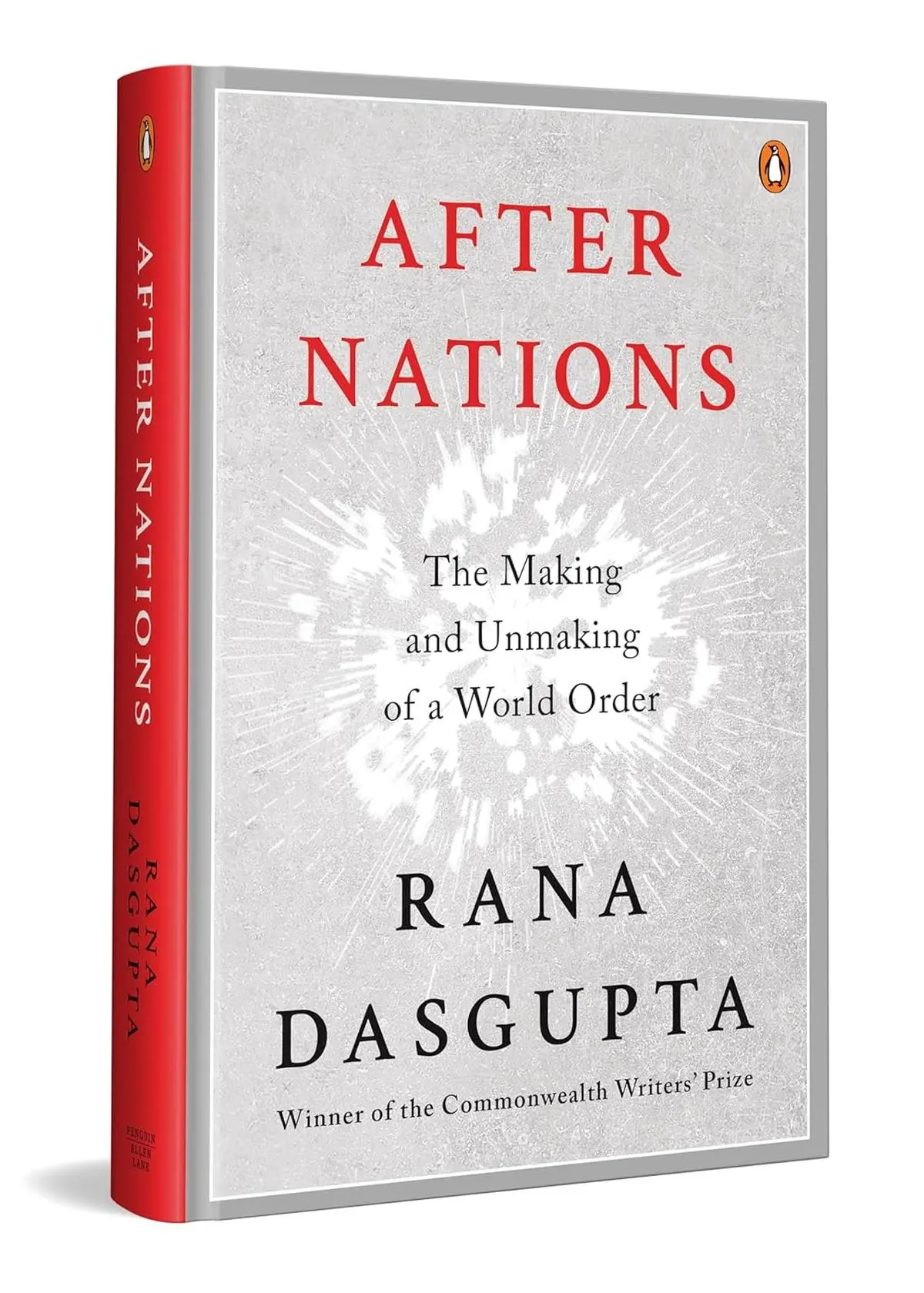
After Nations

The Making and Unmaking of a World Order

By Rana Dasgupta
Allen Lane
Pages: 496
Price: Rs.999

Dasgupta’s survey of political theory is never doctrinaire, and the book urges us to understand the historical underpinnings of our present predicaments. These histories are never fully remote from us, for their ghosts are still floating around. For instance, a key argument in the book details how European liberalism and nationalism were mostly designed to solve disputes within Christianity.

He also showcases how inextricable from mysticism and obscurantism the Enlightenment really was. Pair this with the following scathing commentary on the present moment: “Duped by their own language of secularism, liberals often fail to understand that their commitments are every bit as religious as their opponents—and that their contempt for ‘uncouth’ theologies often looks like nothing more than priestly sanctimony.”

A great deal of attention is paid to the imperial trajectories of Europe, America, and China, but the book is equally concerned with understanding the ramifications of the last 50 years of neoliberalism: “In the late 1970s, there began a set of processes which restored the autonomy of financial capital, reset the purpose of politics, and generated a number of formidable new competitors to the nation-state…. Nearly five decades later, the nation-state is unable even in theory to manage reality as it once did.”

Neoliberalism and the nation state

While the years following the Second World War had produced a broad welfarist consensus that brought about a measure of prosperity to the West, this would soon devolve into monopoly and grotesque inequality. Globalisation eroded the conditions in which the religions of the modern state could flourish so that by the time we arrive at the heavily privatised states of the 21st century, “time no longer seemed to bring human betterment, and the old gospel of ‘progress’ appeared to be little more than elite self-justification”.

Hand in hand with this economic turn was a theological shift, a common theme across centuries. Part of the book’s genius is how well it captures these connections. Dasgupta points out that the age of neoliberalism is coterminous with the emergence of equally impressive religious irruptions: the Islamist coup in Iran; Saudi Arabia and the US’ sponsorship of the jehad in Afghanistan; the spread of Pentecostal Christianity in Latin America, Asia, and Africa in the 1980s; the founding of Islamist welfare parties in Turkïye; the rise of Hindutva and the RSS in India post-Emergency.

If, as Dasgupta puts it, “theocracy is rising everywhere from liberalism’s fall”, where do we begin searching for universalism? He locates the answer in planetary ecology, in the rejection of national monocultures, writing that “we need to recover our lapsed theological intelligence, and to revive inter-religious conversations of the kind that were common in the great empires of the past but are rare today”.

At the end of all its excursions into the history of the nation state, After Nations arrives at what is perhaps the most haunting theme of our times: AI. Dasgupta harbours a cautious (and unconvincing) optimism for AI, and this is perhaps the weakest link in the book. The stakes are high: “The most important political question of our time, indeed, is probably that of government by machines; if political philosophers do not do the work of designing such government for the benefit of human beings and the planet, private corporations will design it for profit.”

Surprisingly, Dasgupta does not dwell much on the dystopian possibilities of AI-led warfare, despite their very real deployment in the genocide and destruction happening right now. This, in spite of his sweeping assertion that “AI will also take over much of the work currently performed by media organisations, universities, and think-tanks”.

He instead argues that AI could help “transcend the combative nature of much democratic conversation”, by finding patterns of agreement in people and fostering consensus-building. There is also the romanticised hope that AI could help extend democracy beyond humans to non-human agents: migratory birds, endangered animals, rivers. New forms of digital citizenship that promote migrants’ rights and freedoms, coupled with new forms of digital monies that break away from the tyranny of national currencies, are futures that Dasgupta envisions for a brighter world.

I was recently introduced to an online game called Worldle, where one must guess the country from its geographical borders. It is a fine way to dwell on the absurdity of nation states (as well as one’s ignorance): The Gambia looks like an intestine; Kosovo and Montenegro are almost doppelgangers. The aching hopes and desires of entire peoples corralled into the destinies of around 200 bizarre-looking states, ranked in an unforgiving hierarchy of currencies and passports.

What might a game like this look 100 years from now? If, as Dasgupta puts it, the “nation state is a constantly changing commercial engine, whose interests coincide only sometimes with those of human beings”, we must only hope that other forms of political creativity emerge that may champion humanity, ecology, and above all, life. 

Srikar Raghavan is the author of Rama Bhima Soma: Cultural Investigations into Modern Karnataka.

Also Read | The lie of Modi-land

Also Read | Rama Bhima Soma pushes the boundaries of Kannada cultural discourse