






Saleem Baig lives on the third floor of a cramped 2BHK flat in a congested pocket of New Delhi, with his wife and three sons. He pays Rs.15,000 a month in rent. He keeps to himself, barely knows his neighbours, and does not list this address on the documents he files. Every few weeks—sometimes two or three times in a month—he travels to Moradabad to sit through court hearings in cases the police filed against him nearly two decades ago.
Baig, 58, is what India’s bureaucracy and its critics both call an “RTI man”. Since the Right to Information Act came into force in October 2005, he says he has filed roughly 20,000 applications across nearly every State and Union Territory, and with the Prime Minister’s Office. Several of his queries have forced authorities to reverse decisions, and have led to action against errant officials.
The price has been high and heavy. He has been jailed in what the courts have since found to be fabricated cases, gone underground for stretches totalling two and a half years, sold the family’s belongings and his wife’s jewellery, shut down the brass business that supported them, watched his children pulled out of school, and abandoned his hometown. He now lives, by his own description, as a private and secret man.
“I have been harassed for asking RTI questions—by the police, by local politicians, by anti-social elements,” Baig said. “I have been underground, jailed in a fake case, and changed living places many times because of arrest, fear and threats.”
The RTI Act, passed by Parliament in 2005, lays down rules and procedures for citizens seeking government information. It mandates timely responses, allows inspection of records and the supply of certified copies, and applies to every public authority funded by taxpayers. For nearly two decades, it has been used by farmers, slum-dwellers, journalists and activists to extract everything from ration entitlements to information on public works.
Baig is from Bhojpur, a village 20 km from Moradabad in western Uttar Pradesh, about 180 km from the national capital. He holds a master’s degree in Urdu (1990) from M.J.P. Ruhelkhand University and a certificate course in human rights from the Indira Gandhi National Open University. In 2007, he contested the Uttar Pradesh Assembly election from Moradabad Rural on a National Loktantrik Party ticket. He lost, and went back to filing RTIs.
His two-storey house in Bhojpur now stands abandoned. Rain has damaged the roof. A neighbour recently asked him to repair it. “I don’t have the money,” Baig said, scrolling through a video of the ruined building on his phone. “How can I repair it?”
His brass business in Moradabad—India’s “Peetal Nagri”, which accounts for the bulk of the country’s brassware exports—was wound up after his arrest in 2008 and the long underground period that followed. A Hindi fortnightly he founded the same year, Nature Watch, was meant to publish his RTI replies in their original form, free of editorial trimming. “Sometimes journalists also modify news in their own sense,” he said. He refused outside funding, fearing it would compromise his work, and the paper closed in 2016 after two earlier suspensions. He says he still has the title and the RNI number, and hopes to revive it.
The application that changed everything
Baig began filing RTIs soon after the law came into force. The trouble started in February 2007, when he filed an application at the local Moradabad police station seeking caste-wise data on police recruitment in his area. He suspected the selection process had been rigged.
According to Baig, the police did not provide the information and instead asked him to deposit Rs.58,000 to retrieve it. He challenged the demand before the Uttar Pradesh State Information Commission. The commission, he says, found irregularities in the recruitment process, imposed a fine of Rs.25,000 on Superintendent of Police Moradabad (rural) Kush har Saurabh and SSP Prem Prakash, and directed that the information be furnished.
When the police still did not comply, the State Information Commissioner ordered that Rs.6,000 in compensation be deducted from the SSP’s salary and paid to Baig. “First they asked me to come to the police station to collect it,” he said. “When I refused, they posted a cheque. But they still did not give me the full information I had asked for.”
That order, in his telling, marked him out. Soon, relatives, police officers, local politicians and middlemen began pressuring him to withdraw the case. He says he was attacked two or three times and escaped narrowly. He informed the Commission of the threats and refused to step back.
In June 2008, he was arrested in Moradabad on charges of theft and extortion. He spent 18 days in jail before being released. A second First Information Report was filed against him almost immediately. “They were all bogus cases,” Baig said. “One has since been quashed by the court. In another, the man who was supposed to be the complainant told the court he had never met me before that hearing, and that he had been forced by the police to file the case. Before my RTI work, there was not a single case against me or my family.”
He went underground three times over the next two and a half years, moving between Lucknow and other towns. His lawyer, he says, warned him that the police were considering invoking the National Security Act—a 1980 preventive-detention law that allows the State to hold a person without trial for up to 12 months on grounds of “public order” or “national security”, and which civil-liberties groups have repeatedly criticised for its use against activists, journalists and political opponents.
During this period, he says, the police circulated word that anyone who helped him would also face cases. Friends drifted away. Only his family stayed.
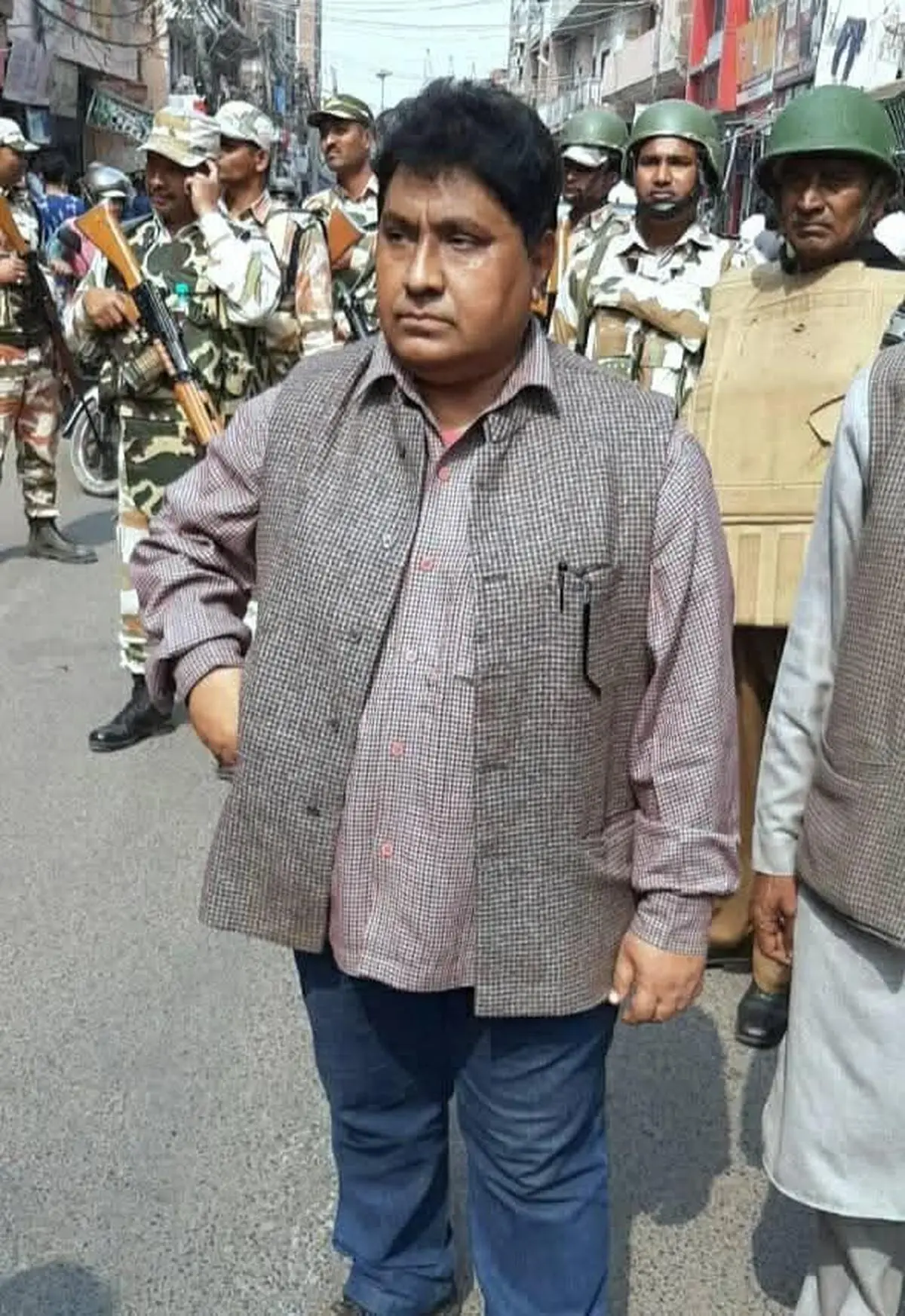
RTI activist Saleem Baig. | Photo Credit: Facebook
Even underground, Baig kept filing. His applications, by his account, exposed irregularities in the Indira Awas Yojana in parts of Uttar Pradesh, where only six of 53 sanctioned houses had been allotted in one cluster; gaps in the Prime Minister’s 15-Point Programme for Minorities, which he found was not functioning in several districts; minority-welfare budgets in 21 UP districts that had lapsed unspent; and what he describes as irregularities in Waqf Board accounts and a Unani medical college.
His queries also covered the maintenance of the Taj Mahal, RBI loans, UGC-aided colleges, the authorship of PMO press releases, his own salary, the Unlawful Activities (Prevention) Act and custodial deaths. A Public Interest Litigation he filed, Saleem Baig Vs. State Of U.P., he says, led to a court setting aside a decision of the Mayawati government which outed “vigilance information” from RTI in Uttar Pradesh.
The cases against Baig followed his family through every government office. Routine paperwork—school certificates, block-level documentation, files moving from local councils to the Centre—slowed or stopped. Local councillors and officers, he says, treated him as a marked man because his queries about roads, sanitation and welfare schemes embarrassed them.
“My income had dried up,” he said. “Expenses kept rising—travel, lawyers’ fees. We had already sold our belongings. My wife sold her jewellery. My children’s schooling stopped for two years. Other children would ask them, ‘Why does the police come to your house? Your father is bad.’ So I shifted them to my father-in-law’s home.”
“My younger son used to ask his mother, ‘Ammi, why does the police come again and again?’” Baig said. “When my wife told me on the phone that he was asking, ‘Ammi, hum school kab jayenge’—when will we go to school—my heart used to tremble.”
Admissions and certificates required the help of a local MLA or MP. “I was already on their target,” he said. “I could not approach any of them.”
A weakening law
Baig says the squeeze on RTI applicants has tightened in the last four or five years. Information that once arrived in 30 days, he says, now does not arrive at all, or arrives so heavily redacted as to be useless.
“I now get calls from the PMO, from the Minority Affairs Ministry, from other institutions, asking me, ‘Who are you? Why do you want to know this?’” he said. “Under the RTI Act, no one is allowed to ask me that. The State Information Commission in Uttar Pradesh has all but collapsed. It is failing to deliver justice.”
His larger fear is the change to the law itself. Section 44(3) of the Digital Personal Data Protection Act, 2023, amends Section 8(1)(j) of the RTI Act to exempt all “personal information” from disclosure, removing the public-interest override that was previously available. Civil society groups, former Information Commissioners and more than 120 opposition MPs have written to the government demanding a rollback, arguing that the change creates a blanket privacy shield that public officials and politicians can hide behind.

At a protest against changes to the RTI Act at Jantar Mantar, New Delhi, on July 29, 2019. | Photo Credit: Shiv Kumar Pushpakar
“After this amendment, getting information will be almost impossible,” Baig said. “Already, the Act has been weakening. The government does not want corruption to stop—it is sheltering it. Right now, officers are afraid of RTI. After this amendment, that fear will end. If it is fully implemented, I will not be able to file an RTI.”
More than 30 organisations—including the Internet Freedom Foundation, the National Campaign for People’s Right to Information, Mazdoor Kisan Shakti Sangathan, Satark Nagrik Sangathan and Common Cause—have demanded that the amendment be withdrawn.
There were brief reprieves. Between 2011 and 2014, the Dalit Foundation gave him a fellowship of Rs.7,000 a month to document atrocities against Dalits and minorities. From 2012, ActionAid India supported him with Rs.15,000 a month for six years, and later took him on as a staff member until December 2022. “That support kept us alive,” Baig said.
The Delhi Minority Commission has given him a lifetime achievement award. He served on a fact-finding team that documented the February 2020 Delhi violence. Civil society groups have invited him to train new RTI applicants.
That income has now also dried up. The pandemic ended his training assignments and pushed him into debt. The proposed amendment has further reduced demand. He survives on his eldest son’s salary.
A risk that does not appear in any contract
The work has long carried a physical cost. According to data compiled by the Commonwealth Human Rights Initiative (CHRI), over 100 RTI applicants have been killed since 2006, while 180 have been assaulted and 187 threatened. CHRI estimates that, on average, 28 RTI users have been threatened, assaulted or killed every year since the Act came into force.
Baig says no government, central or State, has shown any sustained interest in the safety of RTI applicants. “By filing RTI, we are helping the State be aware of its own policies,” he said. “But RTI activists are being killed in this country, and no government, no officer, is concerned about their safety.”
His current docket includes applications on the Waqf Board and on properties classified as “enemy property” under the Enemy Property Act.
“I will keep filing RTIs as long as the Act exists,” Baig said. “Before the RTI, I used to file PILs, but those take much longer. The RTI is faster. Through it, files that have been invisible for years become visible.”
“We vote once in five years,” he said. “We can file an RTI every day. As a citizen, I feel honoured when I am the one asking the question of the Prime Minister or the Chief Minister. I want to ask people to use this Act. It gives us an ehsas—a feeling—of our freedom, of being alive.”
Muhammad Tahir is a Delhi-based journalist. He has worked various media organisations including The Caravan, Newslaundry. He writes on several issues and mainly focuses on human rights, minority and marginalised societies issues.
Also Read | Will the DPDPA muzzle RTI Act and investigative journalism?
Also Read | CIC: Headless and toothless