




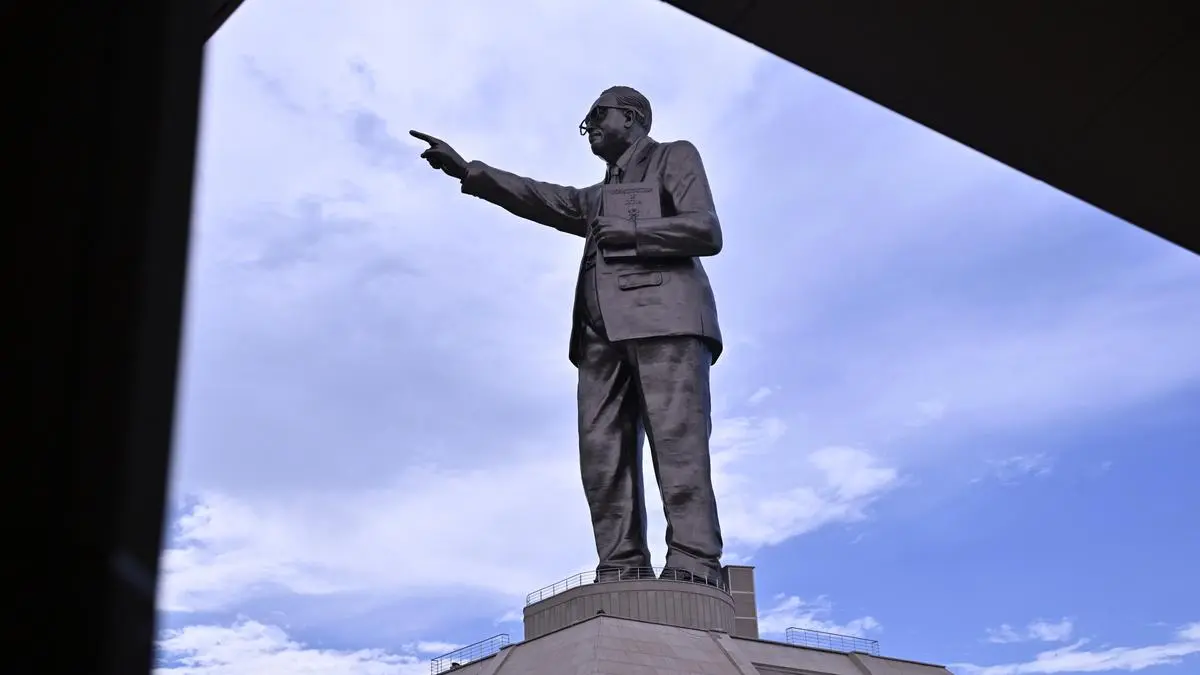
Inarguably, Dr. B.R. Ambedkar is one of the most important figures in India’s modern history. A thinker, reformer, and a symbol of resilience, his ideas continue to influence the country’s democratic journey. As the principal architect of the Constitution, Ambedkar laid the foundation for a republic grounded in equality, liberty, and fraternity. But Ambedkar’s vision stretched far beyond the confines of the constitutional framework. He challenged caste hierarchies, redefined social justice, and worked toward building a society rooted in dignity and inclusion.
On this Ambedkar Jayanti, Frontline presents a comprehensive package that probes the depth and intricacies of Ambedkar’s legacy. A.G. Noorani revisits Ambedkar’s early and urgent warnings against the rise of communalism and authoritarianism in “Ambedkar’s warning”, while N. Ram discusses the continued relevance of his ideals in India’s fraught political present. Ilangovan Rajasekaran’s “Ambedkar & Periyar”explores the powerful synergy between two radical thinkers, and Anand Teltumbde looks at why Ambedkar decisively rejected Gandhi’s vision of Dalit emancipation.
Several pieces interrogate how Ambedkar’s contributions are remembered—and misremembered. Ajay Gudavarthy’s “Ambedkar under the lens” and Divya Trivedi’s “Idolatry vs ideology” investigate the tension between symbolic veneration and ideological engagement. In “Squandered heritage”, Noorani critiques how India’s political leadership has failed to uphold Ambedkar’s vision. Meanwhile, Gopal Guru, in “Equality, dignity and justice”, returns to the philosophical heart of Ambedkar’s mission.
Suryapratim Roy contributes two essays—”Ambedkar in the here and now”and “Was Ambedkar really farsighted in his constitutional vision?”—which assess the radical imagination behind Ambedkar’s democratic ideas. Harish S. Wankhede’s“Ambedkar, on a device near you”scans the digital resurgence of Ambedkarite thought among new generations, while Cynthia Stephen traces how London influenced Ambedkar’s political awakening in “How London taught Ambedkar to ‘educate, agitate, organise’”.
The collection also addresses current political realities. Anand Mishra’s “BJP’s Dalit dilemma” analyses the uneasy relationship between Hindutva politics and Dalit representation. And in a candid interview, Anand Teltumbde reminds us why Ambedkar’s words—“A Hindu Raj would be the biggest calamity to India”—must not be forgotten.
We invite readers to engage with Ambedkar not as a frozen icon, but as a radical thinker whose ideas demand reflection and action. Read on for a critical and compelling exploration of his life, philosophy, and enduring impact.