






Shafi Shauq is one of the most authoritative voices in Kashmiri letters—poet, fiction writer, critic, lexicographer, and translator whose work has brought Kashmiri literature to readers across languages and continents. His oeuvre spans literary criticism, lexicography, poetry, fiction, translation, and language studies, with over 100 books authored, edited, or translated across Kashmiri, English, Urdu, and Hindi.
Born in 1950 in Kaprin village of Shopian district in south Kashmir, Shauq completed his PhD in English from the University of Kashmir, where he subsequently taught for 33 years, retiring in 2010 as Professor and Dean of the Faculty of Arts.
In January, Shauq was named a Padma Shri recipient for 2026, India’s fourth-highest civilian award, in recognition of his contributions to literature and education, particularly the preservation of Kashmiri language and poetry.
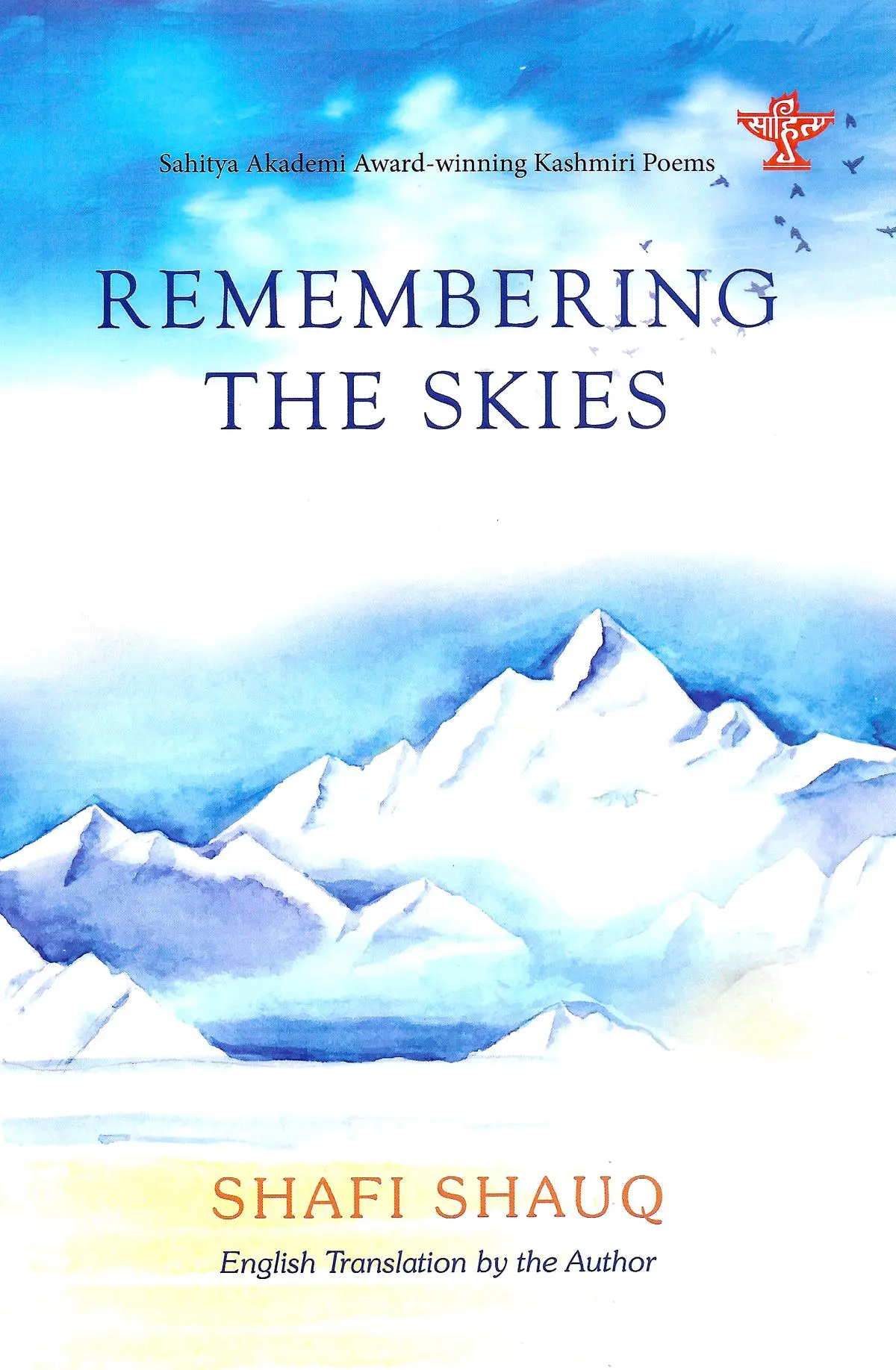
His standout works include the anthology series The Best of Kashmiri Literature (volumes on Lal Ded, Nund Reshi, and Kashmiri Sufi poetry), poetry collections such as Remembering the Skies and Aa ki Naa, and foundational linguistic texts: Kaeshur Lugaat (Kashmiri Dictionary), Kaeshryuk Grammar (Grammar of the Kashmiri Language), Kaeshir Zaban ti Adibuk Tawaariekh (History of Kashmiri Language and Literature), and Zabaan ti Adab (Language and Literature).
He has previously received the Sahitya Akademi Award (2006), the Sahitya Akademi Translation Award (2007), the Bharati Bhasha Samman (CIIL), and the Jammu & Kashmir State Award for Outstanding Contribution to Languages and Literature. He has represented Indian literature at forums in China, Germany, the UK, Canada, Brazil, and elsewhere.
In this interview, Shauq talks about growing up in a south Kashmir village, the teachers and family members who shaped his literary sensibility, and his early reading of Kashmiri folk tales and world classics. He also speaks about the institutional constraints that stifle the Kashmiri language and insists that no language dies as long as its speakers remain.
Edited excerpts:
You grew up in Kaprin village in south Kashmir’s Shopian district. Which Kashmiri writers, stories, or texts captured your imagination as a young reader?
As a child I got interested in Kashmiri folk tales and mathnavis that my father read out on winter nights when there was no other means of entertainment. My sense of literature took shape when my elder brother Naji Munawar—a renowned writer—made me read some world classics: Alice in Wonderlandby Lewis Carroll, Nehru’s Letters from a Father to His Daughter, and Arabian Nights. I was also influenced by Urdu writers like Prem Chand and Krishen Chandra. In Kashmiri, I read the poems of Abdul Ahad Azad during my school days, and they left an indelible mark on my imagination. I also read and enjoyed the children’s poems written by Naji Munawar.
You’ve authored, edited, and translated over a hundred works. In your view, how do we attract younger readers to Kashmiri literature? Can the spoken language alone keep it alive?
I am glad that my books, in original and in translation, serve students and scholars. Wider readership comes only when we write books of information, science, and diverse fields of knowledge.
Kaeshur, like any other living language, is essentially a speaking language—a medium of understanding and explanation. It does not depend on written texts. It has been the identity of the Kaeshir (Kashmiri) people for thousands of years, long before written texts existed, and it will continue to be the medium of communication as long as Kashmiris are on the face of this earth. The rumour of the language’s extinction serves certain individuals’ ends. The spoken form of a language is the index of its community’s life; written texts are fast being replaced by newer forms of communication—speech to text and its reverse.
You’ve said that research and information-based writing are as vital as poetry. What drew you, alongside your poetry, to documenting indigenous knowledge?
Composing poetry is, and must be, an instinctual drive that draws strength from the playful creativity of human beings—it has a universal grammar and pattern. Poetry, in whatever form, will therefore always be an expression of the human condition in space and time.
Information-based knowledge is the result of an individual’s concerted and conscious effort; it is always subject to scrutiny and questioning. It has to be verifiable. Much has been done to document indigenous knowledge, and it is worth noting that a great deal of this work was done by European scholars—as I discuss in my book Europeans on Kashmir. Some local scholars of Kashmir too have produced significant works in documenting folklore and folk literature.
What challenges did you face in rendering Kashmiri idioms, proverbs, and imagery into English?
The most challenging task in translating Kashmiri literature is placing it in its proper context, with close attention to cultural content. My translation volumes—on Lal Ded, Nund Reshi, Sufi poetry, and love poetry—reflect my attempt to find dynamic equivalents for idioms, proverbs, and imagery. The greatest hurdle was overcoming fixed expressions and shibboleth phrases. Even so, I am satisfied with the work—success is always subject to scrutiny.
In your Best of Kashmiri Literature volumes, you introduced poets like Lal Ded and Nund Reshi to modern audiences. Can you recommend lesser-known Kashmiri poetry collections that would help readers outside the Valley understand its lyrical tradition?
I would point to the works of George Grierson, Aurel Stein, and Hinton Knowles.
Shauq said poetry, in any form, expresses the human condition in space and time. | Photo Credit: By Special Arrangement
What advice do you have for writers eager to write in Kashmiri but worried about readership and reach in the digital era?
Printed readable texts may not survive the onslaught of digital media, yet I hope our younger writers are alert to this new challenge. Without sacrificing the creative integrity of form and content, they might write in newer genres and forms. AI has yet to generate poetry and fiction in Kashmiri, but that time is approaching fast. ChatGPT and Copilot can already produce verse in perfect rhyme—that ability is now within reach.
You’ve spoken about integrating digital tools into Kashmiri. How can technology help revitalise the language?
Unfortunately, some writers today face serious hurdles in this direction. The biggest is the subordination of the language to unnecessary diacritical marks devised by certain people. AI and other tools do not treat anything as sacred. I support universal standards that do not treat the visual medium as a mere reflection of oral and aural media. English spelling is one illustration of the fact that spelling and pronunciation are arbitrary—and that has not killed English.
How crucial is institutional support—in schools, colleges, and universities—for the growth of Kashmiri language and literature?
No rhetoric is needed here, but the fact is that institutions cause the death of languages and literatures by subjecting them to pedagogical patterns and time-honoured rules.
Why has Kashmiri literature struggled while Malayalam or Tamil have flourished through prolific translation and government support?
Kashmiri literature has in fact always been rooted in translation, going back to the 14th century. Mehmood Gami gave the process new life when he adapted major Persian classics into Kashmiri. His mathnavis were enormously popular, and other narrative writers followed his lead, accepting the mathnavi as their medium of expression. Hundreds of long narratives based on translations were produced and later published—works like Prakash Ram’s Ramayana, Lakhiman Joo Bulbul’s Saamnaama, Maqbool Kralawari’s Gulrez, and Wahab Parrey’s Shahnaamah.
In the 20th century, translation received fresh impetus and most world classics were rendered into Kashmiri. European scholars—Aurel Stein, George Abraham Grierson, and
Hinton Knowles—translated Kashmiri classics into English and German, and preserved texts of all the Kashmiri classics.
Why have Kashmiris been unable to establish a dedicated literary journal to nurture young writers under established mentors?
I say this not to discourage such efforts, but it is a hard reality that journals and popular magazines require a very large readership and subscriber base. Social media could play a role—without becoming vulgar or bathetic.
How has reading and writing sustained you through decades of turbulence in Kashmir? Are there particular books—Kashmiri, English, or otherwise—that have been especially meaningful?
I say with firm conviction that studying the masters in all genres of literature is the fundamental principle of originality. Any piece of literature is, and must be, the product of individual genius and the art learnt by effort. Hard work and the study of masters across languages is indispensable. No work of literature exists in isolation from others.
Also Read | Land colours memories and imagination: Mamang Dai
Also Read | World classics, the Upanishads, the Gita, and popular science made me who I am: C. Radhakrishnan
Majid Maqbool is an independent journalist and writer based in Kashmir. Bookmarks is a fortnightly column where writers reflect on the books that shaped their ideas, work, and ways of seeing the world.