






It began on May 16 with a brief question posted by Abhijeet Dipke on X: “What if all cockroaches come together?” The query was made in jest, and later the same day, inspired by some of the responses he got, Dipke announced the launch of a new platform for all the “cockroaches out there”—the Cockroach Janta Party.
A political spoof, mock-serious for good effect, Dipke’s message carried a link the “cockroaches” could click to join the Cockroach Janta Party (CJP). It also listed a few criteria that those wishing to join the critter party had to fulfil: they had to be unemployed, lazy, chronically online, and able to rant professionally.
The CJP began as a joke but rapidly became an online phenomenon, driven by an extraordinary level of engagement from the youth, or more specifically, Gen Z. Its “founding president”, the 30-year-old Dipke, is currently in the US, pursuing a master’s degree in public relations at Boston University.
Dipke was, until now, an unknown entity. However, his felicity with online media and his understanding of political messaging were on display during his three-year stint with the Aam Aadmi Party’s social media department, which ended in 2023 when he decided to focus on academic pursuits and left for the US.
The young man from Chhatrapati Sambhajinagar (earlier Aurangabad), Maharashtra, is now a public figure, and his humorous take on the current state of affairs through the CJP, which in his own words was intended to be a “parody party”, has fast become an online sensation, its reverberations being felt in the real world.
Dipke created the CJP, taking off on comments made by Chief Justice of India Surya Kant during a hearing in the Supreme Court on May 15. Hearing a petition by a lawyer who sought directions to the Delhi High Court on the designation of senior advocates, the CJI had said, “There are already parasites of society who attack the system, and you want to join hands with them? There are youngsters like cockroaches, who don’t get any employment, who don’t have any place in the profession. Some of them become media, some of them become social media, some of them become RTI activists, some of them become other activists, and they start attacking everyone.”
On May 16, the CJI issued a clarification, saying his oral observations during the hearing of a frivolous case had been misquoted by a section of the media. “What I had specifically criticised were those who have entered professions like the Bar with the aid of fake and bogus degrees. Similar persons have sneaked into the media, social media, and other noble professions as well, and hence, they are like parasites,” he said.
Kant further said, “It is totally baseless to suggest that I criticised the youth of our nation. Not only am I proud of our present and future human resources, but every youth of India inspires me. It is not an exaggeration to say that Indian youth have great regard and respect for me, and I too see them as the pillars of a developed India.”
But by then, Dipke’s cockroach campaign had already gone viral. The CJP’s website describes the platform as the “Voice of the Lazy & Unemployed”. In an obvious dig at the traditional parties, it states it has zero corporate donors. There is also a manifesto with five demands, related to issues such as post-retirement benefits for the judiciary, allegations of “vote chori” against the Election Commission, the independence of the media, the need for more women in politics and government, and party-hopping by MPs and MLAs.
The party’s web page features a petition seeking the ouster of Education Minister Dharmendra Pradhan over the leak of the NEET examination paper. According to the website, as on May 30, nearly 8 lakh people had signed the petition.
The cockroach campaign is satirical and its tone irreverent. The short, snappy statements on the CJP’s website are deliberately cheeky: “Sponsored by no one, funded by nothing”; “HQ: Wherever the WIFI Works”; “Filed Under: General Disgruntlement”; “Now Accepting Rants, Retweets, and Resentment”.
The website, which Dipke claims was taken down by the government on May 23 and which came back online on May 25, has been signed by more than one million supporters. On Instagram, the CJP had over 22.4 million followers as of May 30. The CJP’s Instagram account had, on May 21, just four days after it was created, overtaken the BJP in the number of followers. On X, before the CJP’s account was withheld by the government on May 21, citing “national security” concerns, it had garnered over two lakh followers. A new CJP account, later created and called “Cockroach is Back”, had over 2.38 lakh followers as on May 30.
On June 1, Dipke announced that he would return to India and lead a protest at Delhi’s Jantar Mantar on June 6. According to reports, Dipke appealed to the CJP’s supporters to gather in the capital, marking the movement’s first significant attempt to convert online engagement into a physical political presence.
Gen Z anger
The unprecedented virality of the campaign, according to experts, is on account of the readiness with which the youth, or more specifically Gen Z, have not just responded to it but seemed to own it. They say the cockroach became an apt symbol of the restiveness of young people, and the immediate context of the NEET paper leak ensured the CJP resonated even more with them. There are indicators of the importance of Gen Z as a pressure group and an electoral constituency, as well as the limitations of traditional parties in reaching them.
The CJP’s online boom is being viewed as a reflection of how Gen Z views the current socio-economic and political scenario, especially the issues that matter to the youth. According to Dipke, behind the CJP’s online success is the rousing support it has received from Gen Z.
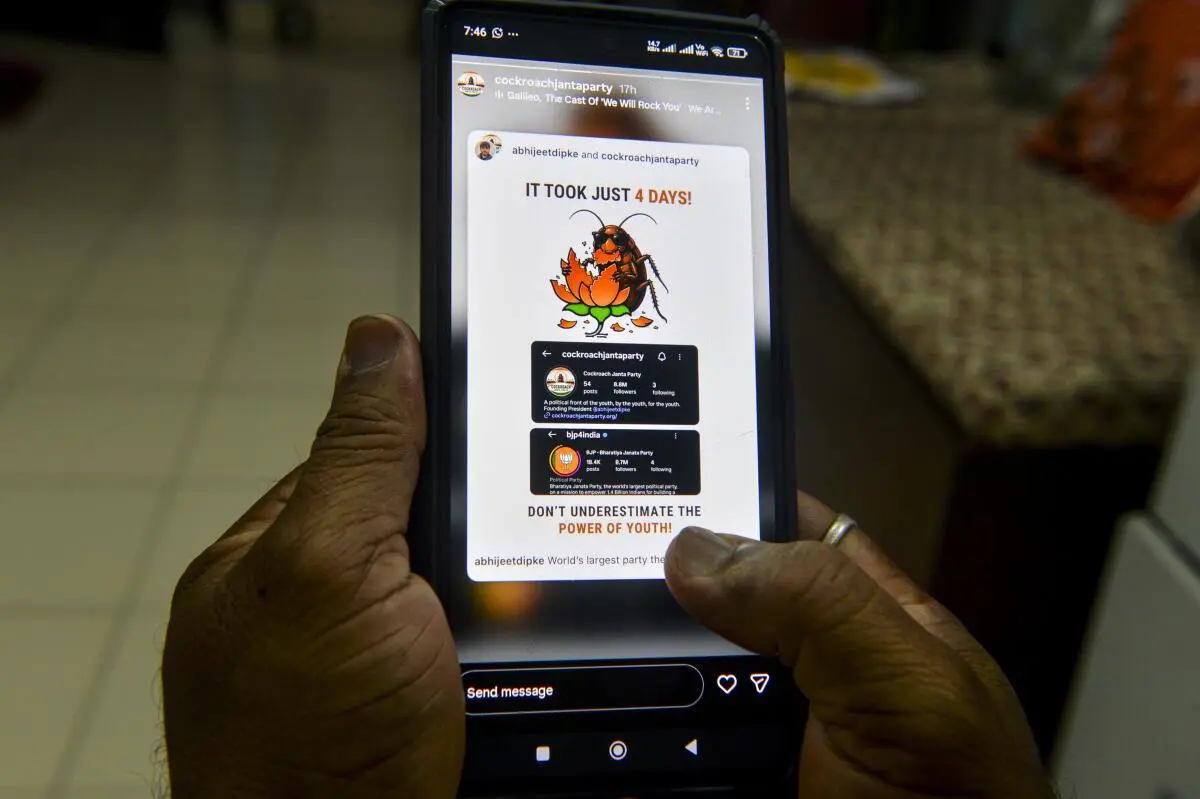
A man browses the Instagram account of the Cockroach Janta Party on social media, in Siligur on May 21, 2026. What began as a satirical response to a Supreme Court remark rapidly evolved into an online phenomenon, attracting millions of supporters and sparking a wider conversation on youth issues, digital mobilisation, and political engagement. | Photo Credit: PTI
In a podcast with The Hindu on May 20, Dipke said it was voices from Gen Z that first egged him on to start the campaign, and it is their support that has given it such momentum. “Gen Z, across the world, is fed up with the establishment, with the politics, because it is no longer serving them. This generation won’t tolerate you if you don’t serve them because they know their rights,” he said.
The CJP may have started as a joke, but it appears to have touched a chord with the youth and hit a spot where it hurts. According to Ankit Lal, who formerly headed the AAP’s social media department and authored the book How Social Media Is Leading The Charge And Changing The Country, the CJP reflects the present state of mind of the youth and throws the spotlight on the grim, lived realities of the young generation.
“There are multiple things that have come together to create this perfect storm. We are a predominantly young nation. And the youth today is not confident, but fearful of what the future holds for them. The confidence that came with India being a leader in the software industry has dissipated because we have missed the AI bus. There is frustration with the establishment not being responsive to the concerns of young people,” Lal said.
The virality of the CJP, say experts, also lays bare the dissatisfaction among the youth with the perceived inadequacy of the establishment in responding to their concerns.
“There are around 23 million people, mostly young, who are supporting the CJP. They are not ardent supporters or followers of a party or an ideology. The momentum the CJP has gained online shows that there is widespread and deep resentment. There is distress and despair. The numbers are an indication of the state of mind of the youth. They are angry and frustrated, and the Cockroach Janta Party provided a platform where they expressed their feelings,” said political analyst Yogendra Yadav.
The CJP, feel experts, could tap into the prevailing sentiment of the youth, especially because of its timing, the use of the right media and messaging, with the cockroach proving an effective mascot.
Symbol of resistance
Harish Bijoor, a business and brand strategy specialist, said the CJP is a classic case of “moment branding”. “The promoter of the CJP picked on the CJI’s cockroach comment and used the moment to great advantage. The digital medium waits for such moments and thrives on moment marketing. The traction for the movement was terrific, especially because Gen Z and Gen Alpha is very much an online and click-forward generation. And when the cockroach moment commenced, everyone wanted to jump on the bandwagon,” he said.
The cockroach, said Bijoor, became the perfect brand symbol of the CJP, especially given the issues it has foregrounded, which have to do with the concerns of the youth, such as unemployment and the struggle to get admission in good educational institutions, or the perceived apathy of the establishment towards them.
“The cockroach is a terrific symbol of resilience. Literally everybody knows about the cockroach, its pest value and its resilience. The promoter of the Cockroach Janta Party chose the right icon. The cockroach lends itself well to a campaign for the youth,” said Bijoor.
The online momentum of the CJP is being viewed as an indicator of the effectiveness of social media as a means of political mobilisation, as also the significance of Gen Z as a constituency. The debut of actor-turned-politician C. Joseph Vijay and his party, the Tamilaga Vettri Kazhagam (TVK), in the recently concluded Assembly election in Tamil Nadu has been attributed to the overwhelming support of Gen Z and the party’s effective use of social media in reaching the youth.
Lal said the CJP offers a study of the impact digital media can have, especially when it comes to reaching the youth, as seen recently in the case of C. Joseph Vijay’s electoral success. Vijay became Chief Minister of Tamil Nadu after the TVK, in its first electoral outing, emerged as the single largest party and formed a coalition government.
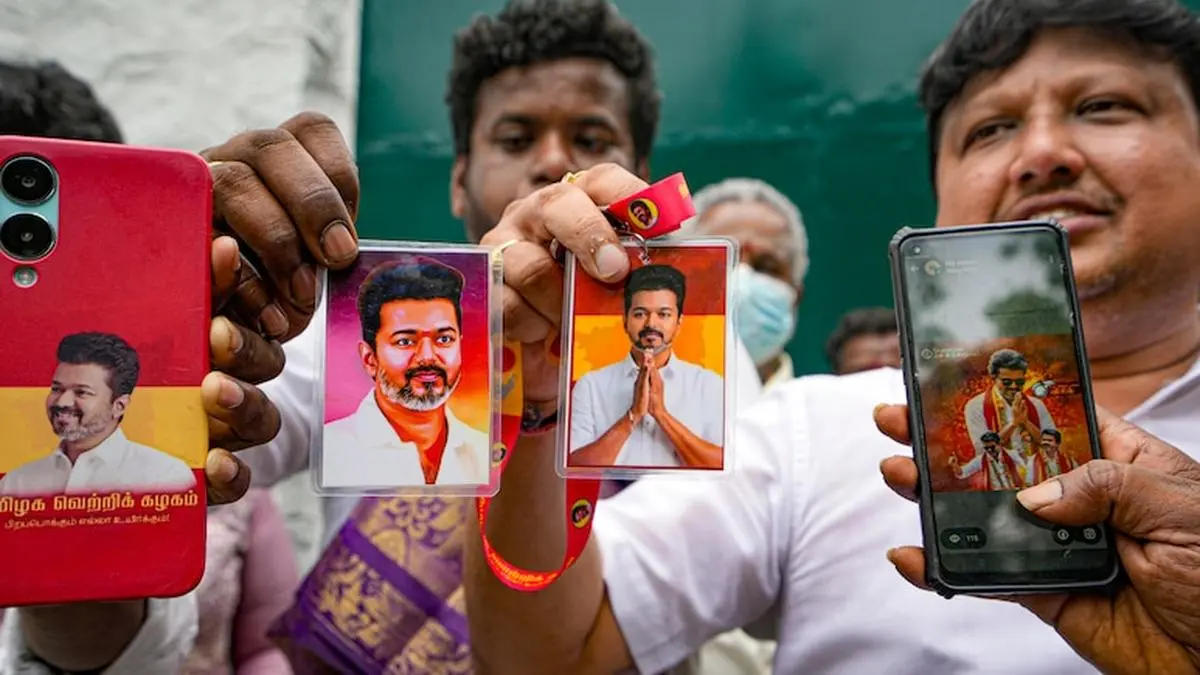
The viral rise of the Cockroach Janta Party underscores the growing political influence of Gen Z, a constituency that analysts say also played a decisive role in the electoral success of Vijay’s Tamilaga Vettri Kazhagam. | Photo Credit: PTI
“Vijay had a massive social media following, and he leveraged that, but with content that had the potential to change people’s perception, seek a change, and, more importantly, make them go to the polling booth and act on their desire for change. The TVK had a “digital first” electoral campaign, which banked on star power and effective messaging,” said Lal.
Lal, who was behind the use of social media for mass mobilisation during the India Against Corruption movement in 2011, said the CJP shows that the new media have to be the primary means to reach the young generation.
“In 2011, during the India Against Corruption movement, we used social media to mobilise people at multiple locations in India and abroad to come out and show their support for our campaign. This is something similar, although the mobilisation so far has been only in the online sphere,” he said.
The response from the ruling dispensation towards the CJP has been extremely critical, filled with suspicion and scepticism, and at times derisive. Dipke has claimed multiple attempts have been made to hack the social media accounts of the CJP. Belonging to the Dalit community, Dipke alleged he has been subjected to casteist attacks and that he and his family members have received threats.
Who’s behind CJP?
Conspiracy theories have done the rounds about the forces behind the CJP and the intent behind its creation. Without naming the CJP, Union Minister Kiren Rijiju posted on X: “I pity those who seek their followers in social media from Pakistan & George Soros gang.”
The CJP’s account on X continues to be withheld. It was blocked under Section 69A of the Information Technology Act, 2000, after the government received inputs from the Intelligence Bureau citing national security concerns. Dipke has approached the Delhi High Court challenging the blocking of the CJP’s X account.
“To protect their interests, they want to defame, demean and discredit the movement even before it begins, even before it takes form, because they have this paranoia that the Indian Gen Z will get on the streets someday. India’s unemployment rate has been at an all-time high. Rather than trying to create enough employment, what are you doing? You are [indulging in] fear-mongering — look, they will do something like Nepal or Bangladesh,” Dipke told The Hindu.
The traditional political set-up, according to Yadav, has betrayed its limitations in understanding the youth through its response to the CJP. “The traditional political calculus has simply failed to understand the cockroach phenomenon. They are asking questions like: Who has done it? What is the conspiracy behind it? Who stands to gain? Who launched the website? The question they should be asking is why more than two million people are supporting the CJP. The way the present regime has responded shows that it is more vulnerable than it would want us to believe,” he said.
Yadav also said the CJP’s resonance with the youth exposes the opposition’s inability to connect with the young demographic.
“Another important takeaway from the CJP’s success is that the opposition is not up to the task. Otherwise, at least 15 million of these youngsters who have supported the CJP should have been following one opposition party or the other. There appears to be a gap in the opposition’s outreach. It is clear that these parties have not been able to connect with Gen Z,” Yadav said.
It is unclear how far the cockroach meme will trend or what form the CJP takes in the days to come. What is clear, though, is that Gen Z can no longer be taken for granted.
Also Read | Why are all parties in Uttar Pradesh fighting over Kanshi Ram now?
Also Read | Bihar and the BJP’s CM challenge