


The world is being swept by a morally unanchored torrent of words and actions. As the US and Israel fight Iran, there are no principles, no restraining voices, and no alliance partners to broker compromise. This is the geopolitics of hubris. Only the power to overwhelm matters. As US Vice President J.D. Vance declared in May 2025: “...when we throw a punch, we throw a punch hard and we do it decisively.”
But there is no decisive punch in the Iran conflict. Nor are there compromises amid the irreconcilable positions. This war of attrition will end when one side walks away in pain, holding little but fig leaves. Paradoxically, the victor is China, its ascent accelerating from dominant economic power to hegemon.
India is a minor power caught up in the torrent. An ever-tightening vice is gripping its industry and agriculture, with the burden falling on its huge surplus labour force. Constrained policy options have forced a “licence and permit raj”, suppressing price shocks and relying on rationing and administrative actions. These temporary aids will soon falter.
Notwithstanding the indefinite ceasefire, the continuing economic crisis is deepening the wounds. The rise of China as a competing hegemon could spawn minor and major wars, a modern form of the era Thucydides described when Sparta sought to dethrone Athens.
In June–July 2025, the US and Israel bombed Iranian nuclear sites in an operation dubbed the Twelve Day War. In the negotiations that followed, the US alleged that the Iranians were not acting in good faith. The American negotiators Jared Kushner and Steve Witkoff, long dogged by accusations of personal financial interests in West Asia, were arrogant amateurs. Any hope of compromise collapsed on February 26, 2026.
Two days later, the US and Israel launched a coordinated strike on Iran. The genie had escaped. A US Tomahawk cruise missile struck a school compound in Minab, killing children and teachers. Almost at the same time, a decapitation strike killed Iran’s top leadership. Americans and Israelis have normalised targeting enemy leaders. Whether it yields tactical gains is doubtful, but it certainly erodes moral and legal restraints.
Iran is at best a third-rate military power. It struck back on March 2 by closing the Strait of Hormuz, which it had often threatened but never executed. The war of attrition had begun. The question was, who could tolerate the pain longer?
The Strait of Hormuz is a key global choke point. After Iran closed it, about 20 per cent of the world’s oil flow came to a near halt. Daily ship transits collapsed to a skeletal trickle as the waterway transitioned from a global highway to a high-risk gauntlet under Iranian control. Several Gulf oil companies declared force majeure, meaning that they would no longer honour delivery contracts.
The Brent crude oil price rose. Set in futures markets, it is the usual barometer of oil prices worldwide. It rose from $72 a barrel on February 27 to over $100 on March 12. The crisis transmitted to India from the outset. The rupee moved in virtually perfect correlation, with the oil price falling from 91 against the dollar on February 27 to 92.4 on March 12. The Sensex, already on a downward slide, fell from 81,000 to 77,000.

A handout photograph released by Iran’s Ministry of Foreign Affairs on April 11 shows pictures and belongings of the children killed during an air strike on a school in Minab, placed inside the plane carrying Foreign Minister Abbas Araghchi and Speaker Mohammad Bagher Ghalibaf to Pakistan for talks with the US. | Photo Credit: AFP
The pressure on India’s balance of payments increased. Businesses—both Indian and foreign—had, since August 2025, been taking their funds abroad. Now, foreign portfolio investors (FPIs)—those that invest in financial securities—also exited the country: between March 1 and 15, they took almost $7 billion out of India.
The rupee’s fall was relatively modest because the RBI was depleting its reserves to fight the decline. Between February 27 and March 13, the RBI’s foreign currency assets fell by $18 billion. The total foreign reserves’ value fell by another $1 billion because gold prices were sliding, reducing the value of gold reserves. The RBI also bought rupees through forward contracts. Put simply, the RBI promised dollars it might have to pay later if the rupee fell too much.
Systemic shocks for India
Reduced energy supplies were not the only problem for India. As the West Asian scholar Adam Hanieh has explained, the Gulf countries are “industrial giants” producing chemicals that “sustain industries and food systems across continents”.
India faced a systemic shock through petrochemical derivatives that feed into industry and agriculture. For instance, propane and butane are inputs for the production of LPG; sulphur is critical to the fertilizers, metals, and pharma sectors. Other derivatives are needed for active pharmaceutical ingredients and specialised plastics. The Gulf’s near chokehold on helium endangered the availability and impacted prices of semiconductors and MRI machines. Reduced fertilizer availability has threatened kharif planting. Not least, uncertainty has risen over remittances from over nine million Indian workers in the region.
On the global front, falling copper prices signalled slowing world industrial demand, implying weaker Indian exports. India’s Gulf connection amplified the problem. A sharp dent seemed imminent in exports to Gulf countries, India’s fastest-growing market that now absorbs almost 15 per cent of agricultural and industrial exports. Medical travel also took a hit as Arab nationals were unable to travel to India for treatment.
The norms of the post-war international order—already frayed by US President Donald Trump’s extraordinary tariffs and his demand for Greenland—cracked further. On March 16, Trump warned NATO allies of “a very bad future” if they did not help open the Strait of Hormuz. The Europeans dismissed him. Kaja Kallas, the EU’s top diplomat, said: “This is not Europe’s war.” Others echoed that sentiment. “The Americans chose this path, together with the Israelis. We did not start this war,” said Germany’s Defence Minister Boris Pistorius.
In a new first, on March 18 the Israeli Air Force struck Iran’s South Pars gas field, a vital part of Iranian energy infrastructure, disabling approximately 12 per cent of that country’s gas production. Iran launched missile and drone strikes against several Gulf energy sites, including Qatar’s Ras Laffan Industrial City, the world’s largest liquefied natural gas (LNG) export plant. The “Armageddon scenario” was unfolding.
QatarEnergy CEO Saad al-Kaabi stated that repairs to the damaged facilities could take three to five years. Qatar declared force majeure on several long-term contracts for up to five years. Major reinsurers imposed war-risk exclusions for Gulf energy infrastructure, and premiums for vessels planning to pass through the Strait of Hormuz skyrocketed.
LNG prices surged. For India, this was a major blow. India imports half its LNG, and about two-fifths of that comes from Qatar, its largest supplier. Also, it has “ambitious plans” to extend LNG use to replace oil and coal.
The rupee depreciated at the highest pace since the war began, reaching nearly 94 against the dollar on March 20; the Sensex continued its steep fall.
And, as FPIs stepped up their pace of exiting India, domestic stock indices fell. Intriguingly, domestic investors were buying stocks as their prices fell. This is the peril of dip-buying in a national crisis.
After about March 15, the RBI appears to have recognised the gravity of the crisis. It stopped or significantly pulled back its defence of the rupee, presumably fearing market momentum and deterred by the increasing costs of buying dollars in forward markets.
Domestic distress, reverse migration
Barely three weeks into the crisis, the distress became apparent. On March 20, textile and other workers from Surat, Gujarat, began returning to their villages. Migrant workers in Delhi’s bastis (shanty towns) followed. Shortages and soaring black-market prices of LPG made urban living impossible for the vulnerable. They were unable to cook, and even small eateries had shut down.
The reverse migration, though smaller than during the COVID-19 pandemic, signalled a deeper problem. During COVID, agriculture acted as a shock absorber. Now, agriculture too was in trouble. The Gulf’s demand for tea, spices, fruits, and basmati rice fell. Simultaneously, fertilizer availability declined sharply, not only because less was coming from the Gulf but also because reduced LNG availability caused some Indian fertilizer factories to shutter. A dark shadow descended over livelihoods from ceramic factories in Gujarat to tea gardens in Darjeeling.
Reverse migration also began from the Gulf. On March 23, Prime Minister Narendra Modi said that 3,75,000 workers had returned from the Gulf and tried to reassure the nation that the government would help, but the problem was severe: where would these workers be absorbed?
Meanwhile, late in the evening of March 21, Trump posted in all caps on social media that if Iran did not fully open the Strait of Hormuz within 48 hours, the US would obliterate Iran’s power plants. The US had dropped any pretence of abiding by international law.
On March 23, Trump extended the deadline by five days, citing “productive conversations” with Iran. Oil prices fell in relief. Someone knew or guessed well. A massive bet in the futures market, made just minutes before Trump’s announcement, paid off. The “market mind”, biased towards normality, began latching on to Trump’s conciliatory utterances.
But the “market mind” got Iran wrong. It disregarded Trump’s pronouncements and threatened to retaliate by targeting US and Israel-linked energy and desalination plants in the Gulf. Iran would not talk, analysts warned, unless it had a guarantee that Israel would not resume the war. Iran also demanded compensation for damage inflicted and sovereignty over the Strait of Hormuz. All of this was unacceptable to the US.
In India, medium- and small-sized enterprises felt intense pressure. Prompted in part by government policy, many enterprises had switched to gas-fired boilers. The redirection of gas supply to priority uses caused a 30 per cent cut in industrial gas supply. That, and the sudden spike in packaging and transport costs, triggered layoffs.
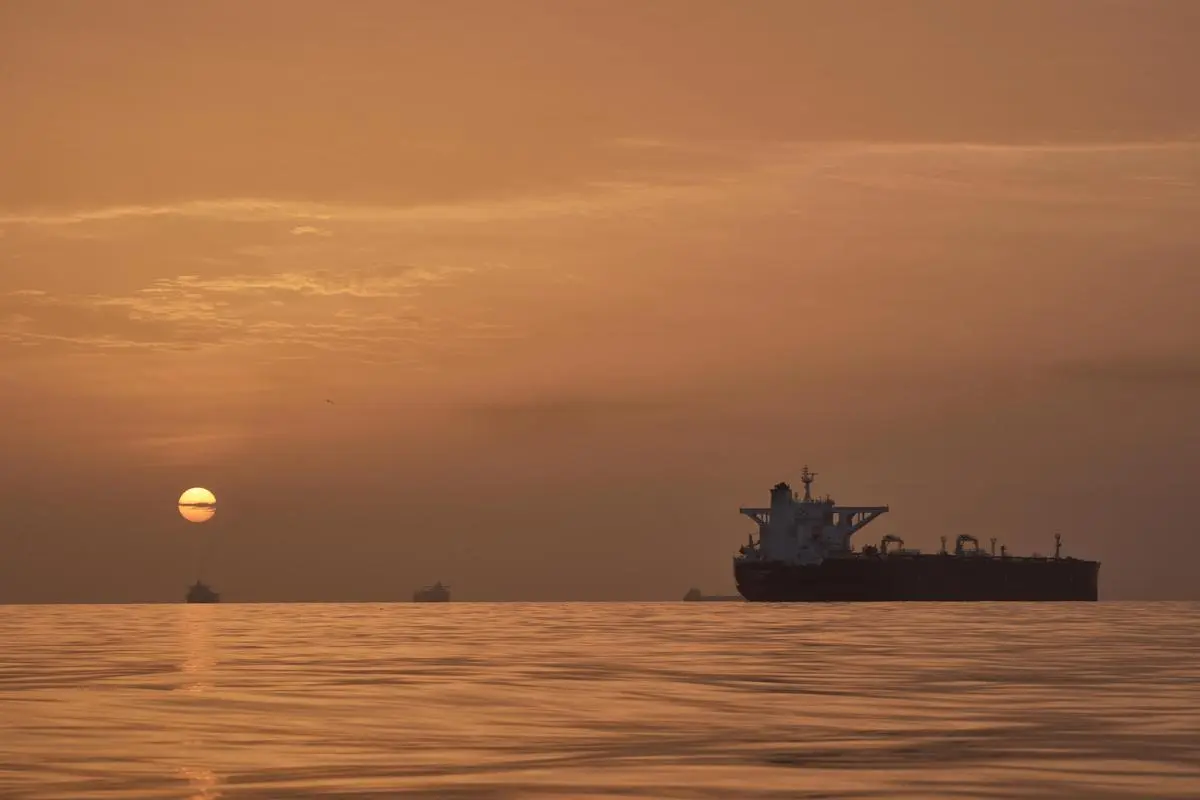
Tankers anchored in the Strait of Hormuz off the coast of Qeshm Island, Iran, on April 18. Iran has closed this waterway, key to the movement of much of India’s oil and gas supply. | Photo Credit: ASGHAR BESHARATI/AP
The March industrial growth rate fell to its lowest level since 2022. The problem hit textile factories, glass making, engineering, foundries, speciality chemicals, and fertilizers. Hotels and restaurants began shutting down, leading to job losses and wage cuts. Reverse migration increased.
A worried Organisation for Economic Co-operation and Development warned of increased stagflationary tendencies, which could tip into recession if global interest rates rose because of elevated government debt ratios, imminently higher fiscal deficits, and central banks’ inability to cut rates. A popular analyst asked if the world had reached a “tipping point”.
In principle, India had the option to bypass the Gulf by increasing purchase of Russian oil. The US had temporarily lifted the ban on imports of Russian oil and had also halted sanctions on Russia’s energy exports. But Russia raised its prices to near parity with global benchmarks. Thus, imports of Russian crude were no longer discounted for India.
More importantly, Ukraine, in a seemingly forgotten conflict, was deploying new defence technology to degrade Russia’s oil infrastructure. Market analysts said that as much as 40 per cent of Russia’s export capability could be offline and Russia too was on the verge of declaring force majeure on account of the long-term damage.
Strain on economy
As the rupee tested the 95 mark against the dollar and foreign portfolio investors continued to pull out, the prospects for Indian households deteriorated quickly. Higher inflation would squeeze real incomes. Higher interest rates would increase the risk of defaults on mounting personal debts, not least because, with gold prices falling, they were vulnerable to high exposure to gold-backed securities and gold-backed loans. And dip-buying of stocks could bite later.
The government tried to protect households from the increase in energy prices. But that only shifted the problem to public sector oil companies, which faced high losses, and their stock prices fell faster than market indices. To ease this, on March 27, the government announced a sharp cut in excise duties on these companies. That shifted the problem to the government’s budget, which would soon be loaded with fertilizer subsidies and other aids to producers.
The government instructed crude oil processors to produce more LPG, which they did. The much-reviled licence and permit raj was creeping back. But a rearranging of deck chairs could not insulate the economy; someone would bear the brunt.
A month into the crisis, as the stream of reverse migration grew in India, the chief of the International Energy Agency, Fatih Birol, explained that global oil and gas supplies were drying up. “April will be much worse than March,” he said. Higher user prices and reduced availability would inevitably require recessionary cutbacks in production. Beyond April, severe damage to at least 40 West Asian energy sites would keep energy prices higher for longer. And with Iranian drones and missiles damaging more production sites virtually every day, supplies would shrink further.
The spot Brent story
A lesser-known price, the Dated or spot Brent, told the story. This became the price for refinery-ready barrels now rather than the commonly cited Brent price, which is a futures price. Dated Brent hit a peak of $144.21 on April 7. It was about $30 higher than the Brent futures for June delivery, after having been nearly identical until March 20. This spot-futures gap exposed the disconnect between real-world companies and trader beliefs. Traders were betting that easing tensions would return energy prices to pre-war levels by the year end.
Meanwhile, on March 30, the rupee fell to 95.21 against the dollar. Two days later, the RBI forced banks to dump some dollars into the market. The rupee strengthened without the RBI expending its own reserves. But banks suffered losses and could provide only limited hedging services to companies that sought protection against the falling rupee. In this own de facto licence raj, the RBI now required strict proof from companies of their genuine need to hedge. With fewer market participants offering hedging services, hedging costs went up.
On April 7, five weeks into the crisis and with the Dated Brent at an unprecedented high, the global economic pressure was intense. In the span of that single day, Trump did a dizzying turnaround. That morning he threatened to blow up Iranian civilisation, and in the evening, he announced a two-week ceasefire agreement with Iran. He claimed Iran had agreed to a complete and immediate opening of the Strait of Hormuz. Markets believed him: oil prices sank from $110 to $95. The Sensex jumped. The outflow of FPIs from India slowed.
On Friday, April 10, a trickle of foreign money returned to India as if to greet the Iranian delegation that arrived in Islamabad, Pakistan, for negotiations with Vice President Vance and his team. The Iranians brought the backpacks, shoes, and photographs of schoolgirls killed by the Tomahawk missile in Minab. They insisted that Israel’s continued bombing of Lebanon—more fierce than before—violated the ceasefire and reiterated their demand for permanent peace, reparations for damage caused, and sovereignty over the Strait of Hormuz (with an Iranian toll on ships).
Negotiations began around 5 pm and stopped around 6:30 am the next morning, with no agreement signed. Some hours later, Trump announced that the US Navy would blockade the Strait to prevent Iran from selling oil to China and other nations.
The markets struggled. Futures prices (for June delivery) moved between $95 and $100 a barrel, but the markets were largely reassured that the Strait would open soon. FPI inflows into India increased a bit; the Sensex rose.
On April 17, Iranian Foreign Minister Abbas Araghchi announced that in response to Israel’s ceasefire with Lebanon, the Strait of Hormuz was open to commercial traffic. Barely 20 minutes before this announcement, investors had placed large bets that oil prices would fall, and they did, to $86 a barrel. In prediction markets, the likelihood of fully normal Hormuz traffic by end-June jumped to 90 per cent. Araghchi had done a Donald Trump.
Arrows from all sides
Iran then talked back Araghchi’s announcement over the next hours, qualifying the Strait’s opening with conditions. Oil prices began to climb again, ending just below $92 a barrel before markets closed. Next morning, with Trump refusing to lift the blockade, Iran shut the Strait more firmly. It fired at tankers, including two from India, one of them carrying two million barrels of Iraqi crude. The financial markets were closed, but prediction markets became more pessimistic about the Strait.
Throughout this kabuki dance, as India bobbed on global market movements, the physical reality never changed. Oil remained around $100 a barrel. Crucially, the price drop did not reflect more supply. On the contrary, the final ships that had escaped the Hormuz closure were arriving and new supply was shrinking fast.
Importantly, buyers were scaling back demand, a classic signal of impending recession. Economies worldwide are settling in for a prolonged shortage of oil and gas. Airlines are dropping routes and petrochemical facilities are reducing throughputs. Mukesh Ambani, his petrochemical empire under stress, has ceded the title of India’s richest man to Gautam Adani.
The most vulnerable felt the greatest pain. LPG consumption in March 2026 was 13 per cent below that of March last year. The tightening vice continued to push migrants from cities to villages. As for migrant workers in the Gulf, on April 14, the Ministry of External Affairs announced that 9.5 lakh Indians had returned: that is one in 10 migrants, a surge from roughly 2 lakh a week earlier.
In agriculture, a perfect storm might be brewing. An El Nino-driven weaker monsoon is projected to cause an 8 per cent deficit in rainfall. Together with reduced fertilizer supplies and/or higher-priced supplies, great hardships lie ahead.
Meanwhile, the Israel-Lebanon ceasefire threatens to crack, and the US and Iran are at a standoff. Trump has been his mercurial self, swinging from announcing peace to threatening to knock out every power plant and bridge in Iran. The US boarded an Iranian ship trying to evade the blockade. Iran launched drones at US warships. The markets sounded alarm bells.
In this war of choice, over 3,000 Iranians and 2,000 Lebanese have died; a million Lebanese have lost their homes. Why? Less severely, Indians too are at the mercy of US-Israeli whims. Even with the current indefinite ceasefire, negotiations to end the conflict are in a Groundhog Day phase. The global economic crisis is growing more severe.
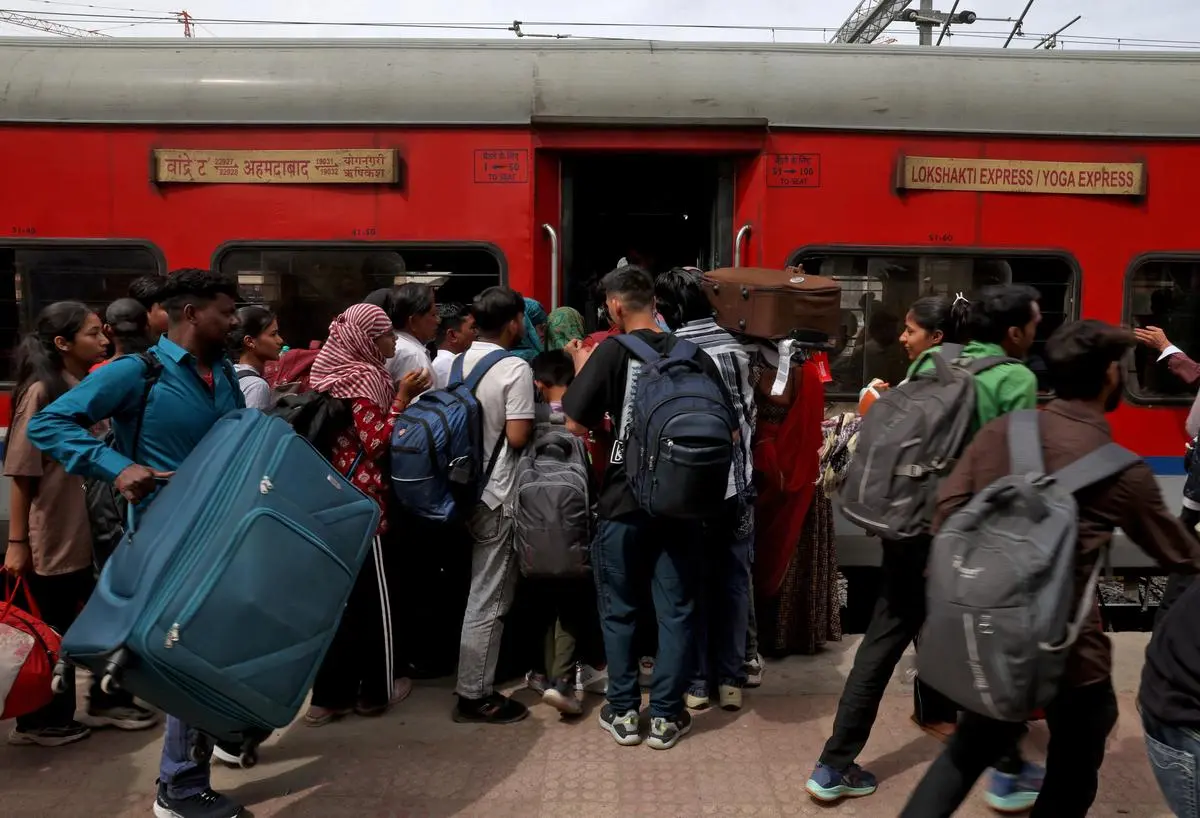
Migrant workers rush to board a train. They left for their hometowns amid LPG supply disruptions, in Ahmedabad on April 3. | Photo Credit: AMIT DAVE/REUTERS
No scenario looks good for India. The markets believe that Iranians, unable to withstand economic misery, will reopen the Strait soon. Even if that happens tomorrow, oil and gas flows could take months to resume. Clearing stranded tankers, draining pipelines, and restarting production will take months. Some sites are too old to restart. The most seriously damaged, such as Ras Laffan in Qatar, will take years to resume full output. The costs of oil transportation and insurance will remain high. In this “market-belief” scenario, the LPG and LNG squeeze will continue in India. More urban workers will return to villages. But fertilizer shortages—worsened if the rains are poor—will limit that escape. The entire 90 per cent of the 650-million-strong workforce in urban informal and agricultural sectors will feel intense deprivation.
More seriously, the Iranians could keep the Strait closed for longer than most believe. For them, this is an existential threat. They must know Ho Chi Minh’s prophetic line: “You will kill 10 of us, we will kill one of yours. You will tire first.”
They have about 150 million barrels of oil on ships past the Gulf of Oman in international waters. These are an export revenue source for two months.
The US is threatening financial and even armed restrictions on this revenue source. But that invites a dangerous flashpoint with China: it received much of the Iranian oil during the Strait’s closure and played a crucial behind-the-scenes role in the negotiations. And China has the economic tools to retaliate.
What lies ahead for India
This chaotic scenario will be the worst for India. All the shortages will persist and global trade will fall sharply, destroying more labour-intensive jobs. With household debt service levels at historic highs, the economic crisis could transform into a financial crisis. As the Gulf promise recedes—the UAE is already seeking US financial aid—more migrants will come back into a bleak job market. For policymakers, budgetary options will shrink. And, with a higher import bill and lower exports and remittances, the RBI will be unable to defend the rupee as it drifts below 100 to the dollar.
Of course, the Americans could decide to declare victory and end this tomorrow and, moreover, pressure Israel to stop its bombing of Lebanon. The war is very unpopular in the US, and support for Israel is dropping quickly. But the Iranians may not be willing to let this end without their demands being met. They will see a toll on the Strait of Hormuz as, in part, compensation for their losses. The Strait will remain a gauntlet. Energy costs will move to a new higher level for longer. Cost pressures and human distress will continue in India.
In the longer run, China may be the winner, though that brings new risks. There are many signs of that happening. More frequent pricing of oil in yuan raises the prospect of a petro-yuan, which the economist Kenneth Rogoff said strengthens the yuan’s challenge to dollar supremacy. China is also the pre-eminent world leader in the renewable energy transition. Not least, the military historian Phillips O’Brien has written: “Trump’s war in Iran is putting America’s strategic and military weaknesses on display.”
But unlike the US’ undisputed post-war global hegemony, which largely upheld rules and norms, contested hegemony risks producing chronic wars, as Thucydides warned. The near future may hold more Russia-Ukraine and US-Israel-Iran-style conflicts in which might is right.
No nation will have strategic autonomy. This longer-term reality will require far-reaching changes that we have ducked so far: a better-educated workforce, energy independence, and external resilience. Without them, the next crisis will arrive faster, and bite harder.
Ashoka Mody recently retired from Princeton University. He previously worked for the World Bank and the International Monetary Fund. He is the author of India is Broken: A People Betrayed, Independence to Today (2023).
Also Read | India can’t ‘wait and watch’ oil shocks
Also Read | ‘We cook only once at night’