

惯性聚合 高效追踪和阅读你感兴趣的博客、新闻、科技资讯
阅读原文 在惯性聚合中打开

推荐订阅源

Microsoft Azure Blog
L
LangChain Blog
A
About on SuperTechFans
博客园_首页
GbyAI
GbyAI
人人都是产品经理
人人都是产品经理
NISL@THU
NISL@THU
让小产品的独立变现更简单 - ezindie.com
IT之家
IT之家
博客园 - 司徒正美
大猫的无限游戏
大猫的无限游戏
MyScale Blog
MyScale Blog
Last Week in AI
Last Week in AI
S
SegmentFault 最新的问题
V
V2EX
D
DataBreaches.Net
B
Blog RSS Feed
Apple Machine Learning Research
Cyber Security Advisories - MS-ISAC
博客园 - 聂微东
Vercel News
Vercel News
博客园 - 叶小钗
F
Full Disclosure
Google DeepMind News
宝玉的分享
宝玉的分享
博客园 - Franky
WordPress大学
WordPress大学
小众软件
小众软件
T
The Blog of Author Tim Ferriss
阮一峰的网络日志
阮一峰的网络日志
T
Tailwind CSS Blog
The Register - Security
Y
Y Combinator Blog
Jina AI
Jina AI
月光博客
月光博客
The GitHub Blog
The GitHub Blog
有赞技术团队
有赞技术团队
钛媒体:引领未来商业与生活新知
钛媒体:引领未来商业与生活新知
量子位
云风的 BLOG
云风的 BLOG
Hugging Face - Blog
Hugging Face - Blog
爱范儿
爱范儿
Blog — PlanetScale
Blog — PlanetScale
C
Check Point Blog
MongoDB | Blog
MongoDB | Blog
博客园 - 三生石上(FineUI控件)
美团技术团队
Engineering at Meta
Engineering at Meta
雷峰网
雷峰网
Recent Announcements

Latest Issue | Current Issue - Frontline Magazine | Frontline

Exploring the Intersections of Identity, Geopolitics, and Mental Health in New Indian Publishing A Story of Childhood Friendships Ruptured by Rising Communal Rhetoric in Rural South India Notes from Ginza Shihodo Shop: A Quietly Healing Read Migrant crisis to war shock: India’s fragile safety nets India Hit by Hormuz Crisis as Iran War Sends Oil Prices Soaring Why the Iran War and Internal Contradictions Signal the End of Dollar Hegemony West Asia Volatility and India’s Economic Vulnerability Amidst Domestic Political Rhetoric The Great Nicobar Project: Documenting the Costs of "Haste Dressed Up as Vision" Beyond Statist Tropes: How Kinship and Trade Redefine the Himalayan Borderlands Defining Modern Hinduism: Rajmohan Gandhi on the Shift from Ethic to Identity Inside ODI Art Centre: Preserving Odisha’s living heritage Noida Unrest and the Reality of India’s Workers Intercaste Marriage Violence in India: Who Protects Women? How the Supreme Court hardened UAPA bail rules in Delhi riots case BJP’s Women’s Reservation Push Faces Opposition Revolt Purvanchal Emerges as Key Battleground for UP Election 2027 Ketaki Sheth’s Flashback: Rare Glimpses of Film Sets Tulika at 30: Radhika Menon on Children’s Books in India Can the Stage Contain Theyyam’s Wildness? This Is Where the Serpent Lives: Power, class, and desire NCR Worker Protests: Low Wages, State Crackdown Gaza Genocide Blueprint: B’Tselem’s Yair Dvir Speaks Will Didi prevail over Delhi? Punishing the South: Modi’s Delimitation Plan and the Politics of Control India Census 2027: Who Gets Counted—and How? SIR West Bengal Voter Exclusion Case 2026 Healthcare’s Breaking Point India’s Elderly Boom: Care Gaps and Policy Failures AI chatbots fill mental health gaps in India, but risks grow Substandard Drugs in India: The Hidden Public Health Threat India Healthcare Costs Crisis: Who Pays the Price? ASHAs hold India’s fragile health system together but are woefully underpaid Occupational Health Crisis in India: Silicosis and Beyond Techno-Elitism vs. Universal Care: The Growing Access Gap in India’s Health Revolution India’s Health System: The Broken Promise of Primary Care Partha Chatterjee’s For a Just Republic and the Limits of the People-Nation Why Jerry Pinto’s 'A Good Life' is Essential Reading for India’s Evolving Healthcare System Ambedkar Caste Critique: Justice Beyond Reform India’s Missing Middle: Trapped Between Health Insurance and Care Hungary Election 2026: Orbán Defeated, Magyar Wins Big Sewage, Neglect, and Governance Failure Mark India's Water Crisis The Hidden Ecosystem Inside our Homes Women’s Health in India: Inequality by Design Absolute Jafar: Nostalgia and restlessness in frames Anita Nair’s Why I Killed My Husband Review: Powerful Themes, Uneven Storytelling Iran War Ceasefire Signals a Shift Toward Multipolar Deterrence How Deepti Priya Mehrotra’s Walking Out, Speaking Up Recovers the Radical History of Indian Feminist Agitprop Lalit’s Lyrical Shift Writing New History China’s rise tests US power but avoids global confrontation Why The Dig Fails to Unearth the Material Reality of Keeladi Archaeology Ferdino Rebello on Goa land protests, TCP Act, and casino politics John Irving on Queen Esther, Politics, and the Writing Process Inside the Studios of Contemporary Indian Artists Hind Rajab and the Limits of Representation in Cinema How Muslims and Tea Tribes may Decide Assam Elections Tamil Nadu Election 2026: How Gender and Gen Z Voters are Reshaping the Dravidian Power Struggle Inside BJP’s Strategy to Win Puducherry Assembly Flesh Review: A stark, experimental Booker winner LDF, UDF, BJP Rework Kerala Campaigns Amid Gulf Crisis Assam election 2026: Polarisation shapes BJP vs Congress fight Tamil Nadu 2026 Elections: New Forces and Voter Trends West Bengal election arithmetic favours Trinamool, says Biswanath Chakraborty Electoral Roll Purge and Political Polarisation Shape Bengal’s High-Stakes Election Kerala Election: LDF, UDF in Tight Battle Lakshadweep Land Acquisition 2026: Constitutional Concerns and Tribal Displacement on Agatti Island Gurmeet Ram Rahim Acquitted in Ram Chandra Chhatrapati Murder Case, Questions Persist US-Israel Iran war: how religion and politics are colliding Trump Iran War Fallout: Strategy Unravels Fast Moral Collapse and the Crisis of Justice UP’s ‘Half Encounter’ Policing Faces Sharp Judicial Rebuke Women of Mathematics Exhibition 2026: Rewriting Science’s Gender Gap Pop History meets Romila Thapar: A Review of Speaking of History From Kerosene Lamps to Electric Lights in Palluruthy Gen Z Wave Propels Balen Shah and RSP to Power in Nepal Chipko Movement and Power of Nonviolent Resistance Right to Recall: Accountability Tool or Political Risk? Mani Shankar Aiyar Attacks Tharoor’s Stand on US Power and Iran War India Poverty Rate Debate 2026: 5% or 24%? Beyond Global Islam: Faisal Devji on the Crisis of Modern Muslim Sovereignty and the Fall of Khamenei The Paradox of Preservation: Why India’s Ajanta Caves Face a 50-Year Countdown to Disappearance Inside Kochi-Muziris Biennale 2025: Art in the Everyday Tamil Nadu 2026: Can Vijay and Seeman Challenge Dravidian Politics? Iran–Israel War Escalates, Shaking Security Across the Gulf George Saunders’ Vigil: A Dark Meditation on Death Why Amitav Ghosh’s Ghost-Eye Fails to Convince How Iran’s Shi'ite Ideology Shapes its War with the US and Israel A French 'grandmother' brings alive the early days of Santiniketan INDIA Bloc Leadership Debate Puts Rahul Gandhi Under Spotlight Called by the Hills: Anuradha Roy’s Himalayan memoir Governor’s Office Reform: Tamil Nadu Panel Seeks Federal Reset How the US–Israel War on Iran Defied International Law India, Israel and Iran: The Tightrope After Modi’s Trip Rafale Expansion vs Tejas Setback: India’s Air Power Crossroads How Sankar reshaped Calcutta in popular fiction R. Nallakannu Dies at 101: CPI’s Resistant Voice How the Absence of Shame is Reshaping Indian Democracy M.K. Stalin Can Unite Opposition Against Hindutva Meghalaya Rat-Hole Mining: A Deadly Economy in Plain Sight Kumar Shahani: Visionary filmmaker who pushed Indian cinema’s boundaries
Iran War 2026: US Strategy and Global South Crisis
R. Mahalakshmi · 2026-03-06 · via Latest Issue | Current Issue - Frontline Magazine | Frontline
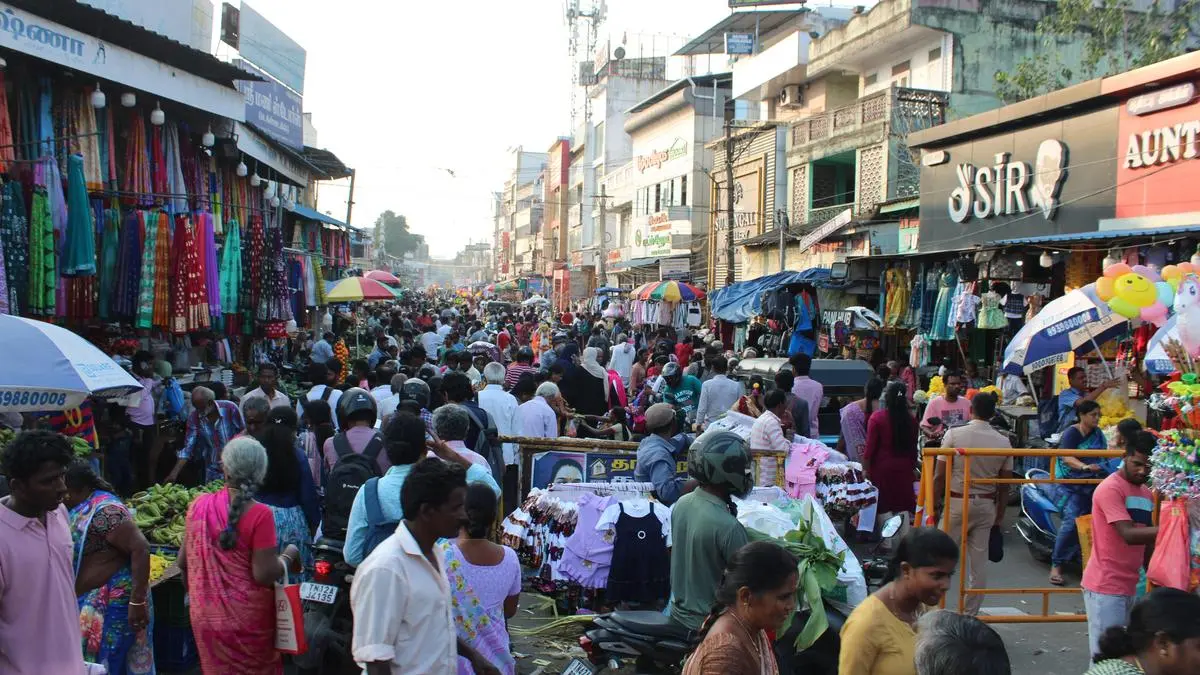
Crowds throng a market in Tambaram West, Chennai, on January 14, 2026.

Crowds throng a market in Tambaram West, Chennai, on January 14, 2026. | Photo Credit: V. UMESH KUMAR

As February ended, a stunned world tracked with disbelief the unwarranted war on Iran declared by the US under President Donald Trump and Israel under Prime Minister Benjamin Netanyahu.

Aimed at ensuring externally engineered regime change justified on grounds that do not stand up to even cursory scrutiny, the immediate fallout of the aggravated aggression violative of international law was civilian deaths, including that of innocent children, the assassination of the political and military leadership of Iran, the wanton destruction of property, the disruption of economic life in West Asia and elsewhere, and the threat of another damaging spike in the price of oil.

But there are longer-term implications of the war and all that preceded it for a world and its citizens plagued by multiple crises. As always, the most devastated would be the less developed countries of the Global South, especially the poorest among them.

Viewed in the longer term, the war on Iran is one more over-the-top, aggressive step in a multipronged final effort to reshape the global system that has been under way ever since Trump’s second term as President began. There are a number of elements to this conscious reshaping of the system. To start with, a waning hegemon is working to end an already weakening multilateralism. Besides announcing a walkout from multiple UN agreements and agencies, the US under Trump has declared that while it still yearns for leadership of the capitalist world, it does not want to bear the costs of that leadership. This has meant that it cuts off flows of grants and concessional finance through bilateral and multilateral channels and trims its contribution towards covering the costs of policing the world.

Countries needing grants and concessional finance to meet multiple challenges tracing to colonial times, and worsened by the extreme events stemming from climate change precipitated by the development of the developed, are told they must find their own resources. It also means that “allies” in Europe and Japan have to meet the costs of their security, necessitating increases in budgetary allocations for defence, including for purchases of defence equipment from the US to support Ukraine’s war effort. The corollary is a decline in grant and concessional flows from Europe and Japan as well.

Secondly, the US government is seeking to recover post–Cold War supremacy by shutting off cost-competitive trading partners from access to its markets, with tariffs and quantitative restrictions. Parallelly, it is weaponising tariffs with differential imposts across partners to achieve multiple economic and political ends varying from protecting and promoting foreign allies (like Jair Bolsonaro of Brazil), to penalising those who “violate” unilaterally imposed sanctions (by importing oil from Russia, for example).

Faced with that protectionism in the US, nations stretching from Europe to Mexico are trying to limit foreign access to their own markets in a defensive effort at compensatory protectionism. World trade is being shrunk by barriers erected by the more developed.

Tariffs are also being used by the US administration as instruments to garner revenues to finance budgetary deficits resulting from tax concessions and transfers to favoured domestic capitalists. This transactional approach extends to using tariff adjustments in “trade deals” to force US multinationals and foreign firms and governments to accept making investments in, and reshoring capacities to, the US, in an effort to revive American manufacturing and appease a white working-class base. The era when the US government exploited the “exorbitant privilege” it enjoyed from the dollar’s role as the global reserve currency to facilitate direct investments abroad by American capital is fading. It now wants to “reshore” capacities to service US and foreign markets from US soil. Integration through productive investment is seen as a problem.

‘Deglobalisation’ in trade and finance

In economic terms, these elements of the US effort to reshape the global order involve a degree of “deglobalisation” in the areas of trade, development finance, and foreign direct investment. But importantly, they do not involve deglobalisation in the flows of private financial capital, which persist and increase because of the huge infusion of cheap liquidity into the system by central banks in the developed nations seeking to prop up weakening economies in the developed North.

These differential trends between trade and productive investment, on the one hand, and financial flows, on the other, arise because the US as a nation has for long been uncompetitive in merchandise trade, and this has led to the relocation abroad of investment in the material producing sectors. But it remains a nation that is competitive in the provision of opaque and speculative financial services. A world of wanton war is also the Age of Finance.

This asymmetry in globalisation processes across trade, investment, and finance is particularly damaging for the less developed countries of the Global South. Trade barriers and reshoring of investment undermine their ability to gain from trade in goods and services, forcing them to rely on the surfeit of capital flows from Northern locations to finance their trade and current account deficits. Wars that disrupt economic activity and trigger inflation in the prices of dollar-denominated energy and food imports worsen those deficits and intensify that dependence.

As the experience with managing or rescheduling the foreign exchange payments associated with such dependence illustrates, countries are forced into a spiral of austerity euphemistically termed “adjustment”. They must reduce domestic absorption and the associated imports—through cuts in private consumption, investment, and state spending—to release the foreign exchange needed to repay foreign creditors. That imposes pain on already poor populations.

The erosion of multilateralism only worsens this tendency. Poor countries are doubly hit by the resulting squeeze on flows of grants and concessional credit. They are deprived of funding for adaptation to the damaging consequences of climate change. They are also forced to rely on expensive commercial finance to cover chronic current account deficits and resort to austerity to limit those deficits. Domestic policy space shrinks even as external vulnerability increases. Lurking behind the brutality of unwarranted wars is the danger of chronic economic crises and deprivation in the Global South.

C.P. Chandrasekhar taught for more than three decades at the Centre for Economic Studies and Planning, Jawaharlal Nehru University, New Delhi. He is currently Senior Research Fellow at the Political Economy Research Institute, University of Massachusetts Amherst, US.

Also Read | The rules they broke

Also Read | Cosmic bonds with a genocide enabler