


惯性聚合 高效追踪和阅读你感兴趣的博客、新闻、科技资讯
阅读原文 在惯性聚合中打开

推荐订阅源

奇客Solidot–传递最新科技情报
奇客Solidot–传递最新科技情报
C
CXSECURITY Database RSS Feed - CXSecurity.com
D
Docker
有赞技术团队
有赞技术团队
WordPress大学
WordPress大学
Jina AI
Jina AI
小众软件
小众软件
Last Week in AI
Last Week in AI
Hugging Face - Blog
Hugging Face - Blog
博客园 - 三生石上(FineUI控件)
宝玉的分享
宝玉的分享
美团技术团队
爱范儿
爱范儿
V
V2EX
大猫的无限游戏
大猫的无限游戏
人人都是产品经理
人人都是产品经理
J
Java Code Geeks
博客园 - 司徒正美
博客园 - 叶小钗
S
SegmentFault 最新的问题
量子位
S
Secure Thoughts
月光博客
月光博客
让小产品的独立变现更简单 - ezindie.com
O
OpenAI News
L
LINUX DO - 最新话题
罗磊的独立博客
SecWiki News
SecWiki News
雷峰网
雷峰网
Recent Announcements
V2EX - 技术
V2EX - 技术
T
Tailwind CSS Blog
H
Hacker News: Front Page
Exploit-DB.com RSS Feed
云风的 BLOG
云风的 BLOG
Schneier on Security
T
The Blog of Author Tim Ferriss
IT之家
IT之家
博客园 - 聂微东
腾讯CDC
N
News | PayPal Newsroom
P
Proofpoint News Feed
CTFtime.org: upcoming CTF events
The GitHub Blog
The GitHub Blog
Hacker News: Ask HN
Hacker News: Ask HN
aimingoo的专栏
aimingoo的专栏
Webroot Blog
Webroot Blog
Application and Cybersecurity Blog
Google DeepMind News
K
Kaspersky official blog

Latest Issue | Current Issue - Frontline Magazine | Frontline

Exploring the Intersections of Identity, Geopolitics, and Mental Health in New Indian Publishing A Story of Childhood Friendships Ruptured by Rising Communal Rhetoric in Rural South India Notes from Ginza Shihodo Shop: A Quietly Healing Read Migrant crisis to war shock: India’s fragile safety nets India Hit by Hormuz Crisis as Iran War Sends Oil Prices Soaring Why the Iran War and Internal Contradictions Signal the End of Dollar Hegemony West Asia Volatility and India’s Economic Vulnerability Amidst Domestic Political Rhetoric The Great Nicobar Project: Documenting the Costs of "Haste Dressed Up as Vision" Beyond Statist Tropes: How Kinship and Trade Redefine the Himalayan Borderlands Defining Modern Hinduism: Rajmohan Gandhi on the Shift from Ethic to Identity Inside ODI Art Centre: Preserving Odisha’s living heritage Noida Unrest and the Reality of India’s Workers Intercaste Marriage Violence in India: Who Protects Women? How the Supreme Court hardened UAPA bail rules in Delhi riots case BJP’s Women’s Reservation Push Faces Opposition Revolt Purvanchal Emerges as Key Battleground for UP Election 2027 Ketaki Sheth’s Flashback: Rare Glimpses of Film Sets Tulika at 30: Radhika Menon on Children’s Books in India Can the Stage Contain Theyyam’s Wildness? This Is Where the Serpent Lives: Power, class, and desire NCR Worker Protests: Low Wages, State Crackdown Gaza Genocide Blueprint: B’Tselem’s Yair Dvir Speaks Will Didi prevail over Delhi? Punishing the South: Modi’s Delimitation Plan and the Politics of Control India Census 2027: Who Gets Counted—and How? SIR West Bengal Voter Exclusion Case 2026 Healthcare’s Breaking Point India’s Elderly Boom: Care Gaps and Policy Failures AI chatbots fill mental health gaps in India, but risks grow Substandard Drugs in India: The Hidden Public Health Threat India Healthcare Costs Crisis: Who Pays the Price? ASHAs hold India’s fragile health system together but are woefully underpaid Occupational Health Crisis in India: Silicosis and Beyond Techno-Elitism vs. Universal Care: The Growing Access Gap in India’s Health Revolution India’s Health System: The Broken Promise of Primary Care Partha Chatterjee’s For a Just Republic and the Limits of the People-Nation Ambedkar Caste Critique: Justice Beyond Reform India’s Missing Middle: Trapped Between Health Insurance and Care Hungary Election 2026: Orbán Defeated, Magyar Wins Big Sewage, Neglect, and Governance Failure Mark India's Water Crisis The Hidden Ecosystem Inside our Homes Women’s Health in India: Inequality by Design Absolute Jafar: Nostalgia and restlessness in frames Anita Nair’s Why I Killed My Husband Review: Powerful Themes, Uneven Storytelling Iran War Ceasefire Signals a Shift Toward Multipolar Deterrence How Deepti Priya Mehrotra’s Walking Out, Speaking Up Recovers the Radical History of Indian Feminist Agitprop Lalit’s Lyrical Shift Writing New History China’s rise tests US power but avoids global confrontation Why The Dig Fails to Unearth the Material Reality of Keeladi Archaeology Ferdino Rebello on Goa land protests, TCP Act, and casino politics John Irving on Queen Esther, Politics, and the Writing Process Inside the Studios of Contemporary Indian Artists Hind Rajab and the Limits of Representation in Cinema How Muslims and Tea Tribes may Decide Assam Elections Tamil Nadu Election 2026: How Gender and Gen Z Voters are Reshaping the Dravidian Power Struggle Inside BJP’s Strategy to Win Puducherry Assembly Flesh Review: A stark, experimental Booker winner LDF, UDF, BJP Rework Kerala Campaigns Amid Gulf Crisis Assam election 2026: Polarisation shapes BJP vs Congress fight Tamil Nadu 2026 Elections: New Forces and Voter Trends West Bengal election arithmetic favours Trinamool, says Biswanath Chakraborty Electoral Roll Purge and Political Polarisation Shape Bengal’s High-Stakes Election Kerala Election: LDF, UDF in Tight Battle Lakshadweep Land Acquisition 2026: Constitutional Concerns and Tribal Displacement on Agatti Island Gurmeet Ram Rahim Acquitted in Ram Chandra Chhatrapati Murder Case, Questions Persist US-Israel Iran war: how religion and politics are colliding Trump Iran War Fallout: Strategy Unravels Fast Moral Collapse and the Crisis of Justice UP’s ‘Half Encounter’ Policing Faces Sharp Judicial Rebuke Women of Mathematics Exhibition 2026: Rewriting Science’s Gender Gap Pop History meets Romila Thapar: A Review of Speaking of History From Kerosene Lamps to Electric Lights in Palluruthy Gen Z Wave Propels Balen Shah and RSP to Power in Nepal Chipko Movement and Power of Nonviolent Resistance Right to Recall: Accountability Tool or Political Risk? Mani Shankar Aiyar Attacks Tharoor’s Stand on US Power and Iran War India Poverty Rate Debate 2026: 5% or 24%? Beyond Global Islam: Faisal Devji on the Crisis of Modern Muslim Sovereignty and the Fall of Khamenei The Paradox of Preservation: Why India’s Ajanta Caves Face a 50-Year Countdown to Disappearance Inside Kochi-Muziris Biennale 2025: Art in the Everyday Tamil Nadu 2026: Can Vijay and Seeman Challenge Dravidian Politics? Iran–Israel War Escalates, Shaking Security Across the Gulf George Saunders’ Vigil: A Dark Meditation on Death Why Amitav Ghosh’s Ghost-Eye Fails to Convince How Iran’s Shi'ite Ideology Shapes its War with the US and Israel A French 'grandmother' brings alive the early days of Santiniketan INDIA Bloc Leadership Debate Puts Rahul Gandhi Under Spotlight Iran War 2026: US Strategy and Global South Crisis Called by the Hills: Anuradha Roy’s Himalayan memoir Governor’s Office Reform: Tamil Nadu Panel Seeks Federal Reset How the US–Israel War on Iran Defied International Law India, Israel and Iran: The Tightrope After Modi’s Trip Rafale Expansion vs Tejas Setback: India’s Air Power Crossroads How Sankar reshaped Calcutta in popular fiction R. Nallakannu Dies at 101: CPI’s Resistant Voice How the Absence of Shame is Reshaping Indian Democracy M.K. Stalin Can Unite Opposition Against Hindutva Meghalaya Rat-Hole Mining: A Deadly Economy in Plain Sight Kumar Shahani: Visionary filmmaker who pushed Indian cinema’s boundaries
Why Jerry Pinto’s 'A Good Life' is Essential Reading for India’s Evolving Healthcare System
2026-04-15 · via Latest Issue | Current Issue - Frontline Magazine | Frontline

Palliative care is often a nebulous concept. To the better informed, the phrase usually conjures up images of cancer or terminal illness. Jerry Pinto clears that misconception right at the outset, emphasising that palliative care is life-affirming and is about caring and love. This is reflected in the title of this book: A Good Life, not a good death. It goes without saying, though, that a good death is the perfect way to end a good life. A good life is one that is relatively pain-free despite chronic disease. The book also clarifies that hospice and palliative care are not necessarily synonymous.

Palliative care was established as a distinct medical discipline in England in 1967 when Cicely Saunders founded St Christopher’s Hospice in London. It was introduced in India in 1986 when the surgical oncologist Dr Luis Jose de Souza (Dr Luzito) started Shanti Avedna Sadan in Bombay (now Mumbai). The early 1990s saw the setting up of more such organisations, including Karunashraya (disclosure: I have been a volunteer and donor for two decades) in Bangalore (now Bengaluru). As the book makes clear, there are now organisations across India that provide sterling palliative care. Furthermore, palliative care has been embraced by public hospitals, NGOs, and the pharmaceutical major Cipla.

For this slender volume of real-life stories, Pinto interviewed several palliative care physicians and healers across the country. You will meet many truly committed individuals: nurses, social workers, counsellors, rehabilitation specialists, psychologists, volunteers, support staff, and doctors. Doctors may be the face of the palliative care team and the ones who negotiate with the hospital administration, but it is the nurses who are key to care. Teamwork is the norm, possibly more so in palliative care because there are many diverse aspects of care to be considered: the time period may be long—or devastatingly short—and the hopes and needs of patients vary. You will also meet patients who are often a doctor’s best teachers. Witness, for instance, 14-year-old Rohit from rural Bihar who quotes William Ernest Henley’s “Invictus” and itches to get back to school, minus one cancerous eye.

A Good Life

The Power of Palliative Care

By Jerry Pinto
Juggernaut
Pages: 272
Price: Rs.699

It is emphasised during our medical training that we as physicians can only promise care, never cure. To promise a cure is unethical but to fail to deliver care is equally so. Palliative care takes this promise seriously. However, many doctors view anything less than a cure as a personal failure. Thus, as I see it, one of the messages of the book will probably take some time to come to fruition in India: that palliative care should be a part of the treatment schedule from the time of diagnosis. Accepting at the very beginning that not all patients can be cured, and informing them kindly about this, is key. Resilience and dignity are essential. Having been both doctor and patient, I can vouch for the latter.

Empathy, communication, and ethics

Medicine is a social science as well as a hard science. One cannot directly apply the lessons of one group of people to another. Take the case of patient autonomy: it is sacrosanct in the West but has different shades of grey in India. And yet, people are more similar than dissimilar. When Harmala Gupta returned to India from Canada in 1991, having survived cancer, her attempts to create a peer-based support group were initially dismissed by oncologists, who believed that Indians had supportive extended families, unlike the nuclear families and lifestyles in the West. However, Gupta persisted and prevailed, and “Cancer Sahyog” was born. In retrospect, it is obvious that the vast majority of people benefit from such support groups.
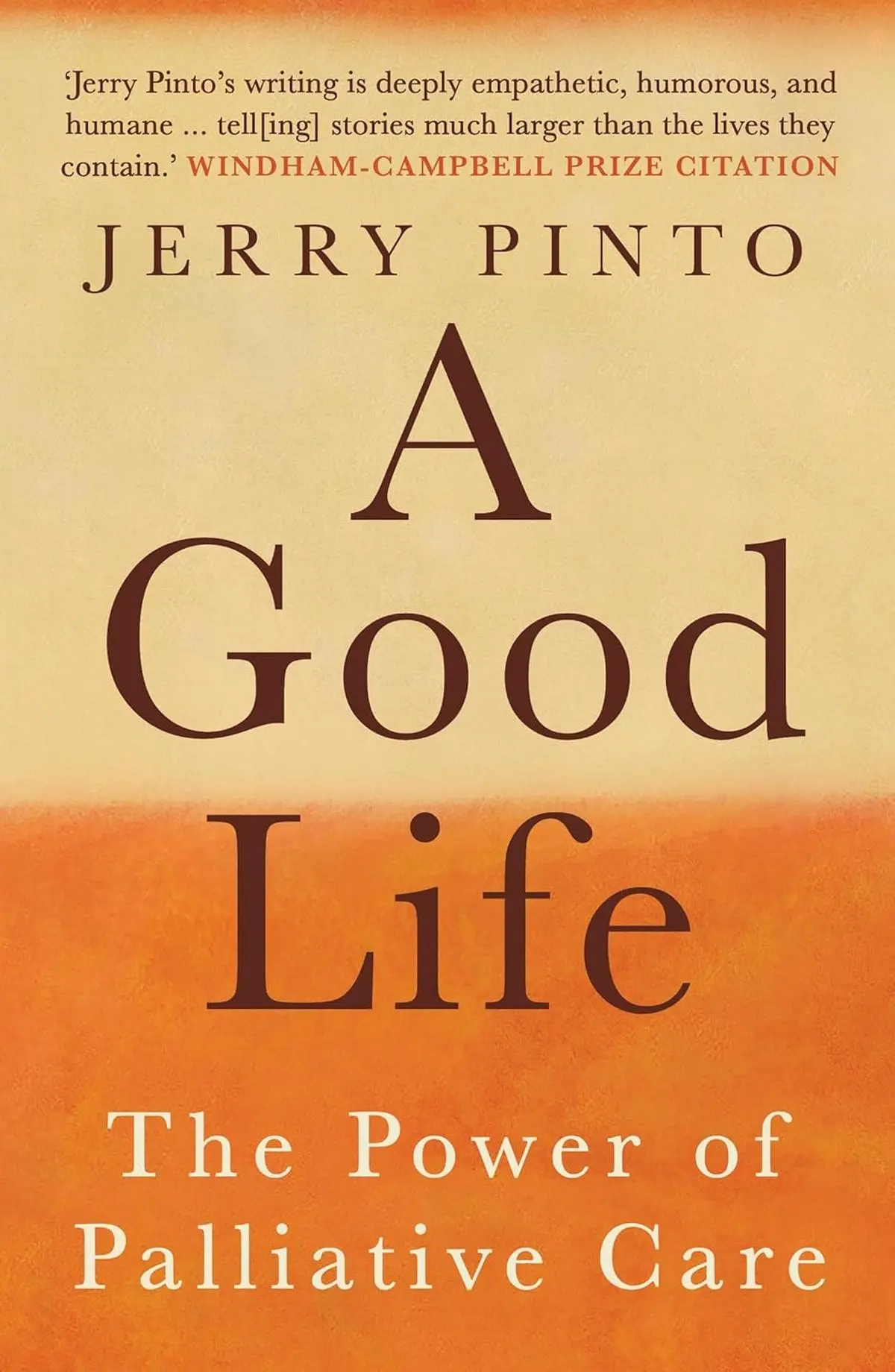
One of the messages of this book is that palliative care should be a part of the treatment schedule from the time of diagnosis. 

One of the messages of this book is that palliative care should be a part of the treatment schedule from the time of diagnosis. 

Literature on palliative care is abundant, yet most doctors and medical students lack awareness of its basic concepts. The Medical Council of India has introduced the concept of AETCOM (Attitude, Ethics and Communication), but I am told these subjects exist largely in theory. Empathy, communication, and ethics remain a pipe dream in medical colleges that are already struggling under the weight of poor planning and inadequate infrastructure. If the medical students of today are to truly contribute to the nation’s health as the doctors of tomorrow, our governing bodies need to act fast.

This book is targeted at the layperson and is written in an easy, flowing manner. However, given that AETCOM teaching often lacks the anecdotes that make up life, I would recommend it to young (and not-so-young) doctors as well. Certain nuances will not strike even the brightest of students or the most empathetic of people. For example: “Would you like to be eye-to-eye with your doctor or would you rather have the doctor loom over you?” I remember a similar statement made by the redoubtable Mr Kishore Rao, one of the founders of Karunashraya, at a lecture that he gave in Bangalore in 2001. Another philosophy that all hospitals could adopt is that of having patient navigators who guide anxious patients through the various loops in a hospital, such as the KEVAT Patient Navigation Programme in Tata Memorial Hospital, Mumbai, and Suhrids at the Dr Bhubaneswar Borooah Cancer Institute, Guwahati.

There are many, many miles to go. One should take heart from the fact that at least a beginning has been made, but also let us remember that well begun is only half done. In this case, we are nowhere near half done. Out of 820 medical colleges in India, there are only 45 with courses in palliative care and 17 that offer postgraduate courses on the subject. And this, despite the exponential increase in the number of medical colleges in India (which should itself be the subject of much introspection).

If I have anything to quibble about, it would be the back cover blurb. The recommendation should be from “Dr M.R. Rajagopal, Padma Shri awardee” and not from (as the cover states) “Padma Shri Dr M.R. Rajagopal”. These awards are not supposed to be used as a prefix. Finally, the message of this book is too important for it to be restricted to English. It should ideally be translated into other Indian languages, perhaps starting with Marathi since Jerry Pinto is comfortable with both English and Marathi. It would be fitting if he did the translation himself. 

Dr Sanjay A. Pai is a Bengaluru-based surgical pathologist and amateur medical historian.

Also Read | Progress against cancer

Also Read | End-of-life care is everyone’s business