







An accident at a mine in Meghalaya on February 5 that killed 33 people has laid bare the failure of enforcement authorities in curbing illegal rat-hole mining. It has also exposed the Conrad Sangma-led State government’s inability to map and dismantle the shadowy labour supply chain that sustains the illicit work, despite repeated tragedies claiming the lives of poor migrant workers.
The calamity has also brought to light the coal mafia’s use of dynamite for rat-hole mining. For workers already operating in deplorable conditions without even basic safety equipment, this poses a greater risk.
The incident has triggered a sharp political debate across Meghalaya, which escalated on February 17 when the State Assembly Speaker Thomas A Sangma refused to allow a discussion on the subject, stating that the matter is in court. Opposition legislators criticised the move as an executive tactic to dodge legislative scrutiny of administrative lapses resulting in large-scale illegal rat-hole mining. A day earlier, Chief Minister Sangma informed the Assembly that following the blast at the mine in the Mynsngat-Thangsko area of East Jaintia Hills district, more than 15,000 tonnes of illegally mined coal had been seized from various parts of the State and that 64 FIRs had been registered in various districts pertaining to rat-hole coal mining, illegal coal transportation, and the unauthorised use of explosives.
Government officials said they had come across the use of dynamite in a rat-hole mine for the first time in the February 5 incident. Rat hole mines are narrow holes dug into the ground either vertically or horizontally generally using manual equipment like shovels, pickaxes, and crowbars to scour for minerals. The Meghalaya police are investigating the source of dynamite used in the Thangkso mine.
“This is the first instance that the use of dynamite in rat-hole mining has come to the fore. In this region, there are many licensed explosive magazines, which are remote, secure, and access-controlled facilities to store explosives. An inspection of these facilities is being undertaken. We have arrested two persons who were responsible for operating the illegal mine. They are being questioned about the source from which they procured the dynamite. Search and seizure operations are being undertaken. We have also recovered more than 35 kg of illegal dynamite following raids in the district,” Vikash Kumar, the Superintendent of Police of East Jaintia Hills district told this correspondent.
As many as 28 workers were found dead during rescue operations and five more succumbed to injuries in the hospital. Rescue efforts were officially stopped on the evening of February 9 after the administration was convinced that there were no more dead or injured workers inside the mine. However, officials say the death toll could climb even higher.
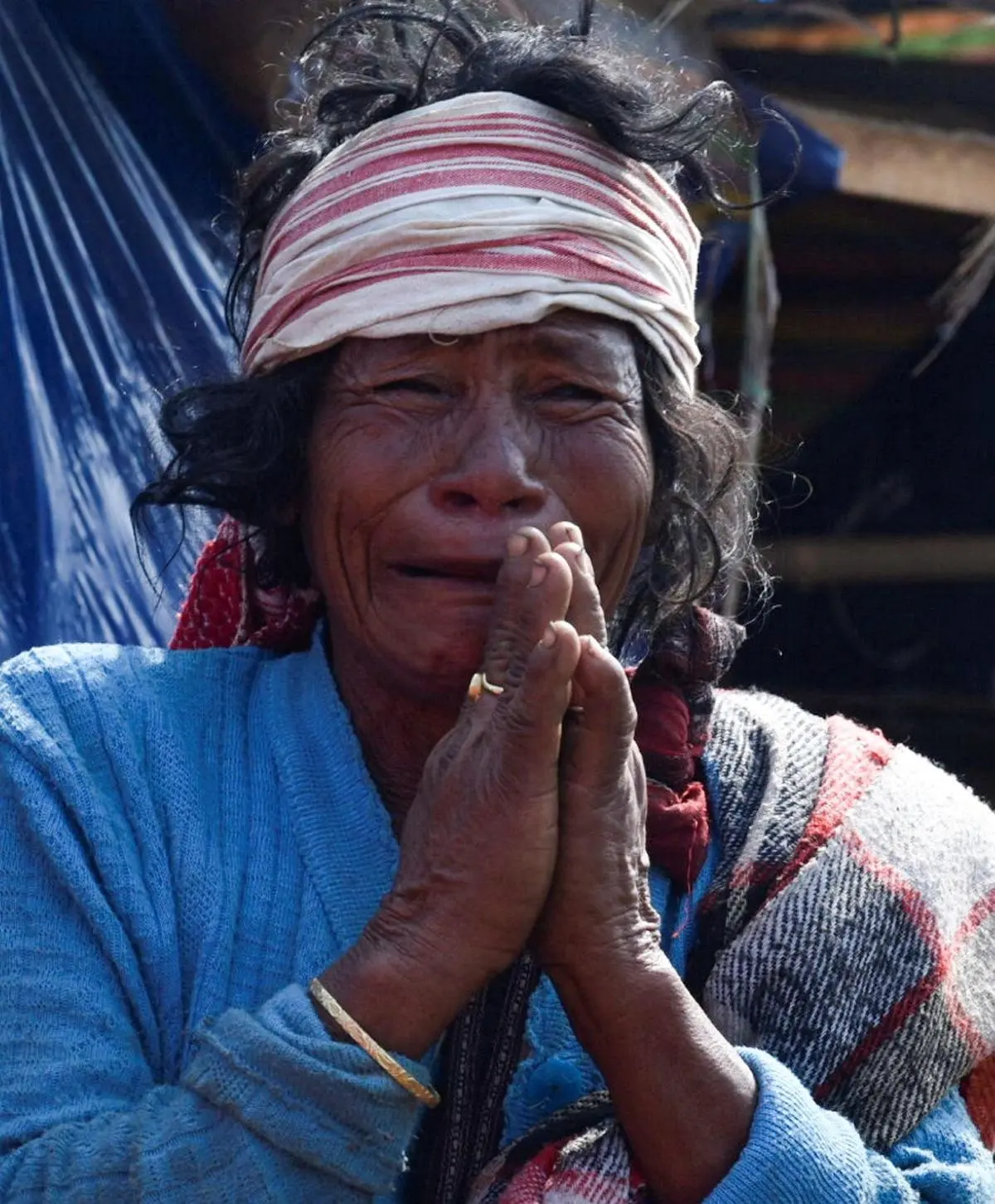
A relative of one of the deceased workers mourns. Several labourers were killed in an explosion at an illegal coal mine in Meghalaya on February 5, 2026. | Photo Credit: HAFIZ AHMED/REUTERS
Prime Minister Narendra Modi has announced an ex-gratia payment of Rs.2 lakh for the kin of the deceased and Rs.50,000 for each injured worker. Sangma similarly announced a compensation of Rs.2 lakh each for the kin of the deceased workers. Furthermore, an ex-gratia payment of Rs.5 lakh for the kin of deceased migrant workers belonging to Assam was announced by the State’s Chief Minister Himanta Biswa Sarma. Reportedly, a number of dead and injured workers are from Nepal who had crossed the border into Meghalaya seeking a livelihood.
Use of dynamite under scanner
Officials said that a probe is on to determine whether dynamite was used in another rat-hole mine explosion reported from East Jaintia Hills in December 2025. “A person had been admitted to a hospital in a critically injured condition resulting from an explosion. However, it is not clear whether the explosion had taken place in a rat-hole coal mine. In his dying declaration, the victim stated that the explosion took place at his ‘workplace’,” Kumar said.
Rat-hole mine accidents have been reported often in Meghalaya. In East Jaintia Hills district alone, six workers were killed when a rat-hole mine collapsed in January 2021, and 15 workers were killed in December 2018 when one of the mines flooded with water. The hazardous mining practice has also been reported from the neighbouring State of Nagaland where in January 2024 six migrant labourers were killed. However, there was no evidence found of the use of dynamite in these instances.
More than 10 years ago, in November 2014, the National Green Tribunal (NGT), the premier environmental court of the country, had imposed a ban on rat-hole coal mining and the transportation of illegally extracted coal. Now, once again, the NGT has issued a notice to the Meghalaya government seeking its response on the recent accident.
The NGT’s ban was revoked partially in July 2019 by the Supreme Court of India while upholding “individual and community rights over mineral resources in Meghalaya” whereby landowners were allowed to extract coal, legally. The mining could take place only on following the conditions set out in the Mines and Minerals (Development and Regulation) Act, 1957 and ensuring due diligence in adhering to environmental laws. Due to a peculiar land ownership system in Meghalaya, the apex court had said in its order, coal does not automatically belong to the State but to individual landowners. The Meghalaya government had, at the time, told the Supreme Court that landowners in Meghalaya possess proprietary rights over underground minerals.
Regulations on paper
Following the order, in April 2020, the Meghalaya government issued an office memorandum laying down the procedure for obtaining leases for coal mining in areas where the mineral did not belong to the government but to individual landowners. By April 2025, three legal coal mines had already begun operating in the State. Chief Minister Sangma himself inaugurated the first scientifically operated mine in Saryngkham-A block in East Jaintia Hills. He also announced that 11 more mines in the districts of East Jaintia Hills and West Khasi Hills would soon be granted licences to operate scientific coal mines.
Yet, rat-hole mines without valid licenses have proliferated in Meghalaya. Each accident has revealed that the mafia generally employ poor migrant workers from neighbouring States like Assam for this hazardous work. A committee appointed by the Meghalaya High Court to monitor illegal coal mining activities in the State has identified more than 22,000 rat-hole mines in East Jaintia Hills alone, a district spread over more than 2,100 square kilometres. According to the Meghalaya police, illegal mining operations have become so prevalent in vast uninhabited areas that surveillance operations become very difficult.
Meghalaya is classified as a Schedule VI area, in accordance with the provisions of the Constitution of India, where administration is undertaken in consultation with local communities to protect traditional culture, land, and resources. Mining activities in the State, as in the other Schedule VI areas, can be undertaken only after consultations and engagement with local communities. However, activists in Meghalaya, such as Agnes Kharshiing, have alleged that the coal mafia often grabs land belonging to local communities for illegal extraction of coal. In November 2018, Kharshiing was the target of a brutal attack, allegedly orchestrated by the mafia, while she was documenting illegal coal mining and transportation in East Jaintia Hills.
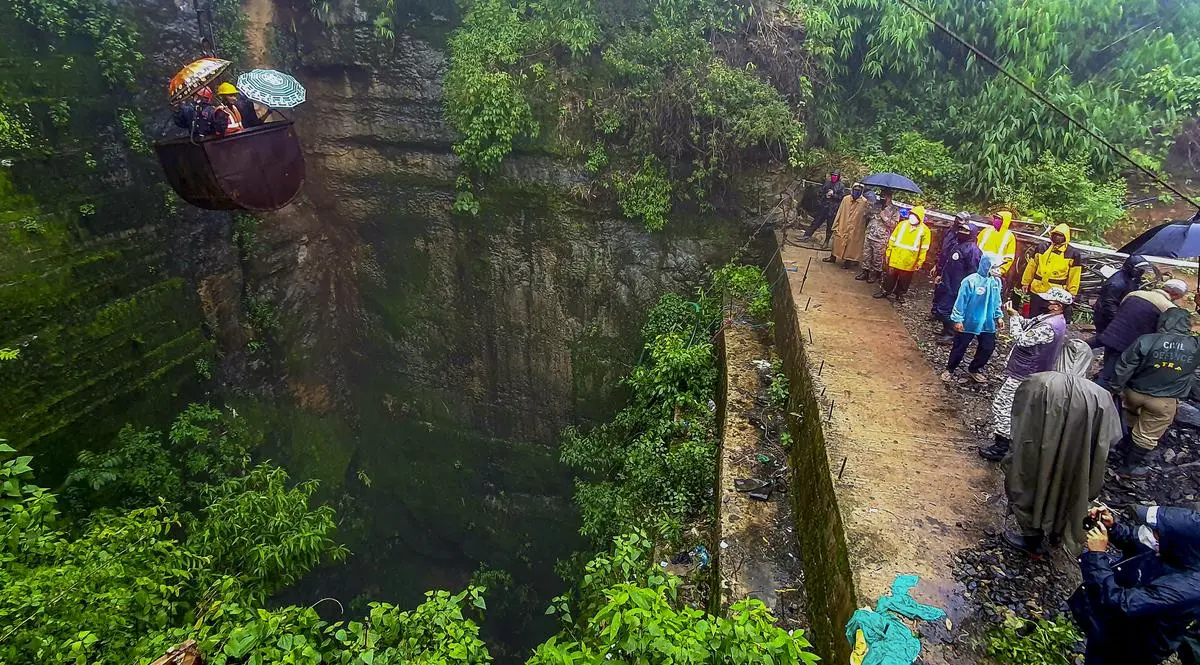
In this file photo from June 2, 2021, search and rescue operations are underway at a coal mine in East Jaintia Hills district of Meghalaya where five miners were trapped after the coal pit got flooded. | Photo Credit: PTI
“If the mafia can undertake illegal coal operations in inhospitable terrain, what is stopping law enforcement agencies from accessing those areas?” she asked. “At the end of the day, the coal is being transported through highways across the State. All the illegal operations are taking place in broad daylight in gross exploitation of human rights of labourers working under precarious conditions. Transportation also takes place along routes where there are dozens of police stations, check posts, and outposts,” Kharshiing told this correspondent.
Nonetheless, the Meghalaya High Court has taken into consideration the police department’s claim that surveillance operations are hampered due to the “shortage of personnel”. In an order issued on February 9, the High Court asked the police and the district administration to submit a detailed report within 10 days on the February 5 accident in Thangsko. The court has also taken cognisance of an interim report submitted by the one-man Justice Brojendra Prasad Katakey committee, which it had constituted in 2022 to monitor illegal coal mining in Meghalaya. Justice Katakey is a retired judge of the Gauhati High Court.
“The report [36th interim report of Justice BP Katakey committee] is distressing and reflects the dereliction in the discharge of duties by the authorities concerned. This Court makes it clear that accountability will be fixed, and if necessary further orders will be passed for institution of a proper investigation and inquiry, by an independent or central agency,” said a division bench of the high court in its order.
In an earlier report—the panel’s 35th interim report—submitted to the high court in January 2026, the committee had noted how more than 37,000 metric tonnes of illegally mined coal had vanished right from under the nose of the State government officials in the past few months. The report stated that 1,92,840.13 metric tonnes of illegally extracted coal was detected across 1,898 dumps through an aerial survey. However, during subsequent surveys, district authorities found only 1,55,390.6 metric tonnes of coal. The rest of the coal is still unaccounted for.
The ecosystem that sustains illegal mining
“I found in my site visit that a cluster of at least three to four vertically dug pits were being mined for coal in the area where the blast took place on 5 February. A dynamite blast in one of the pits resulted in accumulated methane gas catching fire in the nearby pits. In this operation, it is wholly irrelevant as to whether a certified expert had been hired to handle the explosive material. The procurement and use of dynamite itself was completely illegal in this instance,” Justice Katakey told this correspondent.
In the past, Justice Katakey had stepped down from a three-member judicial panel, which was appointed by the National Green Tribunal to monitor illegal coal mining in Meghalaya, owing to non-cooperation by officials of the State government. The judicial committee had unearthed huge discrepancies in the amount of coal transported from Meghalaya to Bangladesh. It had found that the amount of coal recorded at Land Customs Stations at Meghalaya’s border with Bangladesh was several times higher than the amount of coal cleared for export into the neighboring country by the State’s Mining and Geology Department. The panel’s investigations were flagged by the mining department as going beyond the mandate set down upon it by the NGT.
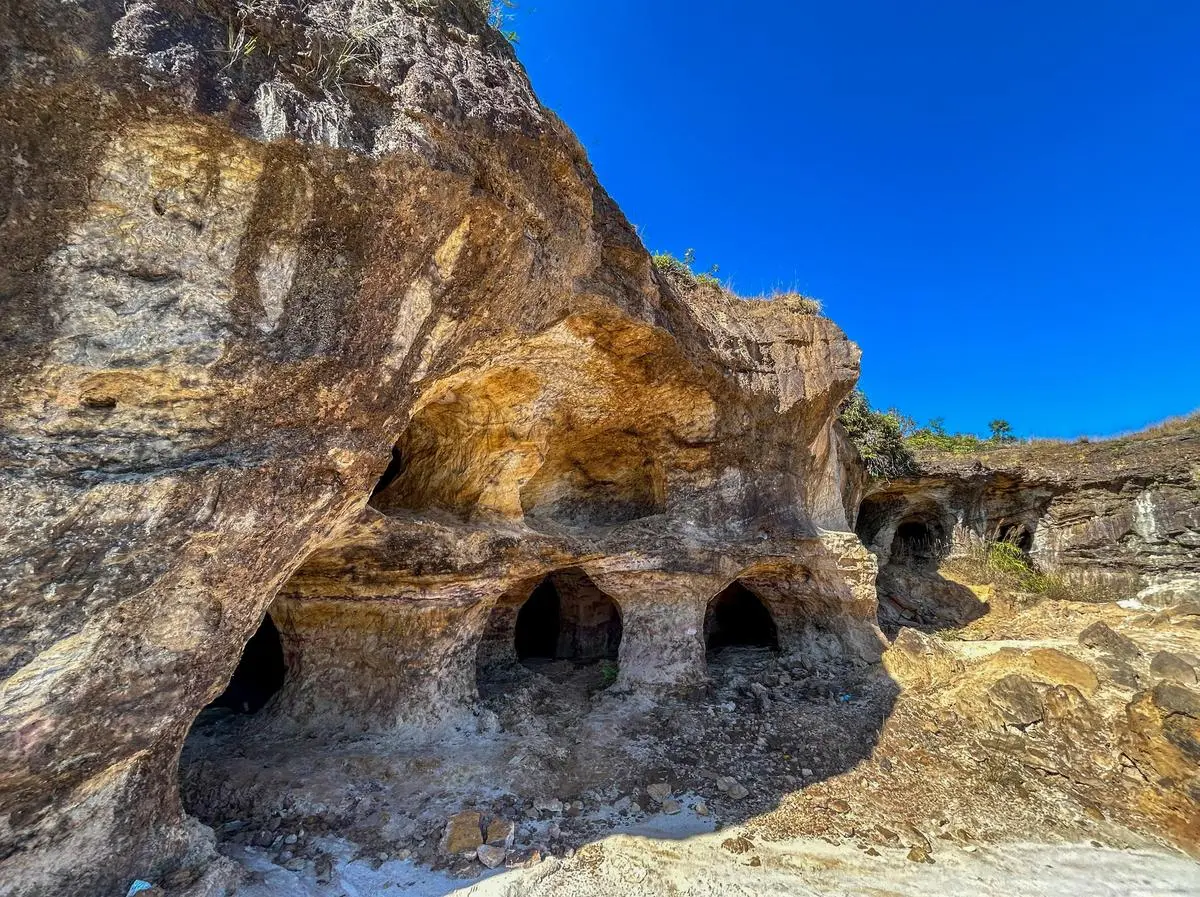
A view of rat hole mine entrances in the West Jaintia hills of Meghalaya. The mining activity makes the hills more vulnerable to earthquakes. | Photo Credit: RITU RAJ KONWAR
Another report submitted by the panel to the NGT in December 2019 highlighted how cement manufacturers and small-scale thermal power producers in the State had been procuring coal from rat-hole mines to avoid paying royalty and to cut costs. An audit of as many as nine industries had revealed huge discrepancies in the quantities of power generated vis-à-vis amounts of coal procured from legal sources. None of these plants had participated in public auctions of unutilised coal seized by the State government. In their response to the committee, these industries claimed to have replaced two-thirds of their coal requirement with slate, a non-fuel mineral. However, these plants could neither produce consent letters from government authorities for changing their product mix nor could they produce details of technical changes made to their units to accommodate an alternative mineral in lieu of coal.
“Through the panel, a demand had been made, therefore, for an independent investigation other than [by] government agencies. The green tribunal did not take heed of the demand. The suspected role of thermal power plants in procuring coal from rat-hole mines is being investigated through the coal committee formed by the high court,” Justice Katakey said.
In his reports, Justice Katakey had also highlighted the massive environmental damage caused by illegal mining activities, including the adverse impacts upon flora and fauna, and rivers, streams, and other water bodies.
Cherian Momin, a civil society activist from Tura town in the West Garo Hills district, told this correspondent that a proper investigation into the trail of money generated from illegal rat-hole mining could unravel an insidious network that possibly includes the coal mafia, businessmen from neighbouring States, and collusive government officials.
“It has been found during investigations in the past that a single challan would often be used to transport multiple truckloads of coal,” said Momin. “Transportation of coal from illegal mines is also a huge scam. There are big businessmen from neighbouring State capitals who are involved in this illegal network. A proper investigation into money laundering activities from the proceeds of the illegally mined coal will expose the network,” he added.
Ayaskant Das is an independent journalist and writer based in the National Capital Region.
Also Read | The Aravallis and the height of judicial insensitivity
Also Read | Questions over Gram Sabha records for Vedanta’s Sijimali Bauxite project in Odisha