





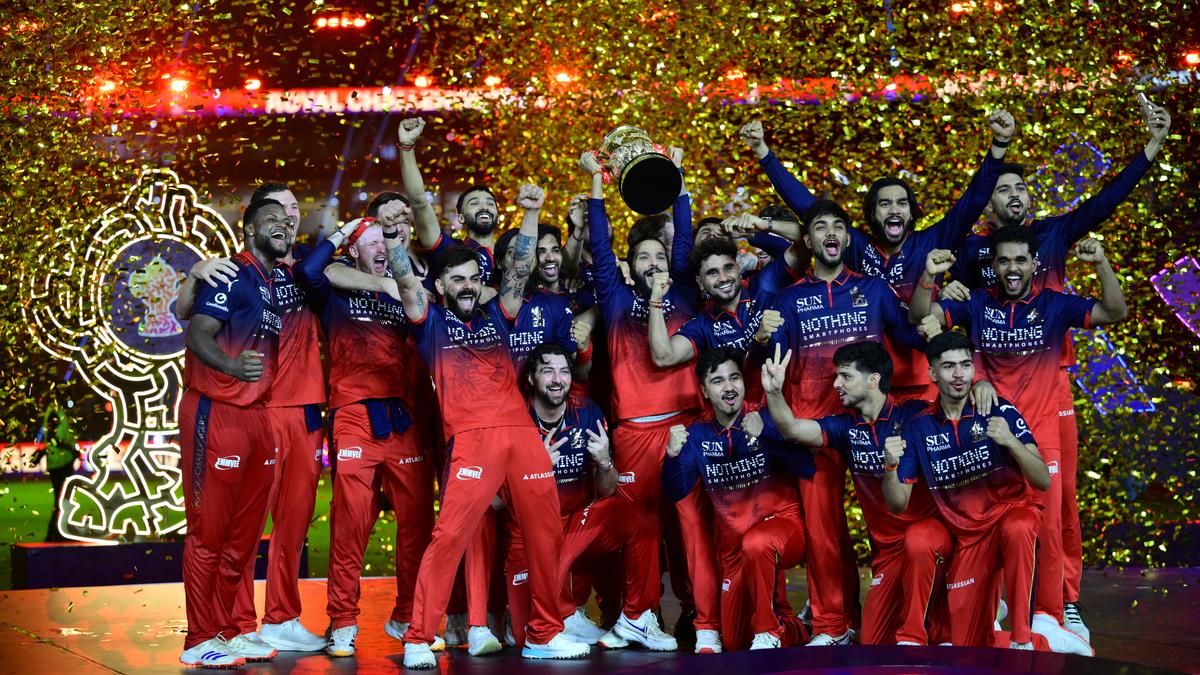
Royal Challengers Bengaluru won its second consecutive IPL title with victory over Gujarat Titans at the Narendra Modi Stadium in Ahmedabad. | Photo Credit: VIJAY SONEJI

Royal Challengers Bengaluru won its second consecutive IPL title with victory over Gujarat Titans at the Narendra Modi Stadium in Ahmedabad. | Photo Credit: VIJAY SONEJI
Virat Kohli could not control his emotions. The tears came almost instantly as the final moments sank in. He hugged teammates, support staff and anyone who happened to be nearby, his face carrying equal measures of relief and joy.
Not far away, Rajat Patidar stood quietly amid the commotion. While celebrations swirled around him, the captain looked towards the sky and smiled. It was a fleeting moment, but one that seemed to capture the weight of a journey that had begun months ago with high expectations and ended with another trophy in hand.
The Narendra Modi Stadium had long forgotten about cricket by then. Children waved flags from the stands, fans lingered in their seats unwilling to leave, and players stretched out the celebrations for as long as possible. Fireworks lit up the Ahmedabad sky as chants rolled down from every corner of the stadium.
As Royal Challengers Bengaluru secured its second successive IPL title, there was jubilation, certainly. But there was also validation.
A year ago, RCB had finally ended nearly two decades of waiting. The celebrations were then fuelled by relief; the burden of history had finally been lifted.
This triumph felt different.
This was not about ending a drought. It was about proving the first title was no accident. Defending a championship is often tougher than winning one. Expectations rise. Opponents spend months dissecting your strengths. Every defeat is scrutinised more closely.
Success often creates its own anxieties. The temptation is to search for improvements everywhere, even when little is broken.
RCB chose a different path.
Under head coach Andy Flower, batting coach and mentor Dinesh Karthik and director of cricket, Mo Bobat, continuity became a strength. The core remained intact, but the franchise quietly addressed areas that needed strengthening. There was trust in a group that had already shown what it was capable of.
That approach shone throughout the season. Players retained their roles after poor outings, and selections were not dictated by short-term results. Even during occasional setbacks, there was little sign of panic.
ALSO READ: Decoding Impact Player: Tactical usages in IPL 2026
RCB opened its campaign by brushing aside Sunrisers Hyderabad at the M. Chinnaswamy Stadium and rarely loosened its hold on the tournament thereafter.
By the halfway mark, RCB looked more certain of its identity than any other side in the competition.
“Last year was a lot of pressure. This year was calmer because of the way we played throughout the tournament,” Patidar admitted after the final. “We didn’t just play well, we dominated.”
One week, it was Kohli anchoring the innings. On another, Phil Salt blew teams away in the PowerPlay. Devdutt Padikkal provided fluency and stability at the top, while there were evenings when Rajat Patidar took charge through the middle overs, or Tim David arrived late to finish the job.
Over two months, contributions came from almost every corner of the dressing room. For years, RCB’s fortunes had often been tied too closely to Kohli. If he scored heavily, the team usually prospered. If he failed, anxiety often followed. This season, that dependency finally seemed to loosen.
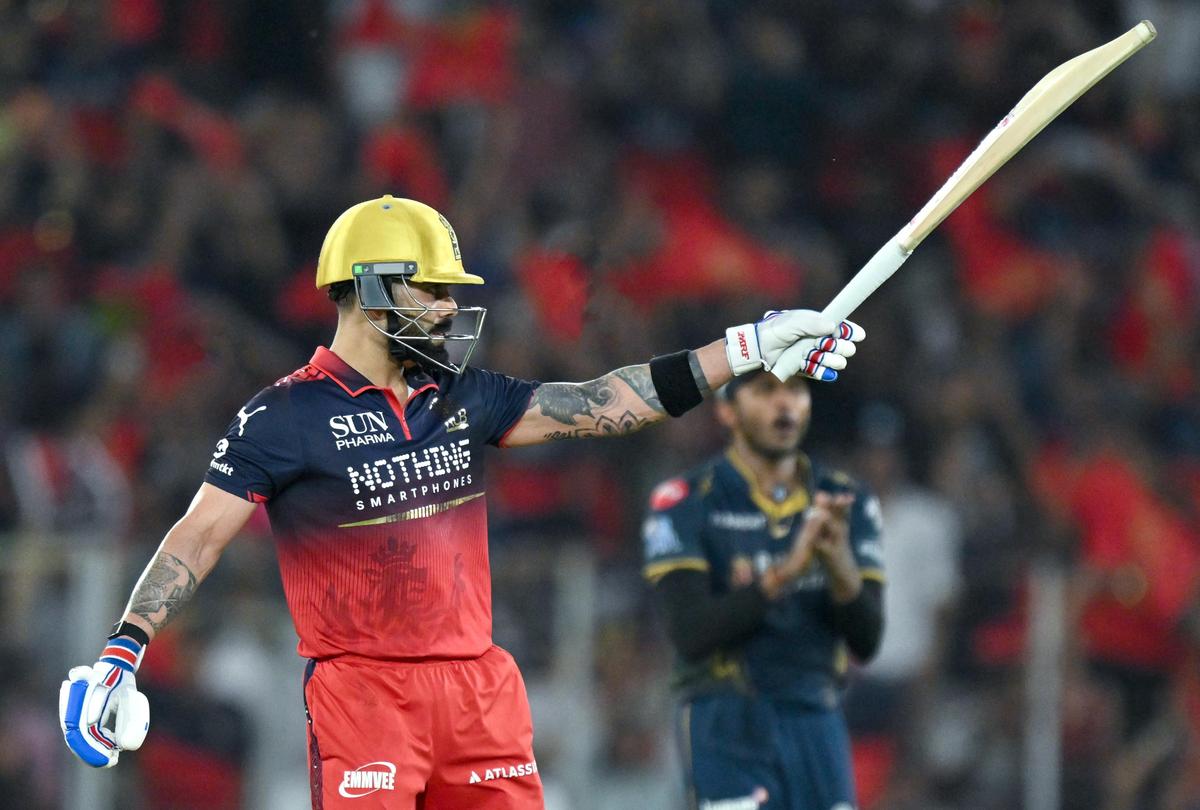
Virat Kohli remained the backbone for Royal Challengers Bengaluru with 675 runs at an impressive strike-rate of 165.84. | Photo Credit: KR DEEPAK
Virat Kohli remained the backbone for Royal Challengers Bengaluru with 675 runs at an impressive strike-rate of 165.84. | Photo Credit: KR DEEPAK
Kohli remained the cornerstone, finishing with 675 runs and once again demonstrating why he remains among the most dependable batters in the game. But support arrived from every direction.
Then there was Patidar.
He does not fit the conventional image of a captain. He is not animated on the field. He does not deliver theatrical speeches. His reactions rarely change regardless of the situation. Throughout the season, however, he exuded a quiet authority that seemed to resonate with the dressing room.
The impact became increasingly visible as the tournament progressed.
Patidar amassed 501 runs at a strike rate of 192.69, often arriving when games were delicately poised. There were innings where he rebuilt after early wickets and others where he immediately counterattacked.
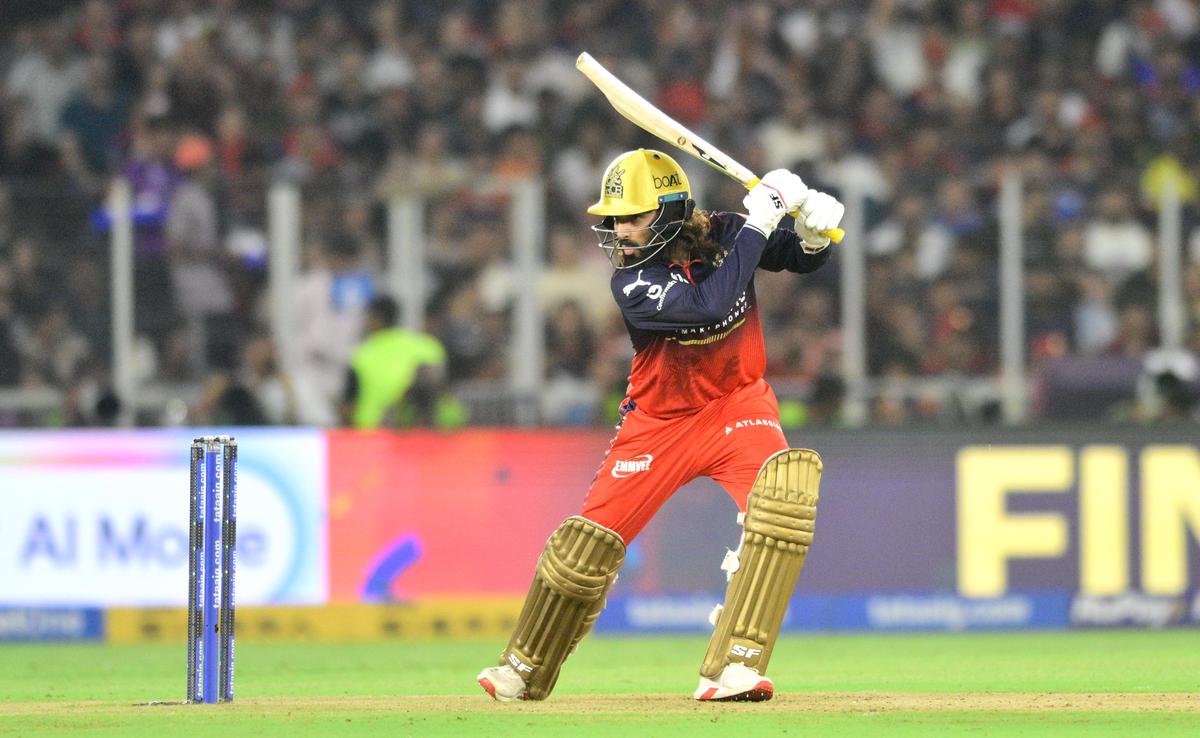
Rajat Patidar delivered a career-best season of 501 runs at a strike-rate of 192.69, and led RCB with calm and composure. | Photo Credit: VIJAY SONEJI
Rajat Patidar delivered a career-best season of 501 runs at a strike-rate of 192.69, and led RCB with calm and composure. | Photo Credit: VIJAY SONEJI
He was hardly alone.
David knew exactly why he had been recruited. His brief was simple: finish games. He scored 305 runs at a strike rate of 189.44, repeatedly tipping balanced contests in RCB’s favour. His unbeaten 70 off 25 balls against Chennai Super Kings stood out, but it was hardly an isolated contribution.
The pattern repeated itself throughout the season. An early wicket rarely derailed the innings. A collapse never seemed to be around the corner. If conditions became difficult, the batting order adapted. Rarely did the side look dependent on one individual.
If the batting provided momentum, the bowlers rarely allowed opponents a way back into contests.
While the batting attracted much of the attention, RCB’s attack quietly controlled games throughout the season. There were nights when Josh Hazlewood’s relentless accuracy set the tone. On others, Bhuvneshwar Kumar’s experience came to the fore. Jacob Duffy provided control, while Rasikh Salam Dar gradually evolved from a supporting act into a genuine match-winner.
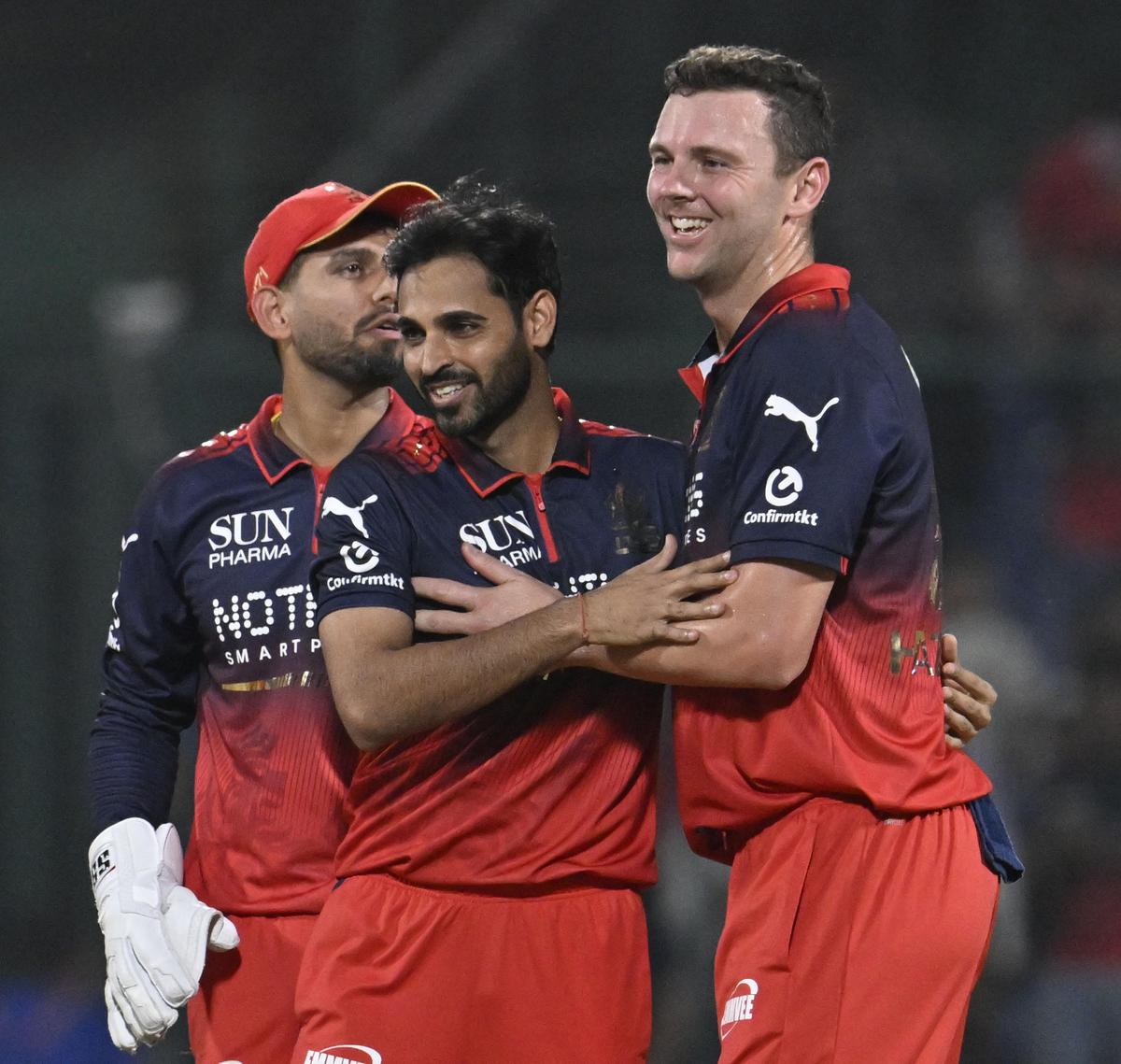
Bhuvneshwar Kumar and Josh Hazlewood led the RCB bowling attack with aplomb. | Photo Credit: SHIV KUMAR PUSHPAKAR
Bhuvneshwar Kumar and Josh Hazlewood led the RCB bowling attack with aplomb. | Photo Credit: SHIV KUMAR PUSHPAKAR
There were evenings when the new ball swung extravagantly under lights and others when it resembled a piece of old leather from the very first over. If movement was available, they exploited it relentlessly. If it disappeared, they shifted gears, attacked hard lengths and squeezed scoring opportunities.
It was a bowling attack built not on mystery but on discipline.
The experience within the attack also created space for younger bowlers to grow.
Rasikh’s emergence perhaps best illustrated the growth of the bowling unit. Trusted with difficult overs and frequently asked to operate under pressure, the young seamer grew in confidence as the tournament progressed.
With Gujarat Titans threatening to build momentum, Rasikh struck at crucial moments and finished with figures of 3 for 27 in the final, effectively extinguishing hopes of a comeback.
ALSO READ: From forgotten trials to IPL glory: The long road taken by Rasikh Salam Dar
Krunal’s contribution was harder to measure. His influence rarely arrived with fanfare. Yet few players were more important to the balance of the side.
Batters rarely scored freely against him. Dot balls accumulated. Pressure mounted. More often than not, his overs created the pressure that allowed the quicks to attack from the other end.
Much of the bowling unit’s growth could be traced back to Omkar Salvi.
Having spent years immersed in domestic cricket for Mumbai, Salvi brought both technical expertise and a deep understanding of emerging talent.
“You won’t find him talking too much in meetings,” Patidar said. “He spent a lot of time one-on-one with every bowler. That helped everyone.”
As the weeks passed, the attack looked sharper, more adaptable and far more confident in different conditions.
By the time the playoffs arrived, RCB was the most complete side in the competition. The batting had depth. The bowling had variety. The fielding remained sharp.
More than anything else, there was a sense of calm.
Kohli acknowledged it after the final. “I said to a few other boys that it doesn’t feel like the same pressure as last year. We knew what kind of ability we had in the group. We topped the table. There’s a reason we got here first, and we just said one thing: if we stick to our cricket, if we execute our plans, we are the best team in the comp, and there’s a reason why we have done well so far in the group stage,” Kohli said.
The final felt like an extension of everything RCB had done during the league phase. There were no tactical surprises and no signs of a side overwhelmed by the occasion. The bowling laid the platform. The fielders sustained the pressure, and then the batters completed things clinically.
RCB simply played the same brand of cricket that had carried it to the top of the table. The occasion had changed. The approach had not.
Long after the presentation ceremony ended, many of the players were still on the field.
Kohli lingered near the boundary rope, soaking in the atmosphere. Patidar moved from one television interview to another. Members of the support staff gathered around the trophy for photographs they would probably revisit years from now. Even as the stadium slowly emptied, nobody seemed particularly eager to leave.
For a franchise that spent nearly two decades waiting for its first IPL title, nights like these remain precious.
A year ago, RCB finally got rid of the baggage that had followed it for years. Twelve months later, it had returned to the summit. The wait for one trophy lasted 18 seasons. The second took only a year.
And as the celebrations rolled on deep into the Ahmedabad night, there was a growing sense that this team was no longer chasing history. It was creating a new one.
Published on Jun 03, 2026
Live Blog 2026-06-03T14:15:00+05:30
Nepal vs Bangladesh LIVE score, SAFF Women's Championship 2026 semifinal: NEP 1-1 BAN; Second half begins此内容由惯性聚合(RSS阅读器)自动聚合整理,仅供阅读参考。 原文来自 — 版权归原作者所有。