








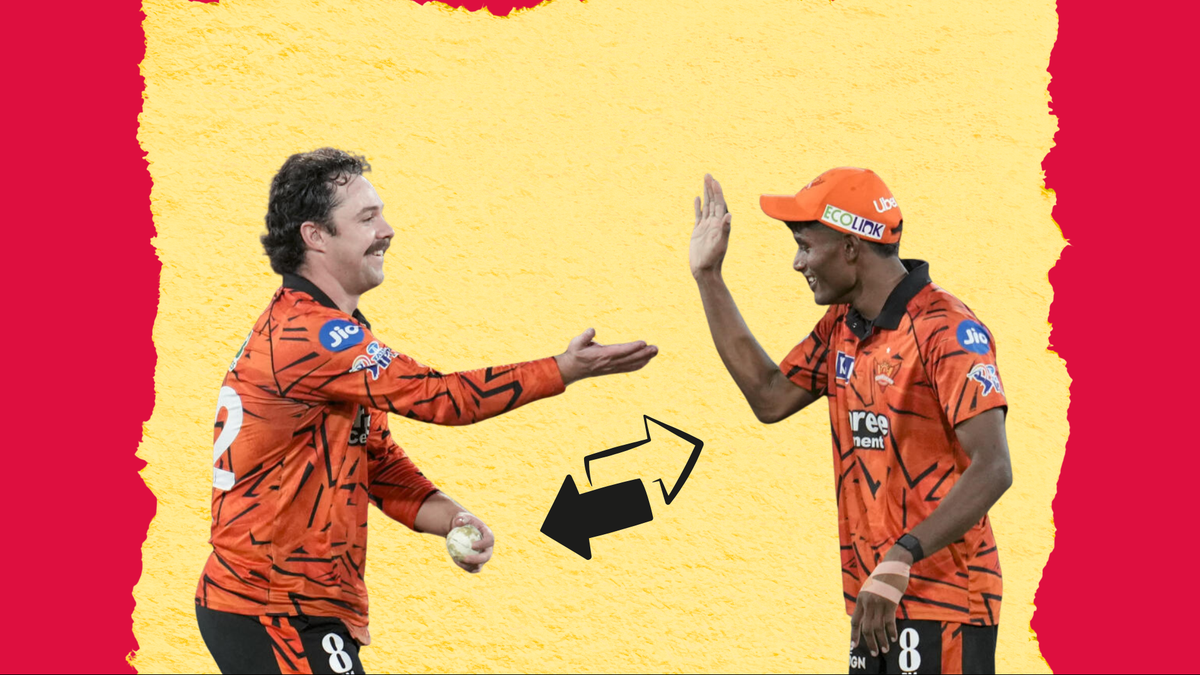
Sunrisers Hyderabad settled into a rhythm of swapping Travis Head (left) and Sakib Hussain in the second half of the season. | Photo Credit: PTI

Sunrisers Hyderabad settled into a rhythm of swapping Travis Head (left) and Sakib Hussain in the second half of the season. | Photo Credit: PTI
The IPL 2026 match between Royal Challengers Bengaluru and Mumbai Indians in Raipur was significant in many ways. RCB has acknowledged it as the match that gave it a momentum boost on the way to the title, while defeat meant that both MI and LSG were eliminated from Playoff contention.
But one of the most interesting things in the match was something that did not happen at all. MI opted to name leg-spinner Raghu Sharma as its Impact Player, but on a tricky wicket, he did not bowl a single over. It was the second time in the season MI had done so, having previously brought Shardul Thakur into a match against Sunrisers Hyderabad before leaving him entirely unutilised.
The effect of the Impact Player on the IPL is well documented. Aided by flat pitches and small grounds, it has kickstarted a batting boom in the IPL, with scoring rates ascending rapidly, along with the number 200+ scores put up and chased. Indeed, these results have earned it heavy criticism.
But beyond asking what impact it has had on the IPL, one must question how the Impact Player rule has changed it. And the most instructive starting place to answer that question is to examine the kinds of strategies teams have employed.
At its simplest, the Impact Player rule affords every team the option to add an extra batter and bowler to its lineup. The identity and profile of the Impact Player is variable, with teams little preference for players of specific roles.
Instead, the identity of any team’s Impact Player tended to be more calibrated to the dynamics of its squad, with players who were carrying injuries, are one-skilled, or weaker fielders generally preferred.
An illustrative example is Finn Allen. Allen became the de facto Impact Player for KKR largely because it had no other option with Ajinkya Rahane the captain, Angkrish Raghuvanshi keeping wickets, Anukul Roy and Cameron Green as all-rounders, and the rest the side’s best fielders.
Similarly instructive is Rohit Sharma. Rohit missed several games with a hamstring injury, and once he was fit to bat again, Mumbai Indians opted to remove him from the match after batting in order to minimise the risk of aggravating his injury.
There are very few examples of teams having a consistent Impact Player swap on both sides of the swap. Sunrisers Hyderabad settled into a rhythm of swapping Travis Head and Sakib Hussain in the second half of the season, and Gujarat Titans generally swapped Prasidh Krishna and Rahul Tewatia or Shahrukh Khan. Far more common was a setup where only one side of the substitution remained fixed.
One point to note is that certain players seem to become the designated Impact Player only in certain situations. The most prominent example of this is Vaibhav Sooryavanshi, who was often substituted into the match when Rajasthan Royals was chasing to keep him fresh for batting, but was substituted out only once when it batted first.
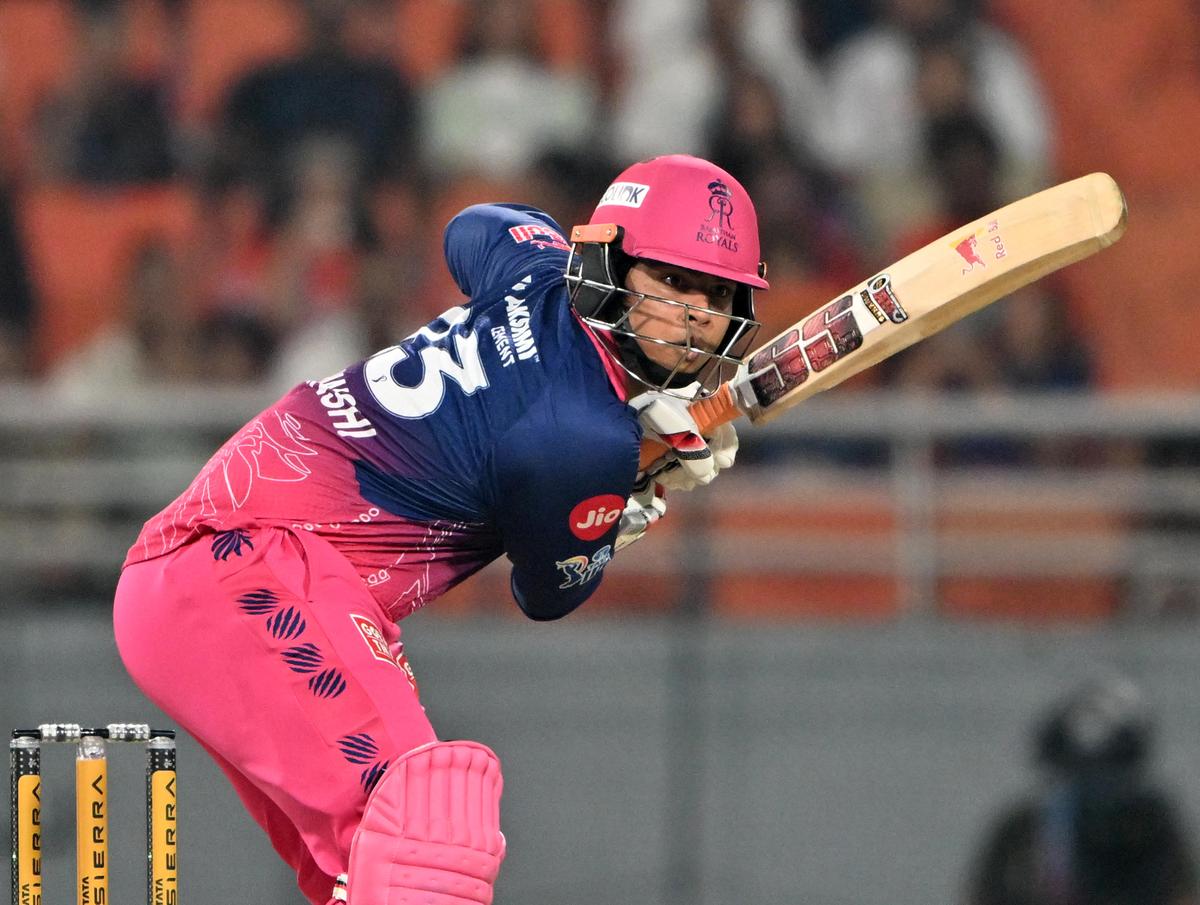
Rajasthan Royals often kept Vaibhav Sooryavanshi on the bench when it bowled first, ensuring the young opener remained fresh for the chase. | Photo Credit: RV MOORTHY
Rajasthan Royals often kept Vaibhav Sooryavanshi on the bench when it bowled first, ensuring the young opener remained fresh for the chase. | Photo Credit: RV MOORTHY
Simarily, Punjab Kings regularly substituted Yuzvendra Chahal out while chasing, but never once brought him in when batting first. Instead, it kept him in the playing XI named at the toss, and substituted another player in.
This is possibly to give it the flexibility to revert to the one deviation from the one batter-one bowler strategy; using an extra batter as the Impact Player when a team’s top order collapses batting first. This is a strategy that many franchises have used, with players like Venkatesh Iyer and Shubham Dubey among those called in to firefight for their teams, albeit with limited success.
Perhaps the most trigger-happy with this strategy was Chennai Super Kings, which twice brought Sarfaraz Khan in as an Impact Player inside the PowerPlay when it had lost early wickets.
CSK is also one of the few franchises that employed a more flexible strategy, often swapping between bringing in an extra seamer or an extra spinner depending on conditions.
The franchise’s approach exploited an interesting fact about the Impact Player rule that has generally been underexplored; that the player being brought in as an Impact Player allows a team to boost its chances of victory by reacting to a gamestate.
A parallel can be drawn in football. A football substitution is done with knowledge of the match situation, in-form players, and the opposition’s tactics and vulnerabilities. A team can then target how to maximise its substitutes by tailoring the tactics to the situation.
The Impact Player is theoretically similar. The XI named at the toss is done with imperfect information about conditions. The substitution, however, can be made with nearly 20 overs worth of information to inform it, and thus maximise the benefit it can give.
There were some shoots of teams beginning to exploit this towards the end of the season. When KKR batted first against Gujarat Titans, it opted to leave all-rounder Rovman Powell on its bench along with Matheesha Pathirana, effectively going into the innings a batter short. If KKR approached the end of the innings needing a finishing punch, Powell could be brought in.
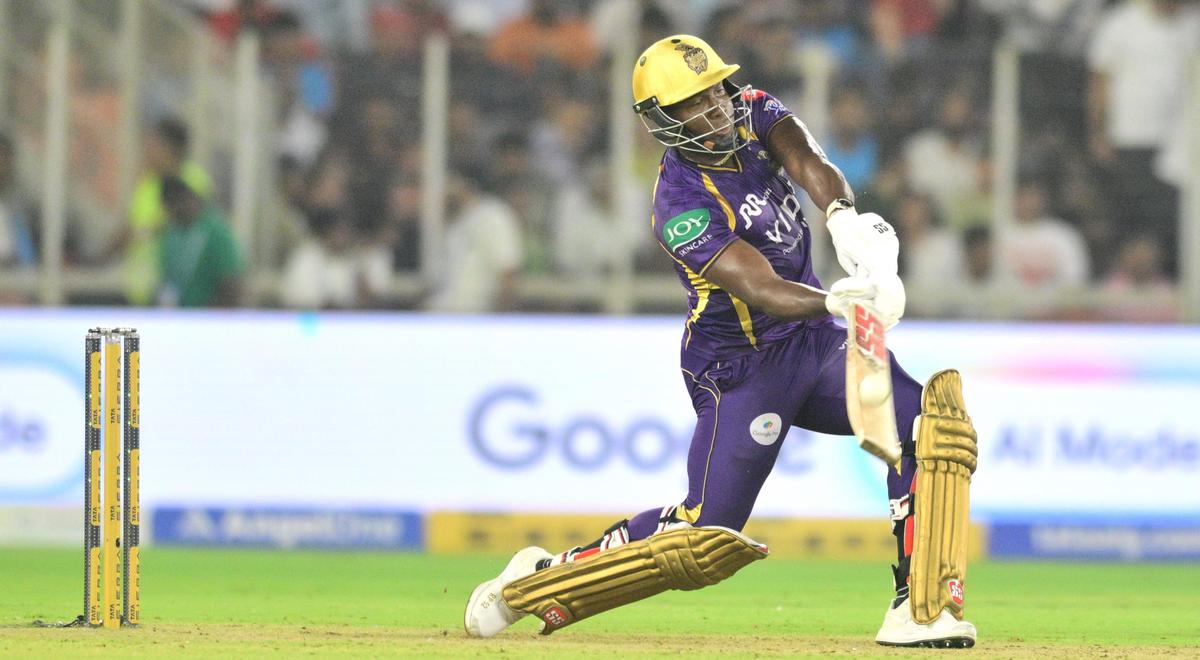
Against Gujarat Titans, Kolkata Knight Riders left out Rovman Powell from its bat-first 11, with the idea of bringing him on only if its batting fails. | Photo Credit: VIJAY SONEJI
Against Gujarat Titans, Kolkata Knight Riders left out Rovman Powell from its bat-first 11, with the idea of bringing him on only if its batting fails. | Photo Credit: VIJAY SONEJI
Instead, KKR’s top-order fired, and it could afford to bring in Pathirana, an extra frontline bowler. As it so happened the ploy was unsuccessful as Pathirana pulled up injured eight balls into his spell, but it was a moment of strategic innovation that came off. This strategy was later replicated in the Playoffs by Royal Challengers Bengaluru with Romario Shepherd and Jacob Duffy, and Rajasthan Royals with Shubham Dubey and Sushant Mishra.
Not only does such a strategy boost the team’s in-game flexibility, but it also allows the side to reap the benefits of better squad construction. Beyond that, it is also a strategy that is only enabled by having genuine all-rounders, often lamented as the victims of the Impact Player rule.
And to push further, could there be other creative uses of the rule? Consider for example, a team using a batter more adept against spin on a turning track, or a left or right-handed batter to exploit a shorter boundary on a skewed ground? Perhaps on the bowling front, a team could use a left-arm spinner against a team of right-handers, or a taller bowler on a bouncy track.
To call on an example, in the final, Gujarat Titans opted to call on Prasidh Krishna as its Impact Player as it has for most of the season. However, with the pitch somewhat two-paced, the evidence of Krunal Pandya’s impressive spell of surprisingly conventional left-arm spin, and a host of right-handers in RCB’s middle-order, could GT have benefitted more from having a similar bowler like R. Sai Kishore or Manav Suthar to call upon?
Or reflecting on the example of our unused substitute Raghu Sharma, MI had a full first innings of evidence to note that seamers had been far more effective and Shardul Thakur to call upon. Had it left Afghan mystery-spinner AM Ghazanfar, who did not bat and bowled three expensive overs on the bench, it could even have given itself the option of bringing in a frontline bowler like Trent Boult as well.
Coming into the season, there was plenty of talk about the Impact Player rule, with captains expressing reservations about it in the pre-season meeting. The BCCI has clarified that any reconsideration of the rule will only take place after the 2027 season.
However to hark back to the examples of Raghu and Shardul with MI, if the Impact Player rule is to go in 2028, it will likely go with teams having left significant potential to extract benefit from it on the table, or if you will, Impact the game.
Published on Jun 02, 2026
此内容由惯性聚合(RSS阅读器)自动聚合整理,仅供阅读参考。 原文来自 — 版权归原作者所有。