










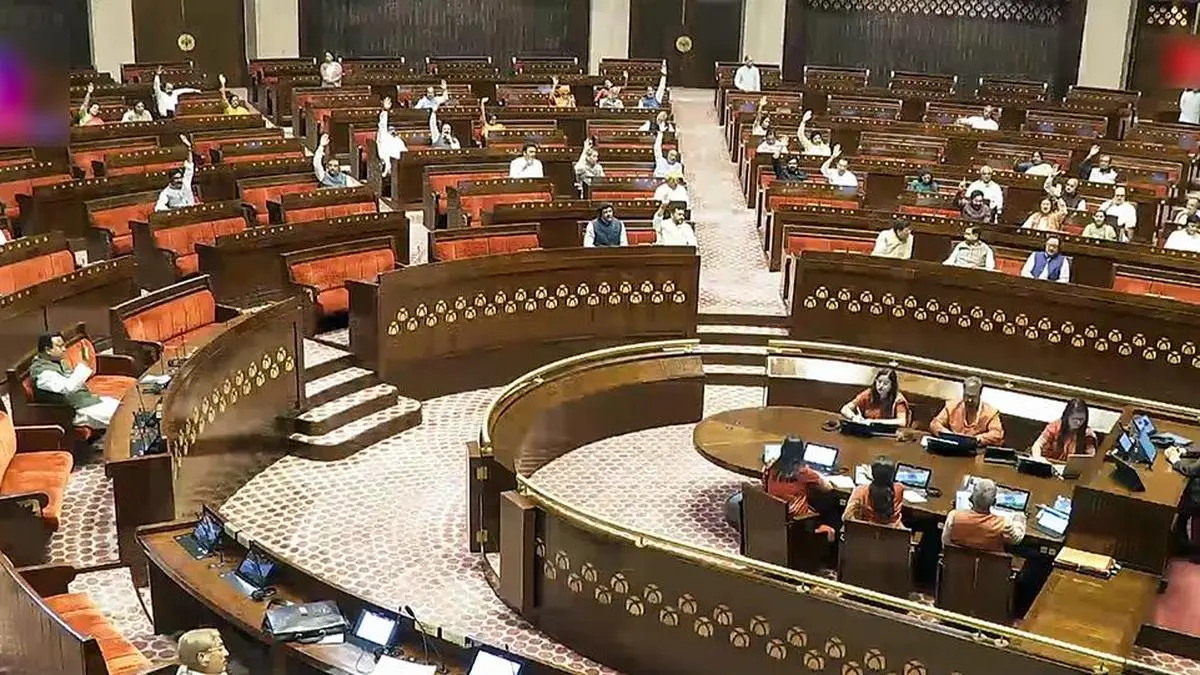
Officials said that the measures aim to facilitate the speedy disposal of cases and reduce litigation burden on courts, while ensuring adherence to principles of natural justice. | Photo Credit: ANI
The Jan Vishwas (Amendment of Provisions) Bill, 2026, was passed by the Rajya Sabha on Thursday, after it was passed in the Lok Sabha on Wednesday. Union Minister for Commerce and Industry Piyush Goyal emphasised that the Jan Vishwas (Amendment of Provisions) Bill, 2026, is designed to foster trust-based governance. Speaking in the Rajya Sabha on Thursday, he said, "There will be fear in those who break the law knowingly."
The Minister highlighted that with this reform, they have attempted to "provide protection through adequate civil mechanisms" and "tried to bring swift and proportionate penalties."
Clarifying that the Bill does not dilute essential regulations like the Drugs and Cosmetics Act Goyal assured the House that "very strict and severe criminal punishment" is imposed for those who manufacture, import, or sell spurious drugs without approval from the drug controller.
The legislation aims to promote a governance model based on trust and proportionate regulation, while reducing compliance burden and decriminalising minor offences to facilitate smoother business operations and improve citizens' quality of life.
The Bill seeks to amend 784 provisions of 79 Central Acts administered by 23 Ministries, decriminalise 717 provisions to promote Ease of Doing Business and amend 67 provisions to facilitate Ease of Living.
The Bill seeks to rationalise more than 1,000 offences, remove outdated and redundant provisions and improve the overall regulatory environment. It envisages a shift from criminal penalties for minor, technical, or procedural defaults to civil and administrative enforcement mechanisms.
Key measures include replacing imprisonment provisions with monetary penalties or warnings, graded enforcement mechanisms, including warnings for first-time contraventions and rationalisation of fines and penalties in proportion to the nature of the offence.
To ensure efficient and time-bound enforcement, the Bill provides for the appointment of Adjudicating Officers and the establishment of Appellate Authorities.
Officials said that the measures aim to facilitate the speedy disposal of cases and reduce litigation burden on courts, while ensuring adherence to principles of natural justice.
The Bill also proposes 67 amendments under the New Delhi Municipal Council Act, 1994 and the Motor Vehicles Act, 1988.
Published on April 3, 2026
此内容由惯性聚合(RSS阅读器)自动聚合整理,仅供阅读参考。 原文来自 — 版权归原作者所有。