







The folklore around the legendary actor-director-producer Pramathesh Barua (1903—1951) began with a bang only to end in a whimper. Immensely popular with audiences throughout the country, Barua earned in lakhs, but frittered the wealth away on drink, women, high living, and misadventures in his later years. While Kanan Devi, the heartthrob of thousands like Barua, rose from obscurity to extraordinary prosperity, Barua faded from remarkable early success to penury. Had a woman, besotted by the actor’s looks and regal bearing, not taken him in, he would in all probability have died destitute. Even then, Barua’s last days were racked by ill health and the indelible marks inflicted by an industry that knows how to exploit but rarely to support those in need.
Nearer our own times, the case of the great character actor Sunil Mukherjee (1946—2012) reads like a repetition of that story of neglect and indifference.
Brojo in Buddhadeb Dasgupta’s Neem Annapurna, Magan in Goutam Ghose’s Dakhal, Shetal Das in Buddhadeb’s Grihajuddha, Chamku in Goutam’s Paar, Rashu in Buddhadeb’s Phera, the priest in Dhananjay Mondal’s Talnabami—across more than three decades, Sunil Mukherjee never gave a mediocre performance. He stood out by virtue of an instinctive gift. His use of the actor’s tools—body, eyes, voice—had to be seen to be believed, and yet he remained largely unsung by the industry and the establishment. That creative but largely unrewarded life came to an end fourteen years ago in a corner of a hospital in Jadavpur. Predictably, none of the leading figures of the Bengali film world, many of whom had built their careers on the labour of extraordinary actors like Sunil, were there. It is time once again to examine the citations for excellence in film, in the light of the neglect with which even the finest of its foot soldiers are routinely treated.
“Isn’t it an irony that after starting out as the lead in Neem Annapurna and giving good performances in several films after that, my appearances these days should be restricted to one or two short sequences in film after film?” Sunil asked, his voice heavy with disappointment.
It was early January 1987, and we were seated on a small cot that took up half the space of a single room he called home, sharing it with his wife and young son. Tea was hot, a bidi was lit, and Sunil’s mind travelled back to the 1970s.
“Mohit Chattopadhyay and Buddhadeb Dasgupta, between them, may be said to have been responsible for my coming to films. Both the dramatist and the poet had seen me on stage and told me, in separate encounters, that the screen held possibilities for me.
“Acting runs in the family. My father was no actor, but an uncle was an accomplished one. I like to believe I have inherited a part of his talent. My mother died when I was very small, and the only pleasant memories of a deprived and difficult childhood hover around my performances in the occasional plays staged in the locality where I lived. I remember doing important roles even at 12 or 13. When I came of age and was looking for a serious outlet, I came across a group called the Calcutta People’s Art Theatre (now defunct). Aparna Sen was among its leading lights.”
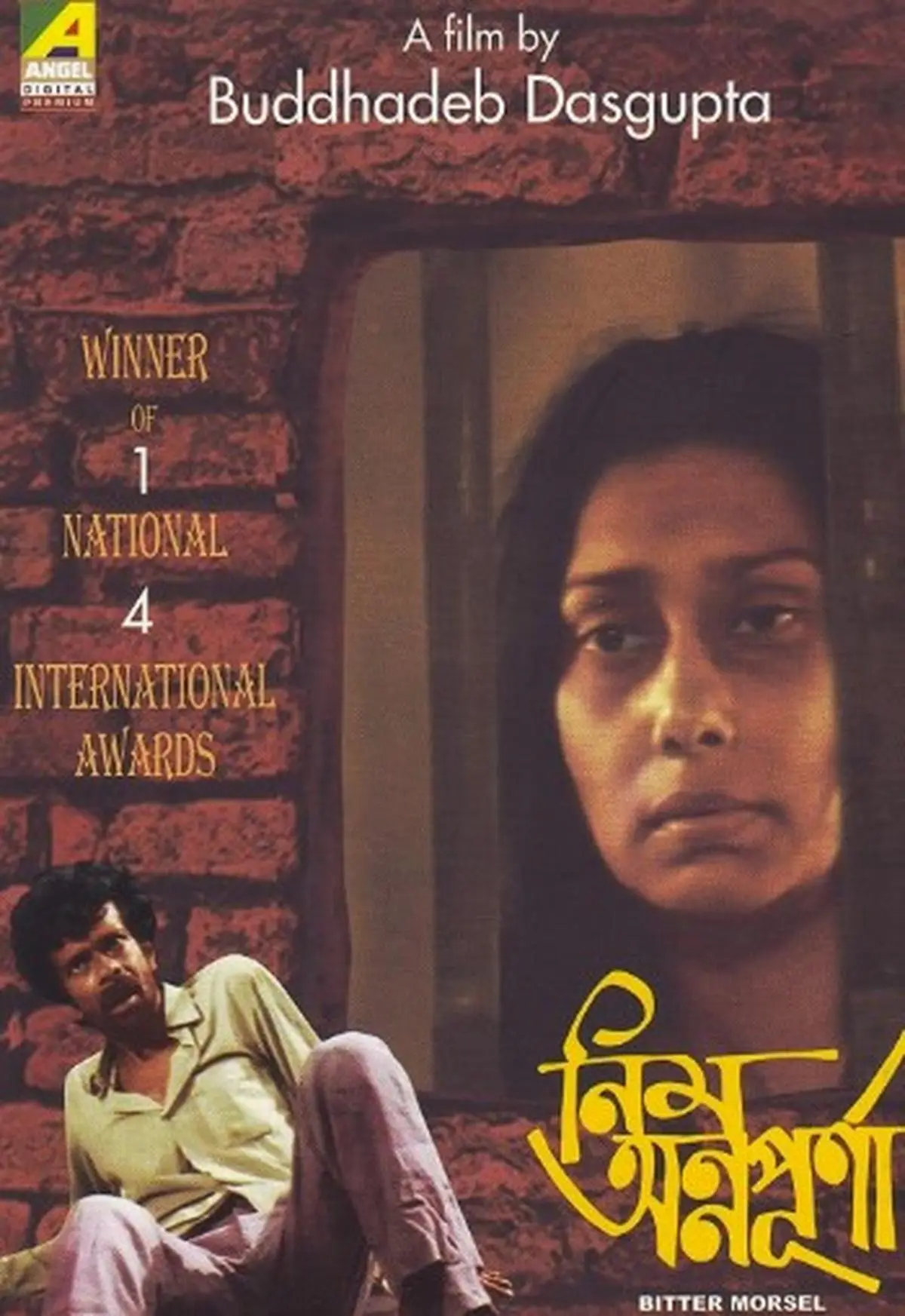
Buddhadeb Dasgupta’s Neem Annapurna. Sunil once asked: “Isn’t it an irony that after starting out as the lead in Neem Annapurna and giving good performance in several films after that, my appearance these days should be restricted to one or two short sequences in film after film?” | Photo Credit: IMDB
“In 1977, Buddhadeb had initially chosen me to act in his first film, Dooratwa, but I did not get to act in it after all. In 1979, when he began assembling his cast for Neem Annapurna, he first asked me to do a bit role. He soon changed his mind and offered me the role of Brojo, the film’s central character—a one-time bhadralok [genteel person] de-classed by adverse socio-economic circumstances. The offer came as a shocking, though pleasant, surprise.
“I was not sure whether I could do justice to such a difficult role in what clearly promised to be a demanding film. But Buddhadeb seemed to have faith in my abilities and, when I expressed my misgivings, said there was nothing to worry about.
“As it turned out, the film was critically acclaimed at home and abroad, and my performance came in for handsome praise. That the film was released years after it had been completed, or that it did not do well at the box office when finally released, reflects more on the production-distribution-exhibition system than anything else.
“After Neem Annapurna, offers started trickling in: first Mohit Chattopadhyay’s Megher Khela, followed by Dilip Roy’s Garam Bhaat, neither of which has been commercially released. Then came what passed for the Left Front government’s enthusiasm for good cinema in the early 1980s, which was exploited by directors good, bad, and indifferent. I got to act in Goutam Ghose’s Dakhal, which won the national award for best film, and Buddhadeb Dasgupta’s Grihajuddha.
“Magan in Dakhal was a low-key role where I had to “say” a great deal with my eyes and face. Acting in Grihajuddha as Shetal Das, the goalkeeper who is also a part-time hoodlum, involved considerable action and body movement. People have said that the range of my abilities came out well in those two very different kinds of films.
“Shankar Bhattacharjee, who first made a name with Dour, which dealt with youth unrest and radical politics, asked me to act in his film Anneshan; and Raja Mitra for his Ekti Jibon. Anneshan did tolerably well at the box office, but Ekti Jiban has been in the making for years and no one knows if or when it will be released. I have also acted in Himghar, directed by Sandeep Ray.”
In Goutam Ghose’s Paar, Sunil had a fairly long role. He felt his performance might have registered more strongly with critics and audiences had the director’s conception of Chamku—the character who introduces the fleeing village couple, played by Naseeruddin Shah and Shabana Azmi, to both the pleasures and the pitfalls of the city—been sharper. In any case, he was quick to add, it was a matter of pride that a Hindi film made in Calcutta did so well commercially and also picked up awards at home and abroad, notably at Venice.
A natural on screen
If Sunil repeatedly proved his mettle on the big screen, his television appearances also did him credit. He was seen to advantage in one of the 13 Hindi episodes directed by Sandip Ray (Satyajit’s son), called Shongshoy. In Tarinir Basha Bodol, whatever public acceptance Goutam Ghose’s otherwise undistinguished series managed was largely down to Sunil’s portrayal of Tarini, the impecunious householder. He was also present in two short stories made into television episodes: Alor Brittey, written by Samaresh Bose and directed by Inder Sen, and Traan Karta by Ashapurna Devi, filmed by Raja Sen.
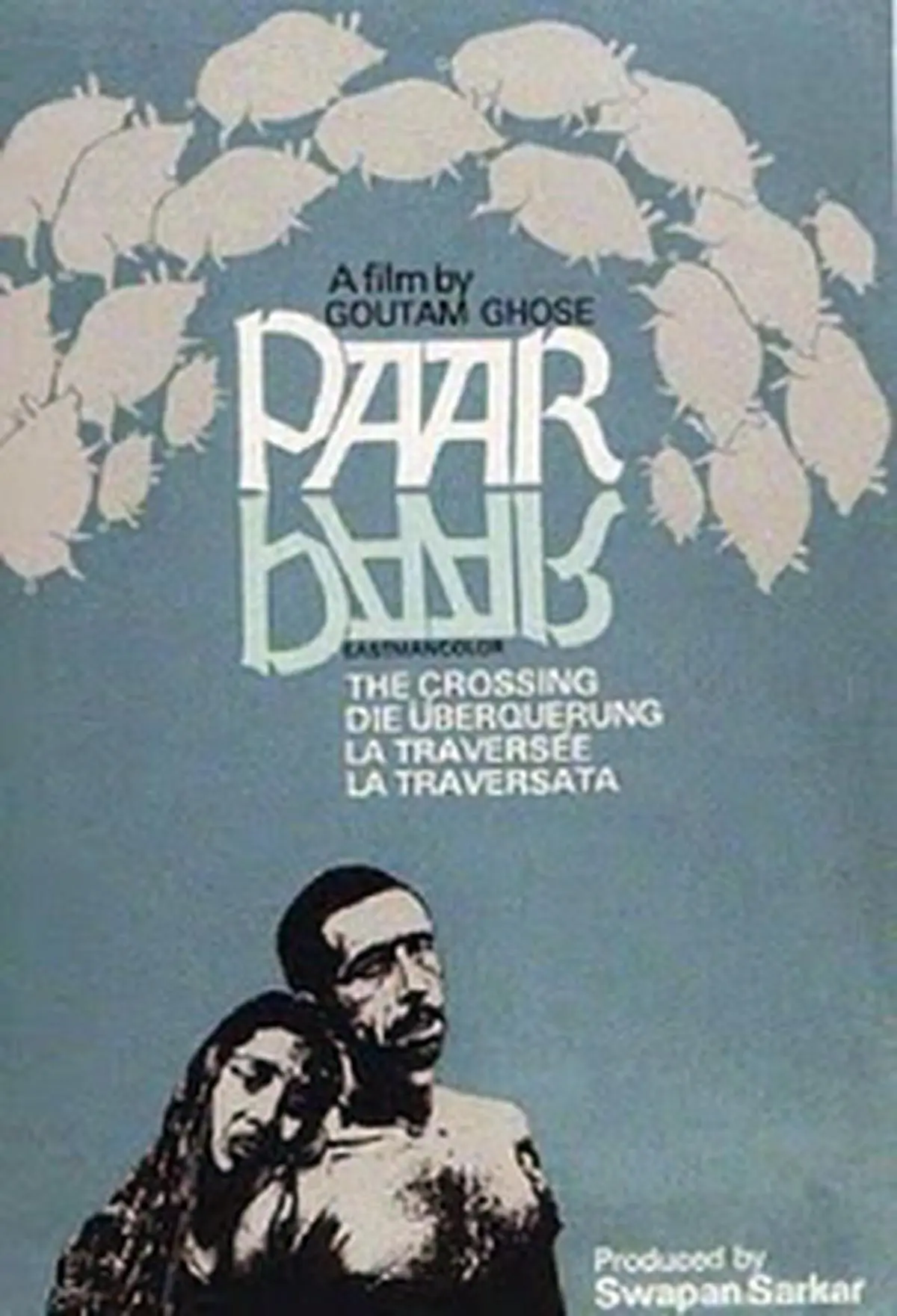
Gautam Ghose’s Paar. | Photo Credit: Wikipedia
Asked how he felt acting in television productions, Sunil expressed views shared by many sensitive directors and artists. Television was still new to most Indians when they spoke in the late 1980s, and while it would attract audiences as long as its novelty held, it was not, he felt, a patch on the big screen. Much of an actor’s exertion was wasted on the small screen, which habitually failed to convey fine touches. The medium was even more agonising for the ambitious director. But money from sponsorship would keep television in the public eye for some time to come.
Little could the speaker have anticipated that the seemingly harmless little box would one day reduce a whole nation’s cultural appetite to something considerably less than it had been.
A measure of the man
From the first time I saw Sunil on screen, I noted his acumen as an interpreter of roles. He never acted; he always interpreted—from the de-classed bhadralok in Neem Annapurna to one of the exploited lumpen in Grihajuddha, from the sly man coveting the defenceless young widow in Dakhal to the city drifter who scrounges off an unsuspecting village couple in Paar. He was easily the most impressive young character artist in Bengal in those years, and one of the finest in the country. It would not be an exaggeration to say that in his most outstanding performances, Sunil was comparable to the great Malayalam actor Bharat Gopy—synonymous with Adoor Gopalakrishnan’s Kodiyettam—or G. Aravindan’s Chidambaram.
A few words about Neem Annapurna are warranted, because this was the only major film in Sunil’s career in which he carried the lead—and what an unforgettable account he gave of himself as Brojo, one of Calcutta’s countless godforsaken men who had lost his surname as surely as his sense of shame in pursuit of a toehold for his family of wife and two daughters. No one was surprised when the best actor’s prize was awarded by the Bengal Film Journalists’ Association (BFJA) to Sunil.
In the summer of 2006, I had occasion to serve on the main jury of the Zanzibar International Film Festival (ZIFF). At the awards ceremony on the final evening, I was called to the stage to accept the FIPRESCI prize on behalf of Dhananjay Mondal, the director of Talnabami (Festival), adapted from a story by Bibhutibhusan Bandyopadhyay. The jury, drawn from Russia, Turkey, Egypt, France, and Burkina Faso, praised the director’s simple and effective style in relating both the textures of village life and the troubles of a poor priest and his family. After the ceremony, more than one FIPRESCI juror told me how moved they had been by the priest’s acting—meaning Sunil Mukherjee’s portrayal of a loving father and husband who cannot provide for his family despite his best efforts. It looked as though, somewhere along the line, the actor’s life and his cinematic role had become inextricably intertwined.
Vidyarthy Chatterjee is a veteran Calcutta-based writer-critic.
Also Read | What Indian cinema did—and didn’t—do with the Earth
Also Read | What can a martyr’s documentary tell Bangladesh about its future?