






Mandira Sen, 77, is a distinguished publisher and co-founder of Bhatkal and Sen, an independent Indian publishing house known for its pioneering imprints, Stree and Samya. She was born in Calcutta in 1948. On her mother’s side, the radical writer Jyotirmoyee Devi was her great-aunt. Sen was educated in India and London, earning a BA in History from Bedford College (1969) and an MA from the School of Oriental and African Studies (SOAS) in 1970.
Sen honed her editorial craft in the United States, beginning in 1972 as an editorial assistant at Schenkman Publishing, before moving to the medical department of Little, Brown and Co., and later serving as a trade copyeditor at Houghton Mifflin. Upon returning to India, she worked as regional editor for Orient Longman and later freelanced for Oxford University Press in the UK. She initially founded “Mandira”, a venture focused on bilingual children’s books, where she learned the gruelling realities of independent distribution.
In 1990, she partnered with Ramdas Bhatkal of Popular Prakashan to establish Stree, one of India’s leading publishers of women’s studies. By 1996, the house launched the Samya imprint, becoming the first in India to address caste and Dalit writing as a central social science and feminist concern. Between 2015 and 2022, the imprints collaborated with Sage India to publish two dozen titles. A staunch advocate of the independent trade, Sen is also a partner in Independent Publishers Distribution Alternatives (IPDA) and a member of India Independent, Books and Ideas.
In this interview, Sen talks about her journey from a childhood shaped by English literature to her mission of publishing marginalised voices without sanitising them for English audiences. She discusses the challenges of maintaining social commitment and scholarly rigour in a publishing landscape increasingly shaped by corporate pressures, the complexities of sustaining an unfunded press at 77, and the power of translation in reshaping Indian social science.
Edited excerpts:
Tell us about your early relationship with books while growing up. What writers and books were you drawn to, and how did that influence your decision to enter publishing?
I don’t recall handling books before the age of seven. I spent most of my time playing outside after school. Our Delhi colony had swings, and I would race to grab them. Though I grew up in a Bengali family and Bengal has a great tradition of children’s literature, I seem to have read only English books. My mother came from a prabasi (expatriate or migrant) Bengali family long settled in Jaipur since 1857 and had little exposure to children’s books. The children studied at home until the youngest uncle returned from England after earning his FRCS and sent them to school.
There was a well-known writer in the family, Jyotirmoyee Devi (1894–1988), a radical figure. She was allowed tutors, education, and publication opportunities after returning home as a widow with six children, all raised in her younger brother’s household. He was my grandfather. I was initially wary of her reputation, but when I read her, I was struck by the quality of her work. We later published a collection of her translated short stories, The Impermanence of Lies.
So I read mostly in English. Apart from Enid Blyton, I read a great deal of historical fiction, often received as school prizes: Violet Needham’s The Woods of Windri; Roman history books by Henry Treece, such as The Eagle of the Ninth; E. Nesbit’s The Railway Children, among others. I was, in a sense, colonised early.
Later, my father’s job took us to London for over four years, where I studied at North London Collegiate School. It was academically rigorous but publicly funded, with students from varied class backgrounds. Art, pottery, and music were treated on par with academic subjects. The emphasis was on questioning everything. There I read Chaucer, Milton’s Paradise Lost,Shakespeare, and Gerard Manley Hopkins. I also read Bunyan’s The Pilgrim’s Progress, and my essay on it was singled out for praise. At university, alongside the History syllabus, I read widely. There was a Bloomsbury obsession about so I read Virginia Woolf and her circle. I was particularly drawn to Leonard Woolf’s memoir The Journey Not the Arrival Matters, a title taken from Montaigne, whose essays I admire.
It was during my MA at SOAS that I began reading Bengali seriously. The library had extensive nineteenth- and early twentieth-century works, and I read Bankim Chandra and Sarat Chandra. I was preparing to return to India and realised how little I knew.
Also Read | Land colours memories and imagination: Mamang Dai
How did this reading and your time abroad influence your publishing career?
The Woolfs’ Hogarth Press gave me a rather romantic and misleading idea of publishing. It appeared civilised and small-scale. Virginia Woolf did the typesetting herself, partly as a way to manage her mental health, and they seemed to acquire important books with ease.
Other books stayed with me from later years: Margaret Atwood’s Negotiating with the Dead; William Empson’s lectures on the relationship between texts, writers, and readers; works by Alice Munro; Colm Tóibín’s House of Names and The Magician; and Marcel Reich-Ranicki’s writings after his return to Germany. I also recall Jaya Mitra’s prison memoir Hanyaman. I read Emily Dickinson, Elizabeth Bowen, Rosamond Lehmann, and Margaret Kennedy. I admired the Southern American women writers: Flannery O’ Connor and Eudora Welty. More recently, I admired Daniyal Mueenuddin, Upamanyu Chatterjee, and Tan Twan Eng. I loved The Little Prince and Tetsuko Kuroyanagi’s Totto-Chan. Our editor Moushumi Bhowmik was translating it for Mary Ann Dasgupta, an educationist who had lived in Calcutta for decades.
Choosing publishing as a career was not planned. I was a graduate student’s wife with a work permit, and my main asset was my British English. I found an entry-level editorial assistant job at Schenkman Publishing in Harvard Square in 1972. There were about seven of us, including Mr. Schenkman, who had strong links with MIT and Harvard faculty. That was how books were acquired. I could not type, which was unusual in the US, so I learned quickly. I handled basic tasks—checking invoices and orders—and learned proofreading. The office was chaotic but stimulating. Salaries were irregular. Senior staff would leave in frustration, and we had to take over their work, which accelerated my learning. I left after two years.
I moved to Little, Brown and Company in Boston, a traditional “Boston Brahmin” publisher. I worked in the medical department under five editorial supervisors, assisting with journals such as Annals of Thoracic Surgery. The trade department had a very different, more elite culture. The company was eventually sold, and parts of its list were dismantled. That gave me an early sense of corporate priorities.
I later joined Houghton Mifflin’s trade department as a copyeditor. I valued both the books and the colleagues. They had published Rachel Carson’s Silent Spring. I worked with authors such as Isaac Asimov, editing his US history book, and Archibald MacLeish. They also published Anne Sexton’s The Death Notebooks.
The corporate structure kept departments siloed. I saw children’s publishing only in passing. Curious George was popular at the time. The department was socially narrow; I was hired largely because of my British English. Some of the works I edited included Food First, on food security, and a novel by Jerzy Kosiński, which I found difficult. Leaving those colleagues was not easy.
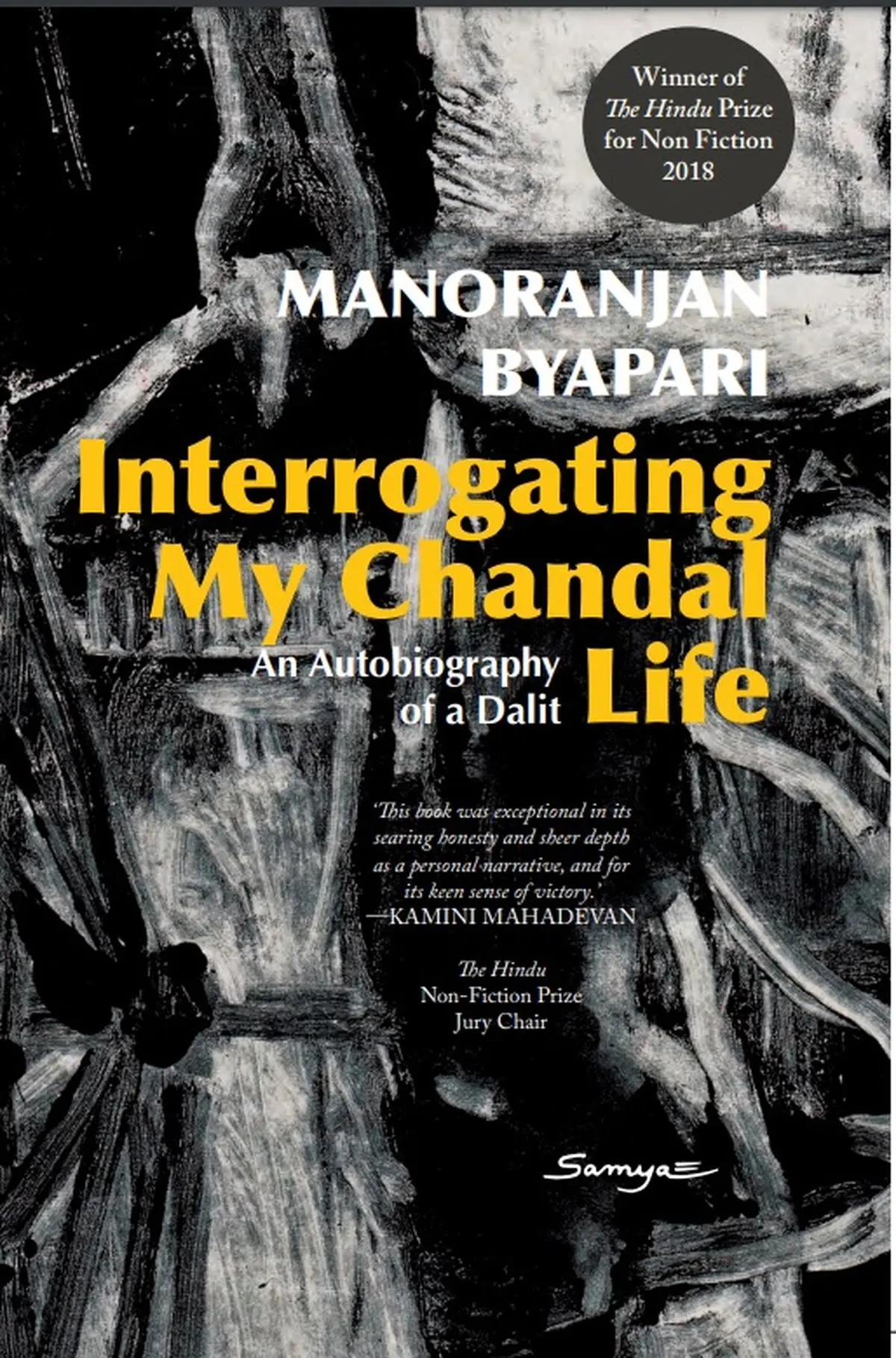
Interrogating my Chandal life by Manoranjan Byapari, published by Sage Publications in association with Samya. | Photo Credit: By Special Arrangement
How did you transition from corporate publishing in the West to independent publishing in India? What challenges did you face early on?
I did not establish anything immediately on returning. I had to learn the basics. I improved my Bengali and read Tagore’s novels and essays. I eventually joined Orient Longman in Calcutta as regional editor. The shift from a corporate environment to a feudal work culture was striking. The office was headed by a former zamindar known as “Raja Saheb”. He valued the editorial and design skills I brought from the US. I learned how publishing functioned in India.
After three years, I left when my predecessor returned. I spent a year in the UK while my husband held a fellowship at Oxford, and I explored how to work independently. I freelanced for Oxford University Press and developed bilingual children’s books for South Asian communities, with English alongside Indian languages. I later sold that list to a children’s publisher.
It was difficult to sustain social science publishing. One early book, In Clive Street by R.N. Sen, about Indians replacing the British heads of British-Indian companies, struggled until an institution bought copies as corporate gifts. I met Ramdas Bhatkal at the 1986 Delhi Book Fair. We began collaborating, first by distributing his social science list. In 1990, we founded Bhatkal and Sen to publish Stree. In 1996, influenced by debates around the Mandal Commission, we launched Samya, focusing on caste.
You have published bilingual editions. How do you ensure that radical ideas in regional languages are not diluted in English?
We focused on doing translations properly. Our first Stree title, a Marathi work on Anandibai Joshee, reached general readers but was criticised for lacking scholarly apparatus. It raised a key question: who is the translation for? Since then, we have been careful, but we do not sanitise texts. When foreign publishers request changes, we route them through authors and translators rather than altering texts unilaterally.
Do you think literature from rural India has receded in contemporary English fiction?
I do not read enough English fiction in India to generalize. I prefer translations. Some young writers assume that writing in English is itself an achievement. They often underestimate the need for revision. Classic works on Dalit life by Sarat Chandra Chattopadhyay remain powerful because their themes persist.
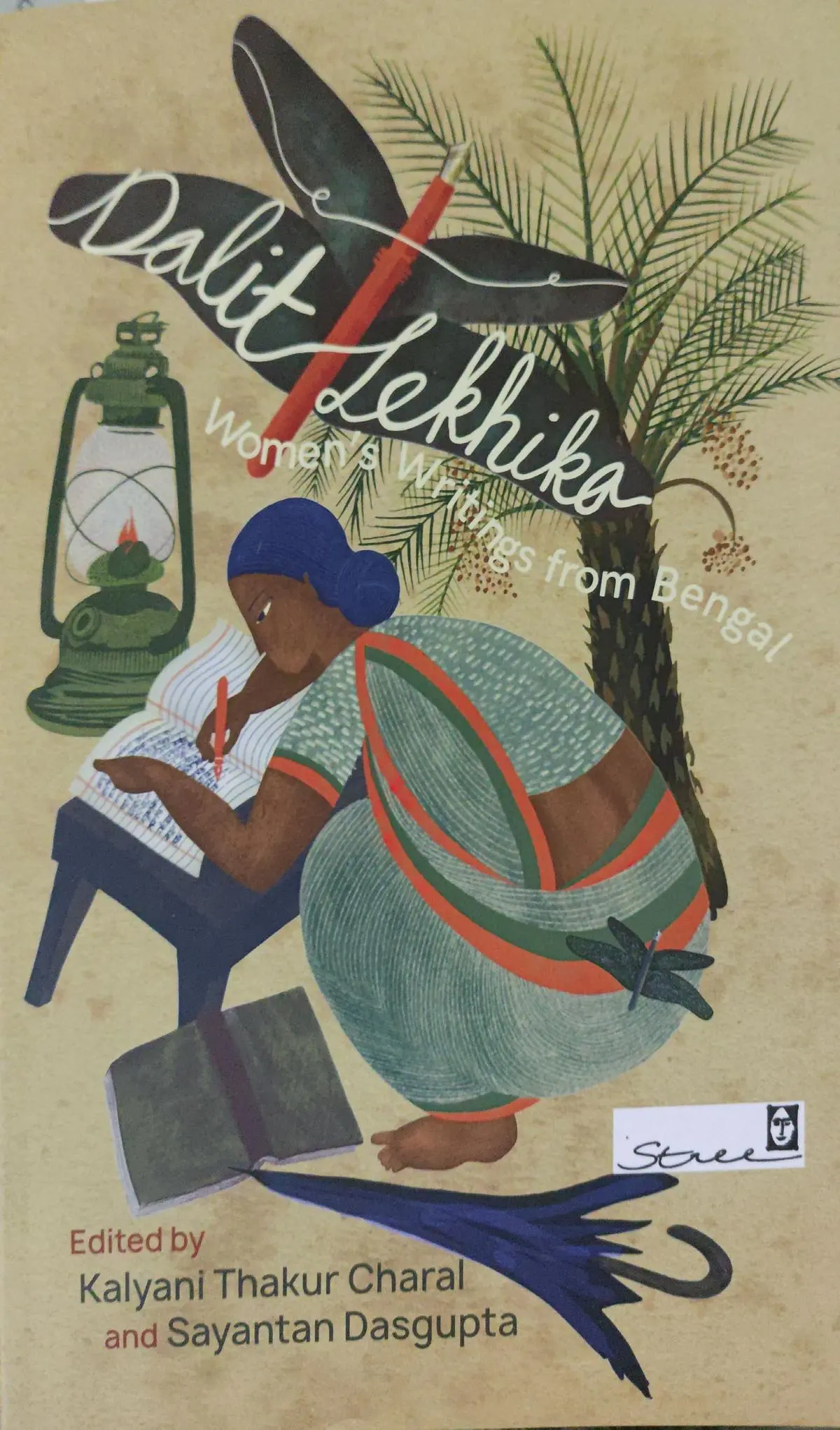
Dalit Lekhika: Women’s writings from Bengal. | Photo Credit: By Special Arrangement
Tell us about publishing early Dalit writing through Samya. How did it reshape social science?
Our first major work was Kancha Ilaiah Shepherd’s Why I Am Not a Hindu (1996), introduced to us by Susie Tharu. It had been rejected elsewhere. It made a strong public impact and remains in print. Ilaiah went on to write several influential works for us..
Other important titles include Omprakash Valmiki’s Joothan and Urmila Pawar’s The Weave of My Life. Both have had wide readership and recognition. We also published Bengali Dalit writing, addressing the impact of Partition. Over time, Dalit studies entered academic curricula, and institutional support has grown.
What challenges do you face today in sustaining an independent press?
The challenges are substantial. Editorial quality remains strong, but retaining authors is difficult when larger publishers offer advances. Maintaining the backlist is another issue; delays in reprints hurt visibility. Distribution remains uneven, and market visibility is limited, though social media has helped.
Financial stability is a constant concern. Earlier support structures have weakened. Our collaboration with Sage ended in 2022, and we have yet to find a comparable partner. Cash flow is unpredictable, especially with delayed payments from distributors. We remain largely unfunded and outside NGO networks.
Staff are modestly paid, and there is an uncomfortable reliance on their commitment. I do not draw a salary myself. Succession is also an open question. I have explored collaborations that might lead to continuity, but none have materialised.
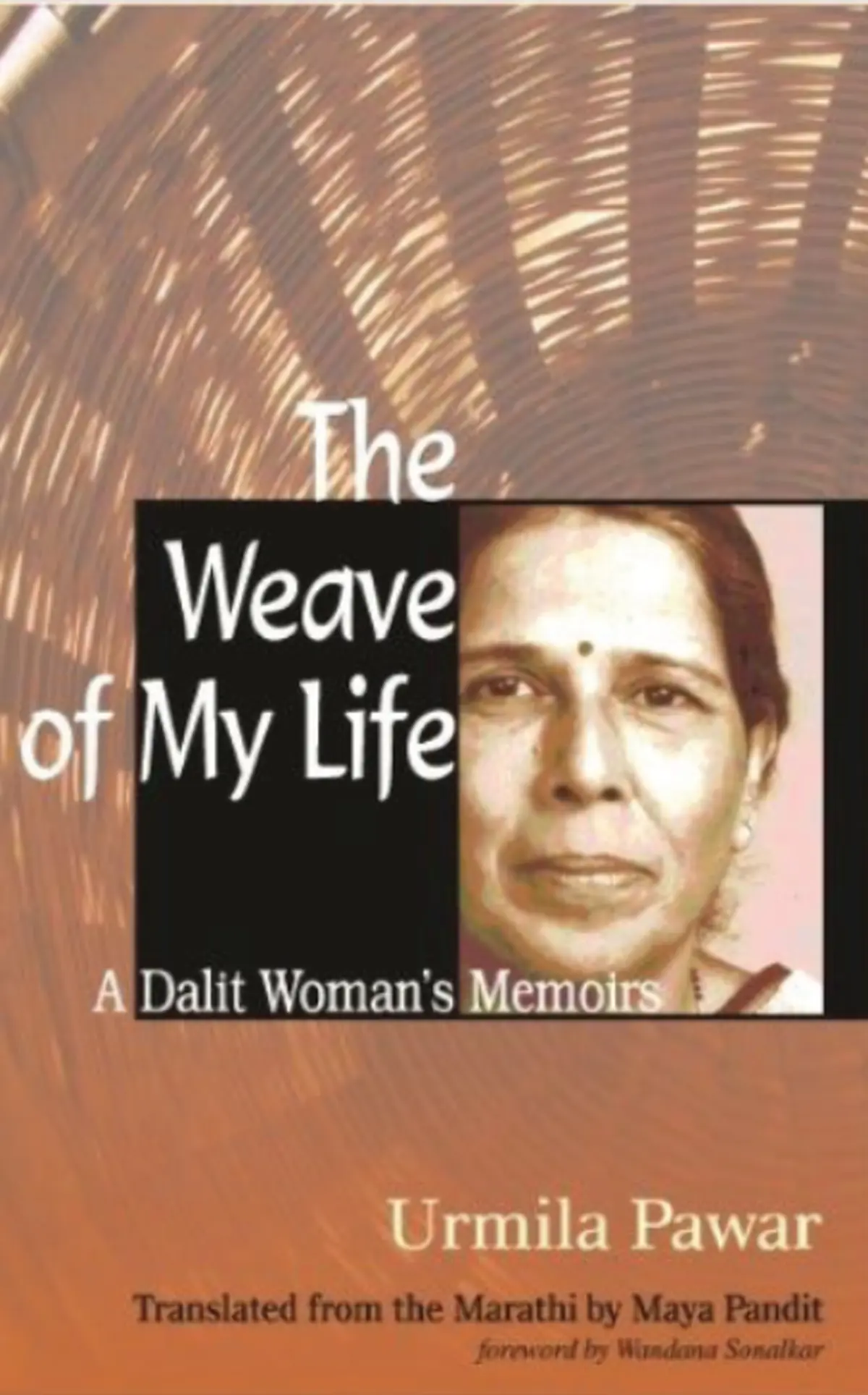
The Weave of My Life by Urmila Pawar. | Photo Credit: By Special Arrangement
How do you maintain editorial independence in collaborations with larger publishers?
The collaboration with Sage (2015–2022) worked well. We handled editorial and design, while they managed printing and marketing. It ended abruptly, and we have not found a similar arrangement since.
Also Read | Writers must become bridges of conscience and use language to restore empathy: Pratibha Ray
Can you recommend memoirs and autobiographies from your catalogue?
I recommend The Whole Truth and Nothing but the Truth by Kesharshivam; Surviving in My World by Manohar Mouli Biswas; Anand Teltumbde’s Hindutva and Dalits; and Women in Concert, an anthology edited by Shaheen Akhtar and Moushumi Bhowmik; The Trauma and the Triumph: Gender and Partition in the Eastern Region, two volumes edited by Jasodhara Bagchi and Subhoranjan Dasgupta.
Any books for readers new to Stree-Samya?
For Bengal, Sketches by Hootum the Owl by Kaliprasanna Sinha offers a sharp view of colonial Calcutta. For South India, V. Geetha and S.V. Rajadurai’s Towards a Non-Brahmin Millennium is essential. Raj Gauthaman’s Dark Interiors provides a distinctive engagement with caste and culture.
Majid Maqbool is an independent journalist and writer based in Kashmir.