








Born in 1954 in Nagalapuram, Thoothukudi district, Tamil Nadu, Tamilselvan grew up in Nenmeni Mettupatti in Virudhunagar. He joined the Army as a Warrant Officer in Kalimpong and left service five years later. In 1979, he joined the Postal Department and worked for 20 years before taking voluntary retirement.
Between 1989 and 1994, he was involved with Arivoli Iyakkam, a mass literacy campaign in Tamil Nadu, serving as its Tirunelveli district coordinator. During his postal department years, Tamilselvan was active in the trade union movement. As general secretary of the union, he led the strike in Ambasamudram during the 1984 postal strike.
With over 60 books to his credit, Tamilselvan has headed the Tamil Nadu Progressive Writers and Artistes Association and currently edits Semmalar, a left-wing magazine. He is a former State Committee member of the CPI(M). His works include Veyilodu Poi, Arasiyal Enakku Pidikkum, Saamigalin Pirappum Irappum, and Namakkana Kudumbam.
In short stories such as Pragnai, Medium, Ubari, and Appavin Pillai, he portrays the power structures within workplaces—how they entrap employees and render them powerless. He writes about the harsh realities of poverty with striking precision, without excess, retaining the originality of his thought and his Tamil.
Tamilselvan tells Frontline that he was five years old when he read his first book—Tappachi, a children’s novel. He does not remember the author’s name but recollects that the encouragement of the local librarian in his village nudged him towards literature.
Edited excerpts:
In Tamizh Sirukathaiyin Thadangal, you note that although early Tamil short story writers were all Brahmins, the form from its origin has had a consistently people-centred, socially grounded, and politically conscious outlook. Could you elaborate on this with examples?
In the early short stories, up until the 1950s and 1960s, writers belonging to the Brahmin community were the only main names. Today, we speak of the progressive politics that says, “One must betray one’s own caste.” But Tamil short story writers had already done this at the very beginning.
A. Madhaviah, in his stories, tore apart, shred by shred, all the regressive thoughts, practices, and rituals prevalent in the Brahmin community of that time. Subramania Bharathi, in his poems, wrote lines like “Paarppanai aiyar endra kaalamum poche” [the time when the Brahmin was called ‘Aiyar’ is gone]. He wrote such ideas in his stories as well.
Bharathi wrote a story with a character named Gopala Iyengar who has an inter-caste marriage. Pudhumaipithan, giving it as a reference, wrote a sequel titled Gopala Iyengarin Manaivi [Gopala Iyengar’s Wife].
V.V.S. Aiyar wrote about child marriage and dowry in the Brahmin community in his story Kulathangarai Arasamaram.
These writers recorded the turbulence of their times. The Tamil short story tradition has always had a secular, democratic outlook. In today’s political-cultural context where command comes from one person, these writers, by putting forward an idea, created a democratic dialogue in society through their short stories.
This is a nearly 900-page book covering over 60 authors. What kind of research was required, and how long did it take?
This is not something that can be done like a time-bound project. I have been reading short stories since I was 18. Having been an active reader for over 40 years, I have developed a sense of what kinds of stories reside with which writers.
I worked on the book during the COVID-19 period, 2020–2021, for two years. I reread all the stories from the beginning, taking notes as I went along. There was no prior planning about how many pages I should devote to each writer. Those I was drawn to, those about whom I had much to say—I ended up writing at length. When it finally took shape, I noticed I had written as many as 60 pages on Ki. Rajanarayanan. I came to the conclusion that one cannot read just 25–30 stories of a writer and then write about them; if he has written 300 stories, it is only right to read all of them. These were stories I had read over many decades, but when read together, a critical perspective organically arises.
If we take Ki. Rajanarayanan’s short stories, they are centred around the Idaiseval village and revolve around the Nayakkar community. But right at the entrance of that village, there is a Dalit colony. Yet, Dalits appear in only two of his stories. When we read everything together, we gain the clarity to look not only at what writers have said but also at what they have left unsaid.
This two-year engagement helped me arrive at a more complete portrait of these writers. I also read their biographies. The Indhiya Ilakkiya Sirpigal Varisai brought out by Sahitya Akademi was very useful. By reading their stories alongside their lives, I came to understand both their social contexts and their creative works. When we work in that way, we come to understand why, in the stories of a writer like Mauni, death and the uncertainty of life become central.
While writing the book, I was reading for up to 18 hours a day. Receiving the Sahitya Akademi Award for this was something I had not expected.
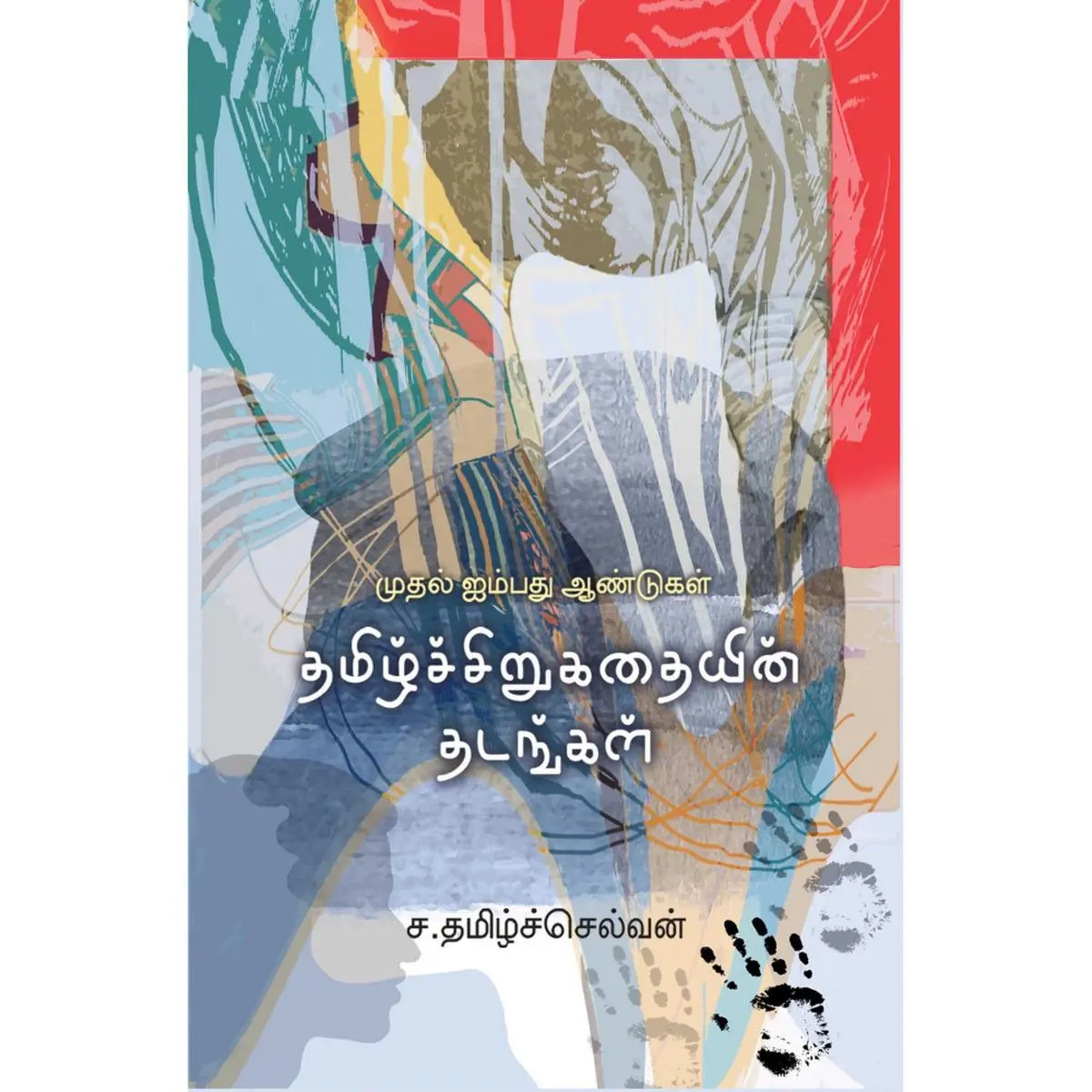
The cover of Tamizh Sirukathaiyin Thadangal. | Photo Credit: By Special Arrangement
You’ve written that if we classify Tamil short stories by magazines and schools of thought, six or seven distinct trends emerge over time. Could you elaborate?
The first trend originated with Manikkodi magazine. Between 1935 and 1938, edited by P.S. Ramaiah with Ki. Ramachandran as associate editor, this period is considered a golden age of the Tamil short story due to the high quality of works published there. It was in Manikkodi that the literary principle took hold: how something is said matters more than what is said.
The second trend comes from commercial magazines driven by market interests, such as Ananda Vikatan, Kalki, Kumudam, Saavi, and Kungumam, which popularised the short story among a broader audience. The third trend is the Left and progressive camp, including magazines like Santhi, Saraswathi, Samaran, Semmalar, and Vidiyal. Their central slogan was that art and literature belong to the people.
The fourth trend is shaped by the Dravidian movement’s ideals—self-respect, atheism, opposition to child marriage and superstition—with notable contributions from writers like Annadurai, Kalaignar, and S.S. Thennarasu. Fifth, from the 1960s onward, influenced by Dalit identity writing in Marathi and Kannada, Tamil literature saw Dalit writers articulating their own experiences.
Sixth, from the 1980s, many women writers entered Tamil literature, contributing across poetry, short stories, and novels. More recently, a trend has emerged that openly engages with sexual themes, free from the constraints of earlier periods.
Last December, Sahitya Akademi cancelled a press conference announcing its annual literary awards following a directive from the Union Ministry of Culture. At a recent event you condemned it..
In July 2025, the BJP government at the Centre signed a Memorandum of Understanding with institutions such as the Sahitya Akademi, Sangeet Natak Akademi, and Lalit Kala Akademi. A genuine understanding would mean both sides consulting each other and making decisions together. But the government forced these organisations to accept the agreement. They themselves have not acknowledged this publicly.
According to the agreement, these bodies can no longer function independently or announce awards freely; the government will scrutinise everything, and only what it approves will constitute the final list. The Sahitya Akademi has had awardee lists taken away by the government just before the announcement of awards. This is an insult to writers in every language.
The autonomous bodies created in Nehru’s time could not be easily dismantled by the BJP government. So, they believe they can bring these organisations under their control by placing people of their ideology in positions of power. We see the same pattern at institutions like the Film and Television Institute of India and the National School of Drama.
Your Arasiyal Enakku Pidikkum, which has sold over a lakh copies, has become a popular guide for beginners who wish to learn politics, especially the youth. How do you assess the reading habits of students today?
I wrote Arasiyal Enakku Pidikkum for the port workers of Thoothukudi. The leader of their labour union once told me that the workers hardly knew anything about politics and asked me to write a book in simple Tamil that they could understand. After seeing it, Bharathi Puthakalayam decided it was a book that everyone should read and published it.
At one of the colleges where we went to conduct a short story workshop, I asked the students not to limit themselves to reading popular magazines like Ananda Vikatan and Kumudam but to read serious literary magazines like Kalachuvadu, Thamarai, and Semmalar. The students asked, “What are Ananda Vikatan and Kumudam?” They even asked whether they were weekly or monthly publications.
For students in Tamil departments, short stories and poetry are distinct forms, but many students in other departments do not even know the difference. Despite all this, some students do come to literature, and the fact that so many books are sold is itself surprising.
In some colleges, a few professors personally encourage reading. In government schools, reading movements are under way. Lessons on social justice must be taught in classrooms, and education must also happen in the streets—just as Periyar [E.V. Ramasamy] conducted lessons in the streets. That is what will guide us toward real social change.

The cover of Arasiyal Enakku Pidikkum. | Photo Credit: By Special Arrangement
You are part of the Left movement in Tamil Nadu. How do you view the tendency among some popular writers to dismiss authors associated with the Dravidian movement or the Left as mere “propagandists”?
When one writes about contemporary issues, a section of writers and critics call it “propaganda”. If that is so, what did V.V.S. Aiyar, Bharathi, and Madhaviah write? Pudhumaipithan, in one of his stories, wrote directly: “You keep waxing eloquent about the global economic depression; here’s the story of how it came and fell upon Ramasami Pathar’s house in Tirunelveli.”
Along the banks of the Cauvery, several writers—Mauni, Pitchamurthi, Ku. Pa. Rajagopalan, Karichan Kunju, M.V. Venkataram—emerged from the Kumbakonam region. Living on this side of the river, they wrote of music, dance, and relationship dynamics between men and women. But on the other side, there were farmers who endured whipping and humiliation. Should they not have found a place in fiction? Ku. Pa. Rajagopalan alone, as an exception, wrote such a story.
There exists a cultural tendency to take pride in being a writer not associated with any political movement. It cannot be said that only those writers produce “pure literature” while others engage in propaganda. Across all strands of writing, one finds both advocacy and aesthetic intent. There prevails a tendency to pass judgement without even reading the stories.
All art and literature, in some measure, function as propaganda. I am a Leftist. The stories I write about working-class people are labelled as propaganda. So, I ask them which one of my stories is propaganda. There has been no answer.
For me, the dialectical way of looking at events, gained by exposure to Left politics and literature, is not simply a lens but became my very eyes. The Arivoli Iyakkam opened my eyes. How can an artist exist without addressing hunger? My first story, “Bavanaikal”, deals with hunger.
While you regularly write short stories, you also write books like Saamigalin Pirappum Irappum, Esapattu, Thiruppi aditha varalaaru, and so on. How do you switch between fiction and non-fiction?
Both fiction and non-fiction come into being only by drawing the required labour from us. When I write, there is a very fine line between fiction and non-fiction. I would describe my works as fictional non-fiction and non-fictional fiction.
I once wrote an article in Hindu Tamil Thisai about the caste atrocity in Vengaivayal, where human excreta were mixed into a water tank. If I had merely written it as a statement of condemnation, it would have remained non-fiction. But what struck me was this: the people who carried that excreta must have gone street by street collecting it in baskets, brought it together, and lifted it all the way up without spilling it before mixing it into the water tank. If so, why not assign them the job of manually collecting excreta across the village?
Questions like these are expected to arise while writing fiction. But they also surface in non-fiction. Fiction can never be completely separated from the truth. As Pudhumaipithan put it, storytelling is the art of lying while remaining faithful to the truth.

The cover of Saamigalin pirappum irappum. | Photo Credit: By Special Arrangement
How much have short stories reached the masses? How can progressive literature more broadly do so? How do class differences influence its accessibility and reception?
Short stories and novels are essentially middle-class forms. It is the middle class that writes them, and it is the middle class that reads them. I don’t mean middle-class in a classical sense, but as a section that is educated. Only after literacy comes literature. If literature remains purely literary, it will not reach the people. To reach them, it must be adapted into drama or cinema. Do the people who throng book fairs and buy books include women agricultural labourers? No. Books reach, at best, the middle and lower-middle classes.
There is no such thing as “progressive literature” that reaches the people. Even epics like Kamba Ramayanam and the Mahabharata reached the masses only through storytelling traditions and devotional movements like Bhakti. For literature to reach people, a reading movement is necessary. No political movement, including the Left, has undertaken this work. The consequences of this neglect are what we face today.
Working-class people think visually. They have no training in abstract reasoning. Without understanding this, all political movements address them in forms of language that are not visually accessible.
In arts and cinema, we have observed a growing communal and rightward tilt in recent times. Do you see a similar trend emerging in Tamil literature?
Even during the times of Hitler and Mussolini, fascism gained influence only through popular support. When that happens, writers and intellectuals will also lean in that direction. In Tamil as well, some writers have openly expressed right-wing sympathies, and their stories reflect that politics. I believe this trend will only increase.
Will writers refuse to side with the Right if offered large sums of money? Both individually and collectively, there are writers who continue to move toward the Right. We must stand firmly and focus on our own work.
Also Read | I started self-censoring myself: Hansda Sowvendra Shekhar
Also Read | Just how little has changed