
惯性聚合 高效追踪和阅读你感兴趣的博客、新闻、科技资讯
阅读原文 在惯性聚合中打开

推荐订阅源

GbyAI
GbyAI
N
News and Events Feed by Topic
D
DataBreaches.Net
MongoDB | Blog
MongoDB | Blog
CTFtime.org: upcoming CTF events
freeCodeCamp Programming Tutorials: Python, JavaScript, Git & More
Engineering at Meta
Engineering at Meta
T
Tailwind CSS Blog
博客园_首页
Microsoft Azure Blog
Y
Y Combinator Blog
博客园 - Franky
Hugging Face - Blog
Hugging Face - Blog
月光博客
月光博客
A
About on SuperTechFans
I
InfoQ
S
Securelist
Last Week in AI
Last Week in AI
S
Schneier on Security
C
CXSECURITY Database RSS Feed - CXSecurity.com
Hacker News: Ask HN
Hacker News: Ask HN
Schneier on Security
Know Your Adversary
Know Your Adversary
腾讯CDC
大猫的无限游戏
大猫的无限游戏
S
Security @ Cisco Blogs
博客园 - 三生石上(FineUI控件)
Simon Willison's Weblog
D
Darknet – Hacking Tools, Hacker News & Cyber Security
T
Tor Project blog
美团技术团队
aimingoo的专栏
aimingoo的专栏
G
Google Developers Blog
罗磊的独立博客
Vercel News
Vercel News
Cyber Security Advisories - MS-ISAC
Threat Intelligence Blog | Flashpoint
The Cloudflare Blog
S
Secure Thoughts
www.infosecurity-magazine.com
Latest news
Latest news
Recent Announcements
Exploit-DB.com RSS Feed
cs.CV updates on arXiv.org
奇客Solidot–传递最新科技情报
奇客Solidot–传递最新科技情报
L
LINUX DO - 热门话题
Security Latest
Security Latest
TaoSecurity Blog
TaoSecurity Blog
Cyberwarzone
Cyberwarzone
有赞技术团队
有赞技术团队

India’s National Fortnightly Magazine

SIR West Bengal Voter Exclusion Case 2026 TN Assembly Polls 2026: Senthil Balaji and SP Velumani Clash for Western Belt Supremacy Women’s Reservation Act Amendments Raise Delimitation Fears Healthcare’s Breaking Point India’s Elderly Boom: Care Gaps and Policy Failures AI chatbots fill mental health gaps in India, but risks grow Substandard Drugs in India: The Hidden Public Health Threat India Healthcare Costs Crisis: Who Pays the Price? ASHAs hold India’s fragile health system together but are woefully underpaid Partha Chatterjee’s For a Just Republic and the Limits of the People-Nation India’s Missing Middle: Trapped Between Health Insurance and Care Hungary Election 2026: Orbán Defeated, Magyar Wins Big Shailaja Paik on Dalit Women, Caste, and the Politics of Erasure in India Free Speech Crackdown in India: Is Dissent Under Threat? Ambedkar Jayanti and the New Publicness of Protest Politics Implementing Women’s Reservation: Why a Hybrid 651-Seat Lok Sabha Model Outperforms Mass Expansion Ambedkar and Free Speech: Who Controls Dissent in 2026? How a Maharashtra Village Turned Tea with Dalits into a Statewide Equality Mission Women’s Reservation, Delimitation Bills Spark Secrecy Row Reforming Tamil Nadu's Local Governance: Why MLAs Aren't Fixers in 2026 Sewage, Neglect, and Governance Failure Mark India's Water Crisis West Bengal voter list controversy explained | Why names are being deleted Pattukkottai Kalyanasundaram: Tamil Cinema and Left Politics Delhi’s PM-UDAY Reset: Regularising Unauthorised Colonies on an “as is” Basis Will Vijay’s TVK disrupt DMK and AIADMK? | Tamil Nadu election 2026 Constitutional Morality vs Social Morality in India 2026 Amit Shah’s Anti-Conversion Promise Opens a New Faultline in Punjab Politics Why Indian Shias Protest for Iran: History of Solidarity (2026) West Bengal Voter List Row 2026: “Votercide” Debate The Hidden Ecosystem Inside our Homes Asha Bhosle’s Death Marks the End of an Era in Indian Playback Music Women’s Health in India: Inequality by Design How Algorithms Turn Feminism into a Marketable Aesthetic An Unanswered People: Adivasi Poetry’s Fight for Language and Land Rereading Kari in the Age of Identity Debates Absolute Jafar: Nostalgia and restlessness in frames Anita Nair’s Why I Killed My Husband Review: Powerful Themes, Uneven Storytelling Why the FCRA Amendment Bill 2026 Has Triggered a Political Storm Iran’s Staying Power Redraws the US-Israel War Calculus Snake Metaphors in Indian Politics 2026: Venomous Rhetoric From Grief to Politics: Porkodi Armstrong and the Battle for Dalit Power in North Chennai West Bengal election 2026: Will Babri Masjid split the Muslim vote? West Bengal Communal Politics and the 2026 Election Battle Raghav Chadha-AAP Rift Explained: Rise to Fallout (2026) Why India Is Not Energy-Secure Amid Global Oil Shocks Mulla Shah Mosque: Jahanara Begum's forgotten legacy Strait of Hormuz Ceasefire: Pause, Not Peace Dharavi’s Kumbharwada Potters fear Adani-led Redevelopment will Destroy their Livelihoods How India’s Poor Lose Years Waiting in Queues (2026) India IT Rules 2026: Threat to Free Speech? Iran War Ceasefire Signals a Shift Toward Multipolar Deterrence US Foreign Policy: Empire, Coups, and Control (2026) CBFC Ban on Gaza Film Raises New Alarm Over Censorship Queer Dalit identity and the limits of visibility 2026 Assembly Polls: Congress vs BJP Power Test Israel's Relentless Bombing Creates Displacement Crisis in Lebanon Iran War Ceasefire Marks End of US Dominance Era Imported Inflation in India: Navigating Gulf Crisis Kerala Assembly Election 2026: LDF Anti-Incumbency vs UDF Momentum Petronet LNG: A Public Company Built to Escape Public Accountability Gujarat Local Polls: AAP Rise Deepens Congress Crisis Who Defines You? | The Frontline Newsletter SIR controversy deepens fear of Muslim disenfranchisement in Bengal Kerala Election 2026: LDF, UDF, and the BJP “B Team” Charge Delhi’s LPG Crisis Exposes How Migrants Are Locked Out At 100, Krishnammal Jagannathan’s Life Marks a Legacy of Dalit Land Rights and Resistance Who will win Kerala Assembly Election 2026? LDF or UDF? Assam Polls: Cash Transfers Mask Stagnant Incomes and Job Distress Jaishankar and India's Diplomacy Crisis West Bengal SIR 2026: Voters Treated as Suspects Sathankulam Verdict: How a Rare Death Penalty Challenges India’s Custodial Torture Crisis How three 2026 bills redefine identity, marriage, and freedom in India After Nitish Kumar, Bihar BJP faces its biggest test: caste coalition without a ‘Mr Clean’ Nuclear Deterrence in South Asia: Fragile Stability Actor Vijay and Politics: An Emerging Landscape Dharavi’s Idli-Vada Economy Faces Disruption Under Redevelopment Child Marriage Annulment in India: Khushbu’s Fight (2026) India’s Role in Palestine: Why West Asia Peace Needs Action 2026 Rethinking Iran beyond Western narratives N Rangasamy’s 2026 Puducherry Poll Strategy and Power Play Khalid Jawed on Urdu’s Future and Cultural Loss (2026) Kashmir Encounter Killing Sparks AFSPA Debate 2026 Birds and grief in Hamnet and H is for Hawk GST Federalism Crisis 2026: How States Lost Fiscal Power US-Iran War 2026: Petrodollar Stakes Behind Hormuz Clash White Savior Complex in Arab Regimes Drives Ukraine Deals Not Self Reliance UPA Corruption Narrative vs Court Verdicts 2026 Mathur Sathya Case Exposes Patriarchy in Progressive Politics Personality Cult in Indian Politics 2026: Why Leaders Remain Untouchable India Needs a New Economic Model Beyond Neoliberalism Why J&K MLAs Are Fighting the Lieutenant Governor Over Security Pawar Family Rivalries Stall NCP Factions Merger in Maharashtra DMK manifesto 2026: Key promises, alliances, & welfare politics State Assembly Elections 2026: How Voter Dynamics Are Shaping India Iran-Israel War: Hegel’s Recognition Theory Explains the Escalation Coal, Capital, and Compliance: Fairmine Under NGT Lens Hindu Rashtra Debate: 2026 State Elections Test Secular India Tamil Nadu Election 2026: How Gender and Gen Z Voters are Reshaping the Dravidian Power Struggle Gujarat's proposed marriage registration amendment 2026 polices choice Will NEET Break More Students Than It Makes Doctors?
Noida Unrest and the Reality of India’s Workers
C.P. Chandrasekhar · 2026-04-27 · via India’s National Fortnightly Magazine
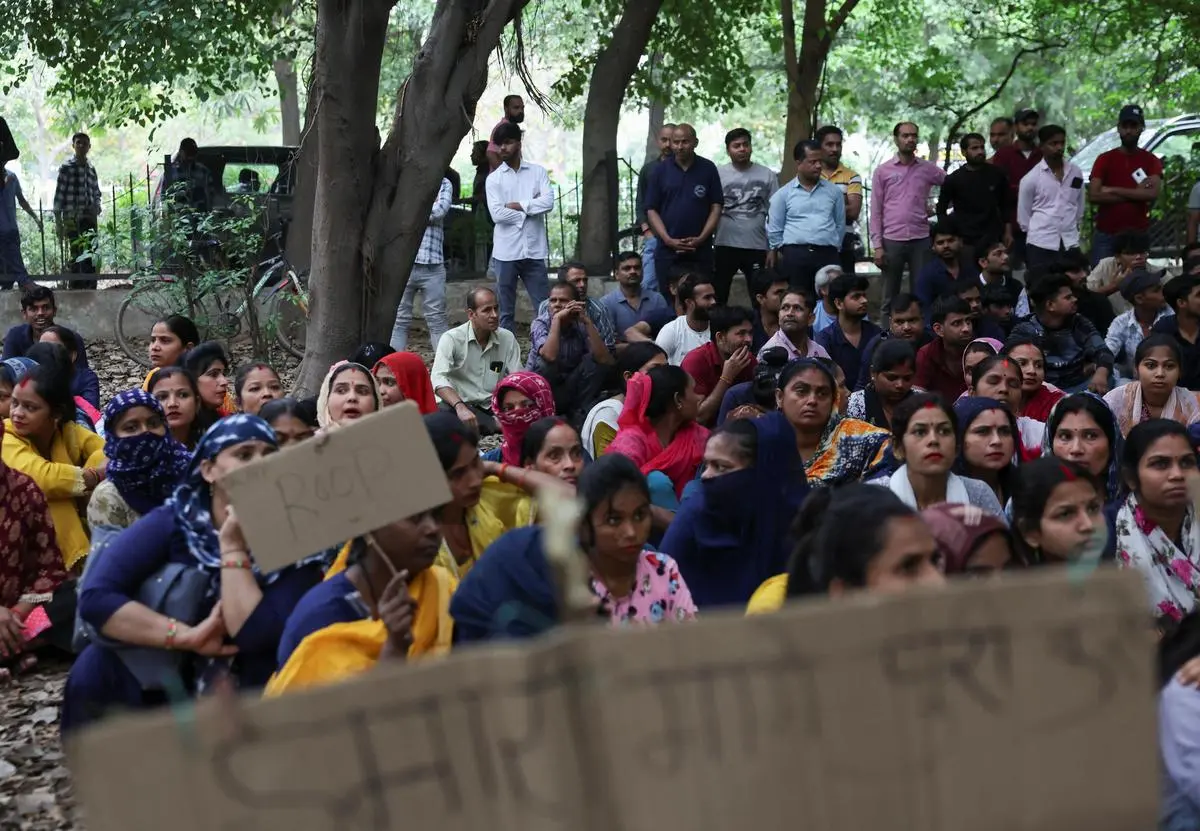
At a workers’ protest against low wages and poor working conditions, in Noida, Uttar Pradesh, on April 13, 2026.

At a workers’ protest against low wages and poor working conditions, in Noida, Uttar Pradesh, on April 13, 2026. | Photo Credit: PTI

On April 13, 2026, a large number of factory workers in Noida, Uttar Pradesh—one of New Delhi’s suburban industrial centres—took to the streets. They were protesting against low wages and poor working conditions. Details on what followed remain hazy, with the protesters charging that the police attacked them without provocation and the police claiming that the protesters turned violent, necessitating action.

What is noteworthy is that protests by workers in Haryana against a measly increase in wages recommended by the State government had preceded the stir at Noida. In Noida, the initial protest involved workers from multiple factories who had been coordinating and mobilising through social media. It soon spread across a cluster of factories in unrelated industries and brought domestic workers, many of whom are poorly paid and treated badly by their employers, into the fray. The protests signalled resentment that runs deep and is quite widespread.

The workers have a strong case. Many are paid as low as Rs.10,000 to Rs.11,000 a month for 12-hour shifts on working days. Being contract workers hired through agents, many of them lack security of tenure and any social security benefits. Even the benefits due to them are not provided by employers. And norms on payments for overtime work are ignored. In addition to being treated badly in the workplace, workers find it difficult to meet basic needs. When any new shock is felt, such as the rise in fuel prices following the US-Israeli war against Iran, life proves unbearable, and the situation turns volatile. The implicit violence at work spills over as violence on the streets.

What fuels anger further is evidence of the huge differential between the benefits derived and lifestyles led by employers and privileged managers and the earnings and standards of life of workers in these relatively newer business enclaves, which reflect the new modes of doing business in neoliberal India. These enclaves are populated with units relying on unskilled workers or those with “lower-valued” skills, which, when successful, deliver large profits by riding on low wages and poor working conditions in a country plagued by precarity because of high under-employment, inadequate education, and laws that do not preclude or even permit the recognition of violations by employers and managers.
Workers demanding wage hikes, in Manesar, Haryana, on April 7, 2026.

Workers demanding wage hikes, in Manesar, Haryana, on April 7, 2026. | Photo Credit: Bhawika Chhabra/Reuters

Moreover, the state that is expected to mediate to improve workers’ wages over time by raising the minimum wage floor it sets has failed to do so. By definition, the minimum wage consists of a basic component and a component linked to the consumer price index to be adjusted for inflation. The basic component, which is expected to be adjusted upwards at least once in five years, was last revised in Haryana and Uttar Pradesh more than a decade ago. The perception of collusion between state actors and private employers is, therefore, strong.

It does not help that an authoritarian government apparatus that favours factory owners keeps worker dissent suppressed and discourages trade union activity. With little space for a negotiated and reasonable settlement of grievances on a routine basis, spontaneous “revolt” is the vent for accumulated worker anger.

As far back as 2012, in Manesar, another NCR suburb, in the factory of the auto major Maruti Suzuki, worker anger led to violent protests that resulted in the death of a human resources manager. Then, too, the workers had a case. State reprisal was brutal, and the management opted for a lockout and sought to set an example of what could happen to workers following such protests: more than 500 permanent workers and close to 2,000 contractual workers, many of whom were not even identified by the police as protesters, lost their jobs. Even today, some of them return to protest and demand reinstatement and compensation, with no success.

Shifting the blame

The Uttar Pradesh government’s response to the recent Noida protests is revealing. On the one hand, it implicitly admitted that workers were being exploited—by notifying a 21 per cent increase in minimum wages for workers in the State (much lower than what the workers are demanding) and promising a scrutiny of working conditions—and, on the other, it attributed the protests to conspiracies hatched by “outsiders” who were aiming to sully the good name of the State government, no less.

The government of Uttar Pradesh has, according to an official statement, “constituted a high-level committee with the objective of establishing effective dialogue with the concerned stakeholders and maintaining industrial harmony and law and order”. The district administration is threatening to cancel the licences of 203 contractors, blacklist them, and require them to pay workers dues in excess of Rs.1 crore. The attempt is to blame the contractors rather than the system.

Meanwhile, Uttar Pradesh Chief Minister Yogi Adityanath declared that when “the double engine government under the leadership of Prime Minister [Narendra] Modi” was striving to create an environment of “development and peace, some people are trying to create unrest through conspiracies”. The DGP claimed that “provocation” by “external elements” led to the protests. Claiming that his “government stands with workers”, the Chief Minister promised “protection to every worker” and “proper remuneration for them”. Given their experience, workers are not convinced.

It is more than likely that the workers arrested will be held for a long time and be deprived of their jobs, as happened in Manesar many years ago. Meanwhile, employers and contractors are likely to escape being penalised.

The evidence is telling. Under neoliberalism, collusion between the state and private capital facilitated profit inflation at the expense of the living standards and working conditions of undervalued workers during the years when inflows of foreign financial capital and debt drove an artificial boom. There are multiple signs that the boom is giving way to a downturn.

This is likely to justify use of the exploitative apparatus constructed during the boom to sustain profitability. New rounds of violence at work and on the streets seem inevitable.

C.P. Chandrasekhar taught for more than three decades at the Centre for Economic Studies and Planning, Jawaharlal Nehru University, New Delhi. He is currently a senior research fellow at the Political Economy Research Institute, University of Massachusetts Amherst, US.

Also Read | Pushing workers to the edge

Also Read | Dictatorship of the employer?