







Today, the Indian healthcare sector presents a picture of major technical advances. Metro cities boast “5G-enabled” hospitals that rival the technological sophistication of the best hospitals in the world. We are told about AI reading scans, robotic arms assisting surgeons, doctors consulting patients over video, and wearable devices tracking heart rates and sleep patterns.
This transformation is not marginal; India’s healthcare IT market alone was valued at around Rs. 1,40,000 crore in 2024, driven largely by digital technologies and AI. But are these technologies actually making us healthier as a country, or are they making healthcare more expensive and unequal? Let us try to answer this question by looking at some of the major uses of medical technology in India, especially newer ones.
AI in healthcare
The use of AI in Indian healthcare is growing rapidly, particularly in medical imaging, where it assists radiologists in spotting anomalies with unprecedented speed. It also helps doctors prioritise life-threatening cases, such as brain haemorrhages, in short time frames. However, while reducing human error, some AI tools are so sensitive that they flag “incidentalomas”, or harmless anomalies that can trigger a further battery of unnecessary follow-up tests. While AI reduces diagnostic wait times, it often carries a hefty “AI processing fee” at private laboratories.
We should also remember that AI systems critically depend on data, and currently, most high-quality medical data in India comes from urban, private hospitals. This creates a significant problem: current AI technologies might not reflect the realities of rural and poorer populations. Biased algorithms might misdiagnose marginalised groups while appearing “objective”. AI cannot substitute for the clinical judgment of doctors, who must remain firmly “in the loop” and responsible for all clinical decisions.
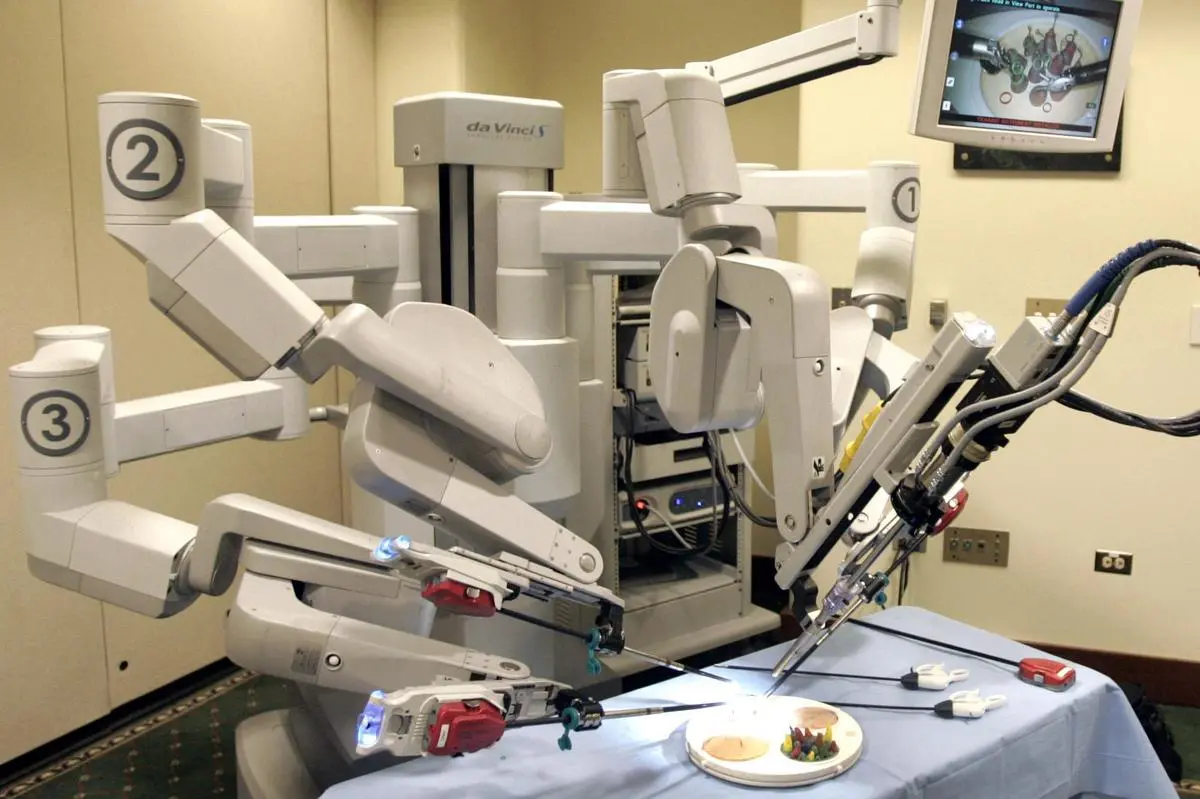
The da Vinci Surgical Robot. Robotic surgery is rapidly expanding in India, with over 170 da Vinci systems installed across the country, making India a global hub for robotic procedures. | Photo Credit: Keith Srakocic
Simultaneously, “frugal innovations” like the AiSteth (an AI-powered digital stethoscope) show potential for mass application, detecting heart and lung anomalies with 93 per cent accuracy. Used in primary care as a supplement to medical judgment, such appropriate uses of AI can surely improve specific kinds of access. Yet, given that it is currently deployed mostly in high-end corporate hospitals, AI might remain another layer of technological sophistication for the elite.
Surgical robotics
Robotic surgery is rapidly expanding in India, with over 170 da Vinci surgical systems installed across the country, making India a global hub for robotic procedures. Certain robotic surgical procedures offer smaller incisions, less blood loss, and faster recovery times. It must be kept in mind that even in robotic surgeries, it is the surgeon who performs the operation. The surgeon’s skill level remains critical, while the robot offers enhanced precision and better visibility.
Access to medical robotics remains highly skewed; robotic surgery installations in India remain highly concentrated in large metropolitan centres such as Delhi-NCR, Mumbai, Bengaluru, and Chennai. A robotic procedure may typically add Rs. 1.5 lakh to Rs. 4 lakh to a standard laparoscopic surgery bill, making it prohibitively expensive for the average middle-class family without top-tier health insurance. In routine cases such as gallstone removal, robotic surgery might not produce dramatically better outcomes than a well-performed laparoscopic surgery, but it costs significantly more.
Telemedicine is an important component of India’s healthcare tech expansion. The e-Sanjeevani platform helps bridge the urban-rural divide, allowing remote, rural patients to consult specialists without travel costs, making it especially useful for follow-ups and chronic conditions. However, a “video-first” approach can mean that subtle physical cues are missed, leading to a “referral loop” wherein patients eventually must travel after spending on digital consultations. Further, telemedicine used in commercial contexts, which prioritise episodic consultations and quick prescriptions, can lead to an “Uberisation of healthcare”, endangering critical doctor-patient continuity.
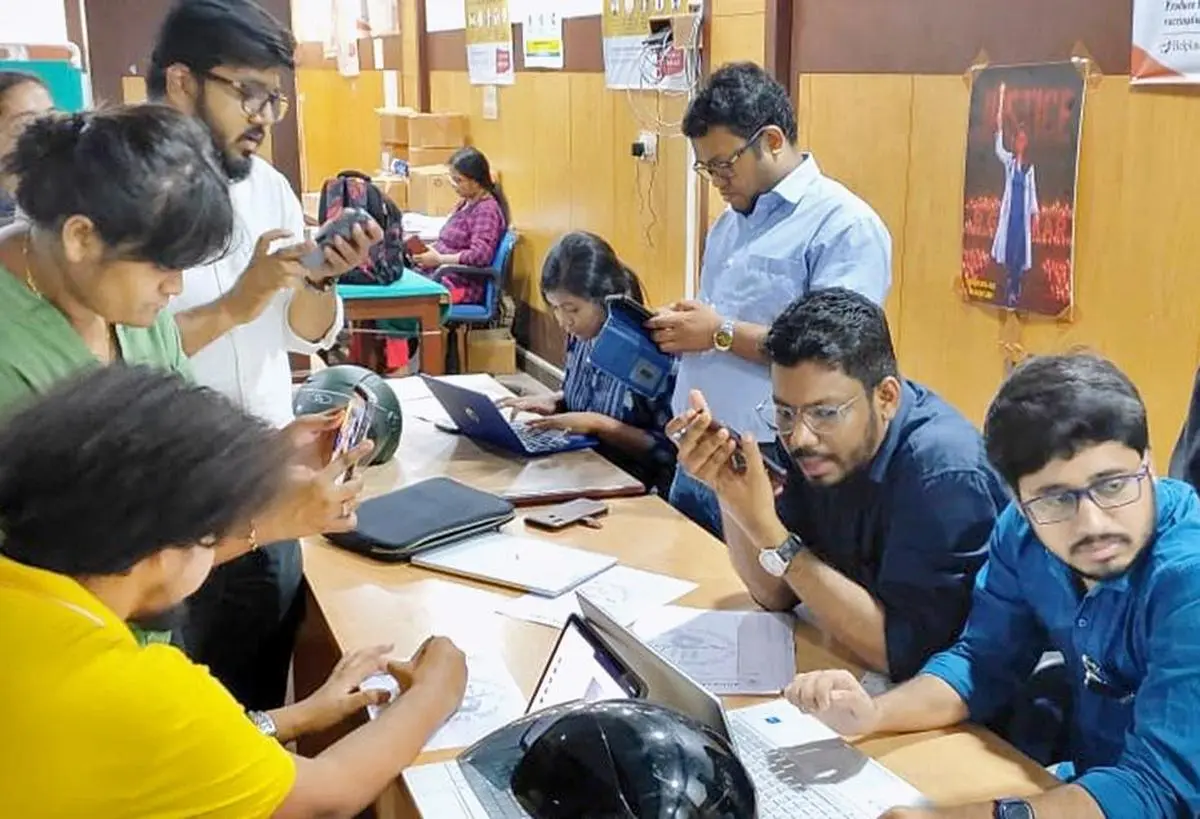
Doctors providing telemedicine services at the R.G. Kar Medical College and Hospital in Kolkata on August 31, 2024. | Photo Credit: BY SPECIAL ARRANGEMENT
Conversely, social enterprises like M-Swasth deliver low-cost care through a phygital (physical + digital) model focused on underserved populations. Their nurse-run e-clinics conduct local examinations before connecting patients to doctors via teleconsultation, combining in-person care with digital access. Ultimately, the utility of telemedicine for rural patients depends on overcoming the digital divide as the patients who need these services most are often excluded due to low income, old age, or limited connectivity. Another key factor related to the effectiveness of telemedicine in rural areas is the availability off skilled human resources. Without reliable health professionals at both ends of the care interface, this technology may promise more than it can deliver at present.
Digital health infrastructure
The Ayushman Bharat Digital Mission has built digital “rails” for India’s health sector, with over 86 crore Ayushman Bharat Health Account IDs already created. The objective is a unified electronic medical records system where patient histories are available to various providers through interoperable online systems. This can be an important step forward if having a card translates into getting prompt access to quality free or affordable care. However, in the current landscape, a card is not a guarantee for care.
Public health facilities still lack basic staff, medicines, and equipment, while private providers remain unaffordable for the majority. Furthermore, many official insurance schemes impose procedural hurdles and exclusions, along with entailing major out-of-pocket payments for patients. In this context, when some policymakers celebrate millions of digital records as a “high-tech success”, while neglecting the upgradation of health facilities required so that these electronic records serve as the foundation for a portal to access quality healthcare, it may be considered a case of “dashboard-itis”.
Market-driven commercial interests like insurance and Big Tech have a stake in turning health data into a commercial asset rather than a public good. Concerns persist regarding data privacy, weak regulatory safeguards, and the monetisation of patient data. There is a legitimate risk that Indian patient data could be used by foreign corporations to train proprietary AI, which is then sold back to Indian hospitals and patients at high prices. Without strong public intervention, digital records can deepen commercialisation and exclusion rather than strengthening equitable access.
Medical diagnostics
Laboratory tests and imaging (such as X-rays and ultrasound and CT scans) are essential to modern medicine but need to be used judiciously. In good clinical practice, investigations supplement a careful history and physical examination rather than overshadowing them. Yet, evidence suggests that up to half of diagnostic tests being performed (for example in preoperative situations) might be unnecessary. This is driven by multiple factors: financial incentives and kickbacks, defensive medicine, and pressure to recover huge investments made on expensive equipment.
A striking example is the rise of whole-body scans and annual health check-up packages marketed to basically healthy individuals, without specific indications. Besides being expensive and sometimes invasive, such tests tend to pick up minor, clinically insignificant variations (“incidental findings”) that are basically harmless. Once detected, they tend to trigger a cascade of further tests, specialist consultations, and even unwarranted procedures, exposing patients to risk and additional costs. Furthermore, there is a risk of “deskilling”: over-reliance on numerous investigations, even in simple cases, can weaken the clinical judgment of the next generation of physicians.
To restore balance, the use of diagnostics must follow clinical protocols, serving more precisely as a supplement to clinical judgment, rather than being pushed in an assembly-line fashion.
Wearables: From fitness to ‘cyberchondria’
The Indian wearable market is an over Rs. 30,000 crore industry and includes smart rings and continuous glucose monitors, which provide 24/7 monitoring. While many consumer devices claim medical-grade accuracy and can sometimes help with the early detection of conditions like irregular heartbeats, they are also likely to increase anxiety-induced hospital visits.
There is an emergence of concern about “cyberchondria”, where anxious healthy individuals rush to the doctor due to momentary shifts in their body parameters, which could be linked to a sensor glitch or normal fluctuations. Wearables are associated with a cultural shift whereby health becomes something to be constantly tracked and optimised, and normal body variations are viewed as problems, with anxiety around maintaining numbers. Wearables are being targeted at the “wealthy worried well”, tending to blur the line between genuine health management and consumerist data fixation.
These descriptions demonstrate how modern medical technologies promoted by global technology in the context of commercialised private healthcare can contribute to techno-elitism. Here we may recall the “inverse care law”, which states that those who need healthcare the most get it the least, while those who need it the least corner the most high-value care. This is especially pronounced in India, where the poorly regulated and commercialised private sector delivers 70 per cent of healthcare.
A classic illustration is the highly skewed distribution of caesarean section (C-section) rates. Analyses based on the National Family Health Survey 5, 2019–21, show that instances of C-section surgery rise sharply with wealth status; just 7 per cent of women from the poorest fifth of the population undergo a C-section surgery during labour, while 39 per cent of women from the richest fifth of the population undergo delivery by operation.
The richest quintile of Indian women has more than five times the C-section rate of the poorest quintile, even though poorer women have more complicated deliveries and more frequently require such operations. This is a dual distortion, since commercially driven maldistribution simultaneously leads to medical deprivation (maternal mortality among mothers from lower-income groups) and medical excess (unnecessary C-section surgeries causing complications and problems in further pregnancies among affluent mothers); both suffer in different ways.
Given this context, our overall priority as a society should move beyond elite-driven promotion of high-end gadgets towards expanding equitable access to basic medical technologies. The cost of a single high-end robotic surgical system is similar to the entire annual operating budget of a district hospital. The focus should be on ensuring that primary health centres (PHCs), community health centres, district hospitals, and urban public hospitals are well equipped with reliable diagnostic tools and medicines, have the required specialists, and can deliver the range of standard medical interventions that are genuinely needed by our population.
If we want to move beyond the “inverse care law”, advanced medical technology cannot be left to the commercial market; it needs to be governed as a social good. This requires institutionalising health technology assessments to ensure that innovations are adopted on the basis of their ability to deliver appropriate care, rather than their profit potential. Standard clinical guidelines and advisories should be observed to prevent over-medicalisation and ensure that high-end technologies are limited to situations where they provide a clear clinical advantage over existing standard methods. Effective regulation and patients’ rights are important to maintain standards of care while safeguarding transparency and patient interests. Fostering public awareness is also vital to steer society away from medical consumerism and faddism.
India suffers not from a lack of technological innovation in healthcare but from a deficit of technological direction. When technology is embedded in public systems and socially oriented providers, when it empowers front-line health workers and professionals, and is responsive to genuine patient needs, it is a major force for public welfare. However, when it is completely left to market logic, it can become a tool for hospital branding and exorbitant charging, as commercial hospitals seek to recoup their investments in expensive equipment.
Today, as India’s health technology market skyrockets, we must pause to consider the kind of healthcare future we are building. Medical technology is not inherently good or bad; an AI-powered stethoscope used by a health worker or an appropriately deployed telemedicine consultation that saves a rural child is a miracle. How well India manages medical technology will primarily be measured not by the number of robotic surgeries performed in metro cities but by whether PHCs across rural India can reliably detect anaemia among women with simple detectors and also whether a terminally ill, middle-class urban patient can afford the dignity of a peaceful death without being bankrupted by unnecessary medical interventions.
What India needs is both a Right to Healthcare and a commitment to “right healthcare” for everyone. Right healthcare is accessible and affordable and aligned with rational medical guidelines; it is neither deficient nor excessive. Thus, patients in any setting with serious bacterial infections should be entitled to receive the necessary antibiotics, while those with common colds or simple viral fevers should not be given antibiotics since this is counterproductive.
Overall, we must approach healthcare technologies not greedily but wisely. In healthcare, the best doctor is not the one who prescribes the most medicines, and the most advanced system is not the one with the most expensive machines. It is the one that delivers appropriate care, at the right time, to the largest number of people, without unnecessary cost or harm. This is not a question about whether we use medical technology, but about social and political choices and about how technology is used and for whom. We need to actively engage with India’s choices related to medical technology since these majorly impact the quality, rationality and affordability of healthcare, which concern all of us.
Abhay Shukla is the national co-convenor of Jan Swasthya Abhiyan.
Also Read | Crushed by cost
Also Read | The AI shoulder Indians lean on is a shaky prop