

惯性聚合 高效追踪和阅读你感兴趣的博客、新闻、科技资讯
阅读原文 在惯性聚合中打开

推荐订阅源

F
Fox-IT International blog
Recent Announcements
D
Docker
IT之家
IT之家
B
Blog
Jina AI
Jina AI
奇客Solidot–传递最新科技情报
奇客Solidot–传递最新科技情报
博客园 - 【当耐特】
Google DeepMind News
F
Fortinet All Blogs
量子位
C
Check Point Blog
Microsoft Azure Blog
罗磊的独立博客
博客园 - 司徒正美
李成银的技术随笔
美团技术团队
Blog — PlanetScale
Blog — PlanetScale
雷峰网
雷峰网
The GitHub Blog
The GitHub Blog
让小产品的独立变现更简单 - ezindie.com
J
Java Code Geeks
T
The Blog of Author Tim Ferriss
酷 壳 – CoolShell
酷 壳 – CoolShell
MongoDB | Blog
MongoDB | Blog
P
Proofpoint News Feed
L
LangChain Blog
Cyber Security Advisories - MS-ISAC
OSCHINA 社区最新新闻
OSCHINA 社区最新新闻
Y
Y Combinator Blog
大猫的无限游戏
大猫的无限游戏
有赞技术团队
有赞技术团队
钛媒体:引领未来商业与生活新知
钛媒体:引领未来商业与生活新知
V
Visual Studio Blog
T
Tailwind CSS Blog
H
Help Net Security
Engineering at Meta
Engineering at Meta
小众软件
小众软件
B
Blog RSS Feed
Stack Overflow Blog
Stack Overflow Blog
月光博客
月光博客
M
Microsoft Research Blog - Microsoft Research
宝玉的分享
宝玉的分享
人人都是产品经理
人人都是产品经理
freeCodeCamp Programming Tutorials: Python, JavaScript, Git & More
GbyAI
GbyAI
H
Hackread – Cybersecurity News, Data Breaches, AI and More
Last Week in AI
Last Week in AI
Martin Fowler
Martin Fowler
Stack Overflow Blog
Stack Overflow Blog

India’s National Fortnightly Magazine

Trump, China, Iran: Is the World Entering a New Age of Disorder? Golden City, Broken Lives: A Tamil Short Story That Still Burns Sandip Roy's Biography of Chapal Bhaduri Recovers a Forgotten Thespian of Bengali Jatra Theatre Beyond the Nation State: How Rana Dasgupta’s ‘After Nations’ Maps the Decline of Global Sovereignty and the Rise of Contemporary Theocracy From Deir Yassin to Tehran: A Violent Trajectory Ramayana, Hindutva and the Battle Over Myth in India Bengal Muslims After BJP Win: Disenfranchisement Fears Yesteryear dissects the tradwife fantasy Air India 171 Crash: Did AAIB Miss Electrical Faults? INDIA Bloc After 2026: DMK, Trinamool Defeats and Fallout "The Seekers" questions inherited truths Amma Ariyan at Cannes 2026: Restoring a Radical Cinema Jinnah, Hindu Rashtra and the BJP’s Majoritarian Project Inside India’s NEET crisis: Paper leak mafia, coaching industry & NTA failures | Anita Rampal speaks The Met Gala and the Crisis of Fashion’s Relevance NEET-UG 2026 Row Gives INDIA Bloc New Rallying Point Bhojshala Verdict and the Future of the Places of Worship Act Rahul Bhattacharya on Writing, Cricket, and Railsong (2025) US-China Summit: Xi Signals New Global Order Aranyak and the Death of Forests Pandav Kumar’s Killing Exposes Delhi’s Migrant Labour Crisis The Shrinking Muslim Presence in India’s Legislature Inside the Legacy of Pather Panchali National Security Act and Noida Workers: Is Solidarity a Crime? Trump, Xi and the new G2 West Bengal Election Signals India’s Managed Democracy ( NEET 2026 cancellation exposes India’s education crisis Astrologers in Indian Politics: Faith, Power, & Fear 2026 Heat, Humidity, and Inequality in a Warming India NEET 2026 cancellation exposes India’s education crisis Labour’s Collapse and Reform’s Rise Signal a New Phase in British Politics V.D. Satheesan’s Rise Marks Congress Reset in Kerala NEET Paper Leak Case: Maharashtra Coaching Nexus Under CBI Probe India’s AI Ambitions Expose the Limits of its Digital Model DMK Social Media Failure in Tamil Nadu 2026 Politics Shift Why the Rupee Is Collapsing Under Modi’s Economic Model West Bengal Election 2026: Voting Speed Raises Questions Tamil Nadu 2026: Vijay’s TVK and the Crisis of Dravidian Politics Bengal Under BJP: Bulldozers, Policing, and the Criminalisation of Dissent The Frontline Weekly | Blown away Mario de Miranda at 100: The Last Great Indian Cartoonist Why Hindutva Can’t Erase the Mughal City from India Great Nicobar Project: Petition Tops 2 Lakh in 2026 Punjab Elections 2026: AAP Defections, ED Heat, Security Fears ‘The Dystopian Times’ by Appupen OMC Losses, Rupee Slide, and Rising Inflation Signal Economic Trouble How BJP's Language Policy Is Quietly Erasing Urdu From Kashmir's Administrative and Cultural Life Bengal after the BJP victory: Identity, surveillance, resistance India’s Water Crisis Is About Power, Not Just Scarcity Modi’s Austerity Advice Exposes India’s Economic Rot Sivakasi Fireworks Explosions Expose Safety Failures (2026) Romila Thapar on her memoir, Hindutva, and India’s plurality The fall of Karuna Human bombs at work in Jaffna Relying on stealth Direct hit Deploying diaspora The opposition gets the government it deserves (2026) Inside Subodh Gupta’s largest-ever solo exhibition in Mumbai Supreme Court’s Anti-Environment Tilt Sparks Outrage (2026) Chalam Bennurakar and the Documentary Politics of Silence How Vijay’s TVK Pulled Off a Stunning Tamil Nadu Breakthrough How Women Voters Are Reshaping Assembly Election Outcomes in Kerala, Tamil Nadu, West Bengal, and Assam Did Voters Reward Performance in 2026 Assembly Elections? Women Welfare Schemes and Voting Patterns The Seed of the Sacred Fig: Iran’s Revolt on Screen SAHA 2026 Shows How Türkiye Plans to Shape the Next Age of Warfare BJP’s New Chief Ministers: Defectors, Not Cadre (2026) How the human tongue made us human How Bengal’s Landslide Pattern Helped BJP Secure a Massive Mandate Salman Sagar on JKNC’s Post-2019 Strategy: Statehood First, Article 370 Later Great Nicobar Project: Why the Debate Misses the Point Marathi Co-Official Language Demand Reopens Goa Faultlines Manipur Violence 2026: The War of Maps and Buffer Zones Intermediary Lives: Intellectual Flux, Gender Autonomy, and the Roots of Historiography in Independence-Era India West Bengal 2026: BJP Win and Bengal’s Violence Economy CBI Director Appointment: Why the CJI’s Seat Fails India Modi UAE Visit 2026 and India’s Foreign Policy Crisis The Frontline Weekly | Yours truly, madly, deeply ‘The Dystopian Times’ by Appupen New Releases in Indian Literature: From H-1B Visa Scams to Bundelkhand’s Feminist Media How Ananya Vajpeyi’s "Place" Reimagines Global Cities through Personal and Political History Mohammad Deepak and the Fight for Shared Identity Tracing the IFS' Origins: Why MEA Dropped the 1783 Claim Delhi’s Central Ridge Faces Ecological Threat from Themed Forest Plan AAP Defections Expose Leadership and Ideology Crisis Why Ladakhis oppose the new district reforms Iran, Trump, and the Crisis of Nuclear Deterrence Ashok Ferrey’s Hot Butter Cuttlefish Is funny and wise Photography and the Unreachable Itch of Meaning Kalyani Thakur Charal and the silence around Dalit writing The Granular Reality of Rebuilding After Partition: A Review of Bhawana Somaaya’s Farewell Karachi Decolonisation and Dispossession: How Post-War Borders Fractured Asian Migration and Citizenship Manipur Conflict Enters Third Year as State Loses Grip on Violence Bengal SIR Disenfranchisement: A New ADM Jabalpur Moment? Romila Thapar at 94: Dissent and India’s History Reverie. Pause. Rupture at Anant Art Delhi review Vijay’s TVK Victory Signals a New Phase in Tamil Nadu Politics Ken-Betwa Dam Faces Protests Over Displacement "Perumazhakkalam" vs "Kerala Story": What Changed in Cinema
Why Jerry Pinto’s 'A Good Life' is Essential Reading for India’s Evolving Healthcare System
2026-04-15 · via India’s National Fortnightly Magazine

Palliative care is often a nebulous concept. To the better informed, the phrase usually conjures up images of cancer or terminal illness. Jerry Pinto clears that misconception right at the outset, emphasising that palliative care is life-affirming and is about caring and love. This is reflected in the title of this book: A Good Life, not a good death. It goes without saying, though, that a good death is the perfect way to end a good life. A good life is one that is relatively pain-free despite chronic disease. The book also clarifies that hospice and palliative care are not necessarily synonymous.

Palliative care was established as a distinct medical discipline in England in 1967 when Cicely Saunders founded St Christopher’s Hospice in London. It was introduced in India in 1986 when the surgical oncologist Dr Luis Jose de Souza (Dr Luzito) started Shanti Avedna Sadan in Bombay (now Mumbai). The early 1990s saw the setting up of more such organisations, including Karunashraya (disclosure: I have been a volunteer and donor for two decades) in Bangalore (now Bengaluru). As the book makes clear, there are now organisations across India that provide sterling palliative care. Furthermore, palliative care has been embraced by public hospitals, NGOs, and the pharmaceutical major Cipla.

For this slender volume of real-life stories, Pinto interviewed several palliative care physicians and healers across the country. You will meet many truly committed individuals: nurses, social workers, counsellors, rehabilitation specialists, psychologists, volunteers, support staff, and doctors. Doctors may be the face of the palliative care team and the ones who negotiate with the hospital administration, but it is the nurses who are key to care. Teamwork is the norm, possibly more so in palliative care because there are many diverse aspects of care to be considered: the time period may be long—or devastatingly short—and the hopes and needs of patients vary. You will also meet patients who are often a doctor’s best teachers. Witness, for instance, 14-year-old Rohit from rural Bihar who quotes William Ernest Henley’s “Invictus” and itches to get back to school, minus one cancerous eye.

A Good Life

The Power of Palliative Care

By Jerry Pinto
Juggernaut
Pages: 272
Price: Rs.699

It is emphasised during our medical training that we as physicians can only promise care, never cure. To promise a cure is unethical but to fail to deliver care is equally so. Palliative care takes this promise seriously. However, many doctors view anything less than a cure as a personal failure. Thus, as I see it, one of the messages of the book will probably take some time to come to fruition in India: that palliative care should be a part of the treatment schedule from the time of diagnosis. Accepting at the very beginning that not all patients can be cured, and informing them kindly about this, is key. Resilience and dignity are essential. Having been both doctor and patient, I can vouch for the latter.

Empathy, communication, and ethics

Medicine is a social science as well as a hard science. One cannot directly apply the lessons of one group of people to another. Take the case of patient autonomy: it is sacrosanct in the West but has different shades of grey in India. And yet, people are more similar than dissimilar. When Harmala Gupta returned to India from Canada in 1991, having survived cancer, her attempts to create a peer-based support group were initially dismissed by oncologists, who believed that Indians had supportive extended families, unlike the nuclear families and lifestyles in the West. However, Gupta persisted and prevailed, and “Cancer Sahyog” was born. In retrospect, it is obvious that the vast majority of people benefit from such support groups.
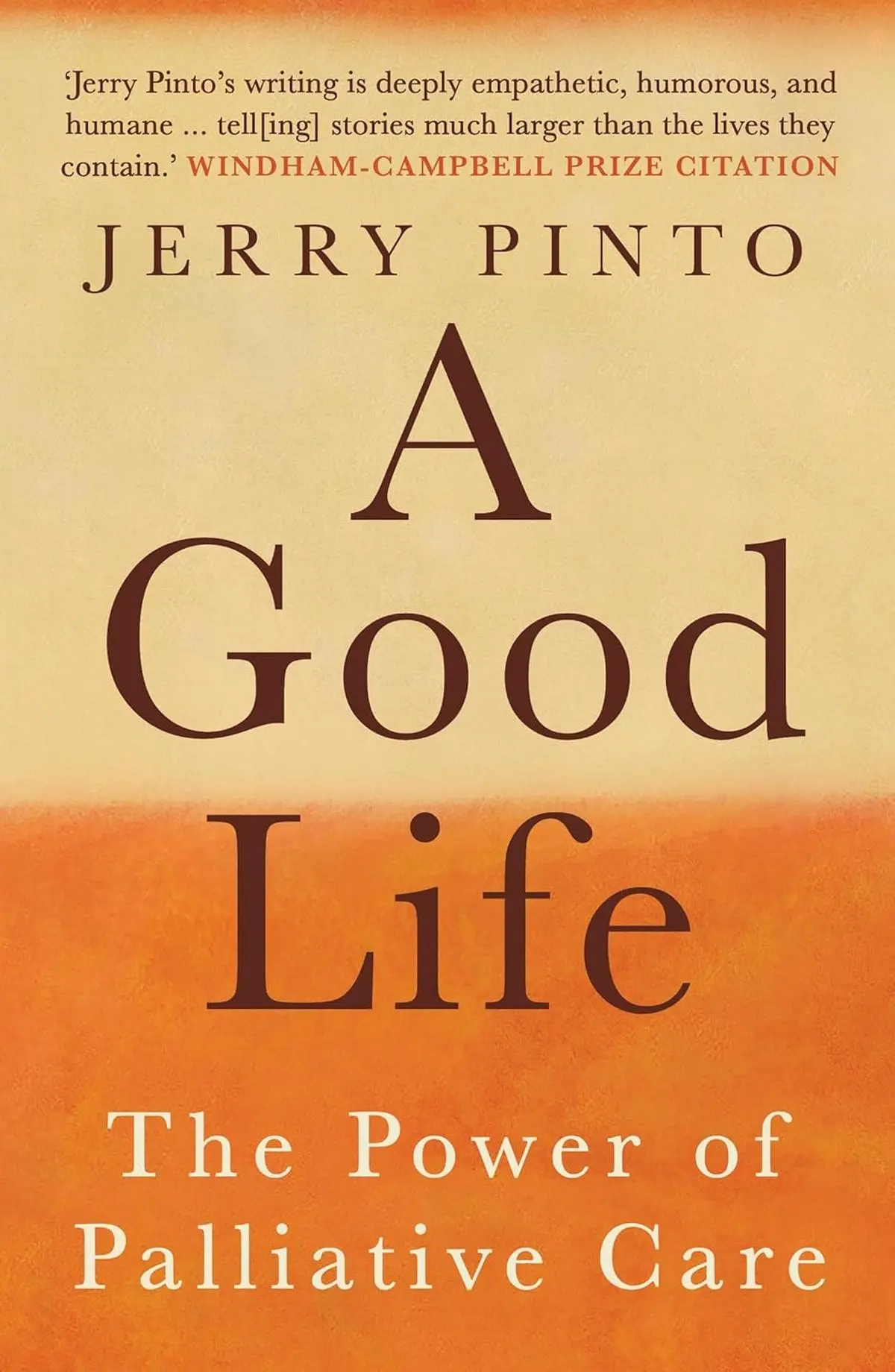
One of the messages of this book is that palliative care should be a part of the treatment schedule from the time of diagnosis. 

One of the messages of this book is that palliative care should be a part of the treatment schedule from the time of diagnosis. 

Literature on palliative care is abundant, yet most doctors and medical students lack awareness of its basic concepts. The Medical Council of India has introduced the concept of AETCOM (Attitude, Ethics and Communication), but I am told these subjects exist largely in theory. Empathy, communication, and ethics remain a pipe dream in medical colleges that are already struggling under the weight of poor planning and inadequate infrastructure. If the medical students of today are to truly contribute to the nation’s health as the doctors of tomorrow, our governing bodies need to act fast.

This book is targeted at the layperson and is written in an easy, flowing manner. However, given that AETCOM teaching often lacks the anecdotes that make up life, I would recommend it to young (and not-so-young) doctors as well. Certain nuances will not strike even the brightest of students or the most empathetic of people. For example: “Would you like to be eye-to-eye with your doctor or would you rather have the doctor loom over you?” I remember a similar statement made by the redoubtable Mr Kishore Rao, one of the founders of Karunashraya, at a lecture that he gave in Bangalore in 2001. Another philosophy that all hospitals could adopt is that of having patient navigators who guide anxious patients through the various loops in a hospital, such as the KEVAT Patient Navigation Programme in Tata Memorial Hospital, Mumbai, and Suhrids at the Dr Bhubaneswar Borooah Cancer Institute, Guwahati.

There are many, many miles to go. One should take heart from the fact that at least a beginning has been made, but also let us remember that well begun is only half done. In this case, we are nowhere near half done. Out of 820 medical colleges in India, there are only 45 with courses in palliative care and 17 that offer postgraduate courses on the subject. And this, despite the exponential increase in the number of medical colleges in India (which should itself be the subject of much introspection).

If I have anything to quibble about, it would be the back cover blurb. The recommendation should be from “Dr M.R. Rajagopal, Padma Shri awardee” and not from (as the cover states) “Padma Shri Dr M.R. Rajagopal”. These awards are not supposed to be used as a prefix. Finally, the message of this book is too important for it to be restricted to English. It should ideally be translated into other Indian languages, perhaps starting with Marathi since Jerry Pinto is comfortable with both English and Marathi. It would be fitting if he did the translation himself. 

Dr Sanjay A. Pai is a Bengaluru-based surgical pathologist and amateur medical historian.

Also Read | Progress against cancer

Also Read | End-of-life care is everyone’s business