


惯性聚合 高效追踪和阅读你感兴趣的博客、新闻、科技资讯
阅读原文 在惯性聚合中打开

推荐订阅源

T
The Exploit Database - CXSecurity.com
D
Darknet – Hacking Tools, Hacker News & Cyber Security
V
Vulnerabilities – Threatpost
Blog — PlanetScale
Blog — PlanetScale
G
Google Developers Blog
M
MIT News - Artificial intelligence
C
Cybersecurity and Infrastructure Security Agency CISA
MyScale Blog
MyScale Blog
P
Privacy International News Feed
MongoDB | Blog
MongoDB | Blog
Know Your Adversary
Know Your Adversary
P
Palo Alto Networks Blog
AWS News Blog
AWS News Blog
Cisco Talos Blog
Cisco Talos Blog
Malwarebytes
Malwarebytes
aimingoo的专栏
aimingoo的专栏
T
Threat Research - Cisco Blogs
Last Week in AI
Last Week in AI
量子位
Cyber Security Advisories - MS-ISAC
C
CERT Recently Published Vulnerability Notes
Hugging Face - Blog
Hugging Face - Blog
奇客Solidot–传递最新科技情报
奇客Solidot–传递最新科技情报
cs.CV updates on arXiv.org
Y
Y Combinator Blog
L
LangChain Blog
L
LINUX DO - 热门话题
cs.AI updates on arXiv.org
Simon Willison's Weblog
V
Visual Studio Blog
S
Security @ Cisco Blogs
cs.CL updates on arXiv.org
O
OpenAI News
N
News | PayPal Newsroom
Stack Overflow Blog
Stack Overflow Blog
H
Hackread – Cybersecurity News, Data Breaches, AI and More
V
V2EX - 技术
李成银的技术随笔
Recent Announcements
C
Check Point Blog
Attack and Defense Labs
Recent Commits to openclaw:main
S
Security Archives - TechRepublic
小众软件
小众软件
博客园 - 聂微东
月光博客
月光博客
GbyAI
GbyAI
T
Troy Hunt's Blog
S
Securelist
雷峰网
雷峰网

India’s National Fortnightly Magazine

Aranyak and the Death of Forests Pandav Kumar’s Killing Exposes Delhi’s Migrant Labour Crisis The Shrinking Muslim Presence in India’s Legislature Inside the Legacy of Pather Panchali National Security Act and Noida Workers: Is Solidarity a Crime? Trump, Xi and the new G2 West Bengal Election Signals India’s Managed Democracy ( NEET 2026 cancellation exposes India’s education crisis Astrologers in Indian Politics: Faith, Power, & Fear 2026 Heat, Humidity, and Inequality in a Warming India NEET 2026 cancellation exposes India’s education crisis Labour’s Collapse and Reform’s Rise Signal a New Phase in British Politics V.D. Satheesan’s Rise Marks Congress Reset in Kerala NEET Paper Leak Case: Maharashtra Coaching Nexus Under CBI Probe India’s AI Ambitions Expose the Limits of its Digital Model DMK Social Media Failure in Tamil Nadu 2026 Politics Shift Why the Rupee Is Collapsing Under Modi’s Economic Model West Bengal Election 2026: Voting Speed Raises Questions Tamil Nadu 2026: Vijay’s TVK and the Crisis of Dravidian Politics Bengal Under BJP: Bulldozers, Policing, and the Criminalisation of Dissent The Frontline Weekly | Blown away Mario de Miranda at 100: The Last Great Indian Cartoonist Why Hindutva Can’t Erase the Mughal City from India Great Nicobar Project: Petition Tops 2 Lakh in 2026 Punjab Elections 2026: AAP Defections, ED Heat, Security Fears ‘The Dystopian Times’ by Appupen OMC Losses, Rupee Slide, and Rising Inflation Signal Economic Trouble How BJP's Language Policy Is Quietly Erasing Urdu From Kashmir's Administrative and Cultural Life Bengal after the BJP victory: Identity, surveillance, resistance India’s Water Crisis Is About Power, Not Just Scarcity Modi’s Austerity Advice Exposes India’s Economic Rot Sivakasi Fireworks Explosions Expose Safety Failures (2026) Romila Thapar on her memoir, Hindutva, and India’s plurality The fall of Karuna Human bombs at work in Jaffna Relying on stealth Direct hit Deploying diaspora The opposition gets the government it deserves (2026) Inside Subodh Gupta’s largest-ever solo exhibition in Mumbai Supreme Court’s Anti-Environment Tilt Sparks Outrage (2026) Chalam Bennurakar and the Documentary Politics of Silence How Vijay’s TVK Pulled Off a Stunning Tamil Nadu Breakthrough How Women Voters Are Reshaping Assembly Election Outcomes in Kerala, Tamil Nadu, West Bengal, and Assam Did Voters Reward Performance in 2026 Assembly Elections? Women Welfare Schemes and Voting Patterns The Seed of the Sacred Fig: Iran’s Revolt on Screen SAHA 2026 Shows How Türkiye Plans to Shape the Next Age of Warfare BJP’s New Chief Ministers: Defectors, Not Cadre (2026) How the human tongue made us human How Bengal’s Landslide Pattern Helped BJP Secure a Massive Mandate Salman Sagar on JKNC’s Post-2019 Strategy: Statehood First, Article 370 Later Great Nicobar Project: Why the Debate Misses the Point Marathi Co-Official Language Demand Reopens Goa Faultlines Manipur Violence 2026: The War of Maps and Buffer Zones Intermediary Lives: Intellectual Flux, Gender Autonomy, and the Roots of Historiography in Independence-Era India West Bengal 2026: BJP Win and Bengal’s Violence Economy CBI Director Appointment: Why the CJI’s Seat Fails India Modi UAE Visit 2026 and India’s Foreign Policy Crisis The Frontline Weekly | Yours truly, madly, deeply ‘The Dystopian Times’ by Appupen New Releases in Indian Literature: From H-1B Visa Scams to Bundelkhand’s Feminist Media How Ananya Vajpeyi’s "Place" Reimagines Global Cities through Personal and Political History Mohammad Deepak and the Fight for Shared Identity Tracing the IFS' Origins: Why MEA Dropped the 1783 Claim Delhi’s Central Ridge Faces Ecological Threat from Themed Forest Plan AAP Defections Expose Leadership and Ideology Crisis Why Ladakhis oppose the new district reforms Iran, Trump, and the Crisis of Nuclear Deterrence Ashok Ferrey’s Hot Butter Cuttlefish Is funny and wise Photography and the Unreachable Itch of Meaning Kalyani Thakur Charal and the silence around Dalit writing The Granular Reality of Rebuilding After Partition: A Review of Bhawana Somaaya’s Farewell Karachi Decolonisation and Dispossession: How Post-War Borders Fractured Asian Migration and Citizenship Manipur Conflict Enters Third Year as State Loses Grip on Violence Bengal SIR Disenfranchisement: A New ADM Jabalpur Moment? Romila Thapar at 94: Dissent and India’s History Reverie. Pause. Rupture at Anant Art Delhi review Vijay’s TVK Victory Signals a New Phase in Tamil Nadu Politics Ken-Betwa Dam Faces Protests Over Displacement "Perumazhakkalam" vs "Kerala Story": What Changed in Cinema Noida Worker Protests: CITU on Labour Codes and Wages Supreme Court Hate Speech Ruling 2026: A Retreat Bangladesh’s China Turn Under Tarique Rahman Tests India Ties Namami Gange and the Ganga Cleaning Mission’s Hidden Cost: Displacing Riverbank Communities India and Global Warming: Why Annual Maps Can Mislead Kerala CM Race 2026: Congress Delays Decision Amid Rift BJP Fear Factor: Why India’s Opposition Is Withering (2026) Why India’s Recent Election Results Demand Rigorous Scrutiny of the Electoral Process and ECI Neutrality Who is Suvendu Adhikari, West Bengal's new Chief Minister in 2026? Assam Election 2026: BJP’s Solo Majority Built on Polarisation West Bengal Election 2026: How BJP Swept Mamata Away Kerala Election Results 2026: UDF Landslide Ends Communist Rule as the Last Left Citadel Falls Tamil Nadu Election: Vijay’s Stunning Debut Rewrites Dravidian Politics Who is Suvendu Adhikari, West Bengal's new Chief Minister in 2026? Why UP Education Minister Yogendra Upadhyay wants Rain Rain Go Away removed from school textbooks Debi Chatterjee on Caste, Dalit Literature and Rights (2026) ‘Bhatinde Wale Aloo’ and the Politics of Fake Local Food ‘Bhatinde Wale Aloo’ and the Politics of Fake Local Food Karl Marx at 208: What If the World Had Never Known Him?
US-China Summit: Xi Signals New Global Order
2026-05-23 · via India’s National Fortnightly Magazine
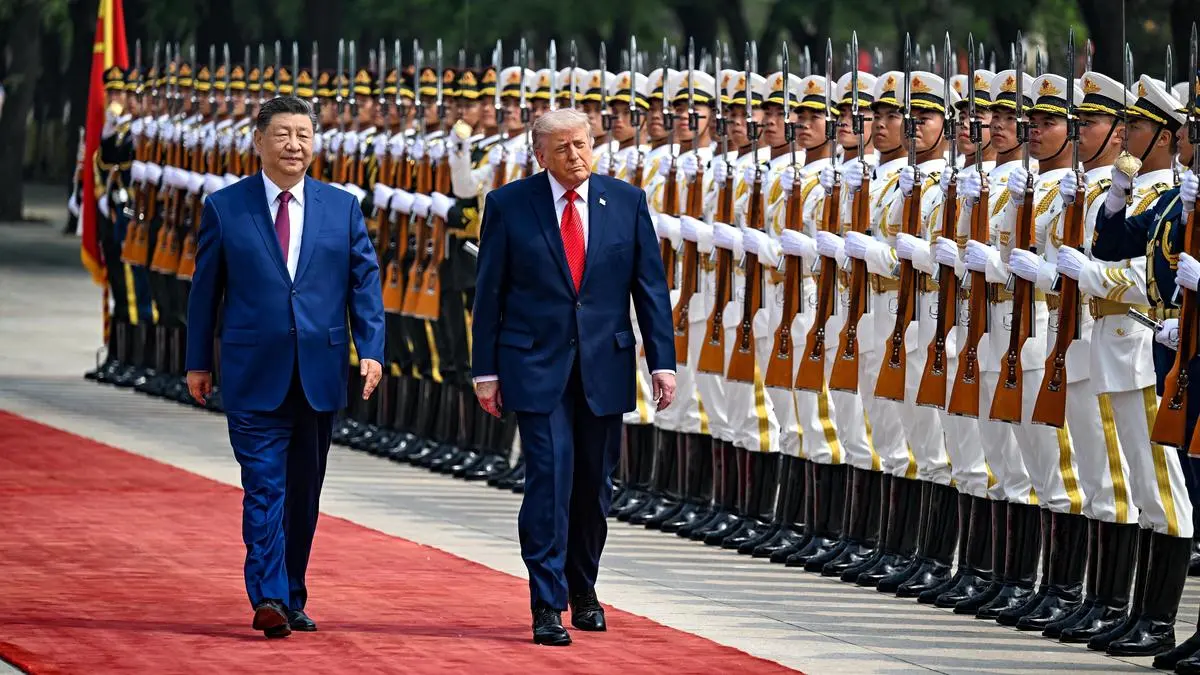
US President Donald Trump with China’s President Xi Jinping during Trump’s visit to the country, in Beijing on May 14, 2026.

US President Donald Trump with China’s President Xi Jinping during Trump’s visit to the country, in Beijing on May 14, 2026. | Photo Credit: Kenny Holston/Pool via Reuters

When US President Donald Trump boarded Air Force One to return home after his much-awaited and once-postponed visit to China, observers were hard put to describe what had come of the meetings between the leaders of the world’s two most powerful nations. There were some minor takeaways. For example, China promised to order 200 (as opposed to an expected 500) aeroplanes from Boeing. It also lifted restrictions on imports from US beef plants, imposed in response to the tariff aggression of the US administration that has played out over the last year. But such small gestures of economic cooperation as opposed to conflict were underwhelming, to say the least, given Trump’s reputation for extreme demands on and transactional engagement with the rest of the world.

It did not help that official read-outs from the two sides and journalistic reports based on conversations with unnamed, high-level sources presented differing assessments. While the US read-out spoke of an agreement towards increased Chinese purchases of agricultural products and energy from the US, statements from the Chinese merely referred to “balanced” and “positive” outcomes from trade talks during the visit. While the US flagged an agreement on further limiting the flow of fentanyl precursors into the US, which Trump had named as a major irritant in the relationship between the two countries, Chinese statements made no direct reference to the issue. Clearly, actual economic concessions by either side were few and received mention only as symbolic messages of an improvement in the fraught ties between the two countries.

Hindsight suggests that it was not in the economic but in the political and strategic realms that the messages from Beijing in the form of statements and silences were telling. Thus, while the Chinese side simply referred to an exchange of views on the situation in West Asia, the US claimed that the two sides had agreed that Iran should not acquire nuclear weapons capability. Specifically, while there was no mention of the Strait of Hormuz in the Chinese read-outs, the US claimed that there was agreement on the need to ensure the free flow of energy through the strait and that China was clear that there should be no weaponisation of the strait or imposition of tolls on ship movement.

Threat to US hegemony

But beyond these, there were two very explicit statements from Chinese President Xi Jinping that, ultimately, defined the visit. One was his warning that the two countries should not fall into the “Thucydides Trap” of war precipitated by the fears of a ruling hegemon in the face of the rapid rise of a potential challenger. This statement explicitly underlined the Chinese reading that it saw itself as a threat to US hegemony and that US efforts to contain its principal rival should be reined in to prevent unspeakable consequences.

The second was Xi’s statement that Taiwan, the merger of which with the Chinese mainland was inevitable, was “the most important issue in China-US relations”, which “if mishandled” could result in “collision or even clashes” between the two nations and push the China-US relationship into dangerous territory.

What was remarkable was not just Xi’s candour on these two important issues. It was also the absence of any strong response from the US to these statements. In an implicit response to the Thucydides reference, Trump in fact said: “The relationship between China and the USA is going to be better than ever before.” And the official White House statement had no mention of Taiwan.

According to reports, Trump told journalists aboard the returning Air Force One flight that no commitments were offered by him on Taiwan and that the possible contentious $14 billion arms sale to the current government of that territory was still on the table. Moreover, in an uncharacteristic resort to diplomacy, he reportedly retorted, “I don’t talk about that,” when questioned whether the US would defend Taiwan in the event of a conflict with the mainland.

Absent any significant results on a host of recent economic, political, and strategic conflicts—from the trade in chips and rare earth magnets to the wars in Ukraine and West Asia—the above statements from Xi are the ones that define the outcome of the visit. The message is clearly that in the reading of the undisputed leader of an “emerging” China, global geopolitics is at an inflection point. Eight decades after the end of a world war that marked the displacement of Britain by the US as global hegemon, the time has come, Xi seems to think, for one more such epochal development involving the displacement of the US by China as world leader.

Seeing that historic shift as inevitable and irreversible, Xi’s interest seems to be in ensuring that, this time around, the context of the transition is not as violent as the previous one. Hence, the need to explicitly call for avoiding a Thucydides Trap and accept the transition as the normal course of things in a world where “change was the only absolute”. This is what Xi possibly meant when he said that Trump’s visit to China, the first in a long while by a sitting US President, marked the beginning of a “constructive strategic stable relationship”. Telling his US counterpart in their first meeting during the visit that the two countries “should be partners, not rivals”, Xi went on to clarify on another occasion: “Achieving the great rejuvenation of the Chinese nation and making America great again can go hand in hand.”

This summit was less about forging agreement and cooperation between two major world powers and more about China making a declaration. Xi may be right or wrong. But he is clear that China’s time as global hegemon has come. It is for time to tell and the rest of the world to experience whether that is true and, if so, what that means.

C.P. Chandrasekhar taught for more than three decades at the Centre for Economic Studies and Planning, Jawaharlal Nehru University, New Delhi. He is currently a senior research fellow at the Political Economy Research Institute, University of Massachusetts Amherst, US.

Also Read | Trump’s Beijing patch-up show

Also Read | The crouching dragon?