


The nuclear trajectories of India and Pakistan are rooted in their historical rivalry, emerging from the contentious partition of British India and the disputes that followed. Since Independence, this rivalry has generated a persistent sense of insecurity and vulnerability, accompanied by the recurring possibility of conflict. Both countries have sought to outmanoeuvre each other through arms accumulation and alliance-building, reflecting the realist and neo-realist view that security remains the primary driver compelling states to acquire nuclear weapons.
Within neo-realist thought, scholars are divided into optimists and pessimists based on their understanding of deterrence. Deterrence optimists argue that nuclear weapons, whether limited or expansive, can ensure stability by raising the costs of conflict to unacceptable levels. Viewed from this perspective, India’s nuclear trajectory, often justified as peaceful, was shaped by strategic concerns, particularly China’s nuclear test in 1964. The subsequent Chinese hydrogen bomb test in 1967 further accelerated India’s nuclear ambitions, leading to weapons design efforts at the Bhabha Atomic Research Centre (BARC) in Mumbai.
India’s scientific community promoted nuclear capability as a pathway to major power status. Nevertheless, achieving this objective through self-reliance proved difficult, prompting India to seek external assistance. In May 1998, India formally declared its nuclear status through a series of tests, soon followed by Pakistan, which embraced nuclear weapons as the ultimate guarantor of its security. This sequence entrenched a regional arms race that continues without meaningful restraint. Both states frame their strategic interests as vital, reinforced through nationalistic narratives, while recent political developments have further intensified regional tensions.
Understanding nuclear deterrence requires a careful examination of theoretical frameworks and empirical realities. Realist theory provides a useful lens for analysing nuclear dynamics, emphasising anarchy, security dilemmas, and competing national interests.
Deterrence optimists argue that nuclear weapons contribute to stability by preventing large-scale wars. The fear of mutual destruction raises the costs of conflict to unacceptable levels, thereby discouraging aggression. However, deterrence pessimists highlight the limitations and risks associated with nuclear deterrence. They contend that deterrence is inherently fragile, particularly in regions marked by intense rivalry and political tension. Nuclear weapons do not eliminate conflict; rather, they transform its character, often shifting it to lower levels of violence.
This dynamic is often described as the stability–instability paradox, first articulated by Glenn Snyder in the early 1960s. Nonetheless, as Rajesh Rajagopalan, professor at the School of International Studies, JNU, argues in the paper “What Stability-Instability Paradox? Subnational Conflicts and the Nuclear Risk in South Asia”, Snyder’s framework also implies that the threat of escalation by nuclear weapons can constrain lower-level violence. This tension underscores how nuclear deterrence is often interpreted in divergent ways.
Historical experience suggests that nuclear weapons do not necessarily prevent conflict. Limited wars, crises, and military standoffs have occurred in nuclearised environments, indicating that deterrence may prevent total war without ensuring broader stability. It rests on key assumptions, including rational decision-making, secure second-strike capability, and effective civilian control over nuclear forces. It also depends on psychological factors, particularly the fear of catastrophic consequences. In practice, yet, these assumptions are not always reliable. Human error, misperception, and domestic political pressures can undermine rationality and increase the risk of escalation.
From a moral standpoint, nuclear deterrence raises serious ethical concerns. The use of nuclear weapons would result in indiscriminate destruction, affecting both military targets and civilian populations. The notion of “unacceptable damage,” embedded in nuclear doctrines, implicitly includes civilian casualties, raising fundamental questions about the moral legitimacy of deterrence strategies.
The sufficiency debate
In an era of expanding nuclear arsenals and advancing missile technologies, the logic of deterrence is increasingly under strain. The destructive capacity of nuclear weapons has increased exponentially since 1945, when the US dropped atomic bombs on Japan. Those bombs, though devastating, were far less powerful than modern thermonuclear weapons. For instance, the Tsar Bomba, the largest nuclear device ever tested, had a yield of 50 megatons and could destroy everything within a radius of 100 kilometres. Such enormous destructive potential raises a fundamental question: how many nuclear weapons are actually necessary to deter an adversary?
Unlike offensive realists, defensive realists like Kenneth Waltz argue that only a small number of nuclear weapons are sufficient to establish deterrence. Even a limited arsenal can inflict unacceptable damage, making aggression irrational. Fear, rather than numerical parity, becomes the foundation of deterrence. A single high-yield weapon, if deliverable, can deter a larger arsenal. North Korea’s nuclear capability, for instance, has functioned as a deterrent despite its relatively small size. This perspective challenges the logic of continuous expansion and suggests that arms races are driven as much by political and psychological factors as by strategic necessity.
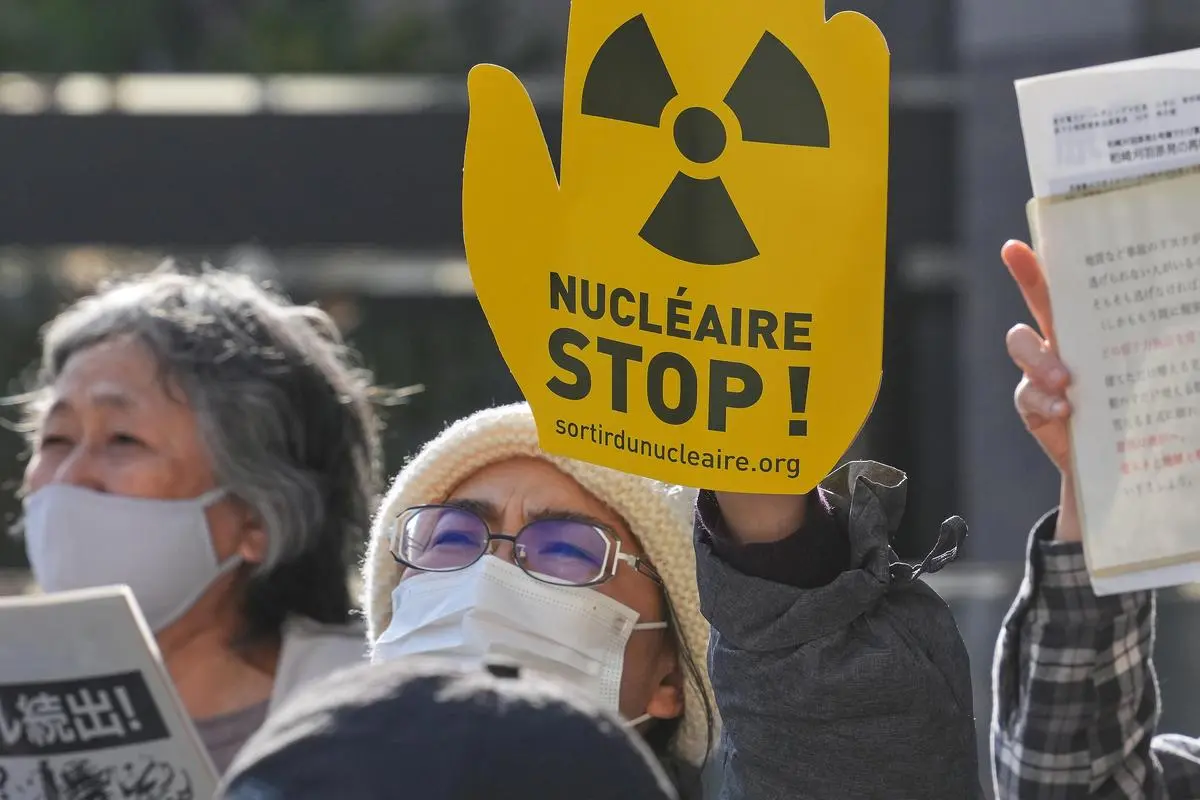
Protesters rally against the restarting of the No. 6 reactor at the Kashiwazaki-Kariwa nuclear power plant, in front of Tokyo Electric Power Company Holdings headquarters in Tokyo on January 19, 2026. | Photo Credit: Eugene Hoshiko/AP
Despite this reasoning, nuclear-armed states have consistently pursued larger and more sophisticated arsenals, reflecting the logic of offensive realism associated with John Mearsheimer. Political leadership often equates security with superiority, leading to competition rather than restraint. Even during the Cold War, major powers resisted maintaining smaller arsenals despite the sufficiency of minimal deterrence. This indicates that perceptions of power, prestige, status, and vulnerability play a significant role in shaping nuclear policy.
In the South Asian context, India’s nuclear programme reflects the tension between sufficiency and expansion. India’s doctrine of “Credible Minimum Deterrence” and “No-First-Use” theoretically limits its arsenal, yet ambiguity surrounding what constitutes “minimum” allows for continued growth. India possesses significant fissile material and the capacity to expand its arsenal beyond current deployments, indicating a gap between declaratory policy and operational capability.
External partnerships have facilitated access to advanced technologies, often justified as necessary for balancing regional threats, particularly from China. However, India’s existing capabilities may already be sufficient to deter both China and Pakistan, raising questions about the necessity of continued expansion. Pakistan, despite more limited economic resources, has developed a credible deterrent, including ballistic missiles and nuclear-capable aircraft. Its proximity to India enhances the effectiveness of its deterrence posture even without a fully developed triad.
The destructive potential of modern nuclear weapons underscores the sufficiency of relatively small arsenals. The bombings of Hiroshima and Nagasaki demonstrated the catastrophic impact of even low-yield weapons. Contemporary warheads are significantly more powerful, and a limited exchange involving a few dozen weapons could produce mass casualties, environmental devastation, and long-term climatic consequences.
Given these realities, a relatively small number of nuclear weapons may suffice for deterrence in South Asia. Existing arsenals already exceed such thresholds, suggesting that continued expansion is driven less by strategic necessity than by competition, domestic politics, and perceptions of insecurity.
The erosion of stable deterrence
Technological advancements are reshaping deterrence dynamics. Missile defence systems, in particular, may undermine deterrence by creating perceptions of protection against retaliation. At the same time, improvements in delivery systems and targeting technologies risk lowering the threshold for nuclear use.
India has invested in Ballistic Missile Defence Systems (BMDS) to protect key urban centres such as New Delhi and Mumbai. Planned deployments in Alwar and Pali reflect this objective. Initiated by the Defence Research and Development Organisation (DRDO) in 1999, the programme represents a significant step towards an indigenous missile defence capability. The system incorporates a two-tier interception mechanism, engaging targets both within and beyond the atmosphere. It integrates long-range radar, developed with assistance from Israeli firm Elta, and a command network designed to track and intercept incoming missiles. Despite successful tests, the system’s effectiveness against large-scale attacks remains uncertain, particularly given the short missile flight times in the region.
Pakistan may respond by expanding its offensive capabilities and adopting strategies designed to overwhelm such defences, as reflected in the development of Multiple Independently Targetable Re-entry Vehicle-capable (MIRV) systems. From a security dilemma perspective, these developments risk intensifying regional instability. As William Perry, who served as a Secretary of Defence as well as the technology advisor to the US government, cautioned, no defence system can provide absolute protection against large-scale attacks.
A major challenge to nuclear stability lies in the risk of unintended escalation. Miscalculation, technical error, and misinterpretation of intent can all trigger crises. The short flight times between neighbouring states reduce decision-making windows, increasing the likelihood of error under pressure. Submarine-based nuclear forces, while enhancing survivability, introduce further risks. Communication constraints may compel commanders to act without direct authorisation. Historical incidents demonstrate that false alarms and technical failures have repeatedly brought nuclear-armed states close to catastrophe.
Revision of India’s nuclear doctrine
These structural and technological challenges necessitate a reconsideration of India’s nuclear doctrine. From the outset, states have recognised the fear-inducing power of nuclear weapons; it is now time to also acknowledge the imperative of rationality in their possession and use. While Kenneth Waltz largely overlooked the rationality dimension, rationality cannot be reduced merely to cautious behaviour in the handling of nuclear weapons. It requires a deeper reflection on whether the continuous upgrading of nuclear capabilities genuinely enhances India’s security. Though peace activists advocate the complete abolition of nuclear weapons, persuading entrenched nuclear establishments, often shaped by notions of politics, prestige, and power, remains a formidable challenge.
Nuclear-armed states, including India, train their militaries for the eventual use of these weapons should circumstances demand it, as do other nuclear powers. Some countries have developed advanced shelters and evacuation plans to mitigate the effects of a nuclear attack. Yet, these measures raise a troubling question: if states lack the capacity to adequately protect their populations from nuclear devastation, what is the strategic logic of maintaining such arsenals? In this sense, deterrence theory appears increasingly tenuous, and nuclear weapons risk being seen not merely as instruments of deterrence but as potential battlefield tools.

Defence Research and Development Organisation tests Phase-II Ballistic Missile Defence System, in New Delhi on July 24, 2024. | Photo Credit: ANI Photo
A limited yet qualitatively advanced nuclear arsenal can serve as an effective deterrent against China and Pakistan, both as nuclear-armed states. The pursuit of great power status does not necessarily depend on offensive nuclear capabilities. Rather, it rests on strong conventional forces, a robust economy, influential soft power, export-driven global engagement, effective diplomacy, research and technological advancement, a peaceful domestic environment, and stable relations with neighbours. While current decision-makers may credit the architects of India’s nuclear programme for strengthening national security, the broader global context reveals a persistent security dilemma.
For instance, some argue that had Iran possessed nuclear weapons, external military interventions by the US or Israel might have been deterred. Such perceptions can motivate non-nuclear states to pursue nuclear capabilities for security, a view echoed by scholars like Kenneth Waltz. However, despite its relatively limited conventional capabilities compared to the US and Israel, Tehran has prompted renewed scholarly attention to the role of advanced conventional weaponry in enhancing security.
Thus, security, not power, should remain the guiding principle. Upgrading nuclear weapons effectively incentivises adversaries to expand and enhance their own arsenals, thereby increasing their capacity to target larger segments of our population. India should prioritise addressing perceived threats rather than focusing solely on capability gaps with China, while Pakistan is likely to maintain its nuclear arsenal along similar lines in response to India. History suggests that continuous upgrading and modernisation of military capabilities often heighten tensions and increase the risk of conflict. Even if India cannot fully trust Pakistan or China to act with restraint, the reality remains that a nuclear war cannot be won.
As Ramesh Thakur, emeritus professor at the Australian National University and expert in international security, nuclear non-proliferation and disarmament, global governance, and the Responsibility to Protect (R2P) doctrine, has argued in Nuclear Weapons and International Security: Collected Essays, “a smaller evil cannot be justified by a greater good; it is still evil, and killing innocent non-combatants is murder.” Similarly, I argue that Pakistan’s conventional asymmetry with India, and India’s own conventional imbalance with China, cannot be offset by nuclear weapons.
However, there remains a serious concern that no nuclear-armed state’s military would readily accept a conventional defeat; in such circumstances, the resort to nuclear weapons could become a means of transforming battlefield loss into a humanitarian catastrophe. Interestingly, the decision by General Thomas Handy to authorise the use of atomic bombs against Japan reflects how military leadership can be inclined to employ the most advanced weapons available, prioritising overwhelming military superiority even at the cost of mass destruction. Therefore, limited nuclear weapons cannot be regarded merely as an option, but rather as a rational choice aimed at protecting populations from mass destruction.
The future of nuclear stability in South Asia
Contemporary nuclear strategy reflects deep mistrust and evolving security concerns. While nuclear weapons are viewed as essential for national security, shifts in doctrine and capability may inadvertently increase the risk of conflict. The assumption of rational behaviour, central to deterrence theory, is often challenged by political rhetoric, historical grievances, and domestic pressures. The development of tactical nuclear weapons is particularly concerning, as it lowers the threshold for use and risks normalising nuclear conflict at the battlefield level.
Since the BJP came to power, Pakistan’s nuclear capability has increasingly been perceived within India as a bluff and a shield for cross-border terrorism. As a result, the No-First-Use policy has come under greater scrutiny, with calls for a shift towards a First-Use posture. While such debates carry implications for regional stability, India has largely relied on limited conventional responses, including the surgical strikes of 2016, the Balakot air strikes of 2019, and the air and missile strikes during Operation Sindoor of 2025. Under the nuclear shadow, the Cold Start Doctrine represents another strategic option aimed at addressing these challenges. These developments indicate that deterrence between India and Pakistan remains under strain.
Recent conflicts in West Asia highlight the risks posed by missile and drone warfare, as well as the limitations of defence systems under operational conditions. India’s reliance on systems such as the S-400 reflects an effort to strengthen defensive capabilities. Nevertheless, as William Perry has argued, credible deterrence ultimately depends on survivable second-strike capability rather than defensive systems alone. At the same time, he noted that political considerations have historically driven nuclear expansion.
India’s pursuit of major power status remains closely tied to its nuclear policy. Yet its deterrent appears less stable in practice than in theory. Persistent instability in South Asia reflects unresolved disputes, weak confidence-building mechanisms, and enduring mistrust. The risk of miscalculation remains significant, particularly given concerns over command and control on both sides.
At the same time, deterrence outcomes in South Asia continue to be shaped by mutual perceptions and strategic choices. The underestimation of adversary capabilities, coupled with the instrumental use of nuclear weapons for strategic signalling, risks eroding stability. As conventional and technological competition intensifies, the pressures for escalation are likely to grow.
In this context, deterrence in South Asia remains inherently fragile. Without sustained efforts to manage rivalry and build trust, the region risks edging toward a point where the very logic of deterrence may cease to hold.
Rameez Raja is a Non-Resident Fellow at the Indo-Pacific Studies Center, Melbourne, Australia. He is the author of India’s Nuclear Policy Since 1998: Perspectives and Challenges.
Also Read | Nuclear powers cannot afford the luxury of war
Also Read | Kirana Hills and the illusion of nuclear stability in South Asia