






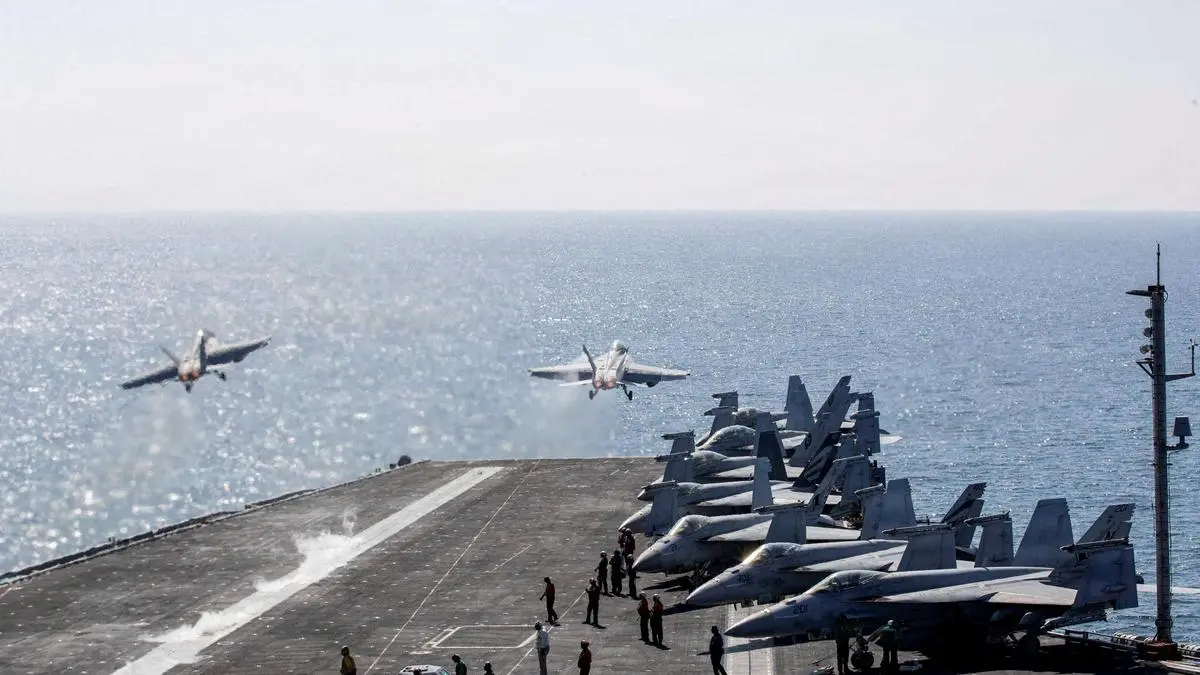
The US Navy is reviewing the design and costs of its advanced Ford-class aircraft carriers, raising uncertainty over future versions of the warship. (A file photo) | Photo Credit: US NAVY
The US Navy is reviewing the design and costs of one of its most high-tech and expensive warships — the Ford-class aircraft carrier — and the service's top boss is not ruling out canceling future versions of its design.
Navy Secretary John Phelan told reporters Tuesday that the review, which should be complete next month, was “a prudent and practical" move aimed at examining “the costs of the designs and the systems to make sure that they make sense and they have all the systems and requirements that we want going forward.” The review of the design comes after years of criticism from President Donald Trump, who has taken issue with some of the technology on this type of aircraft carrier, including its magnetic catapults, which he claimed “didn't work” during remarks in the Oval Office last year.
When Phelan was asked if the review could lead to the cancellation of future Ford-class aircraft carriers, he told reporters only that “it's too early to say, but we will have carriers.” The USS Gerald R. Ford has been on a record-setting deployment of more than 300 days — since June 2025 — that has seen the world's largest aircraft carrier participate in two key military actions by the Trump administration: the capture of Venezuelan leader Nicolás Maduro and the war against Iran.
Navy budget documents made public Tuesday did not list Ford-class aircraft carriers among the ships that the Navy planned to buy. The documents instead simply said “aircraft carrier.” Meanwhile, other ships — such as the Columbia-class submarines and Arleigh Burke-class destroyers — were described by class name.
A Navy statement provided Tuesday praised the Ford-class carrier as “a battle-proven design” that has been able to launch aircraft at a faster rate than the older Nimitz-class carriers and offers increased “combat power and ability to maintain high-tempo global strike operations" in three parts of the world.
Phelan, however, told reporters that he wanted to review that data.
“I go to the Ronald Reagan school of trust and verify,'” Phelan said, before adding that the review would look into the carrier's ability to launch and retrieve aircraft.
The ship's magnetic catapults are a key component in giving the Ford a leg up from the older Nimitz ships in launching aircraft. They also put less stress on planes, require less maintenance and reduce the ship's need for fresh water compared with the older steam-powered variants.
The Navy has three other Ford-class carriers under construction: the USS John F. Kennedy, the USS Enterprise and the USS Dorie Millier.
Phelan said the review will examine the next two carriers — named USS William Jefferson Clinton and USS George W. Bush by the Biden administration — which have been planned but not contracted.
Trump, meanwhile, has rolled out a new warship design dubbed the Trump-class battleship, estimated to cost more than USD 17 billion — or USD 4 billion more than the Ford-class carriers. The Navy does not plan to pay for the first ship in the new class, the USS Defiant, until the 2028 budget year.
Phelan told reporters the current cost for the Trump-class ship is an “early initial estimate” and he expected the cost to fall as the design is refined and further ships are built. He also didn't rule out the ship being powered by a nuclear reactor, which would significantly drive up its costs.
Published on April 22, 2026
此内容由惯性聚合(RSS阅读器)自动聚合整理,仅供阅读参考。 原文来自 — 版权归原作者所有。