






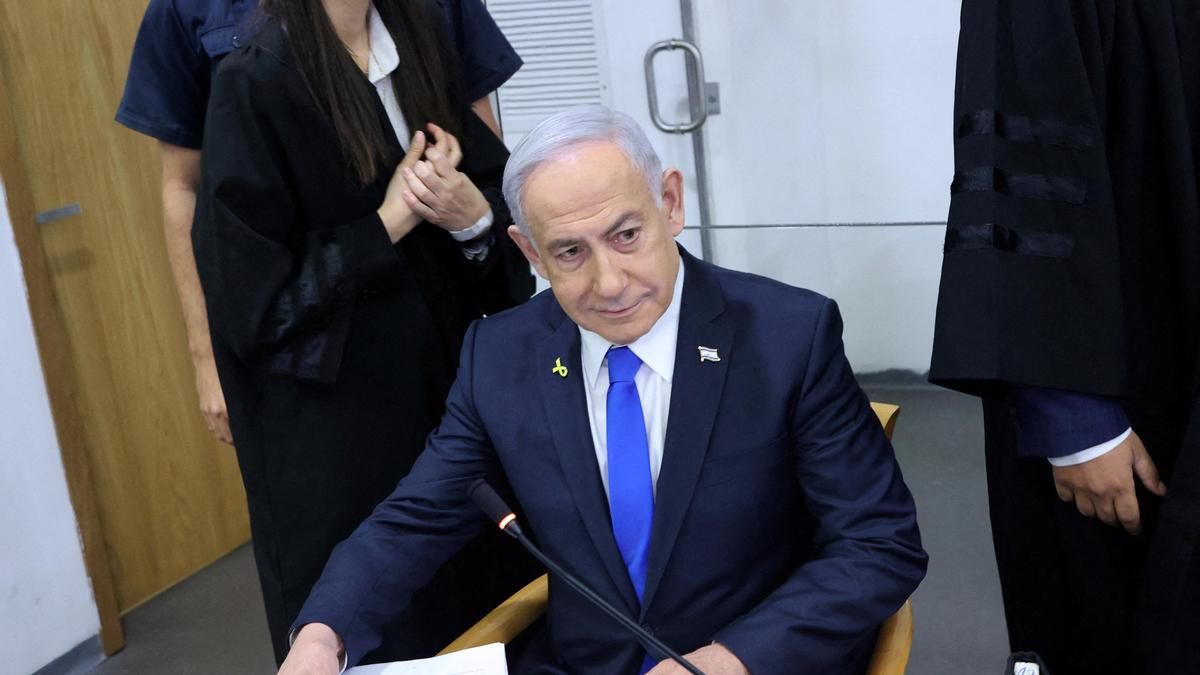
Israeli Prime Minister Benjamin Netanyahu has authorised direct negotiations with Lebanon aimed at disarming Hezbollah and potentially normalising ties, even as tensions remain high. (file photo) | Photo Credit: Moti Kimchi
In a potential boost to Middle East ceasefire efforts, Israeli Prime Minister Benjamin Netanyahu said Thursday that he authorised direct negotiations with Lebanon “as soon as possible” aimed at disarming Iranian-backed Hezbollah militants and establishing relations between the neighbours.
The two countries have technically been at war since Israel was established in 1948, and Netanyahu later stressed that there was no ceasefire between them.
In a video statement, he said Israel will keep striking Hezbollah until security is restored in northern Israel.
There was no immediate response from Lebanese authorities. But Israel-Lebanon negotiations were expected to begin next week at the State Department in Washington, according to a US official and a person familiar with the plans who both spoke on condition of anonymity.
The prospect of talks appeared to bolster the tentative ceasefire in the Iran war that has staggered under the weight of Israel's bombardment of Beirut, Tehran's continued chokehold on the Strait of Hormuz and uncertainty over whether planned peace talks can find common ground.
US President Donald Trump said Thursday that he was “very optimistic” about the prospects of reaching a peace deal, saying Iranian leaders are more amenable in private conversations than in their public statements.
Netanyahu's announcement came amid disagreement over whether the ceasefire deal included a pause in fighting between Israel and Hezbollah, and a day after Israel pounded Beirut with airstrikes that resulted in the deadliest day in Lebanon since the war began on February 28.
Israel has fought multiple wars and launched several major invasions over the years, most recently sending in large numbers of troops last month in response to Hezbollah fire on Israel's northern border communities.
The launch of direct peace talks is a significant achievement, though reaching an agreement will be difficult after decades of hostilities, Hezbollah's continued presence and longstanding disagreements over the exact route of their shared border.
The talks in Washington are expected to be handled on the American side by the US ambassador to Lebanon, Michel Issa, and on the Israeli side by the Israeli ambassador to the US, Yechiel Leiter, according to the person familiar with the planning.
It was not immediately clear who would represent Lebanon.
The timing and location of the talks was first reported by Axios.
After declaring victory with the ceasefire announcement, both Iran and the US appeared to apply pressure on each other. Semiofficial news agencies in Iran suggested forces have mined the Strait of Hormuz, a crucial waterway for oil that Tehran has closed. Trump warned that US forces would hit Iran harder than before if it did not fulfil the agreement.
Questions also remained over what will happen to Iran's stockpile of enriched uranium at the heart of tensions, how and when normal traffic will resume through the strait, and what happens to Iran's ability to launch future missile attacks and support armed proxies in the region.
Iranian President Masoud Pezeshkian said in a message on Telegram that the decision to accept a ceasefire was made unanimously by senior government leaders and approved by the supreme leader. He said the ceasefire “is not a sign of weakness but a way to solidify Iran's proud victories”.
Despite the fragile and disputed nature of the ceasefire, it appeared to have halted weeks of missile and drone attacks by Iran on its Gulf Arab neighbours and Israel, with no new launches reported Thursday. There were no reports of strikes by the US or Israel targeting Iran.
Iran's Parliament speaker, Mohammad Bagher Qalibaf, warned Thursday that continued Israeli attacks on the Iran-backed Hezbollah militant group in Lebanon would bring “explicit costs and STRONG responses”.
Qalibaf has been discussed as a possible negotiator who could meet US Vice President J D Vance this weekend in Islamabad. The White House has said Vance would lead the delegation for talks starting Saturday.
Iran had said Israel's ongoing attacks on Hezbollah were violating the ceasefire agreement. Netanyahu and Trump have said it was not.
Trump said Thursday that he asked Netanyahu to dial back the strikes in Lebanon.
“I spoke with Bibi, and he's going to low-key it. I just think we have to be sort of a little more low-key,” Trump told NBC News in a phone interview.
Hours before Netanyahu authorised the negotiations with Lebanon, he said Israel would continue striking militants in the country “with force, precision and determination”.
Lebanon's health ministry said more than 300 people were killed and more than 1,100 wounded Wednesday in Israeli strikes in central Beirut and other areas of Lebanon that Israel said targeted Hezbollah, which joined the war in support of Tehran.
A New York-based think tank warned that the ceasefire “hovers on the verge of collapse” following Israel's strikes Wednesday.
Lebanon's state-run National News Agency reported that an Israeli strike overnight killed at least seven people in southern Lebanon. The Israeli military did not immediately acknowledge the strike.
Published on April 10, 2026
此内容由惯性聚合(RSS阅读器)自动聚合整理,仅供阅读参考。 原文来自 — 版权归原作者所有。