







In some parts of the Balkan region, under the ‘Kanun of Lekë Dukagjini’ — a centuries-old system of customary law — women can take a vow of chastity and become “sworn virgins”, effectively living as men. This practice allows them to access freedoms typically reserved for men in a patriarchal society.
The chastity oath is sometimes taken to avoid a forced heterosexual marriage or to gain social autonomy within a restrictive system. As a social role, it can be understood as a form of gender crossing shaped by specific cultural and historical conditions, though interpreting it through modern Western gender frameworks can risk oversimplifying its complexity.
In the International Booker Prize-shortlisted novel She Who Remains, Bulgarian writer and actor Rene Karabash centres the story of a sworn virgin. Exceptionally rendered in English by Chicago-based, Bulgarian-born writer and translator Izidora Angel, this fever-dream of a novel, told in an almost angelic voice, is nothing short of a masterpiece.
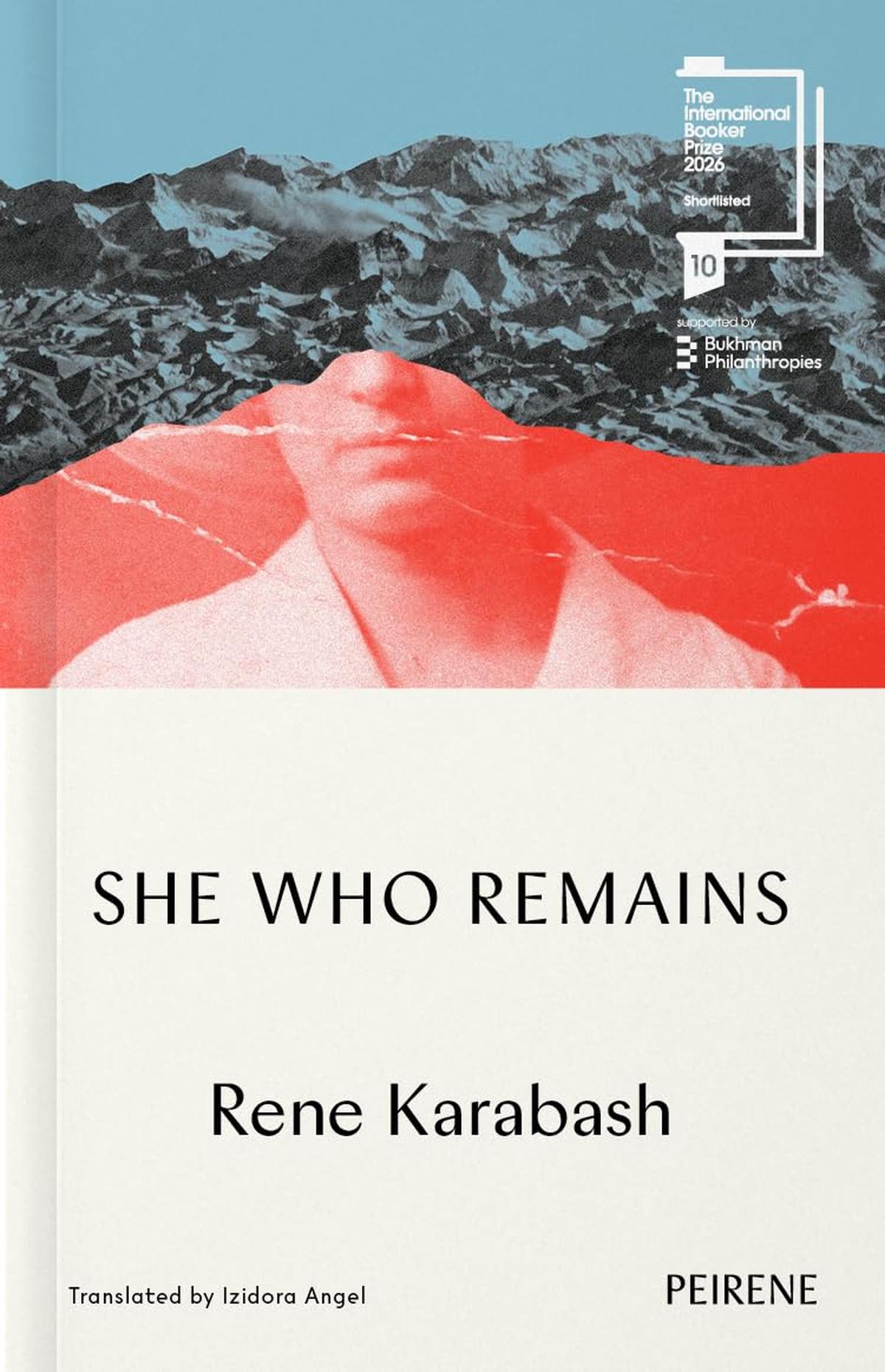
The two-part novel set in Albania begins with a poem. Its liminality far exceeds its plainly rendered language, foreshadowing what readers are about to encounter in the narrative. But first, a murder.
Freedom most precious
The narrator’s mother is pregnant with twins. Murash, the father, wants a son, but the boy does not survive. The girl, Bekija, having learnt in the womb that her father desired a son, decides to become her “daddy’s boy”. A year later, however, a boy, Sále, is born — someone Murash can hardly take pride in raising, as Sále has no interest in patriarchal roles and likes dancing around, which Murash despises.
The second murder is both literal and metaphorical. When Bekija’s marriage is arranged with Nemanja, her mother asks if Bekija is “pure”, for if she is found otherwise, the bullet placed in her marriage trousseau — traditionally packed by the bride’s family — will be used against her.
But before anything can unfold, Bekija takes the chastity oath, socially transitioning and becoming Matija. Under the ‘Kanun’, the groom’s family, in response to perceived dishonour, can exact revenge by killing either the son or the father. Having fled, Sále has already made clear who is to be held accountable.
With both Bekija and Murash gone, Matija realises that “the most precious metal in Albania is freedom”. Looking at Murash’s body, Matija wonders, “what have you brought me a wound or death?” Was the slated union “a marriage or funeral?” In transitioning, was Bekija “dying or being born”?

Author Rene Karabash (right) translator Izidora Angel

Much like binary codes, Matija’s thinking switches one way or another, but it also illuminates the in-between transient, quantum state between the binaries.
As if mirroring the inherent fluidity of the story itself, the narration is shaped by the absence of punctuation marks. Consequently, it flows like time, moving forwards and backwards around the same pivotal incident — the one introduced in the first part as the cause behind the oath.
However, this perspective is overturned in the second part, prompting readers to question their judgments as the narrative shifts its focus to Dhana — the one “with the translucent skin”. Is she an object of desire or of “shame”, “a flower or a weed”? Depending on the beholder, the image changes.
Actions and consequences
But one wonders, why should Matija revisit the past? Is that all a sworn virgin must do, look back, when nothing really changes across the Albanian mountain range? An older Matija is narrating it all to “Mrs Journalist”.
In rendering the journalist’s role as a mere scribe, Karabash does poetic justice to the character, for an outsider’s gaze can either taint or illuminate a story. In this case, it does the latter, enabling her to write She Who Remains. She had wanted to tell this story “for a long time” but could not do so until she “visited a photo exhibition in Sofia by the German-based Bulgarian photographer Pepa Hristova, which was devoted to the sworn virgins of Albania”.
Chapter after chapter, in translator Angel’s meticulous and arresting English prose, the novel reveals Matija at the cusp of action, discovering probing letters from her brother in Sofia, while carefully balancing what to disclose and what to withhold.
In thwarting readers’ expectations time and again, She Who Remains unfolds as a discovery — almost like the miracle it invokes towards the end — inviting readers to consider: if a love “cannot be called by its name”, does it cease to be love? Or has love always been nameless, existing even before language, which people awkwardly use to codify it? Consider this: someone wrote the ‘Kanun’, and everyone came to believe in that construct. What then are we living within, if not the consequences of its collective acceptance?
The reviewer is a Delhi-based queer writer and culture critic.