






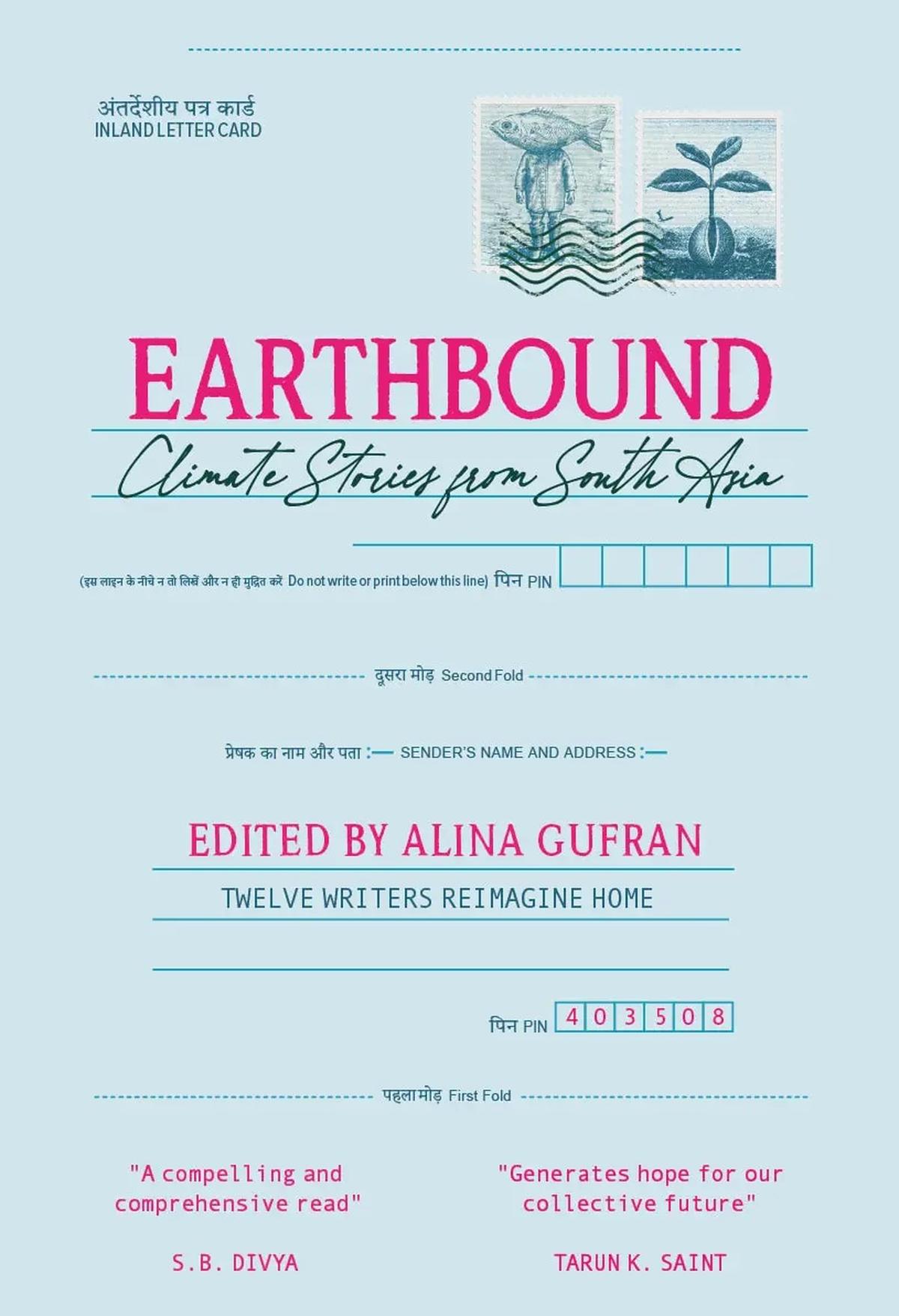
“It is now 85 seconds to midnight,” warns the Doomsday Clock, an annual reminder of humanity’s accelerating descent. Holding up a mirror to this reality, Earthbound, an anthology of 12 short stories edited by writer-filmmaker Alina Gufran, confronts readers with the inevitable consequences of a future left unchecked.
In Earthbound, the future arrives as a formidable history shaped by the unholy trinity of climate change: disease, disaster and decline — economic and ecological.
In Maliha Khan’s ‘If We Go to Hell, We’ll Take a Blanket First’, winters have stopped coming, blankets are a thing of the past, and all that remains is one viral epidemic after another with intermittent heat strokes. In Vijayta Lalwani’s story set in the 2030s and 40s, Mumbai has sunk, warm breezes are “soot filled”, and a Pune housing society insists that all heads be shaved to conserve water.
4040 hours of deluge follow relentless rain in Rhea Lopez’s stoic portrayal of life unravelling in her story, Afterlife. “I was terrified of the weather, and the weather was constant, so I was constantly terrified,” the narrator admits. Yet, amid the devastation stands Flory and her garden, alive with nature’s resilience — “a little green beacon of hope in a desolate urban sprawl”. Lopez is mindful of the damage humans can do but also of the fact that even in times of adversity, nature offers hope; that healing is possible — a sentiment shared by other writers in the collection.

Caste and class barriers don’t go away
The strongest impact, however, comes from stories that evoke Orwellian realities that no longer seem fictional. In these dystopian futures, the poor, displaced and vulnerable are misguided and manipulated by the rich and powerful. Every psychological tactic is used to fool those with nowhere else to turn.
Climate change takes a religious turn when the river Kaveri runs dry but arrangements must be made for the water to run through taps on Kaveri Sankramana — the annual rebirth of the river. Venkataraghavan Srinivasan visualises this in ‘Sambar Kaveri’.
Propaganda spreads in the name of mitigation in the opening story ‘The Solution’ by Prthvir Solanki. The solution is to transform humans into fish — an exercise in “pure science”, according to the protagonist Ravi’s parents and the prime minister, on the belief that “human beings adapt.”
Alas, caste and class hierarchies survive even in this post-apocalyptic setting; the weak and the poor remain eternally so as the powerful continue to reap more power. People like Ravi continue to “experience [their] insignificance like a sickness” against the disproportionate abundance of the rich.

At the end of this journey, two possibilities remain. Either the broken people of a fractured world will require alien intervention to “save humanity”, as seen in Sonal Sher’s ‘The Dolls’, or a post-collapse world will learn to renounce the vices of its predecessors — first and foremost, curiosity, the supposed origin of all catastrophes.

Writer-filmmaker Alina Gufran
Can the human race change?
Some authors, like Rimi B. Chatterjee and Farrel De Souza, remain optimistic. Their narratives offer institutional and behavioural interventions that believe in holding systems accountable and initiating active groundwork. But, social equity is an ideology at best and a myth at worst. We can aspire for it nonetheless.
Earthbound may have been written before the Doomsday Clock struck closer to midnight but the issues it raises are not new. Excessive reliance on non-renewable energy, disruptive technologies like AI, the autocratic and capitalist tendencies of the world, along with our utter oblivion as a species, all contribute to the perennial climate crisis.
Human beings may be many things, but above all, we are wiser in hindsight. Earthbound offers a glimpse into the future — allowing us to borrow its wisdom and rethink our myopic outlook. Real progress is possible only when governance, business and civic responsibility align. The clock is ticking, and we must keep pace.
The reviewer is a freelance writer. Instagram @read.dream.repeat