


The Ides of March and April being the “cruellest month” dominated the world stage recently.
“Ides” (from Latin idus) marked the approximate midpoint of Roman months. On March 15, 44 BCE, a few Roman senators stabbed Julius Caesar, a scene immortalised by William Shakespeare in Julius Caesar, where a soothsayer warns Caesar about his death “beware the Ides of March”. In The Waste Land, T.S. Elliot called April “the cruellest month”.
Throughout these past few weeks, we saw “broken images” caused by the violence unleashed in March continuing in early April. Thousands perished in an insane man-made disaster. Fortunately, the boxers are in the white corner of the ring for the time being.
A few thousand kilometres from Delhi, in West Asia, the world witnessed an audacious attempt by a 250-year-old democracy (the U.S.) to “restore democracy” in a civilization spanning nearly 40 centuries (Iran).
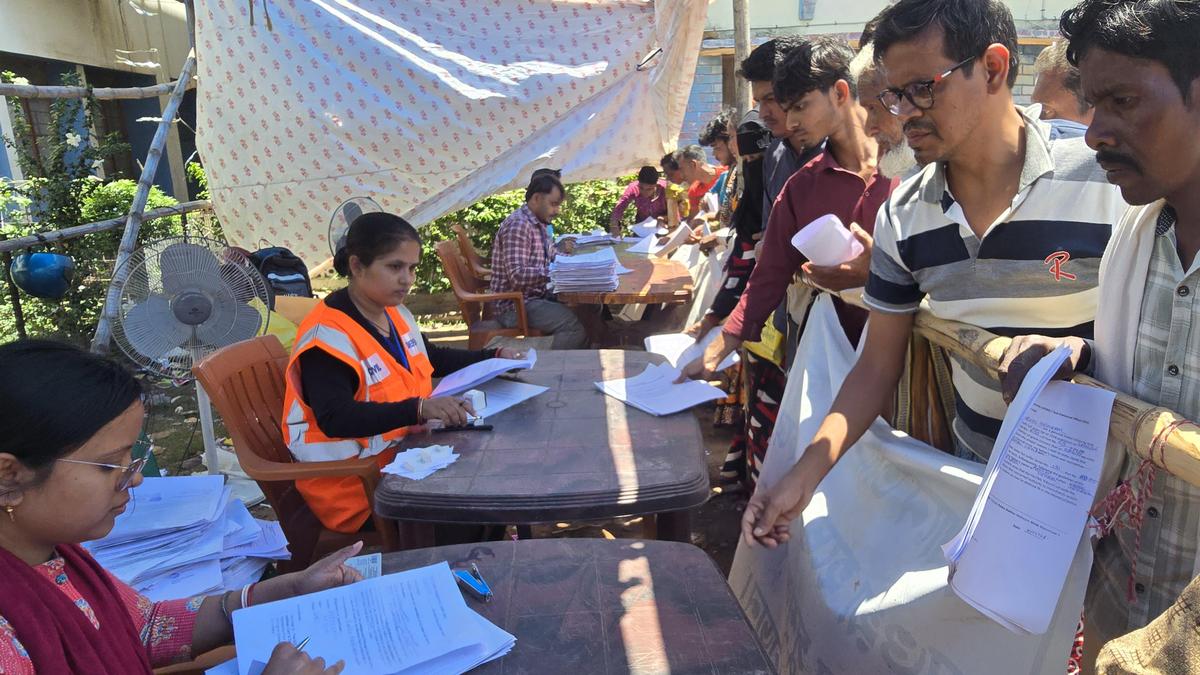
A few hundred kilometres east of Delhi, a different kind of battle of democracy raged, where people tried to save their right to vote, not from a distant aggressor but from an unprecedented aggression of the Election Commission of India (ECI).
The tragic irony is that this institution was created by the Constitution to protect the same right that it conferred on every Indian citizen. That is how Indian electoral democracy was conceived. The vision of the founding fathers was painstakingly and honestly turned into a collective dream since 1950 when India pledged itself to being a Republic launching one of the most audacious attempts at enfranchising an illiterate mass of humanity.
The urge for freedom might have been inherent in them but the right to exercise that freedom in electing their own government was alien. Many were apprehensive of the capability of the unlettered to use this right rationally, but few doubted the ability and intent of those responsible for protecting that right. And yet today, seeing the way in which millions find their voting right being “snatched” just as they prepared to cast their vote, raises uncomfortable questions regarding the guardian institutions.
In undertaking the Special Intensive Revision (SIR), the ECI claimed a noble intent – “purging” the billion strong Indian electoral roll. This ‘ambition’ led to the innovative methodology of the SIR. It singled out West Bengal to apply the freshly-sharpened scythe of “logical discrepancy”, which identified 6 million voters for ‘special treatment’. The ‘last twist of the knife’ was that this was with the consent of the Supreme Court (SC), the most venerable and dependable last resort of the aggrieved. The cruelty is that the SC seems to not mind that the 2.7 million ‘deleted’ electors remained in a state of ‘suspended animation’. In effect, the sentence is “to be hanged by the neck”. Whether it is “till death” will be decided by the appellate tribunals set up under its aegis.
Let us make no mistake. The outcome of the West Bengal elections cannot determine the fairness of this procedure adopted by the ECI. Even if the Trinamool Congress (TMC), the party that cries ‘foul’ most loudly, wins the elections, the ‘abduction’ of the voting right of those denied a chance to establish the genuineness of their contention cannot be overlooked. They were left stranded by a half-baked process, maimed by the weapon of “logical discrepancy”, and undone by the apathy of the protector institutions they trusted. The apathy of one of them was evident in the ‘ultimatum to TMC tweet’, showing the yellow card before any foul was committed.
Last year, during one of the initial Bihar SIR hearings, the SC asserted that it would not allow mass deletions. Apparently, the scale of the deletion in West Bengal has not dismayed the SC whereas even one elector deprived unfairly should be enough to upset the court. For the ECI, it would be a matter of shame if its famous clarion call of “no voter to be left behind” hereafter sounds like a hollow slogan.
Instead of creating a conducive environment encouraging citizens to become electors, ECI actually devised hurdles that many found impossible to cross. Instead of pursuing its motto “every vote matters”, ECI created a situation that risks making people apathetic towards the process. Hitherto, it focused all its energy on increasing poll percentage, which in General Elections have never exceeded 68%. Now, its success might owe to lowering the denominator due to the large-scale deletions.
Voting is not just a public service everyone should be able to access with equal ease. It is a right guaranteed by the Constitution; a democratic duty every citizen is obliged to perform. That is the primary responsibility of the ECI, which like Hamlet sees the ghost of an intruder in every Bengali-speaking Muslim and is attempting to do what the State was obliged to but could not.
It is this obsession to ‘purge’ the electoral roll that has brought the ECI dangerously close to the sin of democide. Every genuine citizen pushed into limbo is entitled to feel that for him electoral democracy is dead and that for him the festival became a funeral because his grave was dug by the institutions meant to take him to the promised land.
Courts can punish illegalities, not sins. A sin only has consequences. It could keep nibbling at your conscience, if you have one. It will sully your reputation, if you care for it. But the most dangerous is if people stop believing in fairness, if people lose hope in the guardians of their rights, if they reconcile to injustice being their collective destiny.
The Supreme Court still has a chance to prevent a sin of commission and redeem the constitutional right of those who had originally passed the test of ECI’s due process, successfully navigated the eddies of the SIR, only to be caught in a procedural whirlpool as they seemed ashore.
Ashok Lavasa is a former Election Commissioner and Union Finance Secretary of India.
Published - April 14, 2026 01:20 am IST