





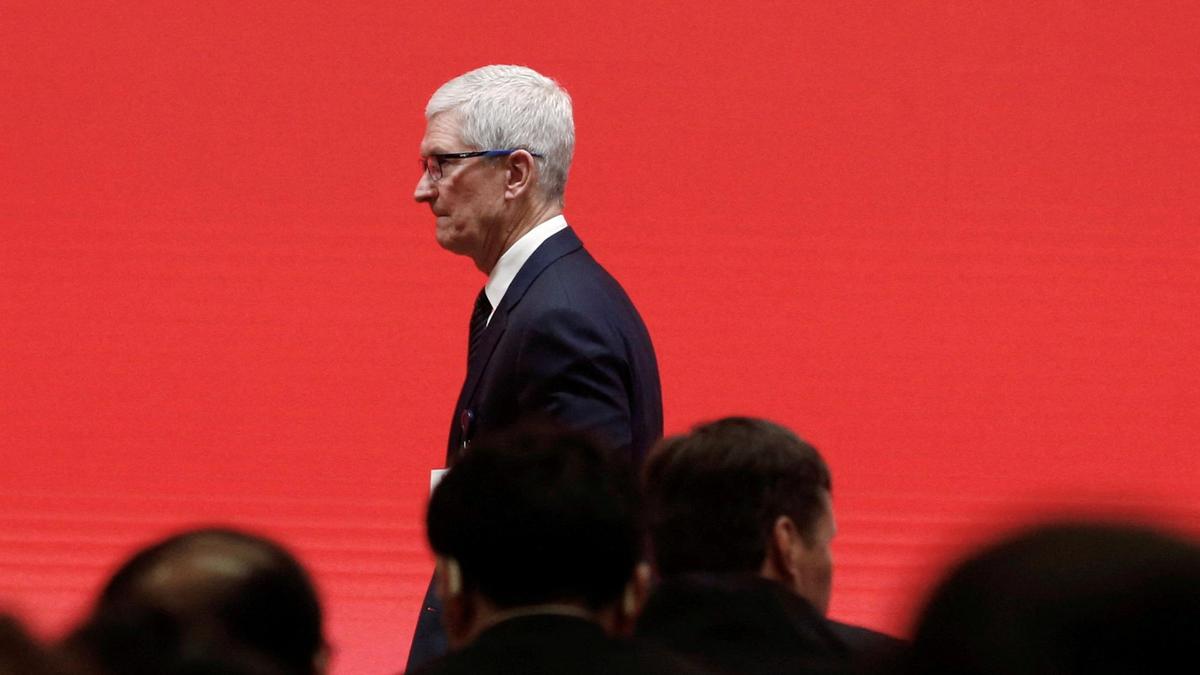
Outgoing Apple, Inc. CEO Tim Cook oversaw a period where the company sank far deeper roots in the Indian market than had been done in the decades prior.
Most notably, he presided over the firm’s supply chain expansion, during which it set up iPhone assembly operations in Tamil Nadu and Karnataka with its contract manufacturers, Foxconn and Tata Electronics.

Starting September 1, Mr. Cook will transition to executive chairman, with SVP of hardware engineering John Ternus taking over. Apple now assembles one in four iPhones sold around the world in India, generously contributing to India’s gross export statistics. Mr. Cook has also managed this supply chain growth, which has expanded to include third party suppliers who make aluminum casings and chargers for the firm’s products, while negotiating pressures from China and the United States, with the former frustrating Apple’s contract manufacturers by denying them access to capital equipment, and the latter making loud rhetorical calls to return all manufacturing to the U.S.
On more than one occasion while visiting here, Mr. Cook said that Apple was “bullish” on India.
This is important to emphasise, since the firm’s perceived attention to the Indian market has not historically been consonant with its presence in other markets.
For much of the iPhone’s history, enthusiast customers long joked that it was cheaper to fly to a hub airport in West Asia, make a purchase, and fly back. The after-sales service ecosystem had also led to frequent complaints from Apple’s sparsely distributed Indian customers.
That small user base has expanded drastically. This has not been straightforward nor complete.
While the company’s premium positioning has situated it well in the high disposable income consumer market of its home in the U.S., that land of telco-subsidised device purchase plans, enticing buyers each year with EMIs tightly integrated with phone plans; high import duties and a continuing unwillingness to cross-subsidise device sales in India meant that it had to wait for a dramatic expansion of India’s overall smartphone base to see some traction in its brand.
Shortly before the introduction of low cell tariffs in 2016 with the entry of Reliance Jio, Mr. Cook made his first highly-publicised visit to India, meeting iOS developers and Bollywood stars alike in the first of multiple carefully curated blitzes that leaned into India’s receptivity to such personalized outreaches.
Apple’s values
Mr. Cook avoided the sticky privacy-based scrutiny Apple faced in China, as the company kept a low profile during spats involving message traceability, successfully arguing that services like iMessage needn’t be regulated like WhatsApp, which took much more heat in the last few years.
The firm also evaded a ban in 2017 for resisting giving a spam-reporting app SMS access, by instead building a protocol that would avoid such sharing directly into WhatsApp. This allowed the firm to mostly stick to its privacy-first values, which could have clashed at any point with national security imperatives.
However, at least in one instance under more pressure, the firm blinked. When Apple alerted dozens of users in India that a “state-sponsored” cyberattack was attempted on them, it backtracked, changing the terminology in future waves of notifications, after to give government officials deniability.
According to Counterpoint Research, Apple’s share of devices shipped in the first quarter of this calendar year was 9%, with mid-range and budget smartphones constituting the bulk of other shipments.
Mr. Cook may have well been aware that there were limits in a market with users obsessed with price, and governments deeply invested in economic nationalism. Perhaps the best he could do was to put down the roots for future generations of the company’s leadership.
Published - April 22, 2026 03:00 am IST