








Ah, classical music. Whether we know it or not, we’ve heard it practically everywhere. From evergreen cartoons like Tom and Jerry and Looney Tunes to popular movies 2001: A Space Odyssey, there are at least four or five pieces we have heard in our lifetime. Today, we’ll be looking at some stories behind some iconic as well as lesser known masterpieces. There will be chaos, there will be laughter and above all, there will be music.
Chaos at the ballet
Igor Stravinsky was one of the pioneers of modernist music and one of the most influential composers of the 20th century. His music carried rhythmic complexity and dissonance. (lack of harmony between musical notes). One such composition was a ballet called ‘The Rite of Spring’, which not only broke the conventional structure of harmony, but also displayed choreography and costuming which was very unusual for its time. The ballet features dissonant music, like a typical Stravinsky composition, and jerky, spastic (stiff and involuntary) dancing.
The ballet premiered on 2 April, 1913 at the Theatre de Champs-Elysees in Paris. And needless to say, no one had ever seen anything like it. From a high-pitched solo on the bassoon (a low-pitched reed instrument) to the jumpy, jerky dancing of the characters, everything was so different. A lot of crew members felt that his piece would brew chaos.
And he was right. Just at the opening notes of the ballet, the crowd began to yell so loud that no one could hear the orchestra, and only kept getting louder and louder. The madness escalated to fights among audience members, things being thrown around the hall and arrests of the audience members. An account mentions that over 40 people were arrested that night.
But as Thomas Jefferson once said: “With great risk comes great reward,” Stravinsky’s unconventional take on a ballet turned out to be a massive success. The premier itself was believed to have received an ovation from the audience, but that is unconfirmed. Nevertheless, the ballet continues to be performed even in recent years.
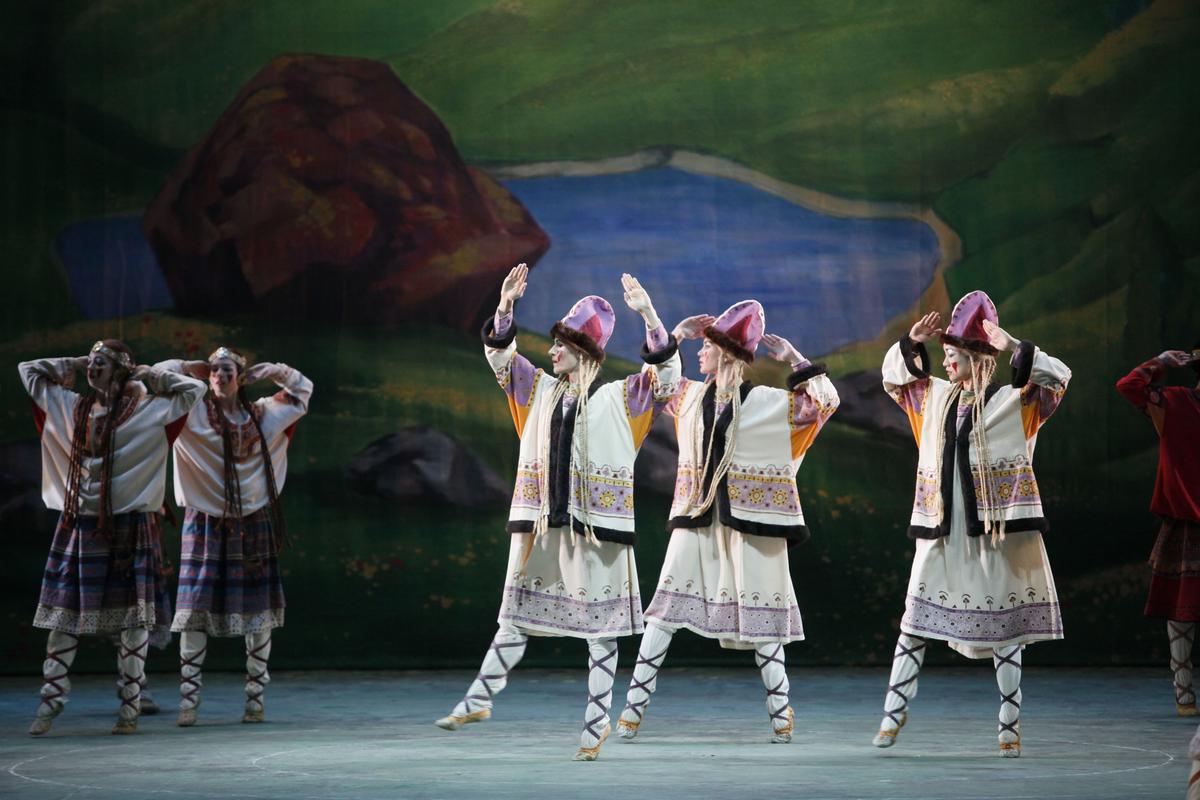
A still from ”The Rite of Spring” ballet at Bolshoi Theater in Moscow, Russia. | Photo Credit: Alexander Zemlianichenko Jr/AP
The bobblehead soprano
Mozart has had a reputation of having a childish and playful sense of humour, and he was not afraid to let it reflect in his music. There are many pieces that reflect his humour, and one such is his comic opera “Così fan tutte” (Italian for: “Women are like that”). It premiered in 1790 in Vienna, Austria.
As a story goes, Mozart disliked the chief soprano, Adriana Ferrarese del Bene, who played Fiordiligi, the leading lady of the opera, during the premier. There is no definite reason why he disliked her, but he decided to have her make a fool of herself on stage. She had a tendency to drop her chin on low notes and throw her head back on the high notes. So, Mozart filled her solo number “Come Scoglio” (Italian for: “Like a Rock”) with leaps from low to high notes and vice versa. That way her head would “bob like a chicken” as she performs. One can only imagine what that would have looked like!
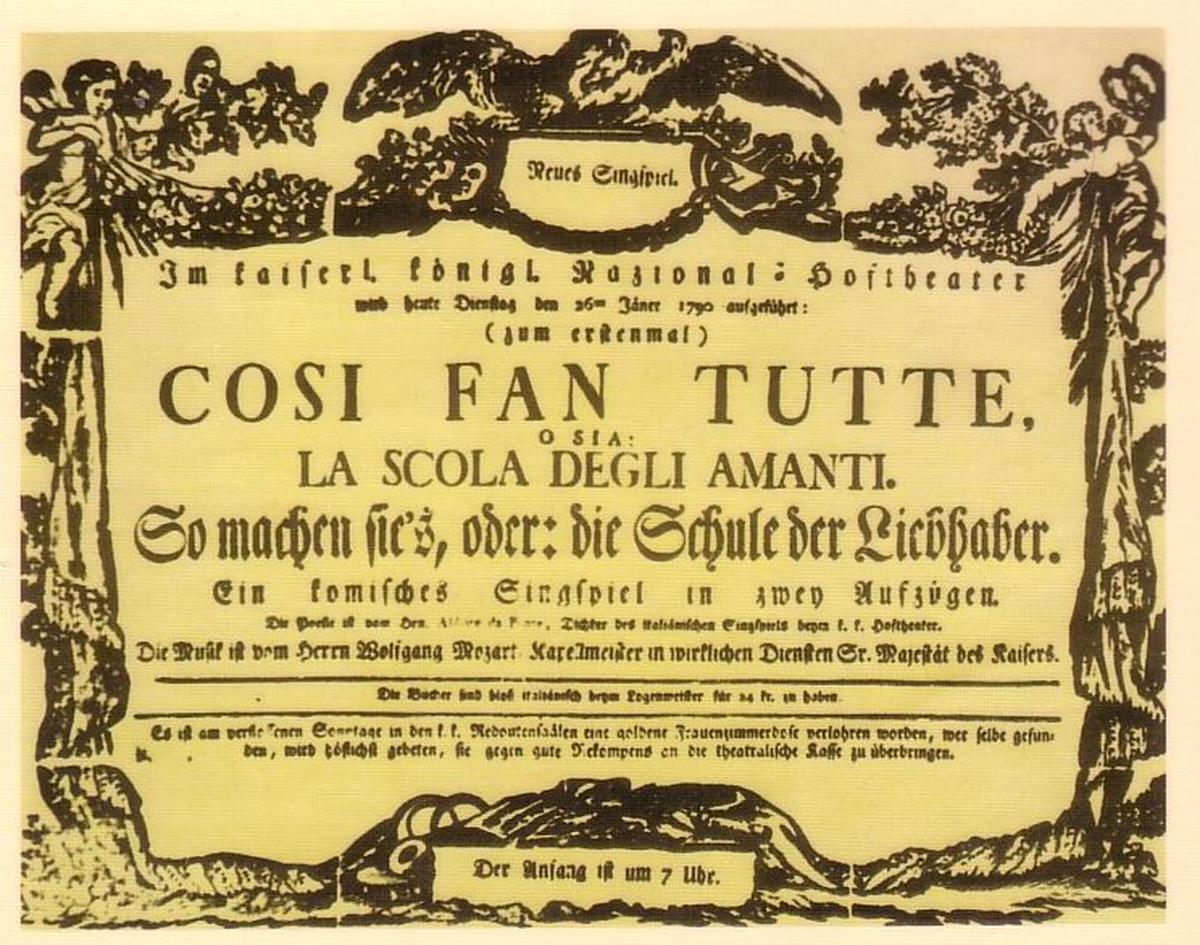
The poster that announced the first performance of “Cosi Fan Tutte”. | Photo Credit: WIKIMEDIA COMMONS
Surprise!
Mozart was not the only one who loved to mess with people and music. In fact, composer Franz Joseph Haydn, who was Mozart’s own predecessor, began this tradition of playing with music.
His orchestral number, Symphony no. 94, also known as the “Surprise Symphony” is one such example and has some interesting stories behind its composition.
One story suggests that he was tired of sleeping patrons at his concerts, so he added the suddenly loud chord in the middle of the concert to wake them up. And it is not believed to have been planned before. Another one suggests that the composition stemmed out from a desire to outdo his student and fellow composer named Ignaz Pleyel, who had his concerts around the same time as Haydn’s.
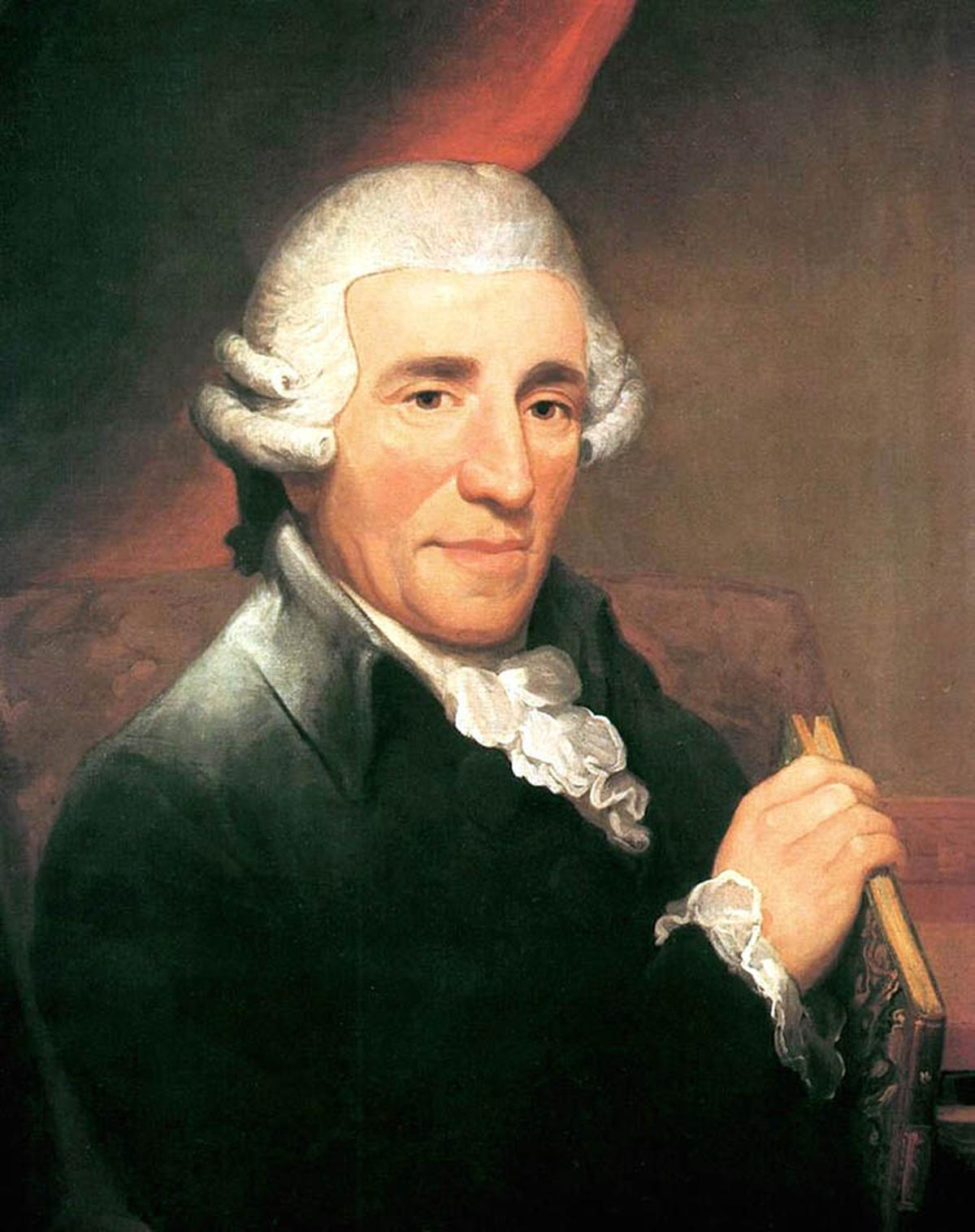
Franz Joseph Haydn, the composer behind the “Surprise Symphony”. | Photo Credit: Special Arrangements
Dreaming of The Devil
You may have heard of people making deals with the Devil for things like fame, skill and fortune. But, Italian composer Giuseppe Tartini dreamt that he had given music lessons to the Devil and in return received such virtuosity (top-tier skill), which was recreated in one of his most difficult compositions, the ‘Devil’s Trill Sonata’. (a solo piece for an instrument, or in some cases, two instruments)
To quote Tartini himself: “One night, in the year 1713, I dreamed I had made a pact with the devil for my soul. Everything went as I wished: my new servant anticipated my every desire. Among other things, I gave him my violin to see if he could play. How great was my astonishment on hearing a sonata so wonderful and so beautiful, played with such great art and intelligence, as I had never even conceived in my boldest flights of fantasy. I felt enraptured, transported, enchanted: my breath failed me, and I awoke. I immediately grasped my violin in order to retain, in part at least, the impression of my dream. In vain! The music which I at this time composed is indeed the best that I ever wrote, and I still call it the “Devil’s Trill”, but the difference between it and that which so moved me is so great that I would have destroyed my instrument and have said farewell to music forever if it had been possible for me to live without the enjoyment it affords me.”
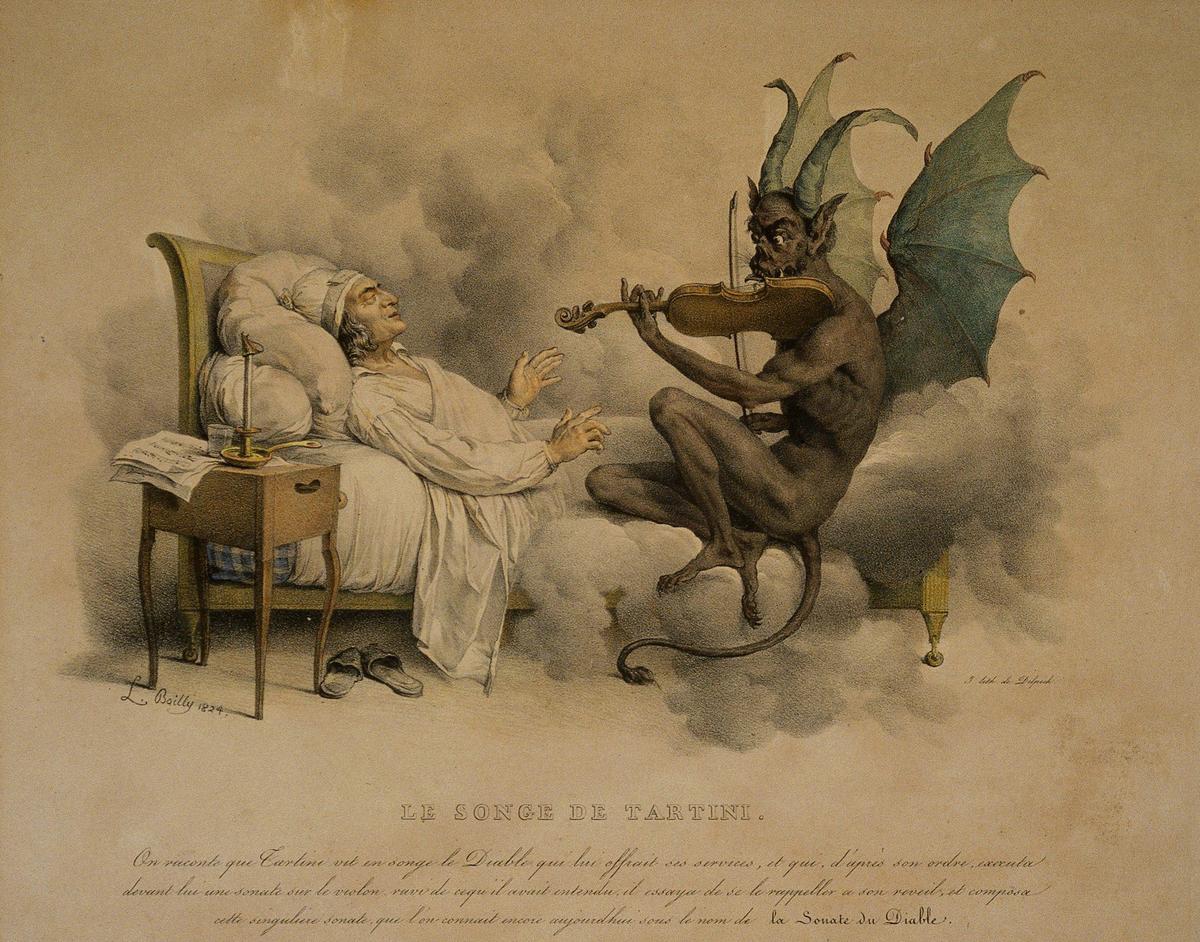
Le Songe de Tartini par Louis-Léopold Boilly 1824. | Photo Credit: WIKIMEDIA COMMONS