


Months after a friend had a baby, she called me, sounding upset. Her mother-in-law had asked her to quit her job and stay at home for a few years to look after the child. “I know you want to work, but please adjust,” the mother-in-law had told her. My friend argued, the mother-in-law relented, and she returned to her job. Despite that win, she often tells me that adjustment always becomes a woman’s responsibility, or even duty.
As a result of constantly adjusting — in their married lives, on streets, in buses, at workplaces — many women end up shrinking themselves physically and emotionally. They stop asking themselves what they really want because they are either unsure of the answer or too afraid to voice it. And when they do, they are often silenced.
Last week, two women ended their lives, with their families alleging dowry harassment. The first was Deepika Nagar in Greater Noida; her husband and in-law were held. The second was Twisha Sharma, an MBA graduate and model, in Bhopal.
Investigators discovered that Twisha had been miserable in her marriage and had reportedly pleaded with her parents to get her out of what she described as “hell”. Each time, she was allegedly told to adjust. Her mother-in-law, Giribala Singh (in photo), and husband, Samarth Singh, face charges of dowry harassment. Samarth is absconding.
Giribala, who got anticipatory bail, has been busy giving interviews that offer more than a glimpse into the impossible expectations placed on women after marriage — even women as educated and accomplished as Twisha. She has criticised Twisha for her “liberal views”, for not cooking, and even for not watering plants. She has alleged that Twisha used drugs, struggled with mental health issues, did not want children, and had undergone an abortion days before her death.
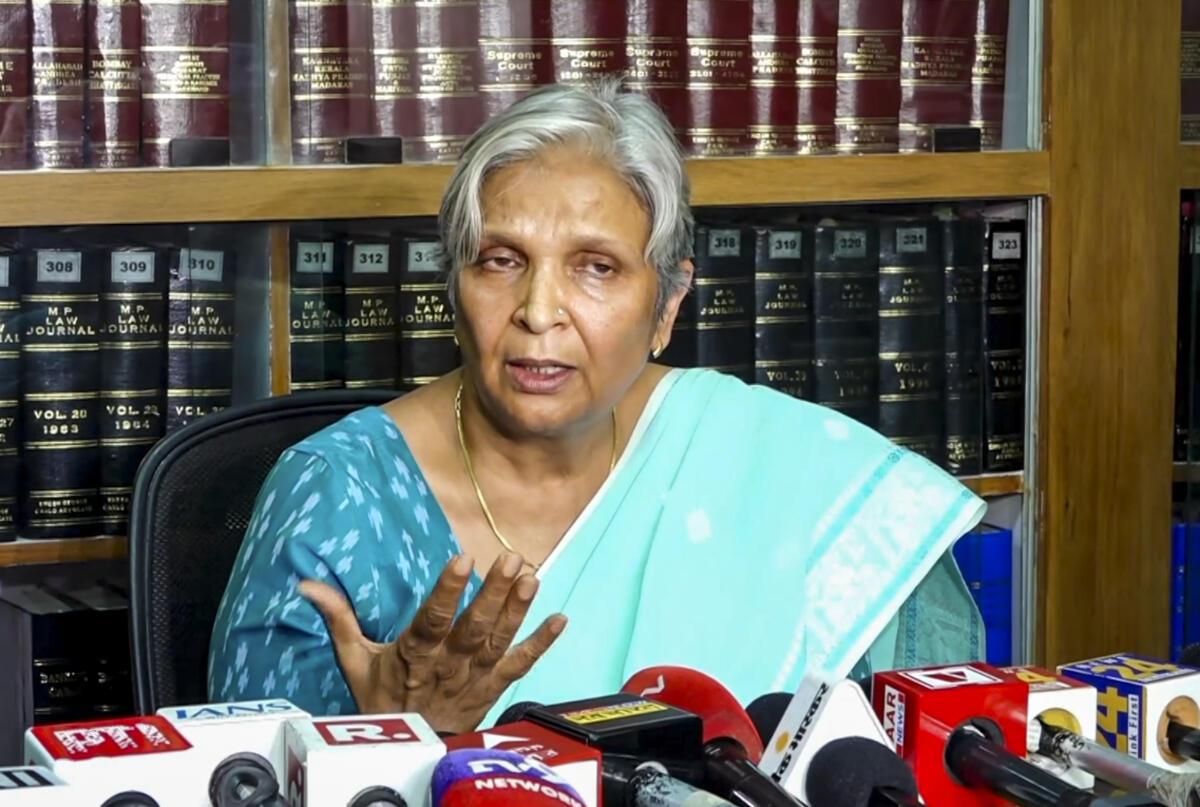
Giribala is a retired district judge. In the past too, there have been several cases where lawyers, government servants, and police officials have been accused of demanding dowry. These incidents show that the dowry problem is not confined to the less educated sections of society; it is equally entrenched among the rich, the educated, and even those entrusted with protection and law enforcement. As this story showed last year, investigations into dowry deaths are slow and convictions are few and far between in India. This gives many families all the more courage to demand it.
Many people wonder why women like Twisha stay in their marriages. But as the media has reported time and again, every time women send desperate messages to family and friends, they are asked to hang on, compromise, or even bear a child. Many of them eventually withdraw, choosing either to stay on and suffer, or kill themselves.
But there are women who are seeking help and getting it as well. Back in the 1980s, as Madhu Kishwar wrote, protestors would directly confront the harassers face to face, shaming them within the community. In 2021, Navamy Sudhish reported how a number of married women in distress were reaching out to dowry prohibition officers appointed in all the districts of Kerala. They were more comfortable doing that than going to the police. The same year, The Guardian reported how a man, Satya Naresh, had been campaigning for 15 years trying to persuade men in India to say, “I don’t want dowry.” Some women who are financially independent have started fighting back, Naresh said.
These cases are more the exception than the rule, though. When my friend spoke about adjustment being a responsibility, she was only half-joking. The truth is, her words reflect the reality in most of India, and the deaths of Twisha and Deepika only prove it.
WORDSWORTH
Gender-based age relaxation: This refers to policies that provide women with an extended upper age limit for job recruitment, higher education, or research grants. In this opinion piece, Nabeela Siddiqui argues that removing gender-based age relaxation in the name of gender neutrality would be a policy error unsupported by evidence.
TOOLKIT
Lights, Camera, Women is a Hyderabad-based open networking forum for women aspiring to enter the film industry. Founded by Navya Nagesh, the collective has more than 250 members from Hyderabad and several others from Chennai, Bengaluru, Mumbai and Pune. Read more about the collective in this article by Sangeetha Devi Dundoo, and if you are a film aspirant, check the Instagram page @lightcamerawomen.
OUCH!
Instagram is for girls... Sometimes grown men send me their Instagram profiles and I’m like are you transitioning or what?
Elon Musk, CEO of Tesla and SpaceX
PEOPLE WE MET
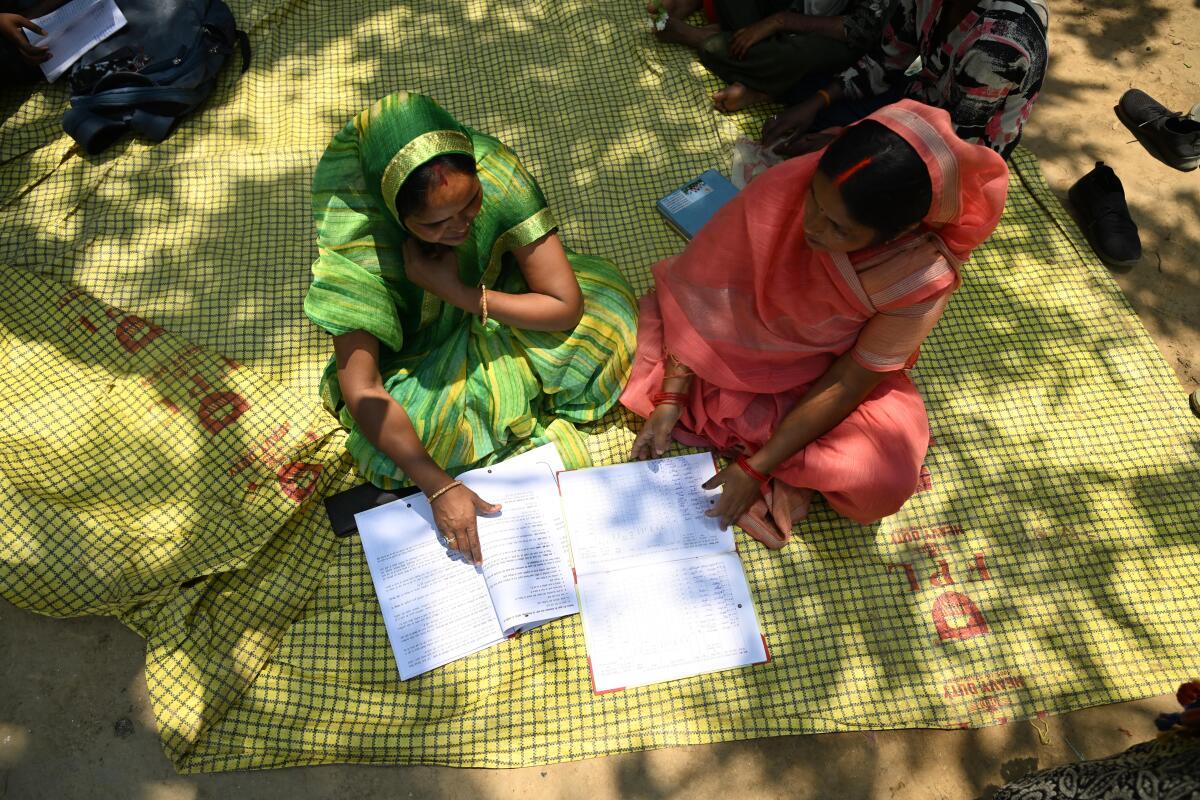
Sunita Devi, an anganwadi worker, got married before the age of 18. She now works proactively to stop child marriage in Mubarakpur village in Chandauli district of Uttar Pradesh. She says it wasn’t easy at first: “Initially, everyone in the village would say that I am working on it because I have daughters and I want to stop them from getting married early.” But over the past few years, 6-7 child marriages have effectively been stopped in the village. Sunita says, “We explain to the parents that the girl is still not mature, and if she has a child at such a young age, it can adversely impact both her health and her child’s health. Some agree, others get upset with us.” Read Ashna Butani’s piece on teenage girls resisting child marriage across five villages in Chandauli here.