






The law and the legal system form the foundation of societal order. Their legitimacy rests upon procedural discipline, fidelity to constitutional and statutory frameworks, and the promise that disputes will be resolved through reason. Courts are designed to embody this seriousness, with their elevated benches, solemn-looking judges, and black robes.
Yet beneath this solemnity lies a less acknowledged history of the legal profession, shaped by vanity, wit, eccentricity, bruised egos, theatricality, and episodes of absurdity that reveal how human the administration of justice has always been. It is this hidden world of law, with its comic undercurrents, institutional peculiarities, and unforgettable characters, that Solicitor General of India Tushar Mehta writes about in his two recently released books, The Lawful and the Awful: Quirky Tales from the World of Law and The Bench, the Bar, and the Bizarre: The Unfamiliar, the Curious, and the Extraordinary in Law. These volumes, which are about foreign courts and legal systems rather than the Indian judiciary, transform humour into a mode of institutional analysis.
The Lawful and the Awful opens with a chapter titled ‘Bench without Borders’. Judges, Mr. Mehta writes, are most often found in the courtroom. Like lions in a jungle, they are possessive of their jurisdiction, and when that jurisdiction is challenged, “various defensive behaviours come into play such as unrealistic expansion of authority, loud vocalisations, displays of dominance and, at times, outright aggression”. Beneath the humour lies a perceptive study of judicial temperament and the behavioural instincts that courts so often conceal beneath procedural complexity. The rest of the book bears it out, case by case.
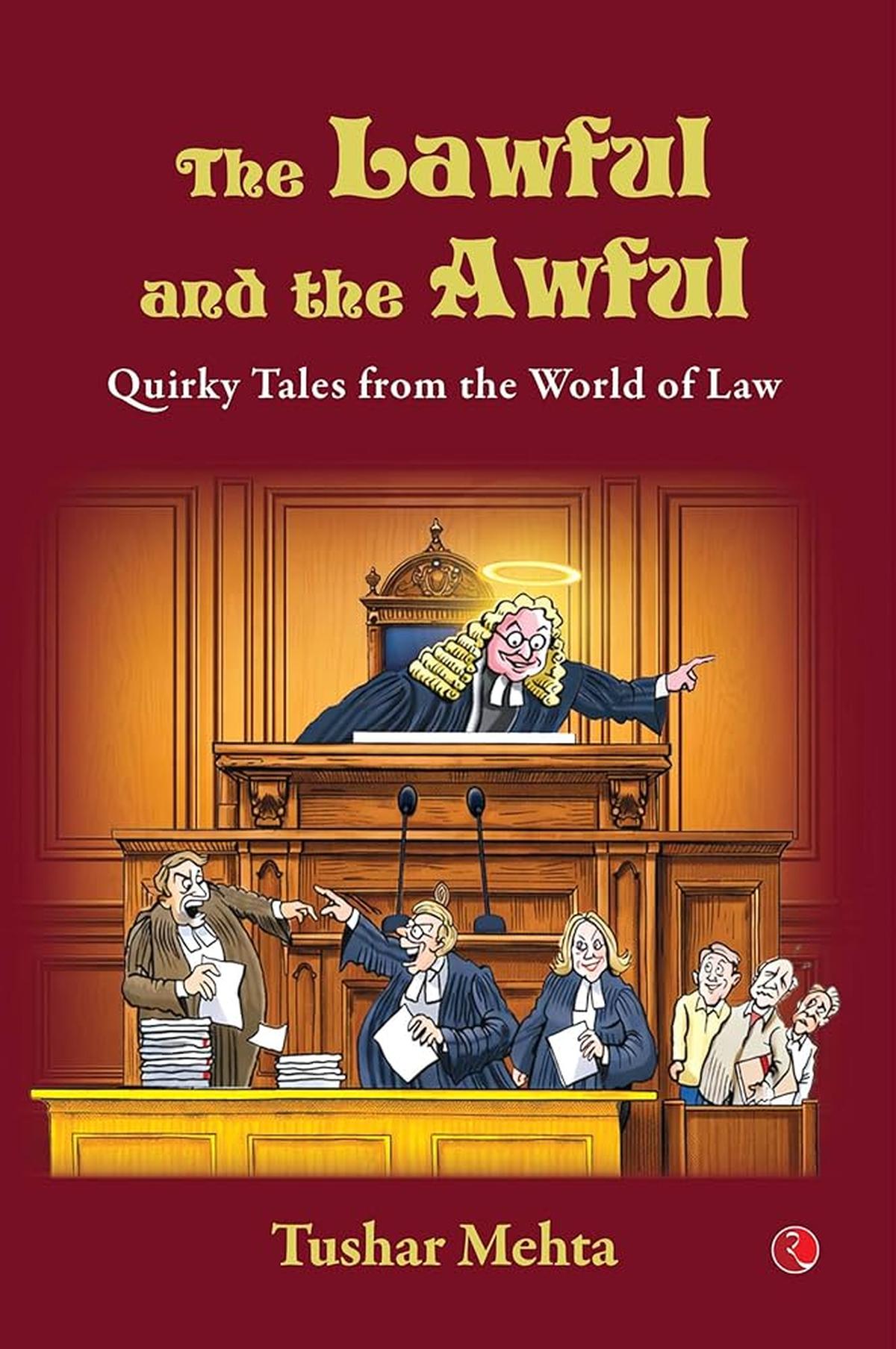
The range in the book is extraordinary. Judge Phantly Roy Bean of Val Verde County, Texas, who dispensed justice from his tavern called the Jersey Lilly Saloon by sitting on a barrel, kept a black bear named Bruno both as a court enforcer and his pet. He selected juries from among his most regular drinking customers. He sits in the same chapter as Lord Chief Justice Jeffreys of the Bloody Assizes, who in 1685 conducted summary trials from inn to inn across England, sentencing hundreds of people to death while, contemporary accounts suggest, allowing his appetite for fine food and drink to influence his venue selection.
The centrepiece of The Lawful and the Awful is ‘The Court of One: The Inimitable Justice Scalia’, a long, carefully written portrait of the American jurist whose dissents rewrote the possibilities of judicial prose.
Mr. Mehta’s footnoting is impeccable. This matters as these are not apocryphal anecdotes but documented legal history, which is what gives the comedy its particular edge. In law as in life, he observes in the preface, truth is generally more ridiculous than invention. His literature endorses this view on almost every page.
The Bench, the Bar, and the Bizarre engages with an equally fascinating range of themes. It confronts the present directly: judicial bullying, the judiciary’s uneasy encounter with social media, the supernatural in courtrooms, and the vertiginous question of Artificial Intelligence in legal practice. Like its companion, the tone remains composed, observant, and frequently funny.
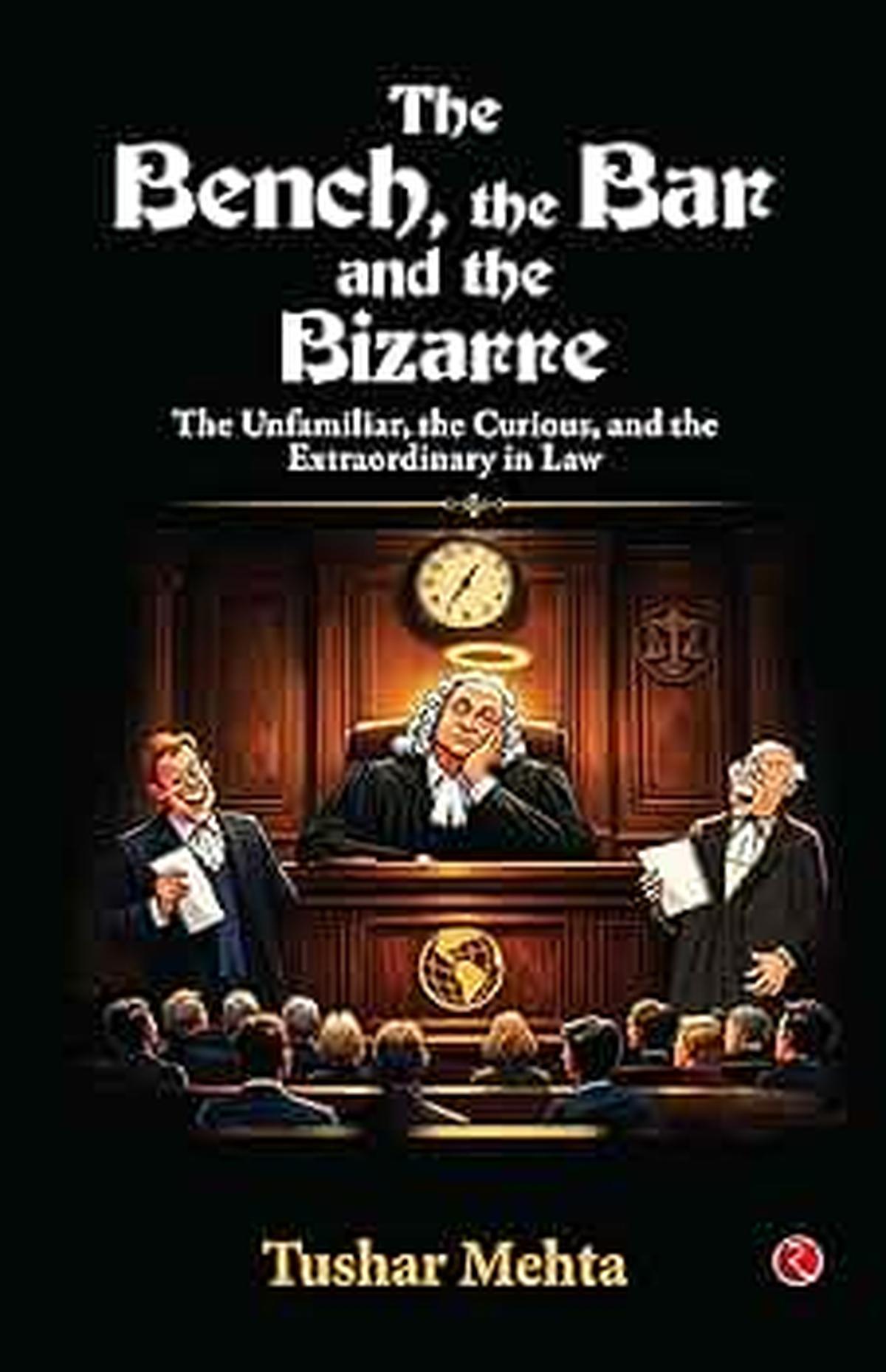
‘The Divinity Virus: Bullies on the Bench’ opens with the account of Judge Talmadge D. Littlejohn of Mississippi’s 1st Chancery District, who required everyone present to stand and recite the ‘Pledge of Allegiance’ before proceedings commenced. The chapter records that in October 2010, when a lawyer appearing in his court declined to participate, he had to face contempt of court. The pages then throw a light on judicial excess - judges unable to restrain their tempers, repeatedly interrupting counsels, humiliating lawyers, weaponising authority through sarcasm and intimidation, and mistaking institutional power for personal infallibility. Mr. Mehta uses these incidents to reveal how quickly judicial authority, when unchecked, can slide into spectacle and outright misuse.
‘Law beyond the Living: Demons, Devils, Ghosts, and God in Court’, which humorously recounts people taking celestial beings to court, is the liveliest and one of the most insightful chapters in both books. Mr. Mehta revisits the case of Stambovsky v. Ackley, where a New York court ruled on the principle of ‘buyer beware’.
The owner of a house had publicly claimed in magazines like Reader’s Digest that the house was haunted. Later, when a buyer complained during a contract dispute, the court said the owner could not suddenly deny the ghosts existed, since she herself had promoted the house as haunted. What begins as an absurd ghost story evolves into a fascinating example of courts adjudicating questions seemingly beyond the boundaries of law itself.
At a time when the Supreme Court has itself raised concerns over the growing use of AI in legal drafting, the chapter ‘Artificially Intelligent, Legally Embarrassed: Hallucinations, Fake Citations, and the Perils of Robo-Research’ is timely. Mr. Mehta observes that technology is only as effective as its users, and the legal profession, like any other profession, has its share of both those who work hard and those who work hardly.
Those who find themselves drawn deeper into this tradition of legal humour as a mode of serious inquiry would do well to turn next to the classic three-volume Miscellany-at-Law series by Sir Robert Megarry, an eminent British lawyer, judge, and legal author, who eventually rose to serve as the Vice-Chancellor of the Supreme Court of England and Wales. Each volume is organised into chapters of themed material — judicial temperament, advocacy, absurd statutes and linguistic oddities of legal drafting.

Much like Mr. Mehta’s excavations, the range of the Miscellanies is astonishing: a court in Charleston genuinely considering whether horses should be required to wear diapers and a court declining to classify trespassing bees as ‘invitees’, ‘licensees,’ or ‘trespassers’.
All these stories are documented, footnoted, and placed within their proper legal context so that the comedy, rather than displacing the doctrine, actually sharpens it.
(Kartikey Singh, lawyer, and currently working as a Law Clerk-cum-Research Associate at the Supreme Court of India)
此内容由惯性聚合(RSS阅读器)自动聚合整理,仅供阅读参考。 原文来自 — 版权归原作者所有。