


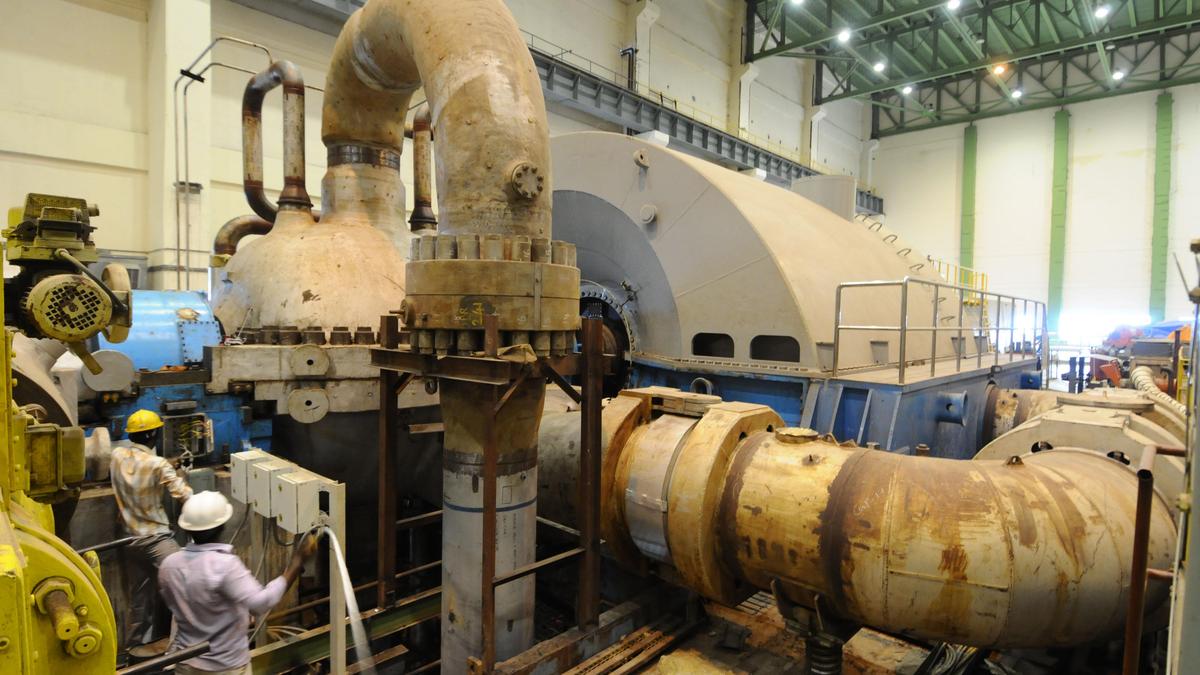
A fast breeder reactor (FBR) gets its name from two features. First, it ‘breeds’ more nuclear fuel than it consumes. Second, it uses fast neutrons — ones that haven’t been slowed — to initiate nuclear fission.
France began building an FBR called Superphénix in 1976. After spending around $10 billion, the reactor became critical in 1985 and commercial in 1986. It operated for 11 years. However, it produced less than 20% of the energy it was capable of producing and, in all, met under 1% of France’s electricity demand. Superphénix also spent 25 months on technical fixes and didn’t run for 66 months for political reasons. At this time, the spot price of uranium also dropped from $40 a pound to $15, wiping out its rationale for saving uranium.
Similarly, Germany built an FBR called SNR-300 from 1972, completed it in 1985, but it never came online, due to political opposition and the Chernobyl disaster. The government cancelled the project in 1991. France and Germany have always been more technologically advanced and have had more mature manufacturing bases than India.
These failed experiments with FBRs outline obvious cautionary tales. India’s first FBR with commercial potential, the prototype fast breeder reactor (PFBR) in Kalpakkam, Tamil Nadu, became critical on April 6. Prime Minister Narendra Modi was present at its fuel-loading event in 2024 and hailed the moment when it went critical. The PFBR is politically and energy-wise important for India — the latter because of its rationale that it will be more fuel-efficient than the fleet of pressurised heavy-water reactors (PHWRs) India currently operates and because it promises energy security in the long run. Yet this picture would be incomplete without accounting for the weight of past experience.
The success of India’s nuclear energy programme is owed in considerable, but oft-unacknowledged, part to political insulation. The Department of Atomic Energy (DAE) has minimal parliamentary or judicial oversight and resists substantive disclosures under the Right to Information Act. It has also not been above securitising dissent and keeping clearance and operational details out of public view. The PFBR itself has survived multiple governments, delays, and cost overruns en route to criticality.
But its barely mitigated authority also risks conditions in which the DAE can pursue the PFBR without public accountability. FBR technology is also nasty. The PFBR uses liquid sodium as a coolant. Sodium is very eager to react with almost anything, even air. So if the coolant leaks, it could take several power plant components down with it. Such a leak at the Monju reactor in Japan in 1995, followed by its operator’s attempts to cover up the disaster, doomed the facility after the country had spent three decades and $15 billion developing it.
Unlike PHWRs, FBRs also respond more quickly to changes in the nuclear chain reaction, leaving their control systems with less room for error. FBRs produce more plutonium than they consume, using uranium as the primary fuel plus a small plutonium input — a reaction India needs for the third stage of its nuclear power programme, which will burn plutonium and thorium, raising concerns about whether the plutonium will be used for weapons.
A PHWR also produces small amounts of plutonium, but it is not easily accessible because it lies inside spent fuel, which is highly radioactive. An FBR, however, requires plutonium as part of its fuel mix, which means India needs plutonium-handling facilities, and at these facilities it will have access to streams of at least reactor-grade plutonium. The U.S. revealed in 1977 that reactor-grade plutonium can be used in a nuclear weapon. For added measure, the PFBR also falls outside the purview of the International Atomic Energy Agency.
While the reactor represents a great technological feat, albeit one that took too long to fructify, it exists now in a political context that resists assiduous public accounting precisely when the nuclear power programme needs to be all the more accountable — while promising more energy in a world where energy has become its own battleground.
Published - April 12, 2026 06:45 am IST