






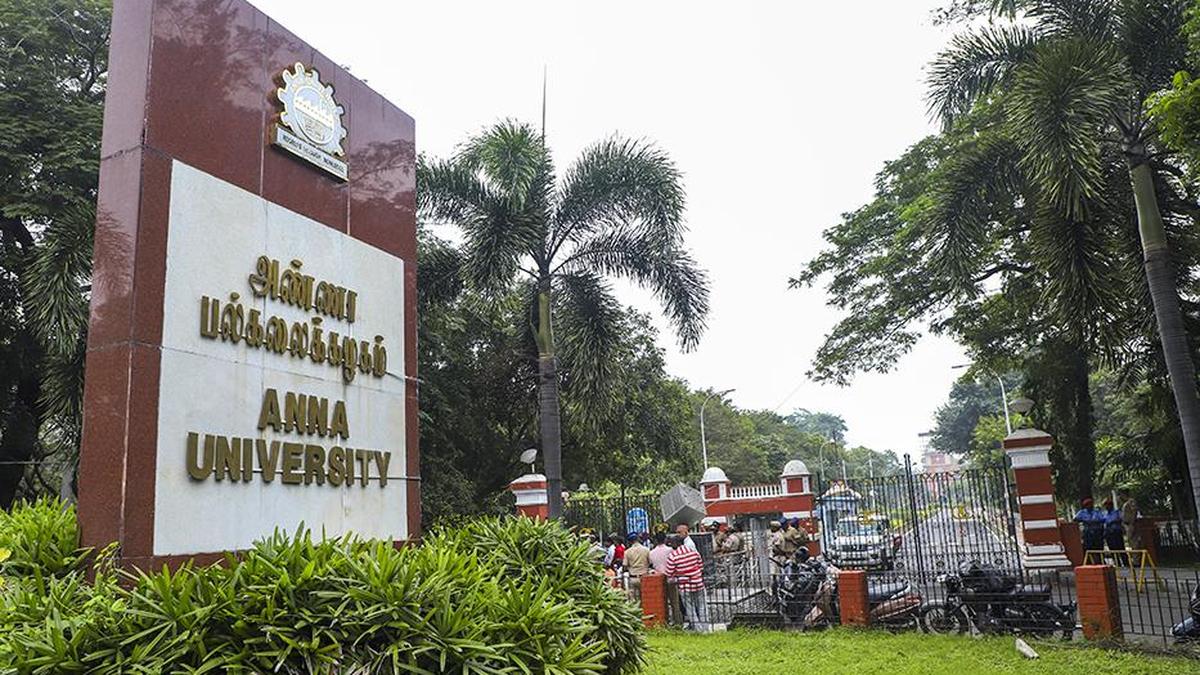
The Higher Education Department in Tamil Nadu had been a virtual battleground of an ideological war between the DMK and the BJP at the Centre, over the past five years. The result has not been pretty.

Whether it is the National Eligibility cum Entrance Test (NEET) for admission to undergraduate and postgraduate medical courses, or the appointment of vice-chancellors to State-run universities, this ideological battle has taken a toll on efforts to keep up the quality of higher education delivered to students in the State.
Over a dozen public universities in Tamil Nadu have been functioning without vice-chancellors for nearly two years due to a tussle between the Governor and the State government. Also, the State Assembly had passed a Bill to abolish NEET twice, and twice was it rejected.
Soon after coming to power, the DMK government in September 2021 passed a Bill in the Assembly which sought to dispense with the requirement for candidates to qualify in NEET exam for admission to UG and PG medical courses in the State. NEET, the Bill stated, festered inequality as it favoured the privileged class of society who could afford special coaching for the exam. The Bill said that its aim was to ensure social justice, uphold equality and equal opportunity, and protect vulnerable students communities from discrimination.
The move followed a report from a high-level committee headed by Justice A.K. Rajan, retired High Court judge.

The Assembly re-adopted the Bill the following year after Presidential assent was declined. In 2025, assent was declined yet again leaving the State government with barely any option. An all-party meeting chaired by Chief Minister M.K. Stalin soon after this unanimously resolved to pursue legal options.
The opposition to NEET became an emotive issue in Tamil Nadu after S. Anitha of Ariyalur, died by suicide in 2017 for not having qualified in the entrance exam. She scored 1176/1200 in her HSC examination, which could have secured her a medical seat in the earlier system. She had impleaded herself as a respondent in a Supreme Court case challenging NEET.
Ideological battle
A tumultuous extension of this ideological battle played out between the Governor, R.N. Ravi, and the government headed by Chief Minister M.K. Stalin on several issues, the most important being appointment of vice-chancellors to public universities.
The conflict reached a flashpoint when the Tamil Nadu government approached the Supreme Court against Governor Ravi for withholding about Bills passed by the Assembly, including a 2022 Bill that transferred the power of appointing vice-chancellors from the Governor to the State government.

This Bill, incidentally, was also challenged in the Madras High Court which stayed the amendments. However, earlier this year, the Supreme Court set aside the injunction, remitted the matter back to the High Court and fixed a six-week deadline for a decision.
While the hearing goes on, 16 of the 22 State-run universities continue to stagger through without institutional heads. This has led to several bottlenecks in the running of these universities, including recruitment of faculty.
With barely any solution in sight to these face-offs, the new government will have its task cut out.
(Assistance for overcoming suicidal thoughts is available on the State’s health helpline 104, Tele-MANAS 14416, and Sneha’s suicide prevention helpline 044-24640050).
Published - April 17, 2026 05:00 am IST