





When the 10th Crunchyroll Anime Awards took place in Tokyo last month, the guest list from around the world offered a useful measure of how far anime has travelled. The annual ceremony, organised by streaming giant Crunchyroll to honour the previous year’s best anime productions, featured presenters ranging from actors Rashmika Mandanna and Winston Duke, to K-pop stars BamBam and Ten, to even The Weeknd. Though Robert Diggs, better known as RZA — the American producer, rapper and founding architect of the legendary Wu-Tang Clan — felt like one of the most inspired invitees among them, whose relationship with Japanese animation predates anime’s arrival in the cultural mainstream by decades.

For this generation of fans who discovered anime through social media edits, Comic Con culture and easier accessibility through streaming services like Crunchyroll, RZA occupies a curious position in the medium’s history in the West. Long before anime became a billion-dollar global industry, he was carrying VHS tapes of Japanese animation around New York while building one of the most influential groups in hip-hop history.
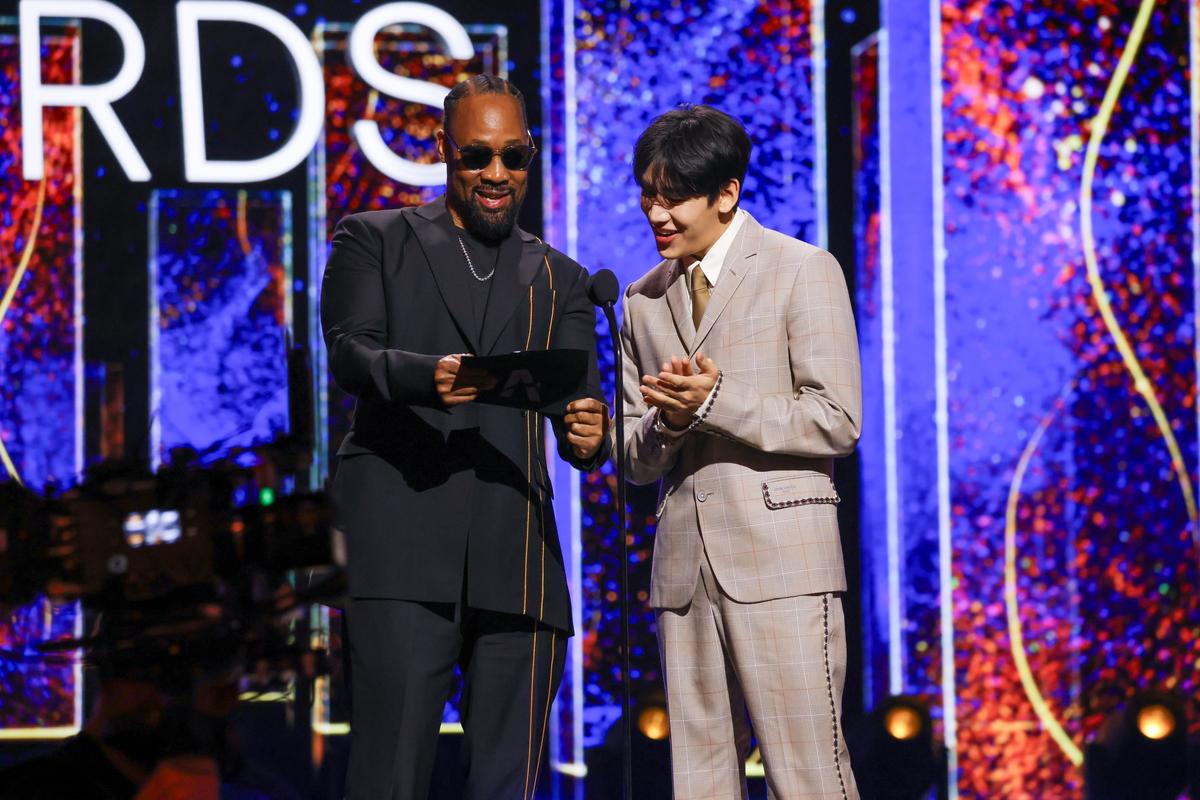
RZA presents an award with BamBam at the Crunchyroll Anime Awards 2026 at the Grand Prince Hotel Shin Takanawa in Tokyo | Photo Credit: Crunchyroll
Asked whether he feels vindicated by anime’s rise from niche obsession to a global entertainment force to be reckoned with, RZA says, “I think it’s beautiful. It’s great when something that you like, something you love, becomes something that the whole world loves. For a moment you think it’s your own private secret. But the secret is out of the bag now. I think it’s wonderful that so many people appreciate anime. It also lets me know that I wasn’t a total nerd.”
The 56-year-old otaku belongs to a generation that encountered anime through scarcity. During the late 1980s and early 1990s, imported Japanese animation circulated through specialty stores and fan trading networks, alongside late-night TV broadcasts. Access required effort, and discovery required luck. The audience remained small enough that enthusiasts often felt they were participating in something relegated to the realm of weirdos.

That underground culture eventually collided with another movement developing across the United States. During the late 1980s, hip-hop was increasingly shaped by the rise of gangsta rap, attracting both enormous audiences and fierce political backlash. RZA recalls that certain forms of cultural identification carried consequences beyond simply enjoying the music. “You couldn’t wear an N.W.A. shirt. You could listen to their music, but you couldn’t wear that T-shirt,” he says.
Wu-Tang Clan emerged from Staten Island in the early 1990s and transformed hip-hop through densely layered production, martial arts imagery and a mythology built from comic books, kung-fu cinema, Five Percent Nation teachings and Asian philosophy. At a time when many artists treated childhood interests as things to outgrow, Wu-Tang turned them into the very heart and soul of their music.
Joining Shifu @usashaolintemple in an effort to #StopAAPIHate! #KungFuNotFlu"#wutangpic.twitter.com/mIXBZiMJSz
— Wu Tang Clan (@WuTangClan) March 23, 2021
Looking back, RZA remembers references to anime as unusual within mainstream rap, although he resists the idea that they were unpopular. “A lot of what Wu-Tang did was what they came across in their childhood and grew out of it, but we were like, ‘Nah, Popa Wu [Wu-Tang’s spiritual mentor] always said, ‘the child you are will make you the man that you become, never forget that’”, he says.
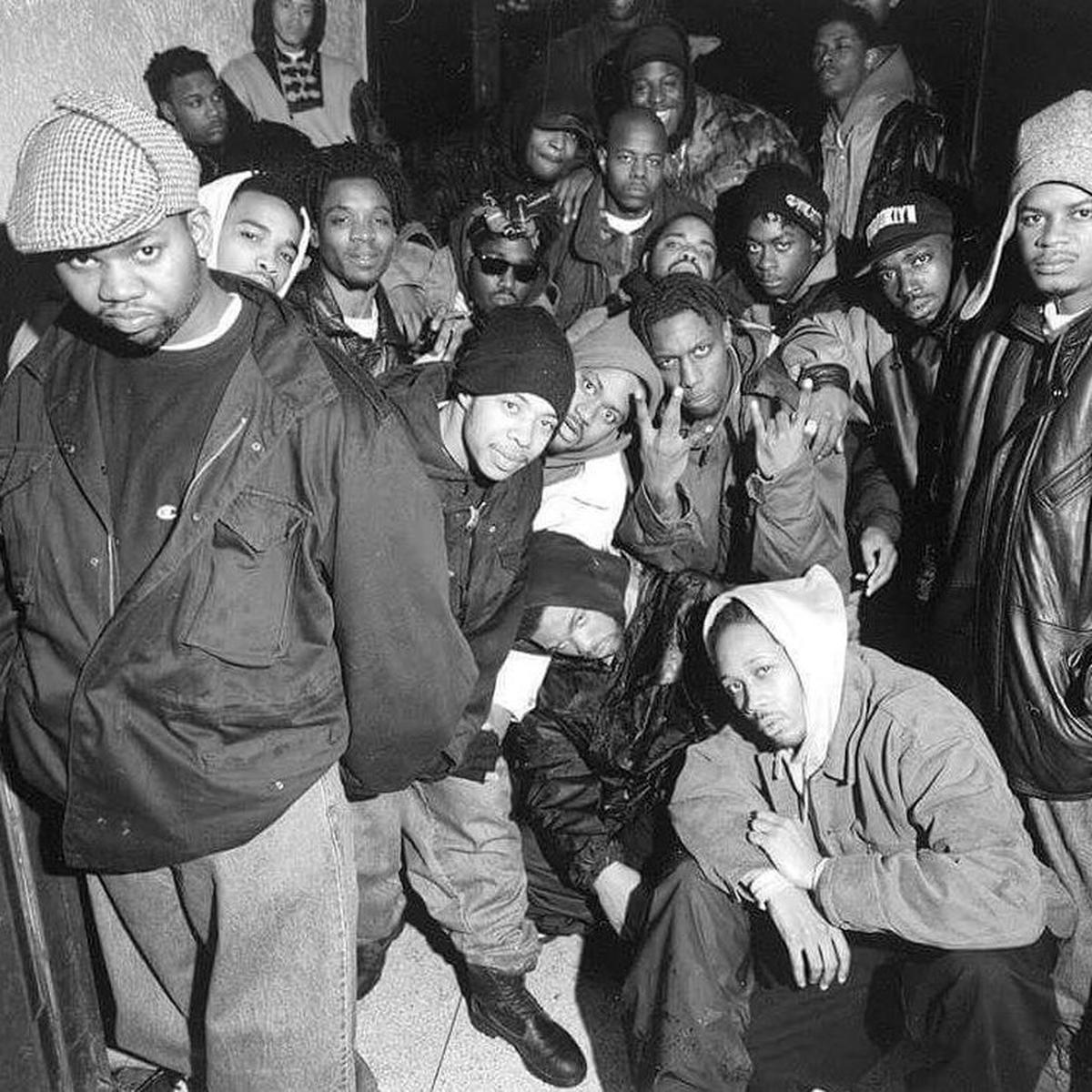
An archive image of Wu-Tang Clan | Photo Credit: X/ @WuTangClan
That philosophy helps explain why anime found fertile ground within Wu-Tang’s creative world. Japanese animation offered visual storytelling that shared certain preoccupations with hip-hop including self-mythologising heroes, intergenerational conflict, elaborate world-building and protagonists struggling against systems larger than themselves. “I think you should look at it as two circles that become a number eight,” RZA says when discussing the relationship between anime and hip-hop. “There is a cross section and now that cross is infinite.”
The intersection became tangible in 2007 through Afro Samurai, the English-language anime miniseries based on Japanese artist Takashi Okazaki’s manga. Produced by Tokyo animation studio Gonzo, voiced by Samuel L. Jackson and scored by RZA, the five-episode series became one of the earliest anime projects deliberately engineered to connect Japanese animation with Black American cultural influences. The production later spawned a television film sequel, Afro Samurai: Resurrection, which won an Emmy Award.
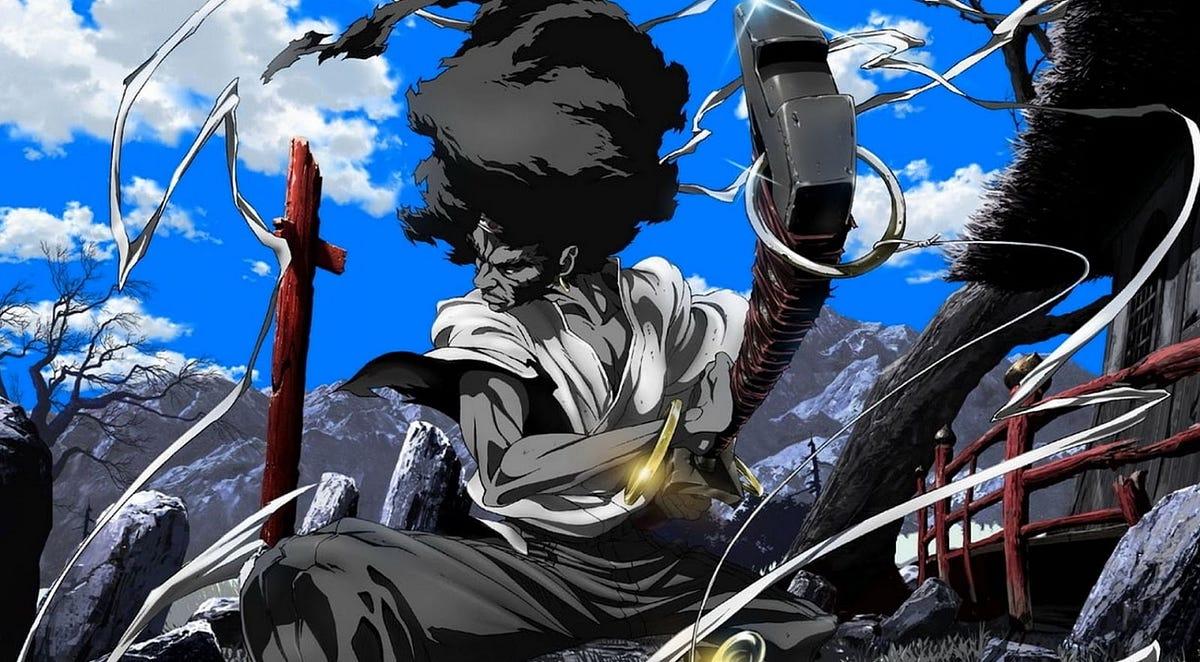
A still from ‘Afro Samurai’ | Photo Credit: Crunchyroll
RZA remembers recognising the project’s potential early. He travelled to Japan to meet Okazaki, whose original manga had already developed a reputation for blending hip-hop aesthetics with samurai iconography. “I did sense that this was something special and I was happy to be a part of it,” he says.
His excitement stemmed partly from the creative personnel involved. Gonzo employed artists whose work connected back to Ninja Scroll, the influential 1993 action film that helped introduce many Western viewers to mature anime storytelling. “Ninja Scroll was like the best anime,” RZA recalls. “I showed it to Leonardo DiCaprio and he went crazy.”
The resulting collaboration came during a period when anime’s global expansion remained uncertain. Streaming services were not yet in the picture and major studios still treated anime as a specialist market. Afro Samurai succeeded because it gave existing anime fans something familiar while offering newcomers an accessible entry point through Jackson’s voice performance and RZA’s soundtrack. Development reportedly took years, with Gonzo producing a proof-of-concept trailer that eventually attracted Jackson’s attention.
The series also demonstrated that Black protagonists could occupy the center of anime narratives without being reduced to novelty. RZA points toward it as evidence that visibility depends upon creators willing to take creative risks:
“Afro Samurai is an example of it being big on the front stage,” he says. “It takes creative artists to have that bravery. You saw it happen with Blade, you saw it happen with Black Panther. Somebody has to step forward and show the world that audiences are ready for it”, he says.
He expands into a broader point about gatekeeping within creative industries, citing Japanese rapper Awich, an Okinawa-born artist whose recent work he has produced, as an example of talent waiting for institutional support. He explains how progress comes when established artists open doors for others, and also cites Quentin Tarantino’s encouragement of his own filmmaking ambitions as another example.

The same logic surfaces when RZA discusses Samurai Champloo, Shinichirō Watanabe’s 2004 anime series whose fusion of Edo-period Japan, hip-hop aesthetics and the music of the late Japanese producer Nujabes became enormously influential among Western anime fans. Asked why Nujabes’ work still inspires such affection years after his death, RZA argues that the breakthrough had as much to do with timing as creativity.
“I think both of those projects were very close to each other,” he says, referring to Samurai Champloo and Afro Samurai. “I think what it really was is that the audience was already yearning for that exposure. But then it wasn’t served to them.” Once somebody finally brought those influences together, the appeal felt immediately obvious. “Who’s the first guy to put butter on toast?” RZA says with a laugh. “Who was the first guy to put a piece of cheese in a hamburger to make it a cheeseburger?” He suggests that the ingredients had been sitting in plain sight, and the shift came when somebody recognised the combination. “I think he did that,” RZA says of Nujabes. “And not to be egotistical, but I think I’ve done that as well for Afro Samurai”.
Though for all the talk around crossover projects, RZA’s foundational anime experience remains surprisingly traditional. When asked which title convinced him that animation could accomplish things unavailable elsewhere, he immediately returns to Akira, Katsuhiro Otomo’s landmark 1988 cyberpunk film set in a futuristic Neo-Tokyo.
“We probably watched it like three times a week,” RZA recalls. “It was like a beautiful song in a way.” He remembers being struck by its visual ambition as well. “The artwork was incredible,” he says, adding that Akira was “one of the pinnacles that made me really know that anime was ‘special’ special.”

RZA’s affection for anime soundtracks also reveals another dimension of that engagement. Although he declines to crown a definitive greatest score, he quickly identifies Studio Ghibli’s Howl’s Moving Castle as a personal favorite, praising its piano compositions.
“Anything Studio Ghibli does, I actually go to the movie theaters and watch it,” he continues. “My son actually got me to go watch Princess Mononoke when it was re-released”.
此内容由惯性聚合(RSS阅读器)自动聚合整理,仅供阅读参考。 原文来自 — 版权归原作者所有。