







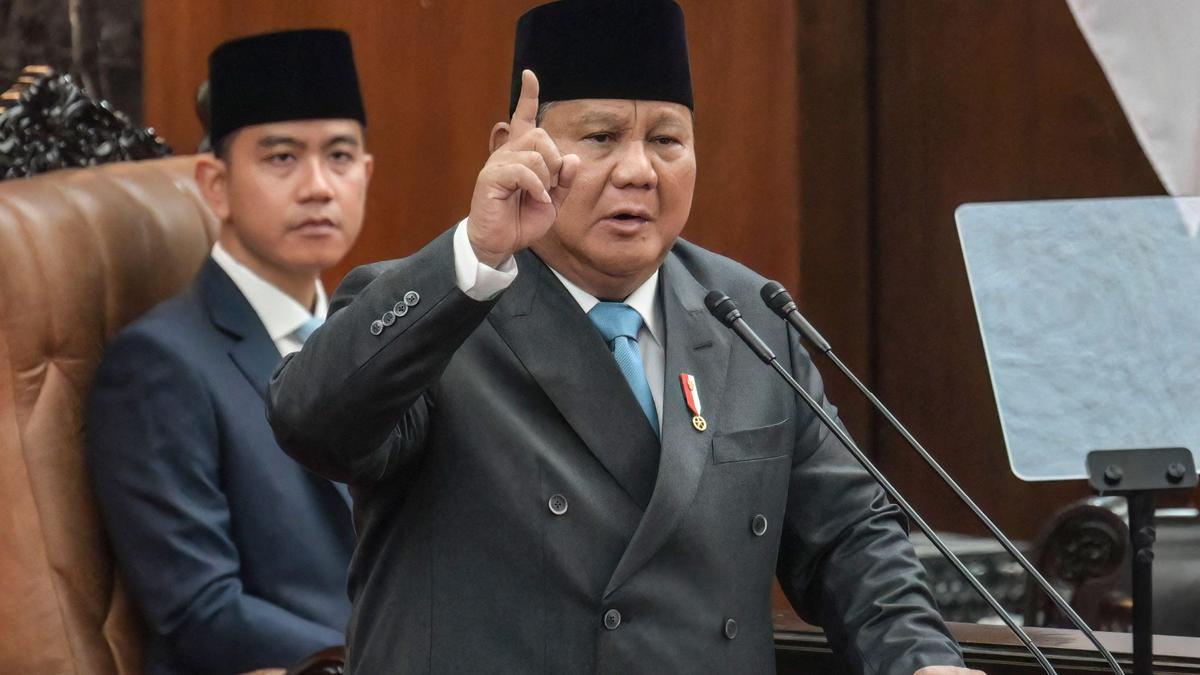
In a major overhaul of trade policy, resource-rich Indonesia announced that key commodities can soon only be exported via a state-run agency. Speaking to Parliament on May 20, President Prabowo Subianto said the Government Regulation on Natural Resource Commodity Export Governance, as the measure is called, would mean that the Indonesian Government will be the sole exporter of natural resource products, beginning with palm oil, coal and ferro alloys.
The new policy requires the resource producers to sell their commodities to PT Danantara Sumberdaya Indonesia, a state-run agency under the sovereign wealth fund Danantara. From here, the agency will engage in transactions with foreign buyers, eradicating direct sales between private resource companies and international buyers.
“This policy will optimise tax revenue and state revenue over the management and sale of our natural resources,” Mr. Prabowo said. Analysts say the announcement signals a major tightening of the government’s grip over the Indonesian economy. Indonesia is the world’s biggest producer and exporter of palm oil and thermal coal, and a major source of nickel. The move has sent commodities markets into a frenzy, with experts warning that its impact will be felt globally. The centralisation is set to come into effect by September, with a transition period of at least three months beginning in June. Details of the plan including the legislation and members of the agency are yet to be announced.
In his address, Mr. Prabowo said Indonesia had lost over $900 billion in revenue over the past 34 years because of fraud and under-invoicing. The new mandate would give the state control over the tax revenue and pricing, while strengthening overall oversight to to minimise revenue leaks. Despite being resource-rich, Indonesia has struggled to convert that wealth into consistent economic growth, with state revenue-to-GDP at around 12%, whereas the Asia-Pacific average is 19.5%, and the OECD average is 33.9%. Increasing tax revenue and plugging leaks allows for investment into the country’s development goals and supports its reserves, which have taken a hit due to energy shocks from the war in West Asia. The plan’s State controlled pricing would also ensure fair transfer pricings. “If they don’t support our price, then they don’t have to buy it. We can use it ourselves,” Mr. Prabowo said.
Market response
Following Mr. Prabowo’s announcement, Indonesian stocks dropped to the lowest in over a year. The Jakarta Composite Index fell by 2.4% on May 20, with major declines in energy and mining firms.
Traders and buyers are still understanding the impact of the decision and how the immediate changes will unfold. The commodities in question are vital to daily life and found in products globally. Palm oil is used globally in everything from processed foods to cosmetics, and half of the world’s thermal coal exports in 2025 came from Indonesia, with China, India, Vietnam and the Philippines being the top importers. Shortages in LNG supply because of the standstill in Iran is further pushing Asian nations, like Japan and South Korea, to lean on coal to fill energy gaps. Fears around the new regulations are leading to private companies selling the resources, like palm oil, in bulk and at discounts, with India and Malaysia among the buyers.China, in particular, is a major buyer of Indonesian nickel pig iron, a cheap alternative that is used in stainless steel production. The mineral is also a key material used in electric vehicle manufacturing. Experts say that the Asian superpower, which has come to rely heavily on Indonesia for its critical minerals, is monitoring the situation closely. Ahead of Mr. Prabowo’s announcement, the China Chamber of Commerce in Indonesia, a group representing Chinese companies, wrote a five-page letter to the President, regarding their fears over the rise in “excessively stringent regulation, over-enforcement and even corruption and extortion by competent authorities.”
Concerns over the centralisation
In 2020, the then administration suddenly and immediately banned the export of raw nickel ore. The move intended to force global companies to invest in Indonesian nickel processing plants, thereby increasing the value of exports and bringing more revenue into the country. It was this move that led to Indonesia’s nickel dominance. Last year, Jakarta created Danantara, the country’s second sovereign wealth fund. The fund has become an instrumental part of Indonesia’s economic policy. However, it has done little to soothe investors about its commitment and staying power, especially in the face of political uncertainty and corruption risks.
Similar worries have been raised now. Private companies are expected to be hit hardest, as the state-run agency monopolises their role. Many also worry about how this will affect existing contracts and any limitations this will cause on Indonesia’s access to the global market.
Published - May 27, 2026 08:30 am IST