







Removing bugs, raising bees
For Rajendran Tamilarasan, an IT professional based near Tambaram, beekeeping exists alongside software work, family life and ecological advocacy: a parallel world sustained less by commerce than by fascination. Originally from Mullukurichi village near the foothills of Kolli Hills in Namakkal district, he traces his interest in bees back to childhood memories of accompanying his maternal uncle during honey collection from wild colonies formed on coconut trees. “I would stand below creating smoke while he climbed up to harvest honey,” he recalls. Smoke, he explains, temporarily disrupts the bees’ scent-based communication system, reducing their ability to signal danger to one another. “This way, both we and the bees stay safe.”
Nearly a decade ago, that childhood curiosity gradually evolved into T R Bees and Apiary, a small-scale urban bee farm in Chennai. Operating from the Madambakkam, Rajendran now manages backyard bee colonies while balancing his full-time IT career. Supported closely by his wife, he sells bee colonies to households interested in setting up hives at home and conducts awareness programmes on pollination, bee behaviour and colony maintenance. Initially, he says, the initiative began as an educational effort aimed at helping people understand how bees contribute to pollination and biodiversity. Over time, increasing public awareness transformed the nature of his work. “Earlier, people immediately called pest control services.
Now many contact us to rescue colonies instead of destroying them,” he says. Much of his work in Chennai involves relocating giant hives from apartment buildings and commercial spaces to safer environments near forested areas. He also trains residents in maintaining backyard hives, inspecting colony health and handling bees safely. Contrary to assumptions about urban spaces being hostile to pollinators, he believes Chennai’s mixed vegetation offers bees a surprisingly stable food network throughout the year. “One house may have moringa trees, another ornamental flowers, another coconut or banana plants,” he says. “So throughout the year, bees get different nectar sources.”
He can be contacted at 99625 91218.
‘Admissions’ on campuses
K. Vasanthakumar moved to Chennai in 2001 after erratic rainfall disrupted farming at his village in Rajapalayam. In the city’s dense neighbourhoods, he was quick to notice what others ignored: flowering drumstick trees spilling over compound walls and scattered open plots still capable of sustaining bees. “In those days, areas like Anna Nagar and Arumbakkam had plenty of flowering plants. I felt bees could survive even in a city like Chennai,” he says. That instinct deepened in 2006, when he helped a resident in Medavakkam install a bee box that yielded nearly three kilograms of honey within a month. “I was very surprised that we got to eat honey, especially in a city,” he recalls. The following year, additional colonies migrated naturally to the area and the yield rose further, convincing him to transport the rest of his bee boxes permanently from his native village to Chennai.
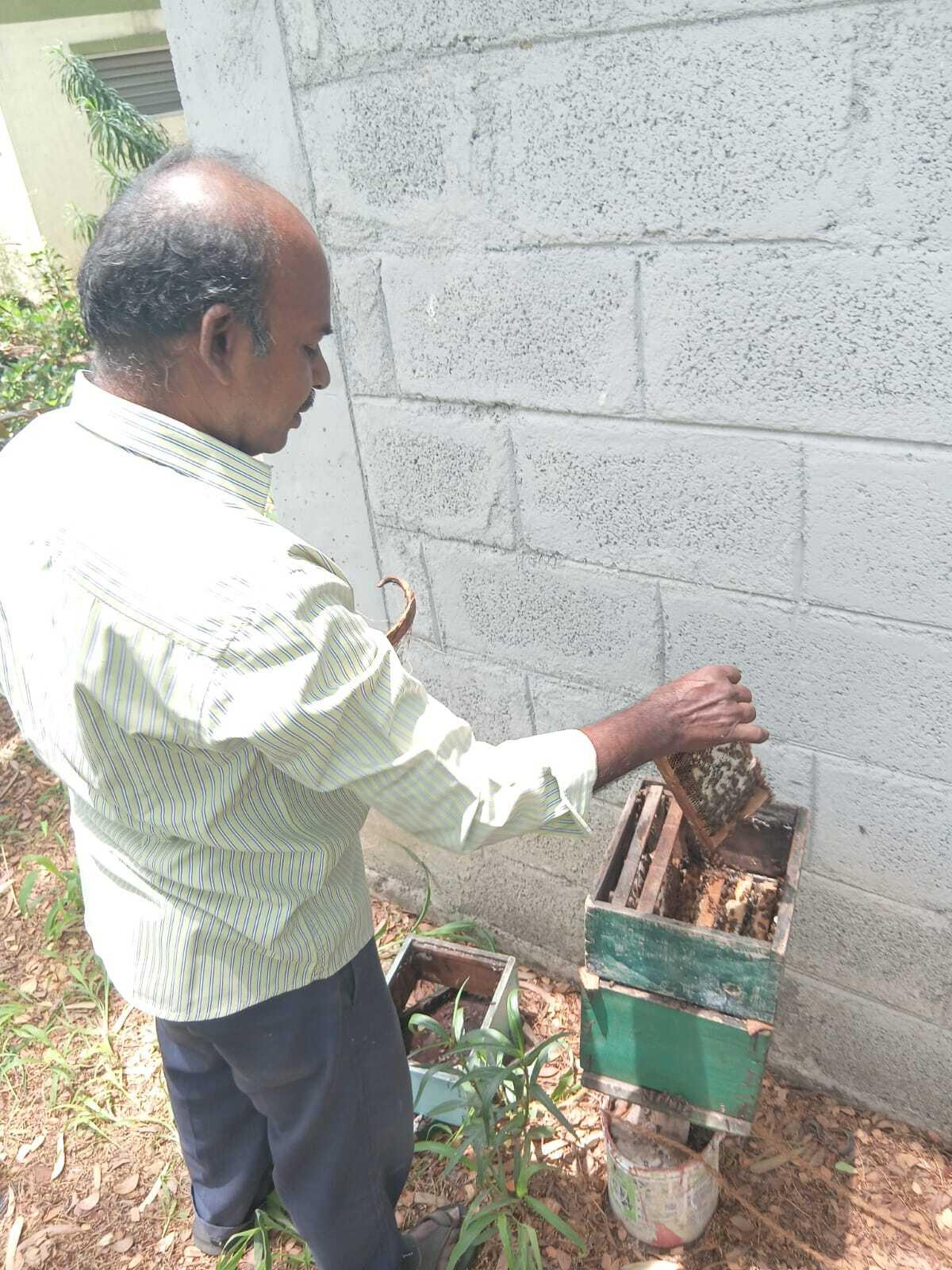
K. Vasanthakumar
Today, from Kolathur, he runs Amudha Bee Farm, a modest but sustained urban beekeeping initiative rooted in practices inherited from his grandfather. He installs bee colonies in residential compounds, the Guindy horticulture, the Khadi and Village Industries Commission (KVIC) campus in Madhavaram and shaded open spaces with sufficient flowering vegetation. In villages, he explains, colonies form easily near coconut groves and wells. In Chennai, however, survival depends on carefully identifying quieter pockets insulated from traffic, disturbance and excessive heat.
The process begins with a wooden bee box fitted with frames containing worker bees, broods and a queen bee. As the queen lays eggs and the colony expands, overcrowding is prevented by shifting the queen and a few bees into another box, allowing a fresh colony to emerge naturally. Honey extraction, he says, is done carefully using gloves, veils and controlled smoke so that neither the bees nor the honey are harmed. Alongside honey production, Vasanthakumar also prepares small batches of beeswax-based lip balms, face creams and pain balms. “Honey keeps the skin soft and protected, while beeswax locks in moisture naturally,” he says, describing them as gentler alternatives to chemical-heavy skin care products.
He supplies bee boxes and live bee colonies on order, along with honey and beeswax-based products. His range of cosmetics includes a 25-gram face cream priced at ₹100 per box and lip balms priced at ₹100 per piece. Yet, despite growing awareness around pollinators, fear continues to influence public attitudes towards bees. “Many people are scared because bees sting. But bees are soft in nature unless they feel threatened,” he says. Weather, however, remains a far greater threat. Excess humidity weakens colonies, restricts movement and often leads to bee deaths during prolonged rainy periods.
He can be contacted at 99418 68926.
Summer home stay
Every summer, residents of Nallappa Street in Chromepet begin looking towards a neem tree inside M. Sreedhar’s compound that has, over the years, become an unlikely refuge for migrating wild bees. For nearly seven years, colonies have returned to the same branches, building large suspended hives that remain there for months before dispersing once again.
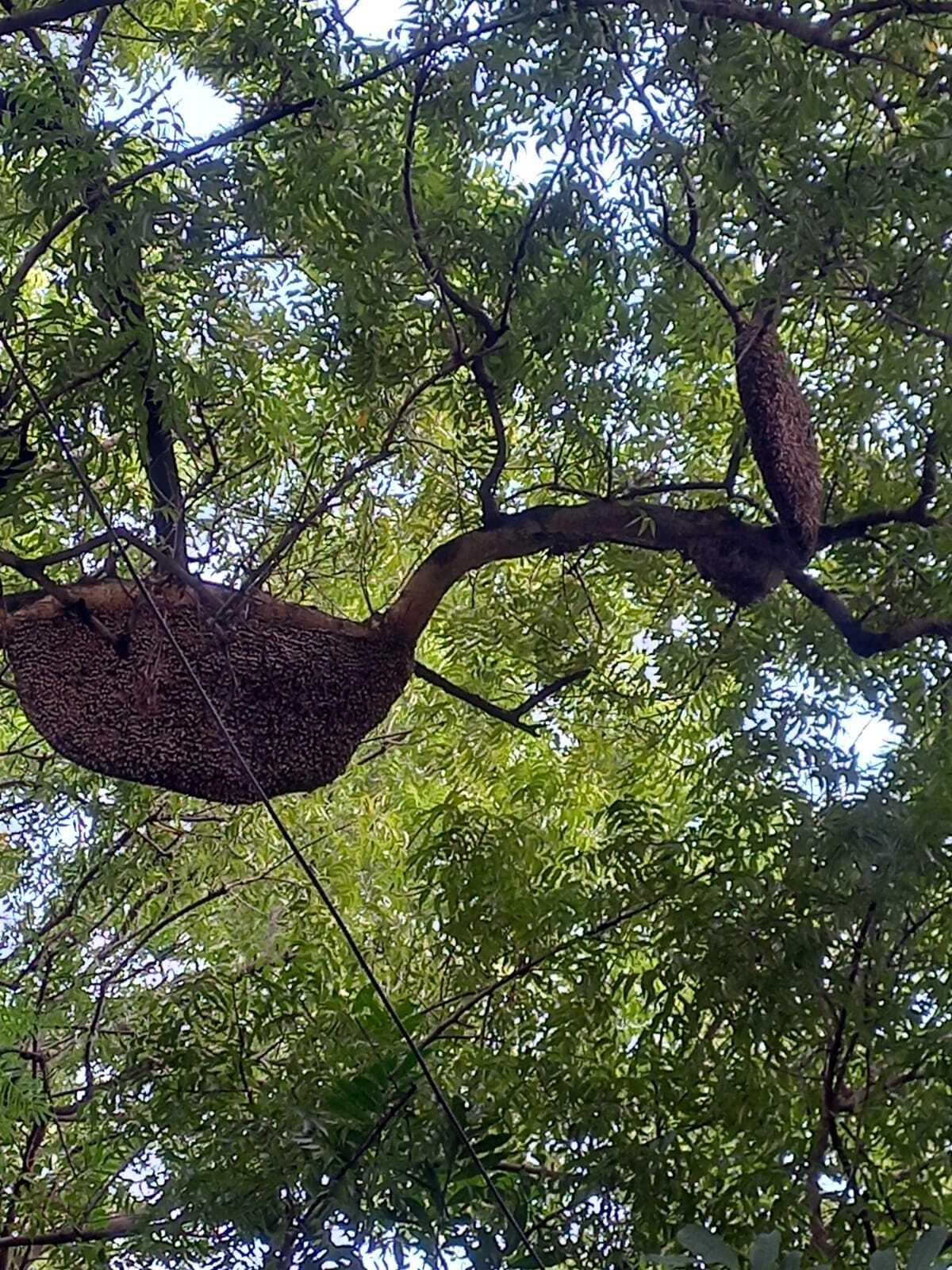
Bee hive on the neem tree at M. Shreedhar’s house at Nallappa Street in Chromepet.
Unlike conventional beekeepers who manage colonies through wooden frames and controlled extraction, Sreedhar practises a quieter form of stewardship. He does not harvest honey or interfere with the hive. Instead, he simply allows the bees to arrive, inhabit the tree and eventually leave on their own terms.
“For the past six years, every year the bees come, build a nest and stay there for around three to six months depending on the climate,” he says. “The current nest would be the eighth one built here.”
This year, however, the bees have been delayed. Sreedhar attributes the absence partly to excessive humidity and increased pesticide spraying in nearby areas. Yet he remains hopeful they will return once conditions improve.
According to him, the bees’ repeated migration is closely tied to the environment his family has cultivated around the house. Over the years, they have planted nearly 30 native trees within the compound, creating a shaded corridor that supports birds, insects and pollinators alike.
“These are not ordinary bees,” he says. “They require a healthy ecosystem. There should not be too much noise, disturbance or harsh sunlight.” Far from provoking fear, the colonies have gradually become accepted within the neighbourhood. During one season, residents even switched off exterior lights at night after noticing bees becoming disoriented and dying from the heat.