



The Periya Puranam of Sekkizhar is the first hagiography of the 63 Saivite saints, collectively known as the Nayanmars. It dates to the 12th century. Apart from the biographies themselves, a matter of side interest is the wealth of detail each story has on the ecology of the places that each of the Nayanmars came from. While perusing some, we feel nothing much has changed, while in some others, we can only wonder at what has been lost.

Sekkizhar was born in what is today very much a part of the Chennai Metropolitan Area – Kundrathur. He was, therefore, very familiar with the region of Thondaimandalam, namely today’s KTCC, and a little more. One of the striking passages is in his narrative of the life of Thirukuripputhondar, who lived in Kanchipuram. While dwelling on the natural beauty of the region, Sekkizhar, in three succeeding verses, mentions Thiruvottriyur, Mylapore, Thiruvanmiyur, and Mamallai in exactly that order. They, in the 18th century, became part of Madras that is now Chennai. A traveller from north to south Chennai would follow the same coastal route even today.

An abiding feature of the description is the proliferation of the fisherfolk. The nets have today become plastic but in Sekkizhar’s time, they were being woven and repaired by the fisherwomen. The men went diving and surfaced with conches that were sold. When the fishing boats came in, the catch of the day was spread on the sands for sale. Besides, there were salt pans where business was brisk, in collecting the salt and selling it. So next time our administration comes up with fancy ideas to alter the shoreline, it needs to consider the original stakeholders, namely the fishing community.
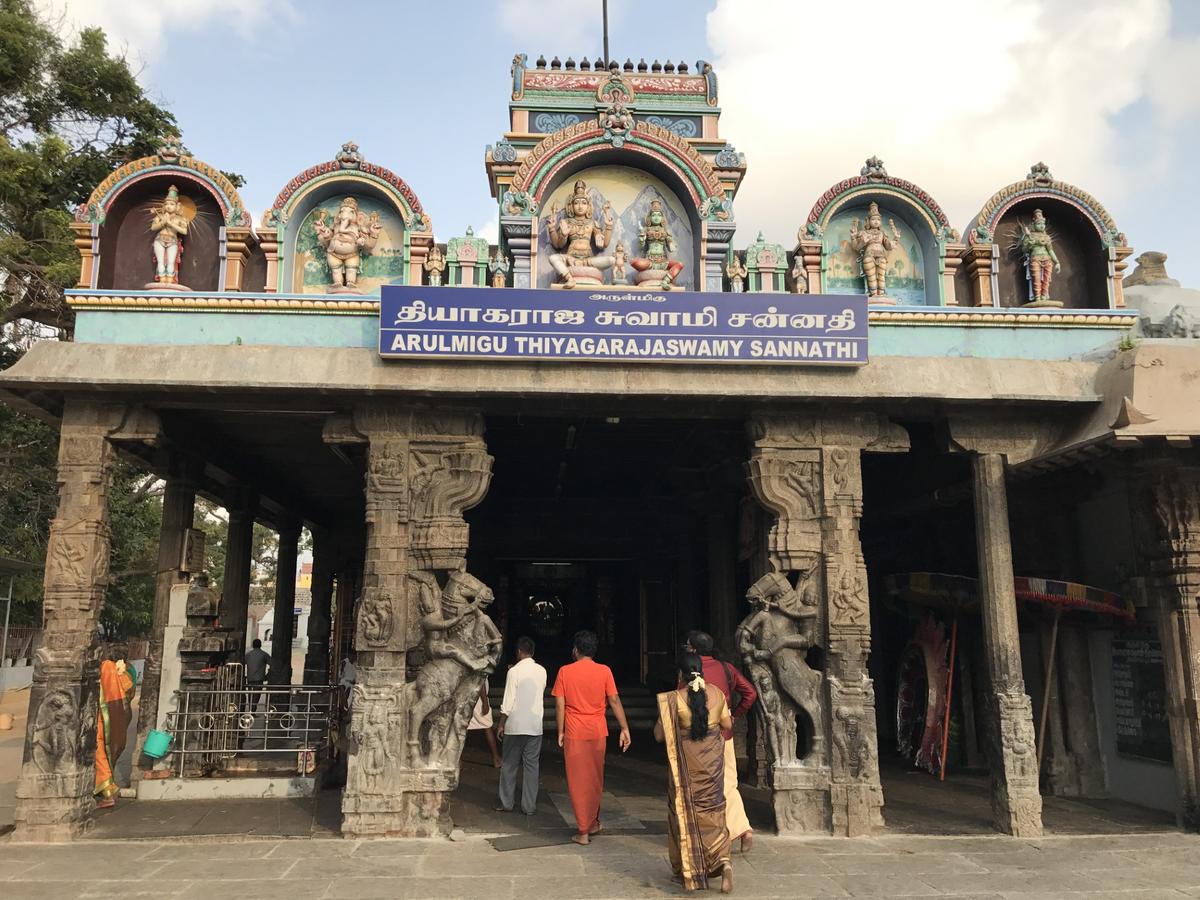
Arulmigu Marundeeswarar Temple, Thiruvanmiyur | Photo Credit: Sriram V.
Thiruvanmiyur was evidently a smaller settlement than Thiruvottriyur or Mayilai, for it is natural beauty of the place that is mentioned. That Thiruvottriyur was a thriving centre for Shaivism is made clear from a reading of the chapter on Kaliya Nayanar, who was an oil monger by trade. His residence is said to have been at Sakkarapadi Street, a thoroughfare no longer identifiable. The four principal streets are described as being broad for the temple cars to travel on. Inscriptional evidence has it that the place was known for its Devadasi tradition and this is supported by Sekkizhar who says there were plenty of pavilions where the dancers could display their skills. He also writes of the presence of Shavite Maths that fed devotees. Today, these are no longer in evidence. Many have morphed into temples, their monastic origins still identifiable by their names.
Mayilai emerges as a colourful spectacle, much of which it still retains today. In his chapter on Vayilar Nayanar, the devotee who still has a sanctum in the Kapali temple, Sekkizhar describes the port of Mylapore as a busy one – filled with ships from faraway lands, all identifiable by their flags. It is noteworthy that a harbour, known as Shah Bandar, existed here right up to colonial times. Its stature, however, was on the decline, and it is very likely that the British destroyed it completely when they took over San Thome. In Sekkizhar’s hands, this port comes alive with elephant calves being offloaded from ships even as buffaloes wander around in the sand and dark clouds lower in the sky. It is a rare literary passage where the beauty in black is celebrated.
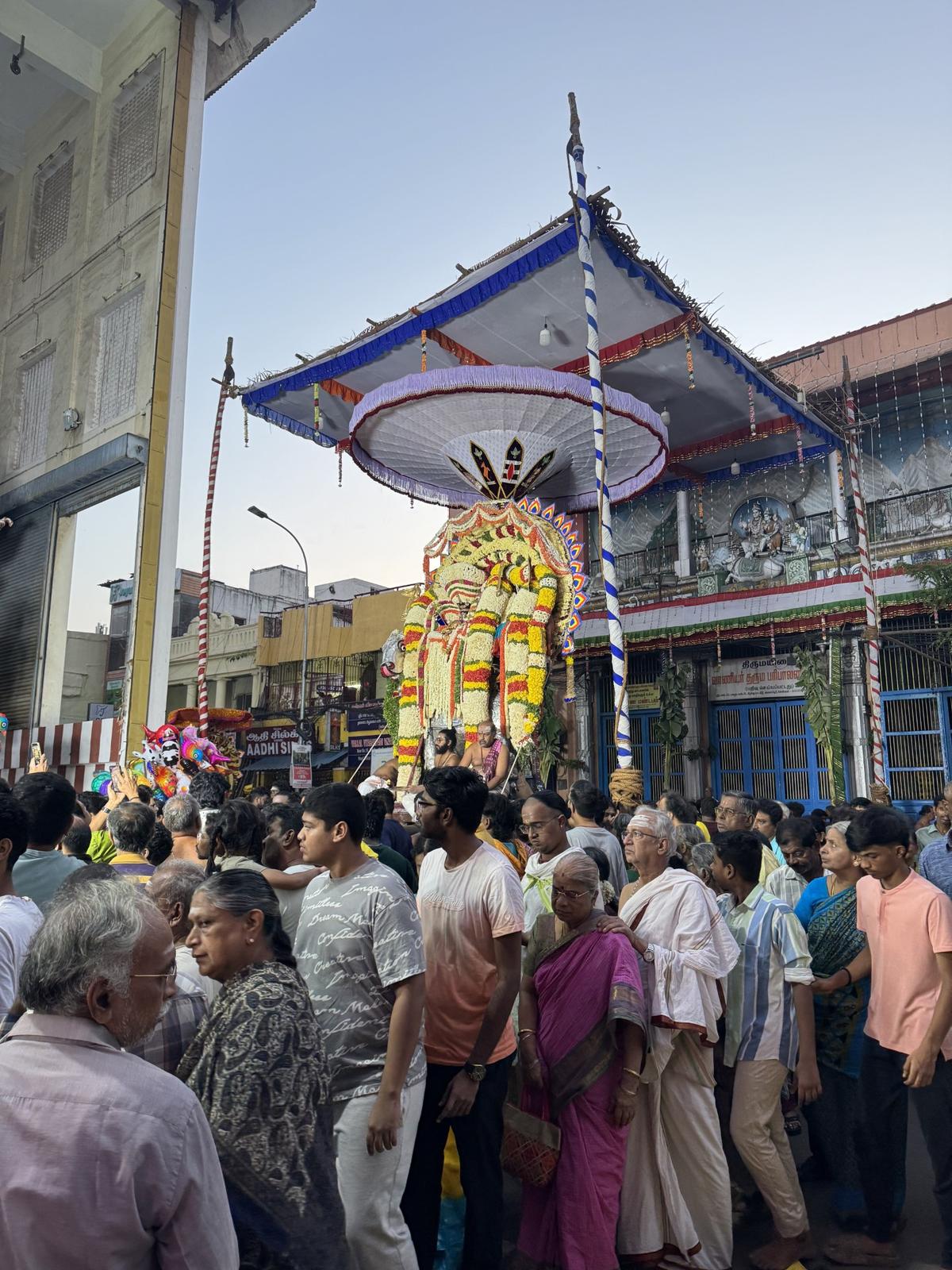
Kapaleeshwarar Temple in Mylapore | Photo Credit: Sriram V.
The Mada Veedis of Mayilai, though they cannot be the present ones, are described as being eternally festive. Young men and women wander about and the banter between them is described through symbolism – the bees flit around the fragrant tresses of the girls as though they are carrying messages from the boys.
Both Mayilai and Thiruvottriyur are depicted as containing tall mansions that seem to pierce the sky. The trees and creepers are so dense that the sun and the moon can only be glimpsed through the gaps. There are further descriptions of Mayilai in the chapter on Gnanasambandar. The boy saint, as is well known, was invited to visit the place by Sivanesan, a prosperous merchant of Mayilai, to resurrect his daughter Poompavai. In the passages that follow, Mayilai is described as a Perunagar – a great town, where locals and foreigners, following Shaivism, Buddhism, and Jainism, lived. The port once again gets mention, and it is detailed that Sivanesan made his fortune by sea trade. Clearly, this was a place where active maritime mercantilism was practised.
Also Read : Madurai jigarthanda: Tracing the origin of the iconic chilled dessert
Sambandar arrives in Mylapore to what would amount to a civic reception. The streets were decorated at Sivanesan’s expense. The saint clearly travelled along the coastal route for note is made that he crossed salt pans! Today, the closest we can get to these are at Kelambakkam and even that is said to be on the wane.
(Sriram V. is a writer and historian.)