








Isn’t it fascinating what technology can do today? From AI to lightning-fast internet, everything is just a click away. But what happens when there’s no power? When your battery runs low?
That’s where something timeless steps in—an art form that doesn’t rely on screens or signals but on pure creativity and storytelling. Puppetry is more than entertainment; it’s a second life, a loyal companion, and a world where you control the story. It’s an escape from the digital rush, a space where your imagination takes centre stage.
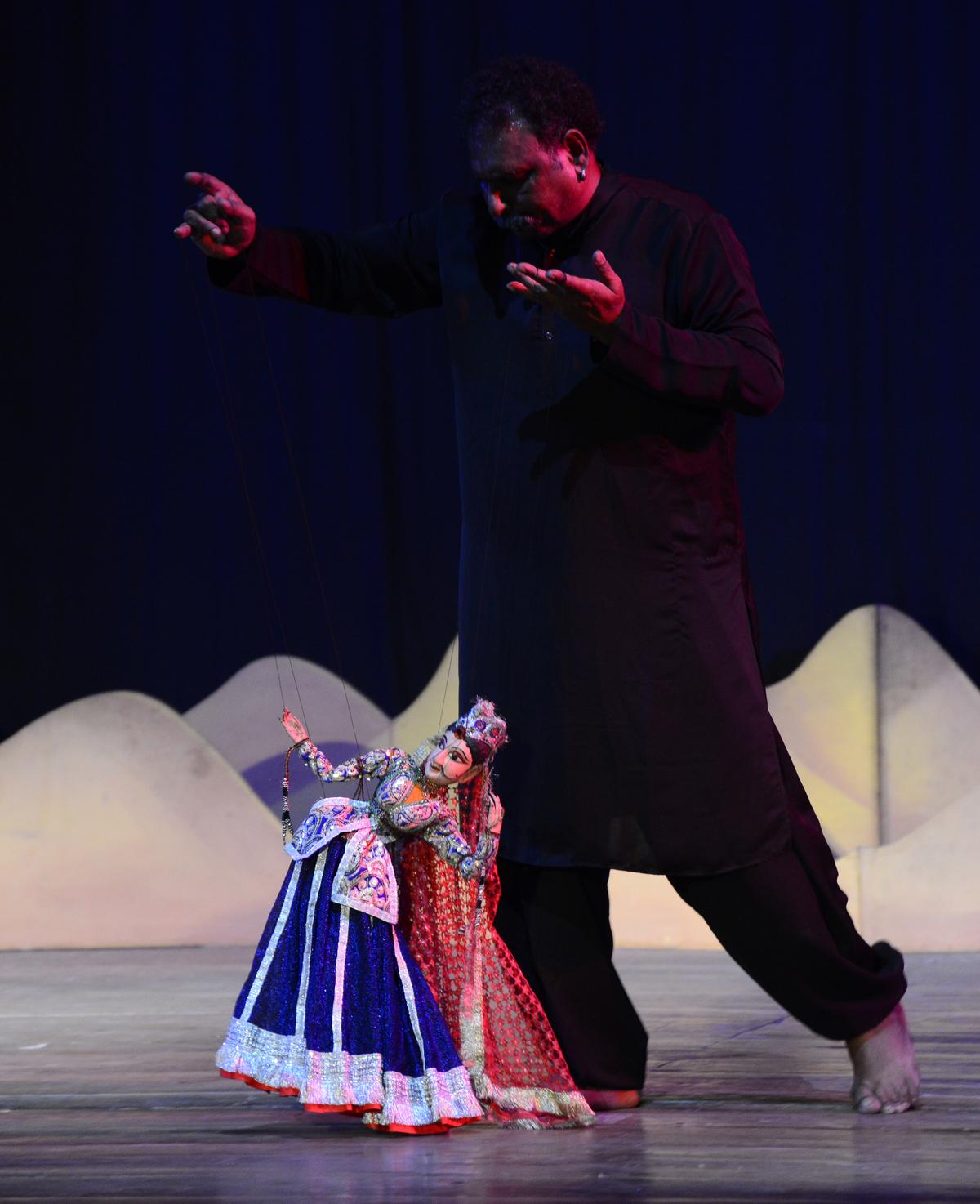
Puran Bhatt, a puppeteer from Rajasthan, performing Rajasthani Kathputli folk tale “Dhola Maru.” | Photo Credit: MURALI KUMAR K
The magic of puppetry
In the heart of bustling streets and quiet village corners, puppetry has danced its way through history, bringing stories to life in the most magical way. Long before movies and cartoons, puppets were the original entertainers—spinning tales of gods, heroes, and common men.
.
Across cultures, from India’s Kathputli of Rajasthan to Indonesia’s Wayang Kulit, puppetry has been more than just a show; it’s been a way to pass down traditions, teach lessons, and spark imagination. In temples, courts, and marketplaces, puppets have whispered history, acted out myths, and even poked fun at society.
What makes them timeless?
They let storytellers create a world where anything is possible — where a wooden doll can become a king, a shadow can turn into a monster, and emotions can be felt without a single spoken word. Whether for children or adults, puppetry isn’t just play—it’s a world where fantasy and reality meet, no screens needed.
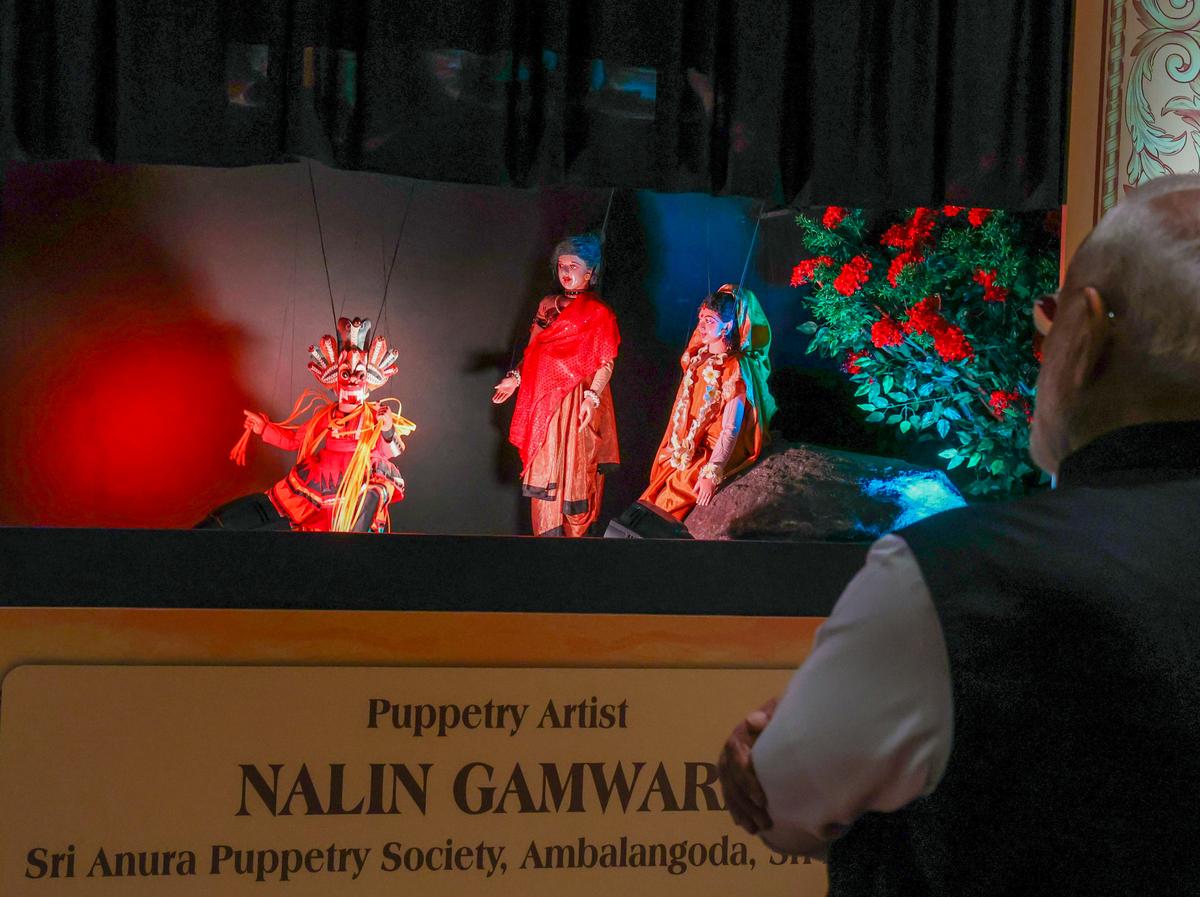
Prime Minister Narendra Modi witnesses glimpses of a puppet show highlighting parts of the Sundar Kand, by Puppetry artist Nalin Gamwari and the team of Sri Anura Puppetry Society, as he arrives at hotel, in Colombo. | Photo Credit: ANI
Puppetry across cultures
Puppetry has always been a form of theatre—whether in royal courts, village gatherings, or religious performances. It’s an art that blends storytelling, music, and movement, proving that sometimes, the simplest forms of entertainment leave the longest-lasting impact!
India’s puppet heritage
Rajasthan – Kathputli, the famous string puppets used in folk tales and historical storytelling.
Tamil Nadu – Bommalattam, a mix of string and rod puppets, is known for its dramatic movements.
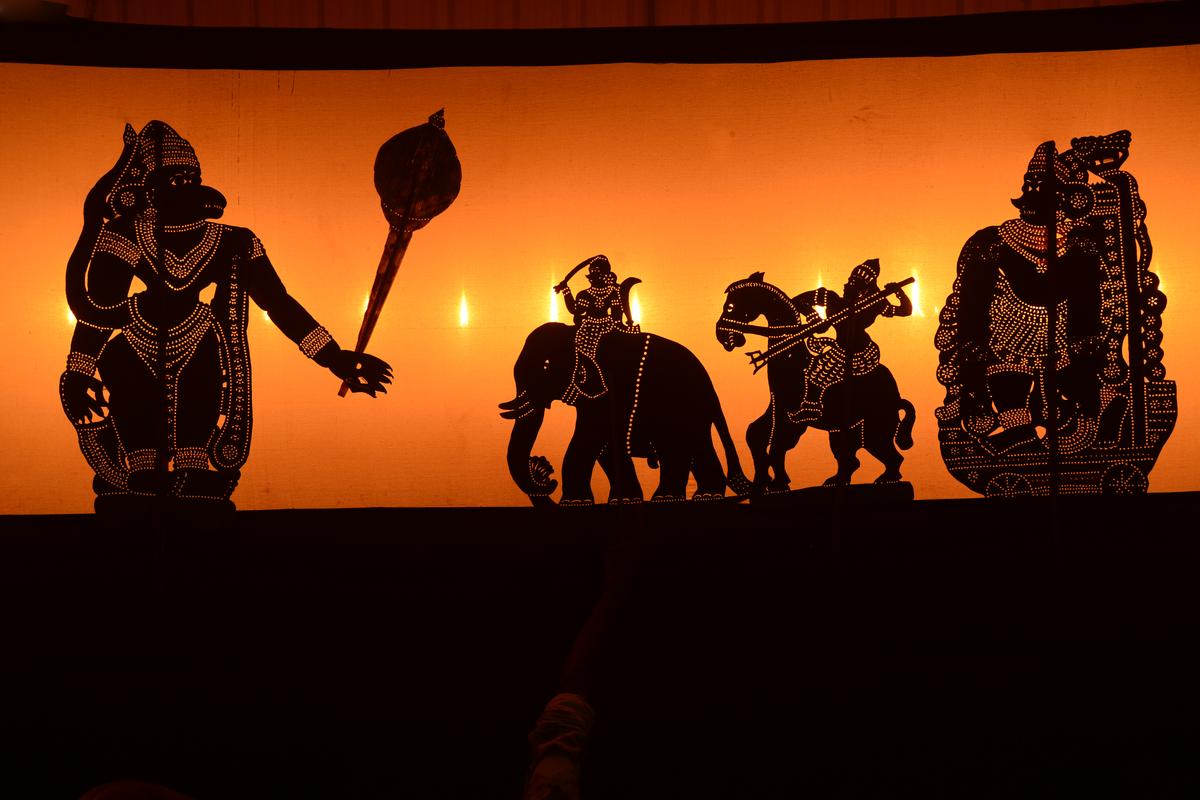
Andhra Pradesh – Tholu Bommalata, intricate leather shadow puppets that light up with colors.
Kerala – Pavakathakali, inspired by Kathakali dance, bringing mythological characters to life.
Puppetry in other cultures
Indonesia – Wayang Kulit, shadow puppetry telling epic Hindu stories like the Ramayana and Mahabharata.
Japan – Bunraku, highly detailed puppets controlled by multiple puppeteers for lifelike expressions.
Europe – Punch and Judy, a street puppet show filled with comedy and satire.

Traditional artistes of Nimmalakunta village in Sri Sathya Sai district prepare their leather puppets ahead of a show.
A scene from ‘Duryodhanavadham’ Paavakathakali (Glove puppet kathakali) organised by Tripunithura Kathakali Kendram in Tripunithura near Kochi. | Photo Credit: THULASI KAKKAT
Meet Pupalife: A storytelling movement that’s reimagining education
Pupalife is not just an organisation—it’s a movement that believes in the power of stories to transform lives. Founded in 2015, Pupalife was born out of a single moment of curiosity when a child asked about shadow puppetry. The founder Mohana Sundaram, not knowing the answer, took it as a challenge. With nothing but YouTube and sheer curiosity, he began learning, experimenting, and performing—and that spark ignited the journey of Pupalife.
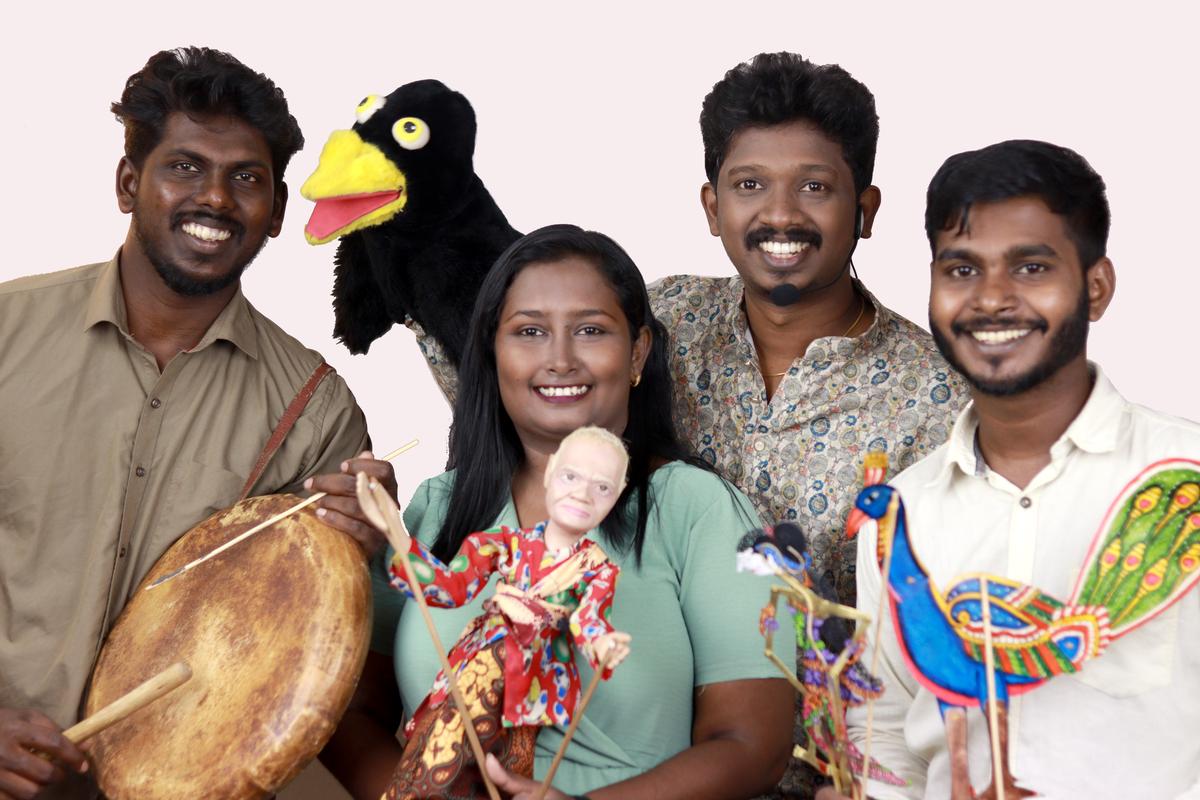
Team Pupalife
At its core, Pupalife is a storytelling collective that believes education is the key to social reform. And what better way to educate than through storytelling? Over the years, the team has mastered and explored more than 10 unique storytelling formats, from shadow puppetry and ventriloquism to folk tales and music-based narratives.
“We mix the traditional with the modern—bringing in folk instruments, songs, and tales while adapting them with themes that resonate with children today,” says Mohan. “Our stories are often inspired by thinkers like Thiruvalluvar, but the real magic happens when children join us in co-creating them. It becomes an interactive and imaginative experience for everyone.”
Talking about their ambitious All India Storytelling Camp launched in 2023, he adds, “We covered 48 locations across India and hope to reach 100 soon. Even when language is a barrier, storytelling isn’t. Through music, actions, and expressions, we connect with children everywhere. Stories are a universal language.”
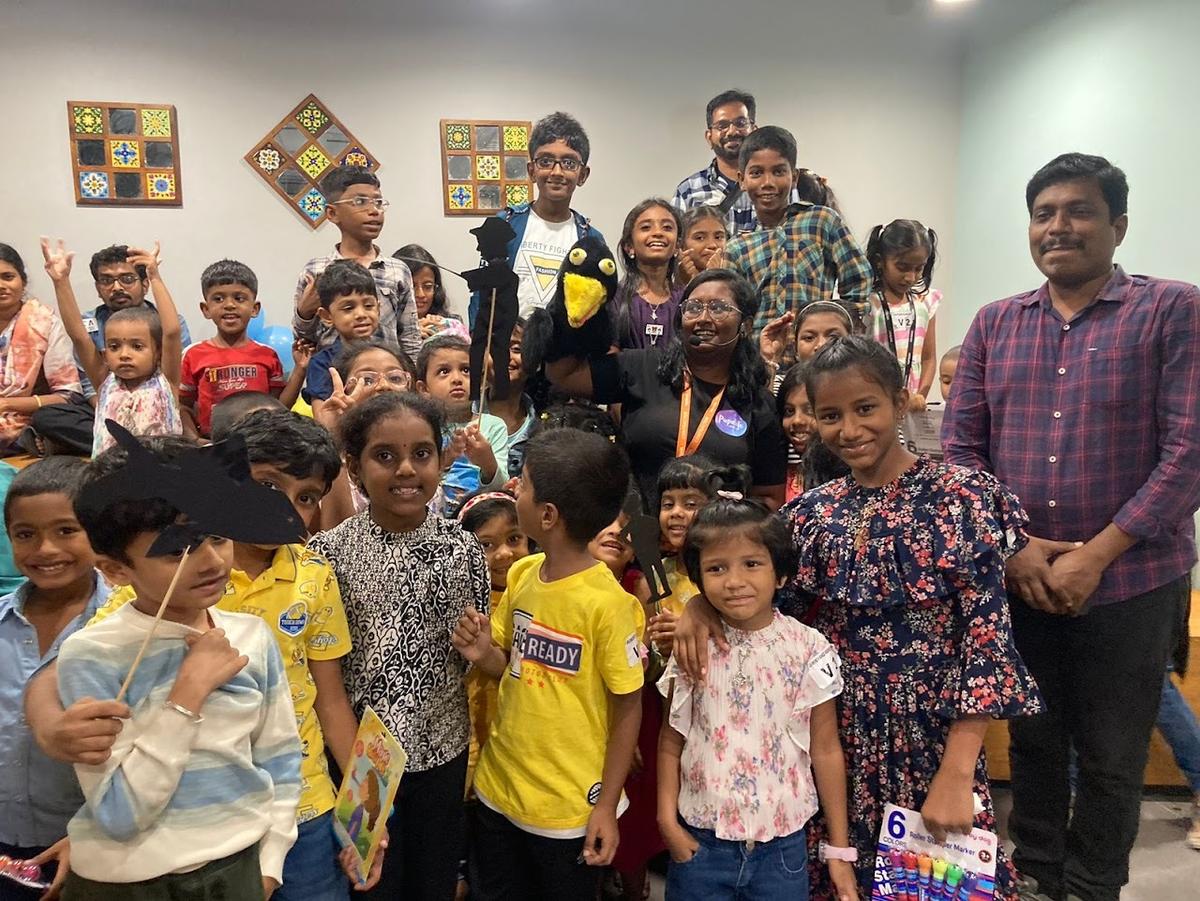
But Pupalife is more than just performances. With a dream to build an institution dedicated to puppetry education—offering structured courses like diplomas, especially in shadow puppetry—the team is on a mission to revive this fading art form.
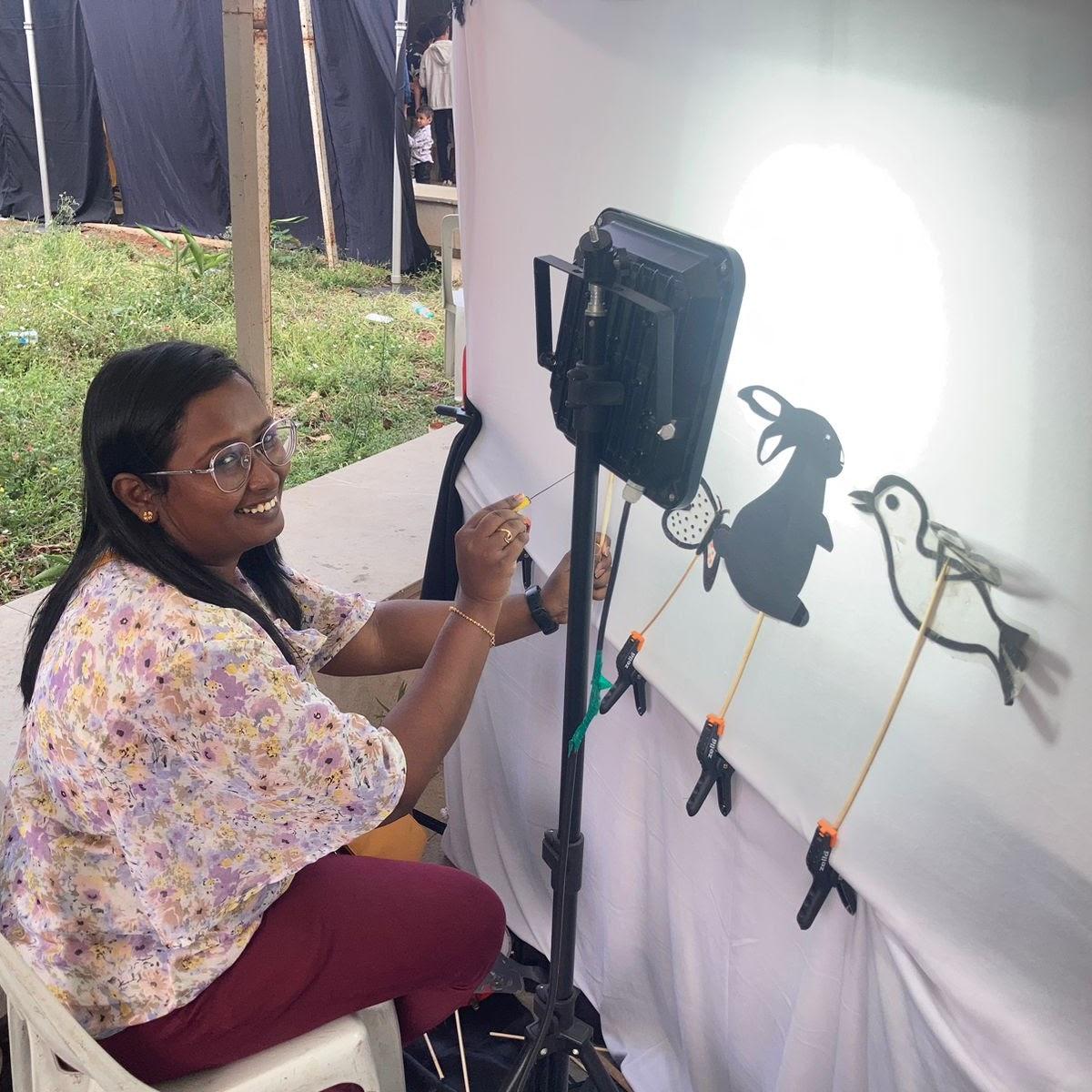
Boshikavya, Co-Founder, Pupalife performing shadow puppetry.
Their passion even took them overseas. “I went to Indonesia to study their traditional puppetry, especially wayang kulit,” says co-founder Boshikavya, who is also a lawyer. “It was eye-opening to see how deeply rooted and respected puppetry is there, and we want to bring that level of seriousness and structure back to India.”
With just a core team of four working out of a small office in Kodambakkam, Chennai, they’ve managed to reach a much larger audience, proving that big changes don’t always need big teams—just big ideas and effort.

“We may not be here after 30 years, but our stories will be—and we want the next generation to carry them forward.”BoshikavyaCo-founder
“He spoke through the puppet”: The life-changing impact of puppetry on autism
For many, puppetry may seem like an ancient form of storytelling. But for some, it becomes a voice. One such unforgettable moment in the journey of these passionate puppeteers was when a 24-year-old with autism, who hadn’t spoken for years, finally expressed himself—through a puppet.
“He can’t talk, he won’t express anything,” recalled the storyteller, speaking about their year-long puppetry workshop with autistic adults. “But after our intervention, he spoke something with the puppet. He delivered something,” shared Mohan.
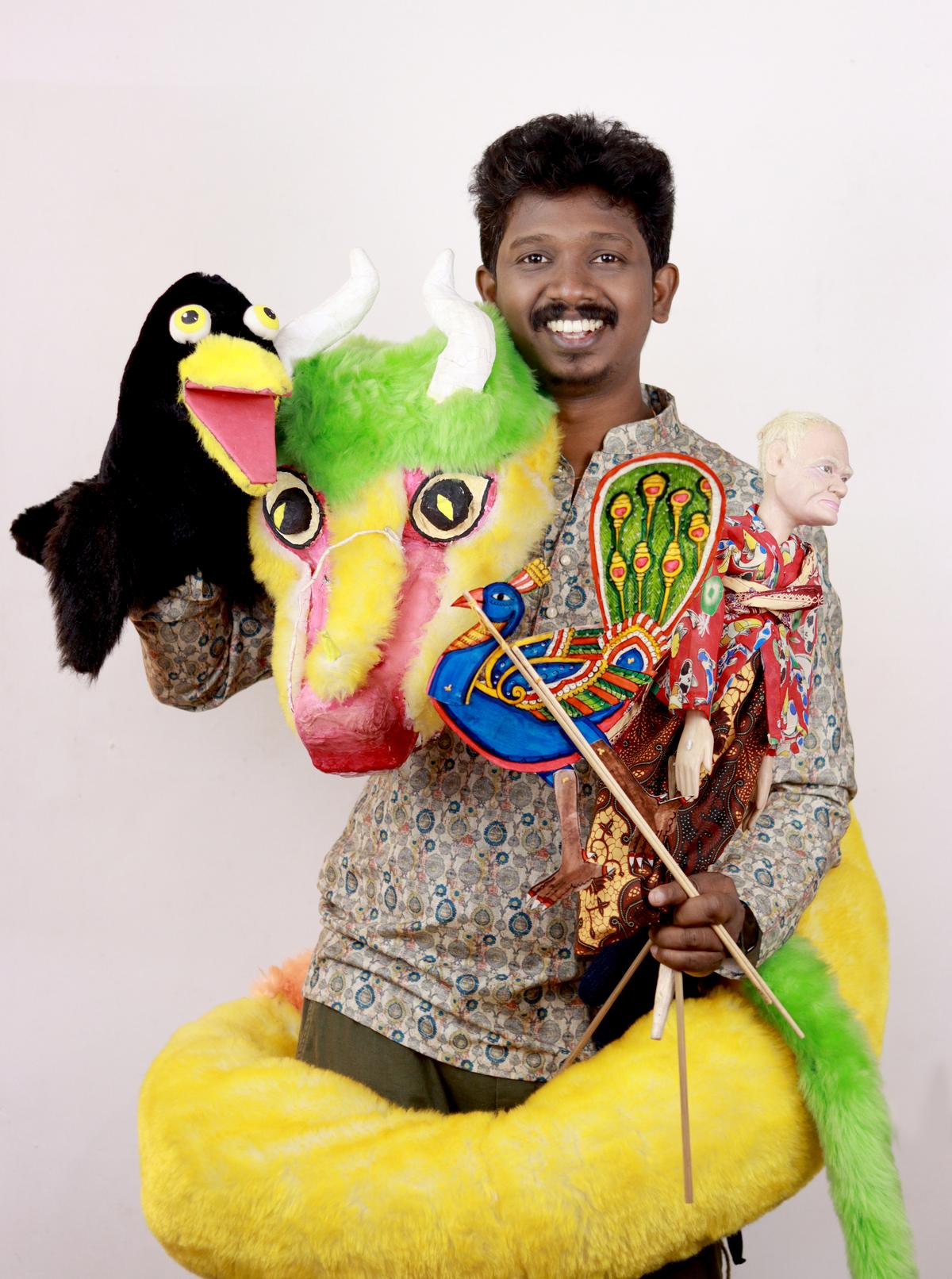
Mohana Sundaram, Founder, Pupalife.
Interaction is the key
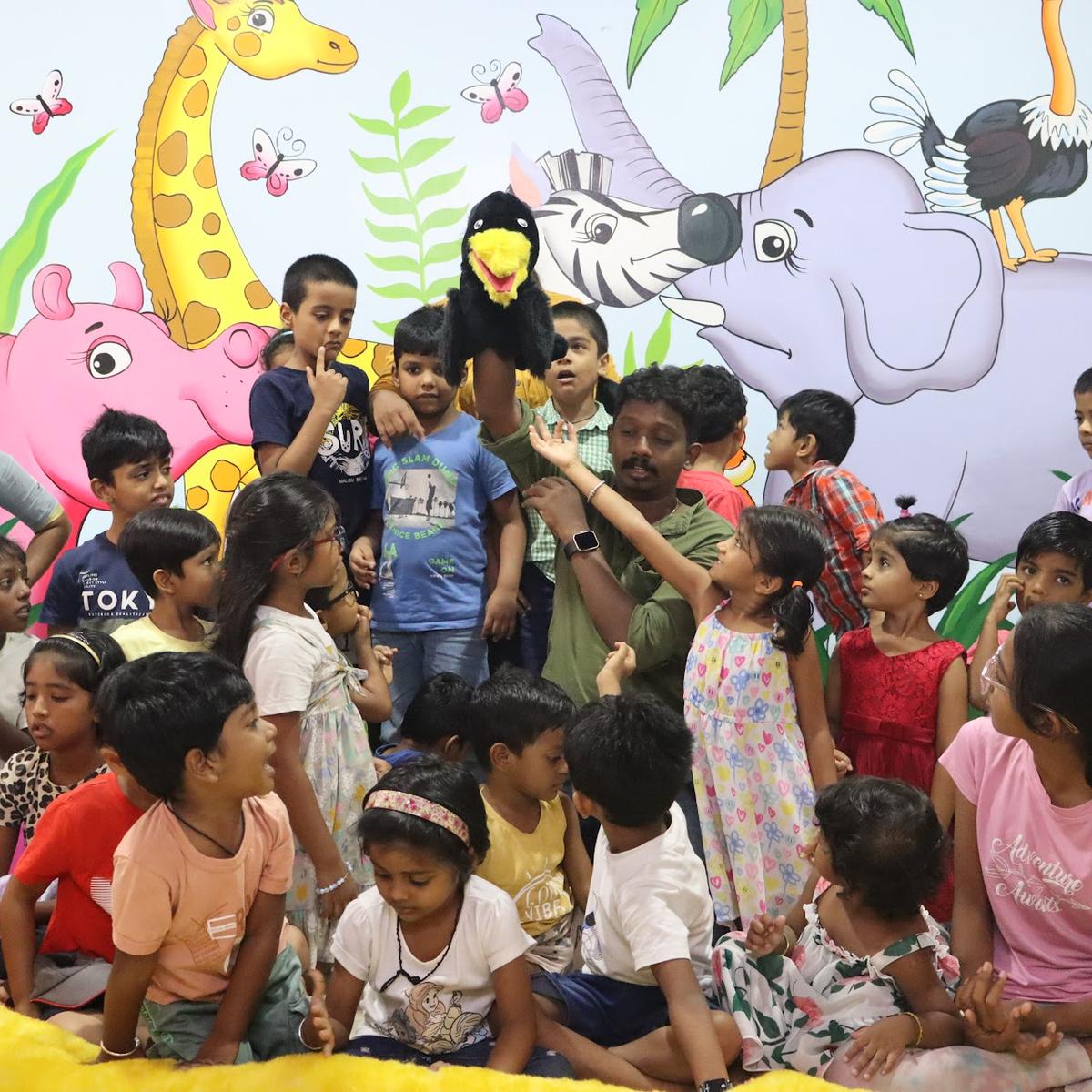
The interactive nature of the art form draws children in, making them active participants rather than passive learners. “Sometimes, we start a story, and then the kids take it forward. They create the characters, build the narrative—it’s their world,” Mohan explained.
“I give the puppets to them, I go and talk to the children, I involve the child in that play,” Mohan shared. “Automatically, the child becomes cooperative.”
Meet Mr. Vaan Every great puppet has a story, and Mr. Vaan is no different. Stitched by Mohan himself, Vaan is more than just fabric and thread—he’s a character brought to life by imagination. His name wasn’t randomly chosen; it was given by a young girl who, when asked about its meaning, explained that it came from the Tamil word “Vaanam,” which means sky, what was also her brother’s name.
Even schools are beginning to understand the power of this medium. From life skills to academics, puppetry is now being developed into a structured curriculum with two tracks: storytelling for life skills, and concept-based academic modules. “When we go to schools, many children come just to feel the puppets once,” Boshikavya added. “They have a thirst to learn this.”
And perhaps, in a world dominated by screens, it’s that simple, tactile interaction—being able to hold, talk to, and become the puppet—that makes all the difference.
“Story is not bound by language. Even if I don’t know a child’s mother tongue, they can understand the story through actions, music, and expressions.”Mohana SundaramFounder, Pupalife
Imagination taking centre stage
Pupalife’s approach is rooted in hands-on engagement. They use shadow puppetry, an art form Mohan himself was drawn to, as a tool for imagination and storytelling. They also integrate folk songs into their performances, making it a cultural learning experience. “It’s not just about puppets — it’s about bringing in traditional music, old tales, and making children a part of it,” he says.
“And that’s the real magic of puppetry — it’s not about watching, it’s about doing. When a child holds a puppet, they aren’t just playing; they’re expressing, learning, and creating something uniquely their own,” he continued.
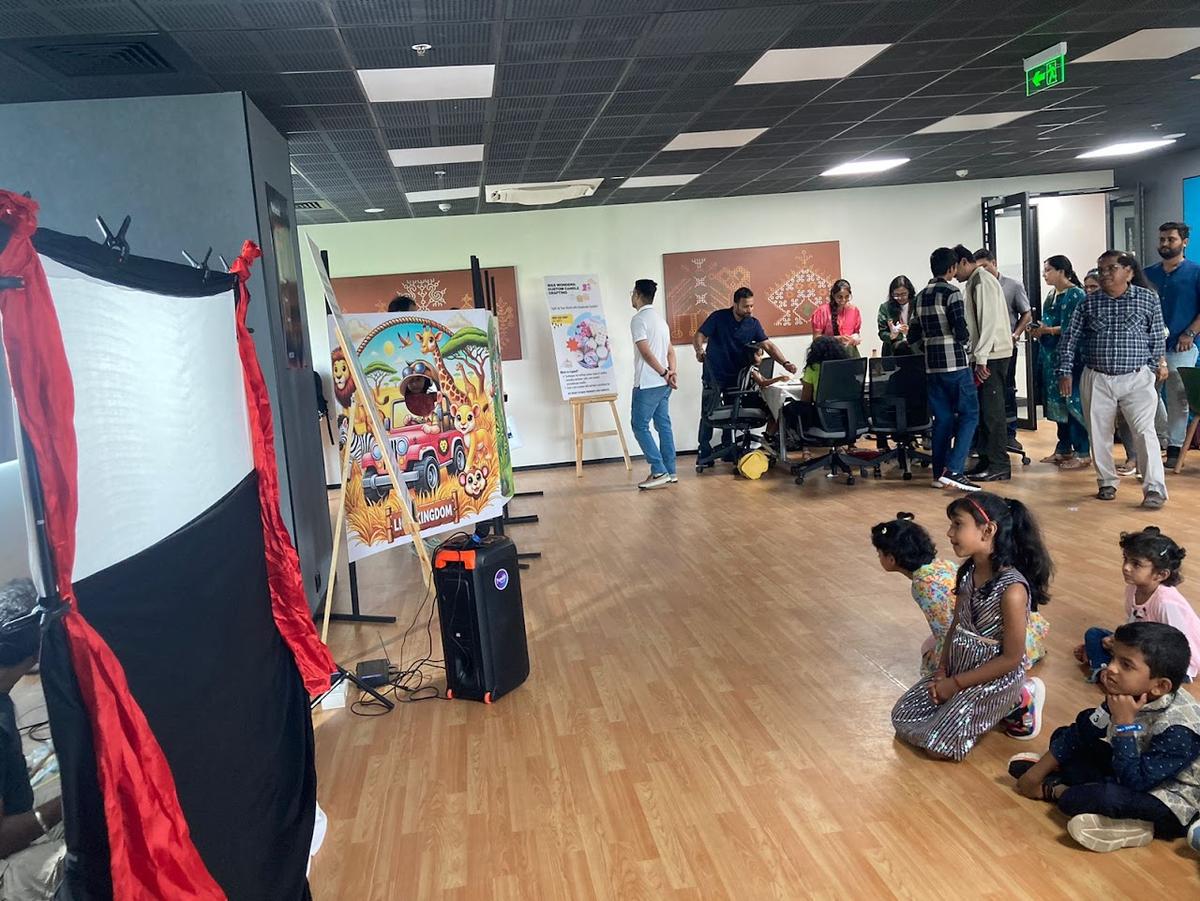
Ventriloquism
Ventriloquism is the art of speaking without moving one’s lips, making it seem as though the voice is coming from a puppet or another source. It is often used in entertainment, but it can also be a powerful tool for therapy and communication.
“One of our biggest challenges was performing a ventriloquism show for blind people. Since traditional ventriloquism relies on visual elements—like the movement of a puppet’s mouth and expressions —we had to adapt. We focused on creating distinct voices, engaging storytelling, and interactive dialogue to ensure the audience could fully experience the performance. The response was incredible, proving that ventriloquism is not just about sight but also about sound, imagination, and emotion,” Mohan said.
An interesting take
“I strongly believe robotics started from puppetry. If there is no puppetry, there is no robotics, which we are talking about now. So, that is the base for everything,” said Boshikavya, Co-Founder of Pupalife, who is also a lawyer.
“A robot and a puppet may look similar, but there’s a crucial difference—one follows commands, the other tells a story. That’s why storytelling connects with children in a way lessons and marks never can,” she added.
Fun fact: The Mechanical Turk
In the 18th Century, Wolfgang von Kempelen created the Mechanical Turk, a chess-playing “robot” that amazed audiences. Spoiler alert: It was actually a cleverly disguised puppet operated by a hidden human!
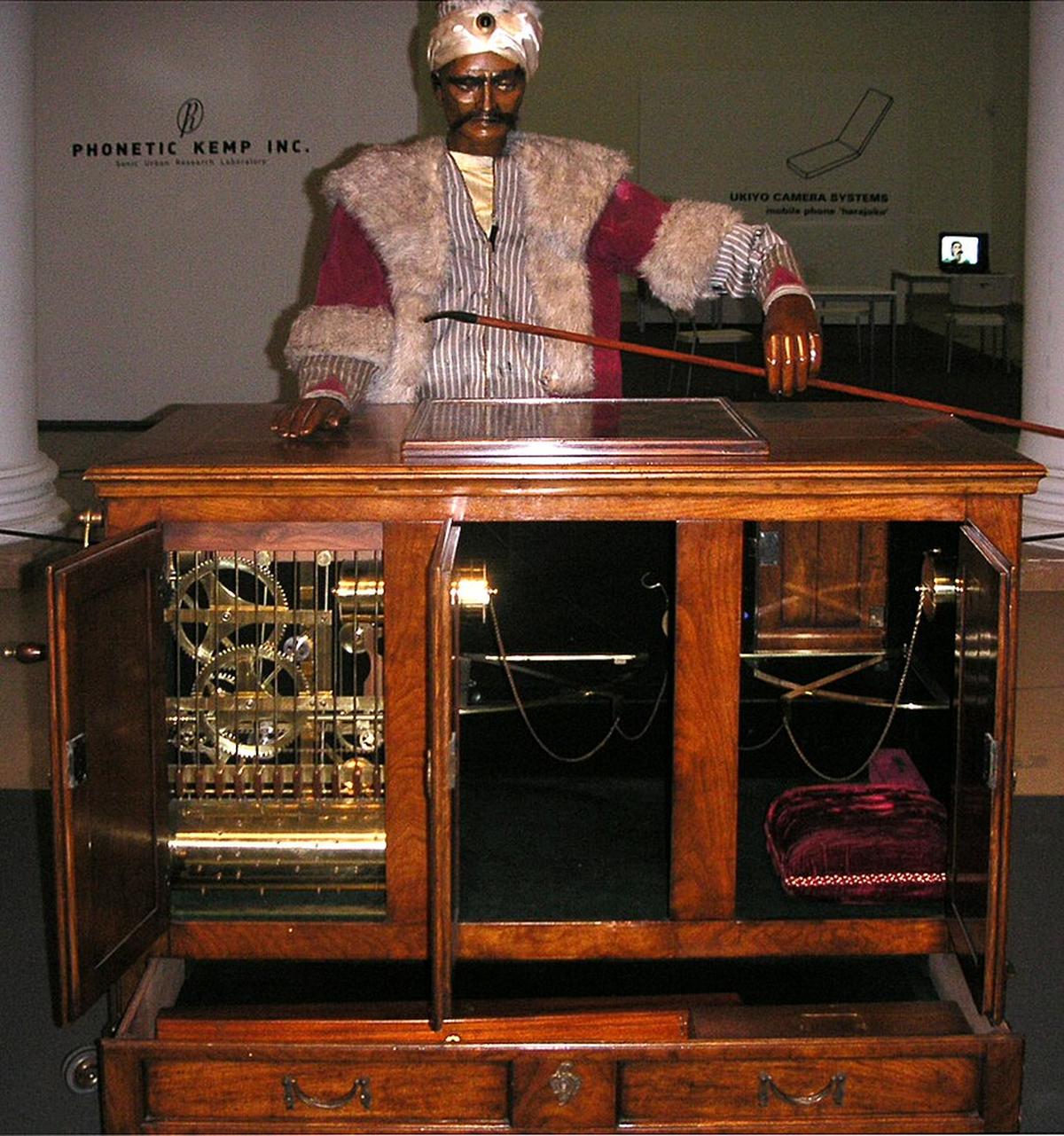
Photo of the reconstruction of the Turk, the chess-playing automaton designed by Kempelen.
“Puppetry isn’t just art—it’s a 3D model that brings stories and concepts to life. While drawings stay flat, puppets move, speak, and teach. Schools are beginning to see its value, with some even asking for weekly shows or workshops. It’s not just performance—it’s education in motion.”Team Pupalife
Pupalife continues to take this art forward through unique workshops where children learn, create, and perform.