





There is something prismatic about remembering. In the mind’s eye, the past refracts, and history stops feeling inevitable. In his latest novel, The Complex (HarperCollins), Karan Mahajan achieves a similar effect, following a post-Partition Punjabi joint family through the upheavals of the 1980s and 90s — from the Mandal Commission to the rise of Hindutva politics. As they navigate these shifts, they emerge as both causes and consequences of a nation in churn.
Now based in the U.S., Mahajan returns to the Delhi of his childhood, where joint families jostled for space and intimacy within a single housing complex. Through figures like the patriarch S.P. Chopra and the immigrants Gita and Sachin Chopra, set against the opportunistic Laxman Chopra, the author traces how patriarchy, sexual and religious violence, and politics shape lives across generations. These concerns also run through his earlier works, Family Planning (2008) and The Association of Small Bombs (2016), revealing a sustained interest in the inseparability of the personal and the political.
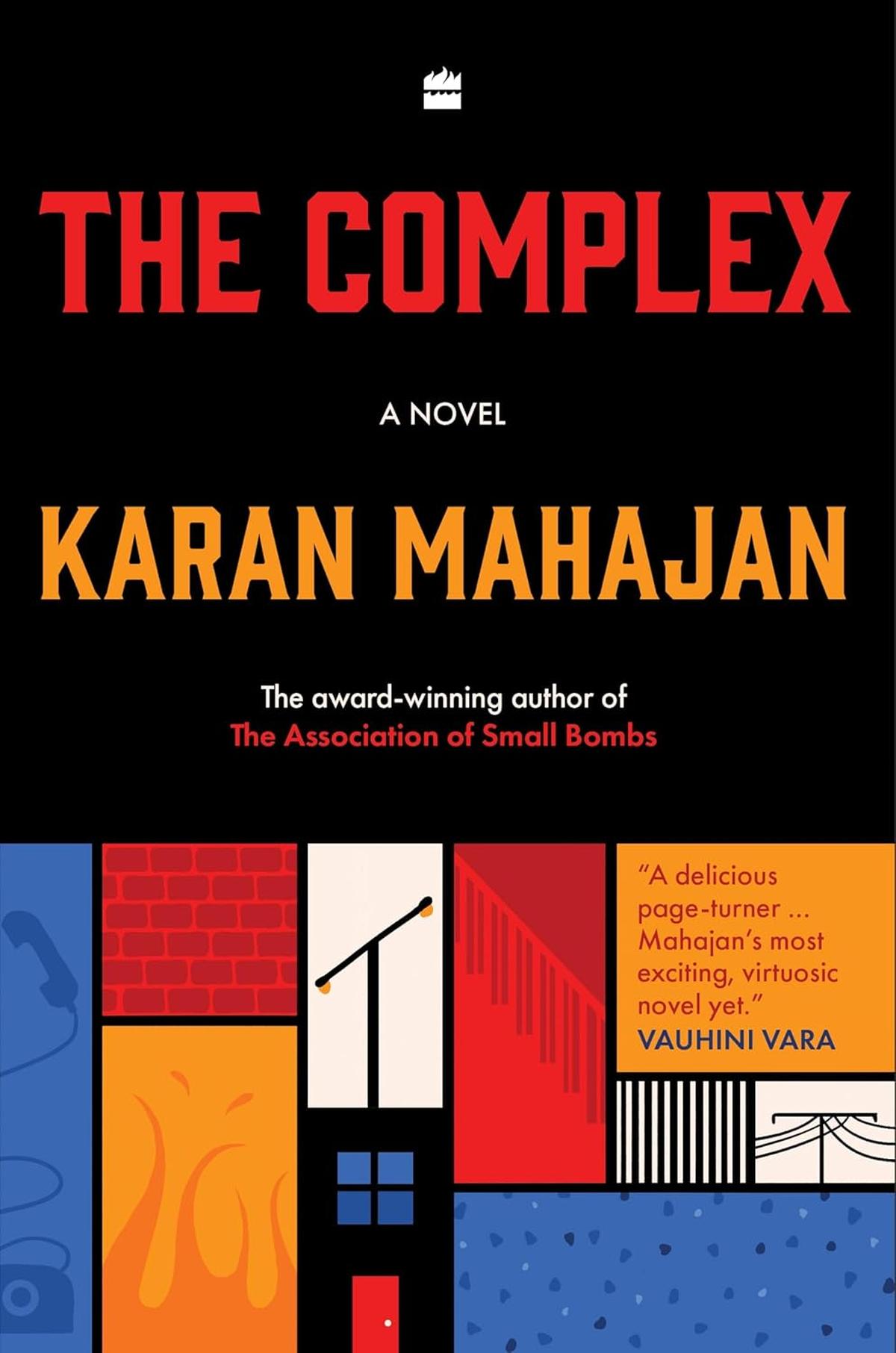
In this conversation, Mahajan reflects on memory, migration and the emotional impulses intersecting private lives and public histories. Edited excerpts:
Question: How autobiographical is The Complex?
Answer: If there’s an autobiographical root for the novel, it lies in emotion. As an immigrant, I have felt suspended between the U.S. and India. I came for college and assumed I would return to India. I kept telling myself that story for years, even as it became more and more untrue.
Thus, the novel begins with Gita Chopra, a woman in her late 20s who goes to the U.S. in the late 1970s to be with her husband and is in denial about where they are. The system of meaning that she could have developed in the new country, to counter the system of meaning we all have, by default, in the place we come from, never develops in the U.S. She starts looking back to India and thinks of moving back. But, on a trip to India, she is sexually assaulted by a relative. Suddenly, this space of family in Delhi also starts becoming unsafe. And so, she feels at home nowhere.
Q: Given that the novel is based on historical events, what research did you undertake?
A: I research my novels almost journalistically. I go out into the world and talk to as many people as possible. I make a huge number of notes, go through archives, and read newspaper reports. It’s just so that I can enter that era myself.
Take the Mandal Commission protests in 1990. I was six and remember school being closed for a few weeks. I didn’t really understand its history, though. I talked to many fellow writers and editors in Delhi, especially those who were in college at the time. Many, left-leaning now, had participated in the protests. Someone described the atmosphere as a college party. Only in retrospect did they think, ‘Oh, I’m embarrassed, I didn’t understand my privilege’. That became useful because it allowed me to enter the event sideways as opposed to coming at it, let’s say, from [then prime minister] V.P. Singh’s perspective or of documented history.
Q: Why do so many characters have a double consciousness as they become different people in different situations?
A: I’m fascinated by how one person’s consciousness is constantly mediated and invaded by others’. That’s partly why the novel jumps from one character’s head to another, sometimes in the space of a sentence or a paragraph. I think that was how my mind was formed, too.
In a country like India, people simultaneously occupy different eras and social mores. You might have a more open and Westernised personality with your friends, and an entirely different one with your relatives. That constant navigation is really interesting.
On a similar note, this is why we never know a politician’s inner motivations. They speak along party lines, but the true wound or source of that will to power is hardly known.
Q: In the novel, Laxman is a sexual predator and, eventually, a right-wing politician. This is a conjunction that is becoming disturbingly familiar. Was that intentional?
A: It’s not a coincidence. Any kind of fiction with a historical bent gets inflected with the concerns of the present. One way of writing about any kind of right-wing ideology is that — if you have an ancestor or a parent who is “great” — you’re constantly shadowed by that legacy, and you wish to recapture it. And of course, that leads to a backward-looking ideology. Laxman is an exaggeration of that, because he’s the biggest loser in the family and wants to be the greatest man, on a par with his father. Obviously, something disastrous will come of that.
Moreover, right-wing movements strongly support the idea of patriarchy. Sexual control and sexual violence are by-products of that. But it’s not that left-wing movements are innocent either. You have all these disturbing revelations coming out about Cesar Chavez in the U.S. right now. He was a great organiser of agricultural workers.
I think that Trump, especially, is a good example of what I’m talking about. People thought that the revelations about him allegedly being a rapist were going to disqualify him, but in fact they made him seem more attractive to certain people in his party and people who supported him because they showed his willingness to exert masculine power and privilege. Such behaviour is a feature, not a bug, of certain movements.
The interviewer is a freelance journalist with bylines in leading international and Indian publications.