


Collard greens ( haakh) is the soul of every dining table in Kashmir.
It is not just a vegetable but a cultural culinary experience that transcends social and economic boundaries.
Kashmiri haakhis are distinct from other collard varieties found across the globe, characterised by their thinner, more tender leaves and a pungent, earthy aroma that defines the Kashmiri kitchen.
Haakhis a resilient crop, grown year-round across the Valley. However, the most prized produce comes from the fertile , loamy soils of the Dal Lake and the floating gardens ( radh), as well as several fields in the interiors of downtown Srinagar.
Haakh is an indispensable part of every kitchen garden, both in Srinagar and across the other districts of the Valley.
The edible leaves thrive in Kashmir’s cool climate, and “frost-bitten” haakhin winter is considered a delicacy, as the cold lends the leaves a subtle sweetness. The trade of haakhis is a sunrise ritual. Farmers transport bundles in shikaras (traditional wooden boats) to the floating vegetable markets on Dal Lake at dawn. From there, it travels to local market hubs. It is almost always sold in tied bunches, often with the roots intact to maintain freshness.
The Kashmiri philosophy of cooking , haak, emphasises simplicity to preserve the vegetable’s chlorophyll and natural bite. Unlike heavy meat dishes, haakhis are usually prepared as a light, soupy stew. The process involves sautéing the leaves in smoking-hot mustard oil, which is non-negotiable for the authentic pungent flavour.
While haakhis are commonly cooked without any addition, it is also prepared with smoked fish ( hogada), dried cheese ( chaman), or mutton.
Served alongside steaming mounds of Basmati or local white rice, haakhis are the ultimate comfort food in the rich tapestry of Wazwaan-dominated Kashmiri cuisine.

Photo: IMRAN NISSAR
NEWS IN FRAMES A farmer picks collard green (Haakh) field in old city Srinagar.
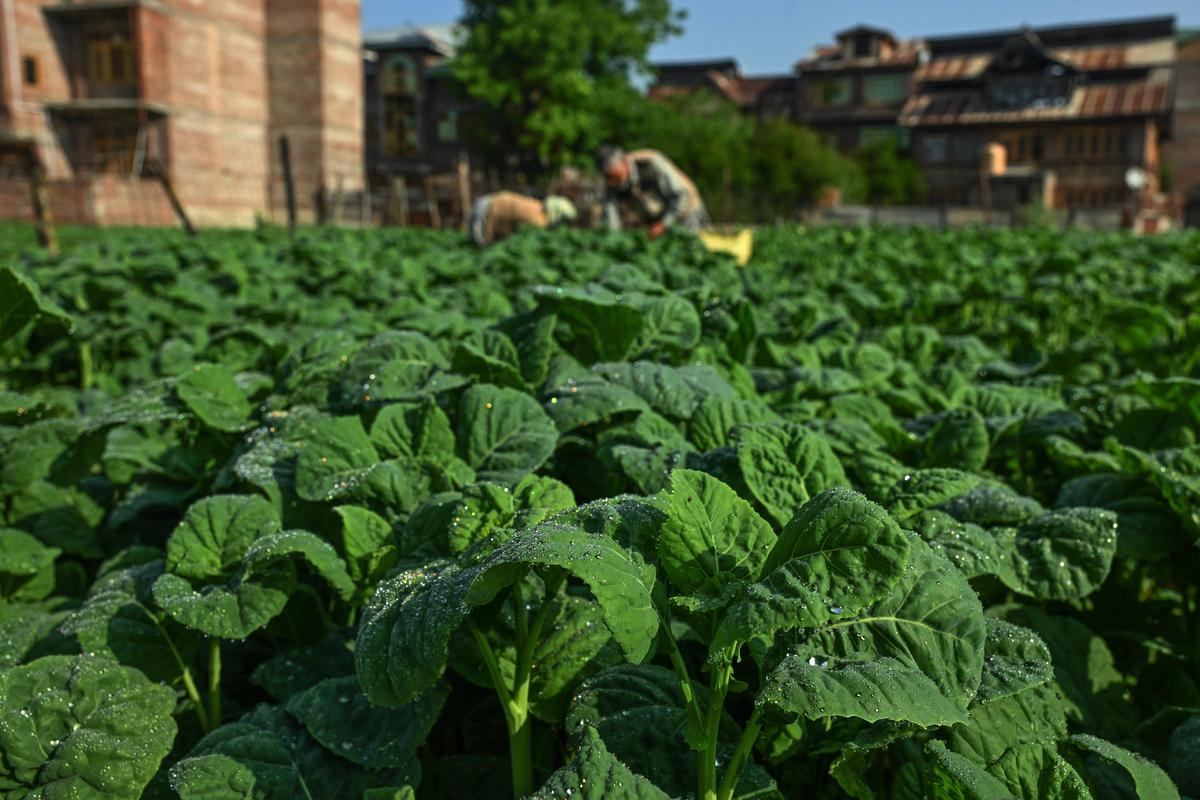
Photo: Imran Nissar
The emerald staple: Collard greens are considered an indispensable part of every household in Kashmir.
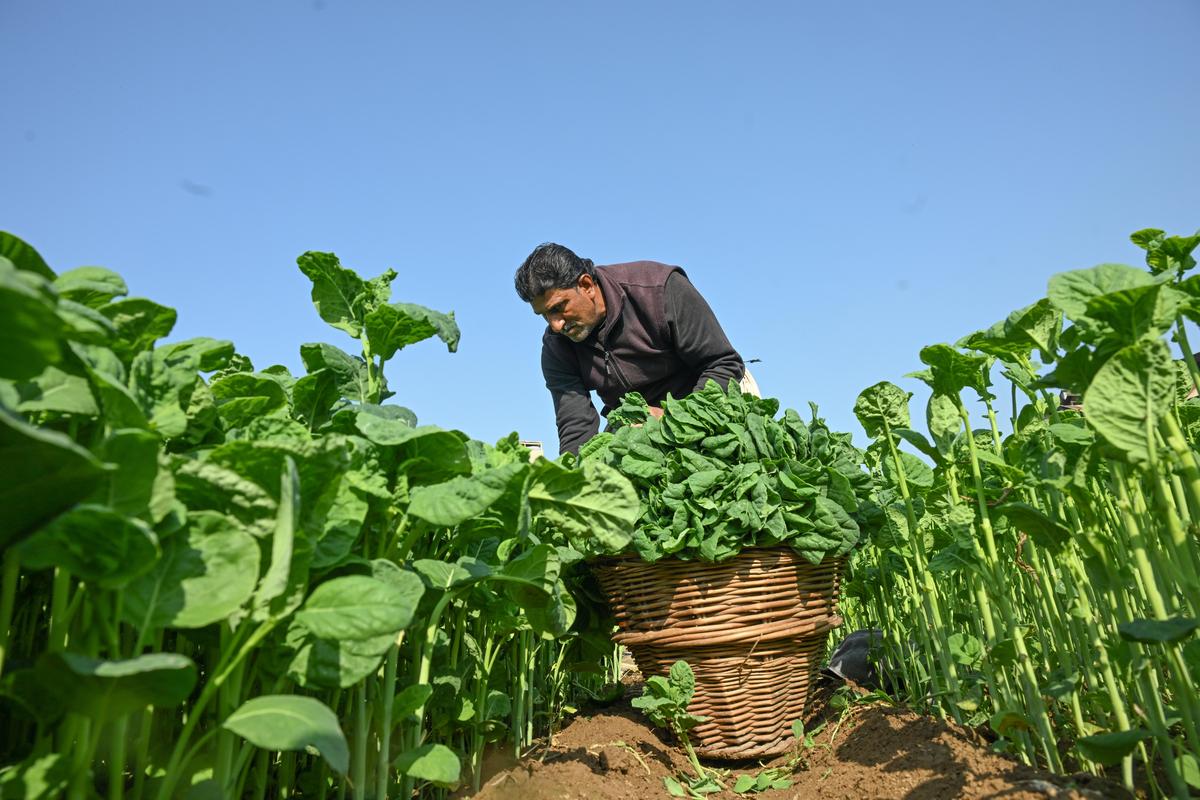
Photo: Imran Nissar
A band apart: Kashmiri haakh is characterised by its thinner, more tender leaves and a pungent, earthy aroma.
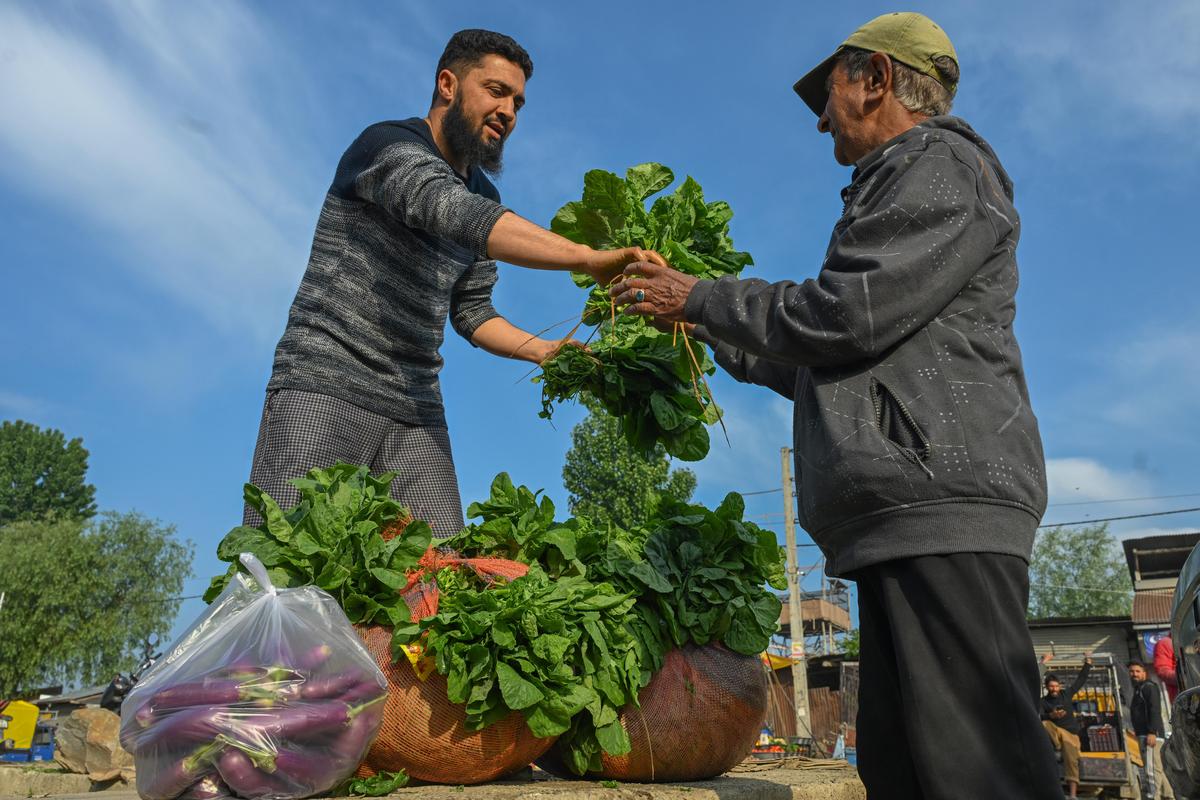
Photo: Imran Nissar
A wellness bundle: A vendor packing collard greens for a customer in Srinagar. It is almost always sold in tied bunches, often with the roots intact to maintain freshness.
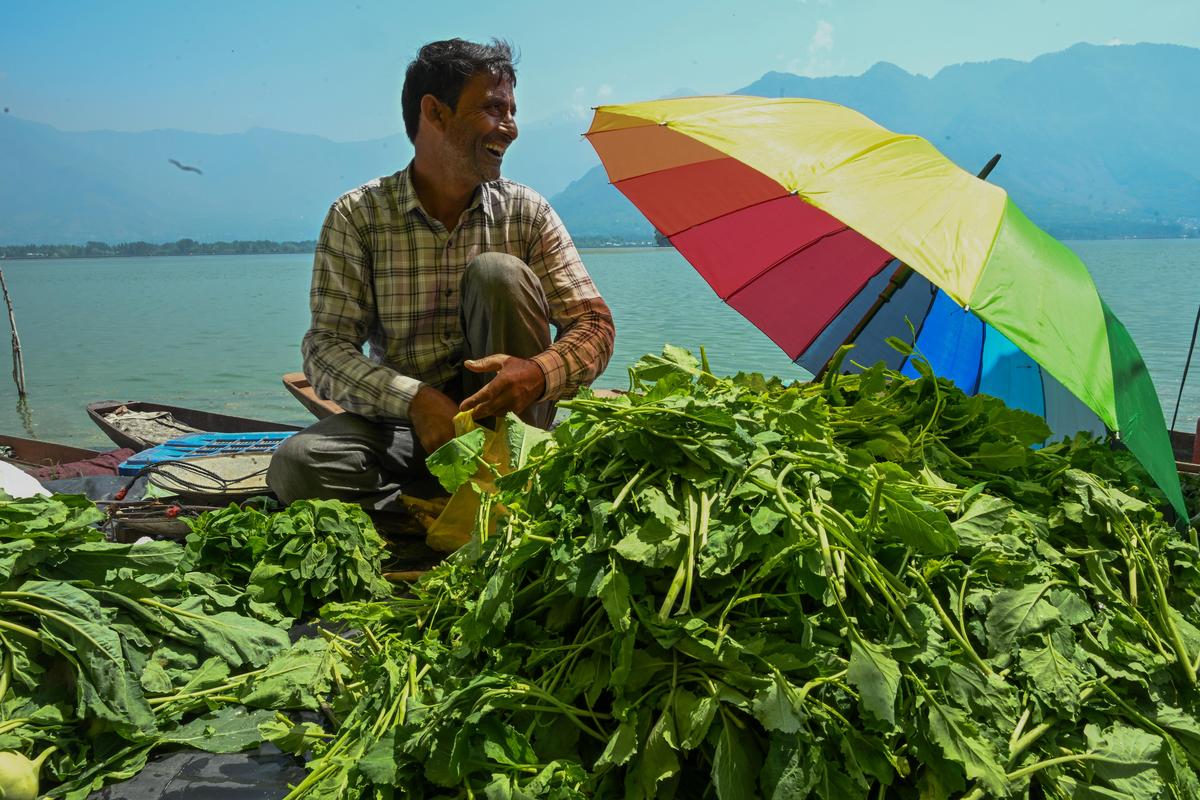
Photo: Imran Nissar
Trading hands: A vendor on the banks of Dal Lake. Farmers transport bundles in boats to the floating vegetable markets. From there, it travels to local market hubs.
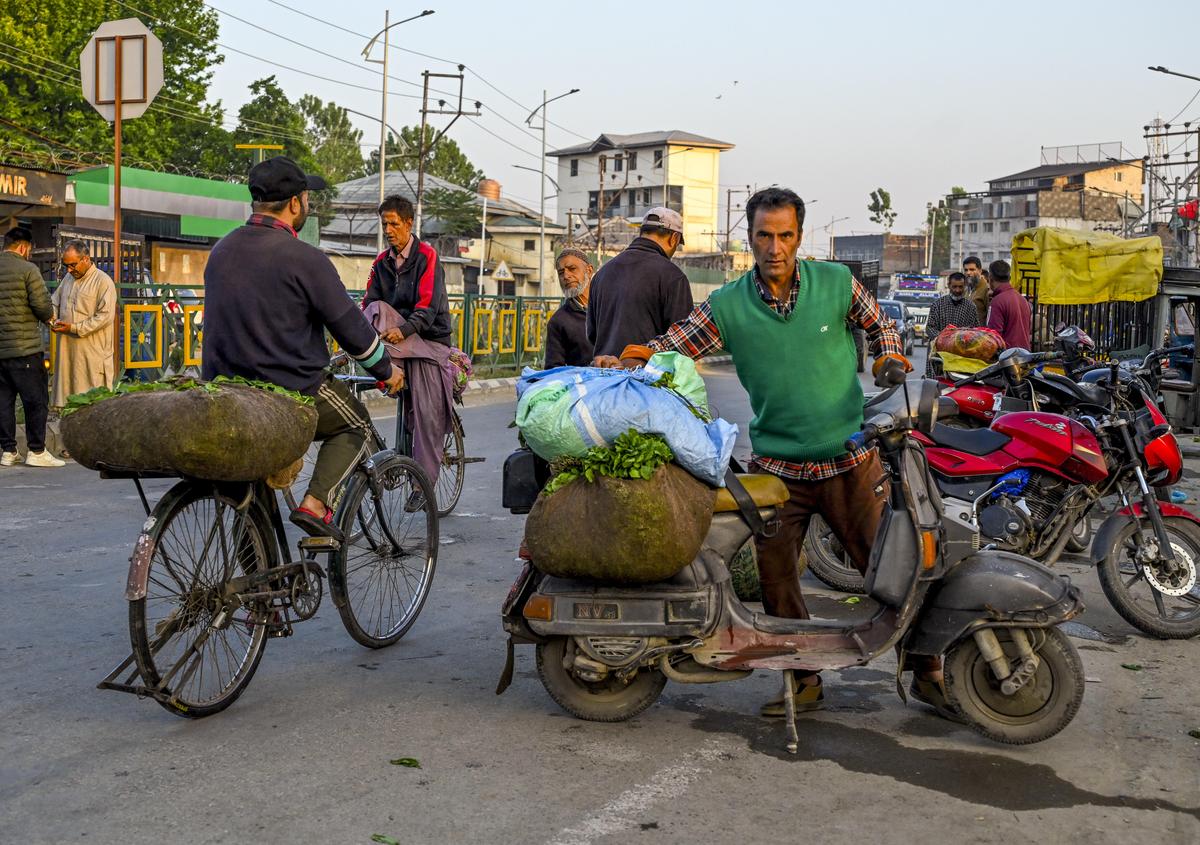
Photo: Imran Nissar
Hawking haakh: A vendor carries collard greens on a bicycle in Srinagar early in the morning.
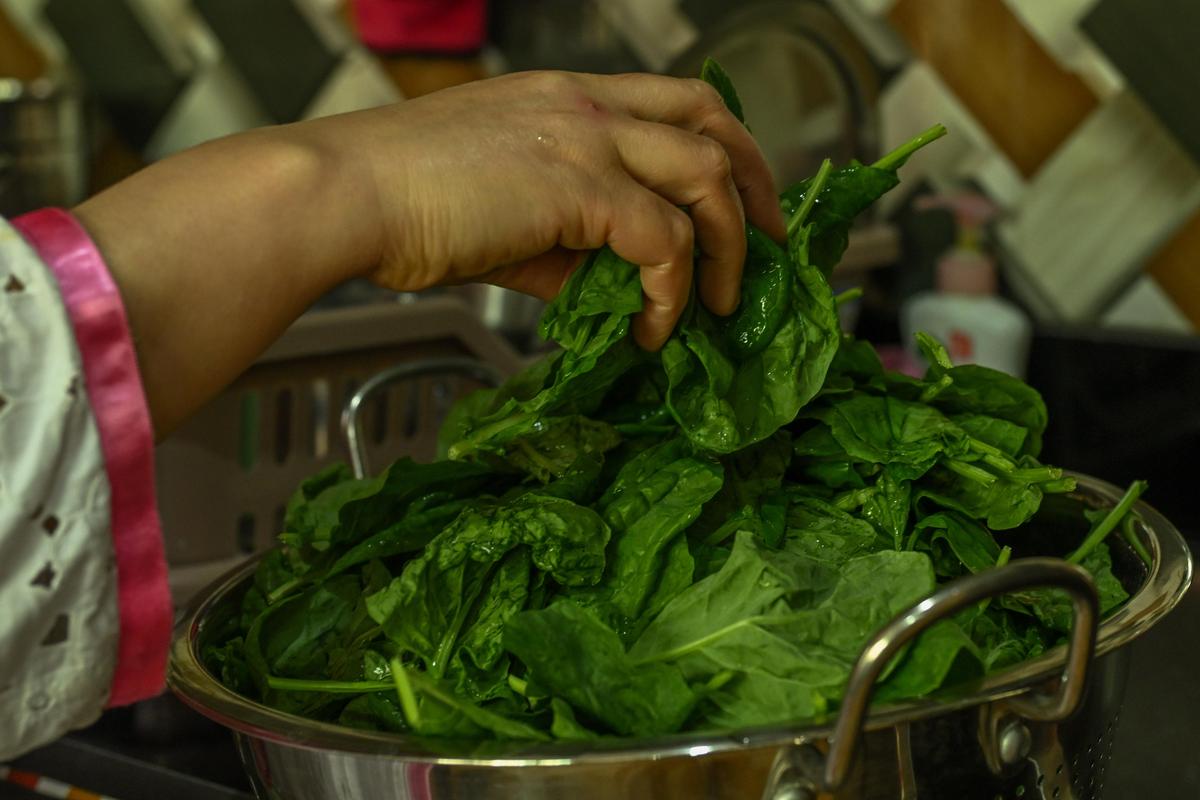
Photo: Imran Nissar
Food for soul: The Kashmiri philosophy of cooking haakh emphasises simplicity to preserve the vegetable’s colour and natural bite.
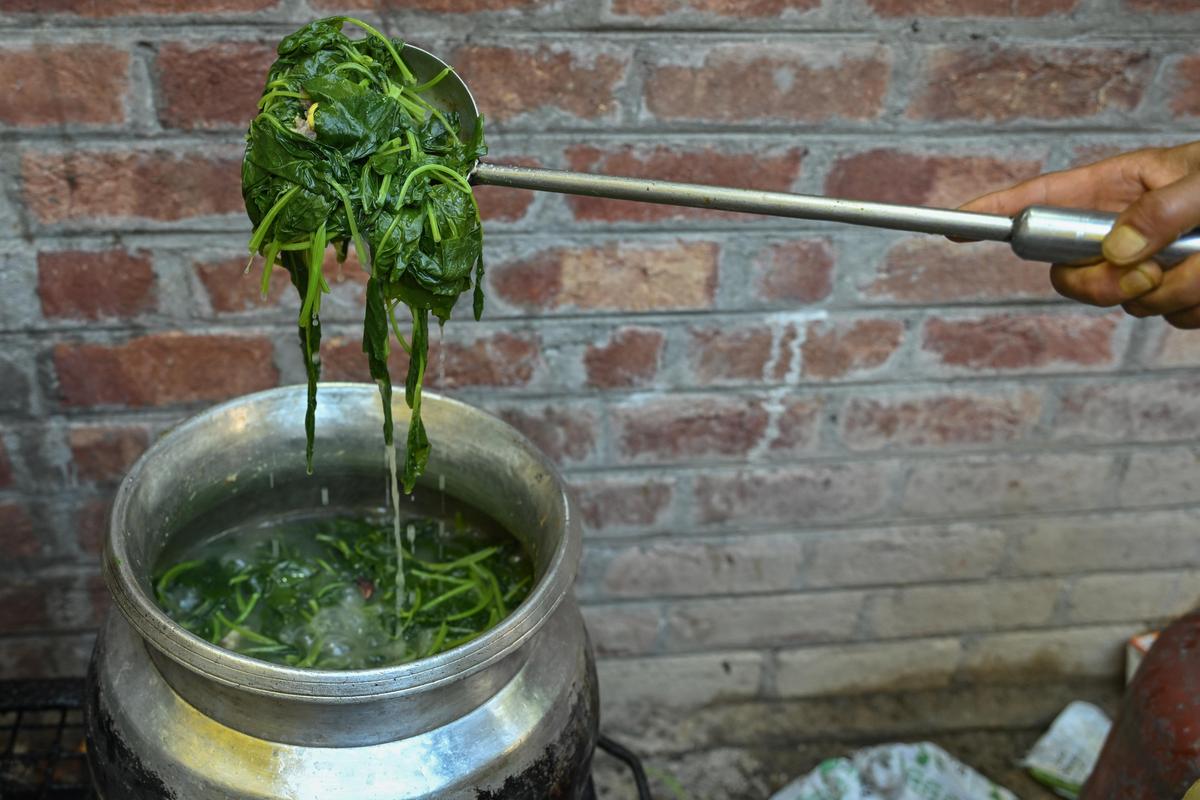
Photo: Imran Nissar
A gentle green embrace: Unlike heavy meat dishes, haakh is usually prepared as a light, soupy stew. The edible leaves thrive in Kashmir’s cool climate, and “frost-bitten” haakh is considered a delicacy.
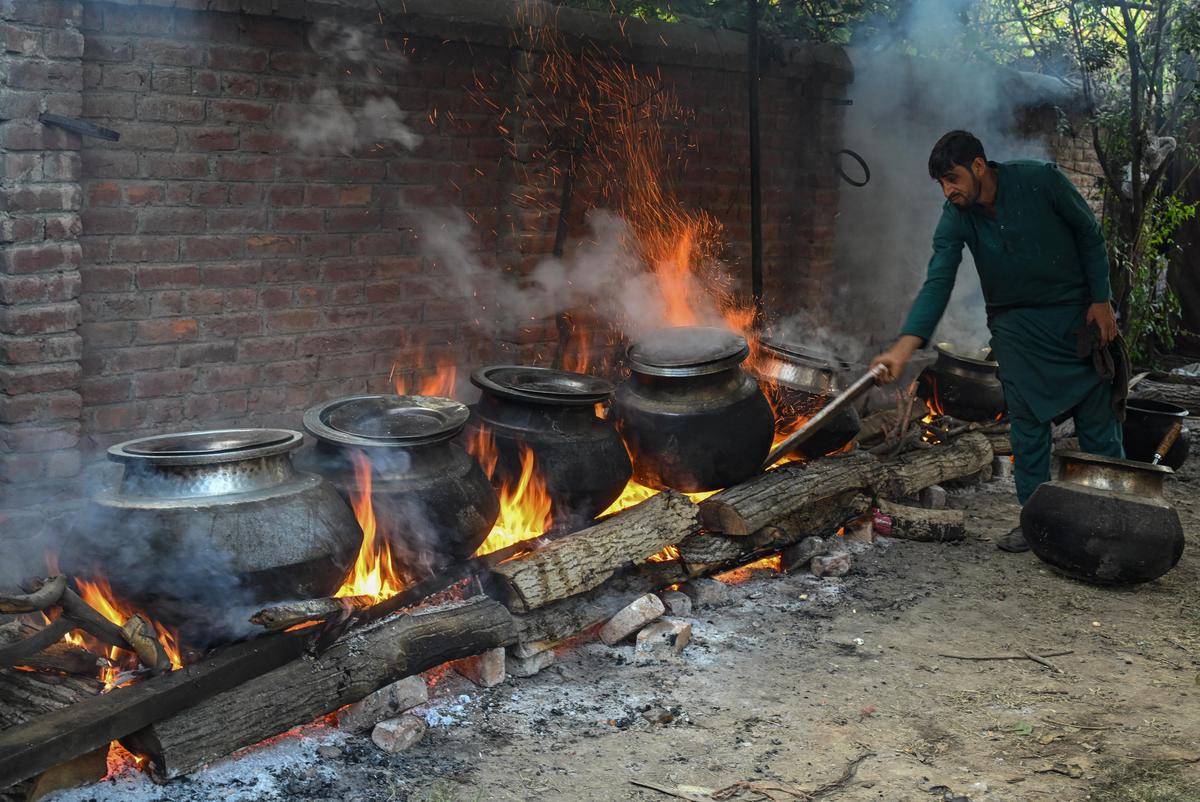
Photo: Imran Nissar
Culinary maelstrom: A traditional chef (waza) preparing a vegetarian delicacy with haakh alongside non-vegetarian dishes. While collard greens are commonly cooked without any addition, they are also prepared with smoked fish (hogada), or mutton.