


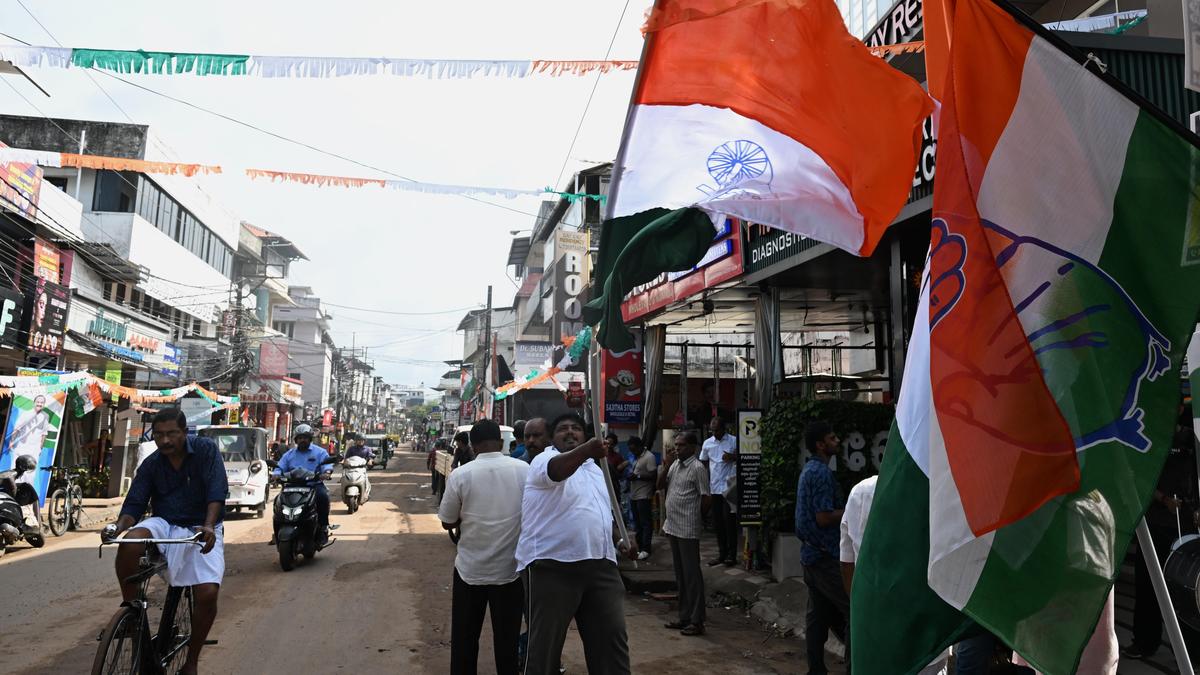
Election season is usually a time when voices subsumed by grand narratives finally find a register, as this writer discovered during a trip to Manjeshwar in Kerala to cover the recently concluded State Assembly elections. A reporting tour across the length and breadth of a State such as Kerala shows us how democracy thrives on plurality.
Manjeshwar, the northernmost Assembly constituency in the Kasaragod district, is officially counted as Kerala’s first, but it continues to be a blind spot for the State’s planners and political leadership. The dominant poll narrative, as always, was the constituency’s relative backwardness. But behind such a simplistic contention lay a plethora of factors, ranging from the historical and geographical to the familial and cultural. It is a constituency that borders Dakshina Kannada, with its linguistically diverse populace tracing its lineage to that region by way of their family shrines, relatives, linguistic roots etc.
Therefore, they were pained when the roads to Karnataka were all blockaded by the Karnataka government during the initial phase of the COVID-19 pandemic. Dakshina Kannada is where people go for education, medical treatment and matrimonial alliances. “So, they felt cut off from their roots. It may sound paradoxical for you when I say I’m a Keralite but not a Malayali,” A.K.M. Ashraf, the United Democratic Front (UDF) candidate from the Indian Union Muslim League (IUML), told this writer. Not surprisingly, Mr. Ashraf, a polyglot with a degree in Kannada literature, took the oath as an MLA in the Kerala Legislative Assembly in Kannada.
The Manjeshwar constituency suffers from all the ills faced by regions located along State borders, such as the absence of infrastructure, educational institutions of standing, tertiary-care medical facilities, and employment-generating enterprises. The impact of the Malayalam Language Bill on the lives of the people was naturally a major bone of contention during campaigning. Despite the Bill’s safeguards for linguistic minorities in designated areas, fears still abound about the proposed legislation undermining the cultural moorings of the people.
Language in a multicultural, federal polity is fraught. In the first-ever Kerala Assembly elections of 1957, Manjeshwar elected unopposed a candidate, Umesh Rao, who stood for a pro-Karnataka Samiti with the backing of the Communist Party of India. The movement is passé, but the political questions arising from the distinctive cultural identity of the region have not really been addressed, despite the constituency being represented by several political formations since. The linguistic angst never boiled over into balkanisation, thanks to the State’s embrace of divergent communities. That said, a subterranean strain of identity angst persists, palpable only on occasions such as elections.
Unlike Manjeshwar, the faultline of Idukki, home to a sizeable population of Tamils, is not language but land. It is probably unique to Kerala that campaigning is in Kannada in the Kasaragod region and in Tamil in parts of Idukki. This writer ran into Muniyandi, who, in his 80s, runs a small-time tea shop at Ellapatti near Vattavada after spending years as a worker in the plantation sector. Mr. Muniyandi waxed eloquent about the State’s polity, showering praise on the late Chief Minister V.S. Achuthanandan for initiating the allocation of land to landless workers, a project that ran into rough weather following allegations of bureaucratic incongruities.
These communities draw media attention during elections, but their plight is swept under the carpet once the frenzy dies down. The awareness of a society’s shared realities, such as these groups’ contribution to its cultural, linguistic, and economic progress, is paramount in reconciling with their identities and recognising the role they play in democratising a multi-ethnic society. A society advances only when its groups can engage across silos.
anandan.s@thehindu.co.in
Published - May 29, 2026 12:13 am IST