







(This story is part of The Hindu on Books newsletter that comes to you with book reviews, reading recommendations, interviews with authors and more. Subscribe here.)
Dear reader,
On May 19, the Taiwanese writer Yáng Shuāng-zǐ and her translator, Taiwanese-American Lin King, won the International Booker Prize for Taiwan Travelogue, published by And Other Stories. Read the review of the book here and a profile of Yáng here.
As she stood beaming on stage at the Tate Modern in London, Yáng said in her speech, “... Translation allows writing to transcend the limits of time and space. I believe in literature’s power because, in the life of the mind, literature has never ceded ground nor given up on the dialogue between people.”
Yáng can only read in one language. She said in an interview on the Booker Prizes website that her field of vision looking out into the world would be drastically reduced if not for translation. “Translated literature is a second pair of eyes for me,” she said. “But that’s not all – to me, translators are essential guides who lead readers deep down the rugged roads of unfamiliar lands.”
We would all have a boring, myopic worldview if we could only read literature in our own tongues. Translated literature not only gives us access to another world in its own idiom, but also expands our minds by introducing us to new stories and new ways of thinking and living. It enables writers working in different languages to become part of the literary mainstream, recognises the work of translators, and helps break down hierarchies of language.
This year marks 10 years since the International Booker Prize began awarding a single work of fiction written in a language other than English and translated for English-speaking readers. The prize acknowledges that translation is a creative exercise, not merely a mechanical process of converting words and emotions into another language. It is necessary for a translator, as the writer Vivek Shanbag said, to understand the way a writer builds a reader’s imagination. Over the years, the award has honoured works translated from Taiwanese, Bulgarian, Dutch, Kannada, and many more languages.
Taiwan Travelogue is the first English translation of Yáng’s work. She is the first Taiwanese writer to win the International Booker Prize, and this is the first work originally written in Mandarin Chinese to receive the award. That is the beauty of this prize: it raises the profile of writers and translators alike and reminds us, as Banu Mushtaq, who won last year’s prize with Deepa Bhasthi, said, that “in a world that often tries to divide us, literature remains one of the last sacred spaces where we can live inside each other’s minds.”
Books of the week
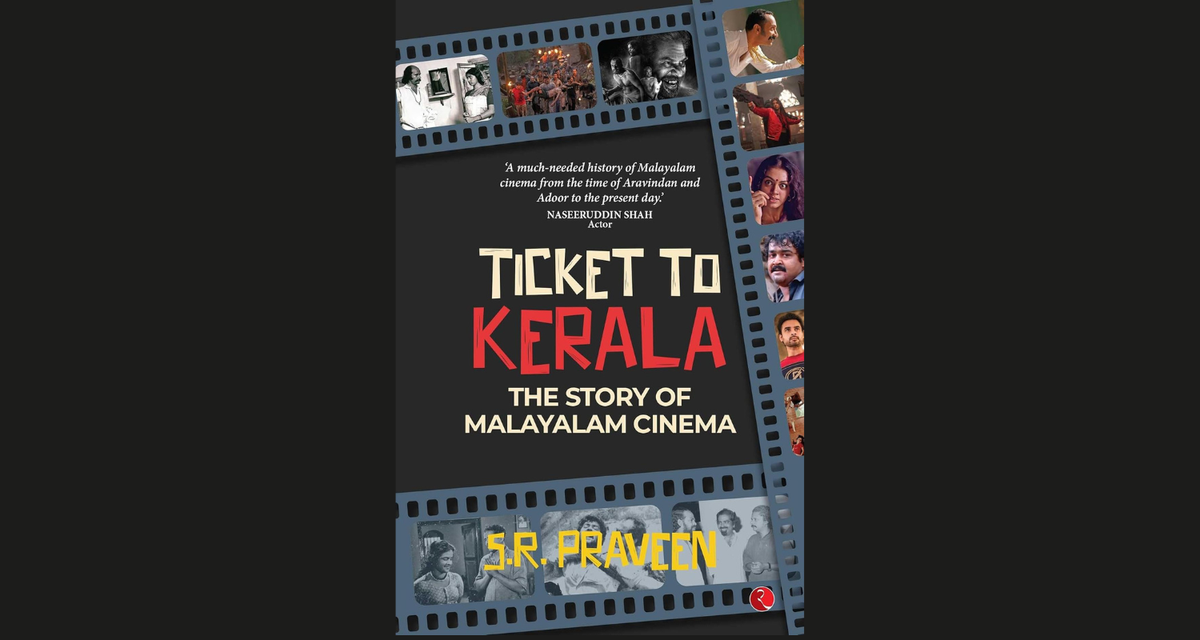
In non fiction, we have an excerpt from my colleague, S.R. Praveen’s book, Ticket to Kerala: The Story of Malayalam Cinema (Rupa Publications India). Malayalam cinema has transcended Kerala’s borders ever since the OTT boom and the availability of films from various languages with subtitles. Malayalam cinema has been praised by audiences and critics for producing low-budget, rooted films with exceptional writing. In his book, Praveen traces the history of Malayalam cinema, which began with a tragedy. Read the excerpt here.
Ankit Kawade’s debut work, The Ambedkar-Nietzsche Provocations: The Genius of the Chandala and the Gospel of the Superman (Navayana), explores the contrasting ways in which the German philosopher, Friedrich Nietzsche, and anti-caste leader and the architect of India’s Constitution, B.R. Ambedkar, engaged with the Brahminical scripture, Manusmriti. In his review, Prathmesh Kher says, “Kawade reads Ambedkar as a careful, combative reader of Nietzsche, not dismissing him wholesale but exposing the class and caste assumptions buried beneath the aristocratic individualism.” Read the review here.
Yann Martel, the author of Life of Pi, has come out with a new book, Son of Nobody (Canongate). It ties together a reimagined Trojan war epic with a modern-day academic’s personal tragedy. When asked if comparing domestic problems to an epic war might make the myth seem less important, Martel said no. In an interview with Vasudevan Mukunth, he said, “Whether you’re in hell because you’ve been to war literally — against the Trojans — or metaphorically — against your wife or husband — you’re in hell. And you can’t really trivialise a myth; you can only fail to make it your own.”
Musalman (Yoda Press), written by Falah Faisal and illustrated by Spud, is a graphic novel. It follows the journey of its eponymous superhero as he battles the Coronavirus, the 10-headed king Raavan, priest-politician Dhongi Ji, and primetime anchor Arnab Cowswamy on Dictatorship TV. Chintan Girish Modi says in his review, “This is the kind of book you read for vibes and laughs, not for sophistication of craft.”
Spotlight

Man walking in German Forest in the Morning with Fog Light | Photo Credit: Robert Knofe
Many books grapple with death — from memoirs of terminal illness (Paul Kalanithi’s When Breath Becomes Air) and novels probing the mysteries of what comes after (George Saunders’ Lincoln in the Bardo), to stories narrated by death itself (Markus Zusak’s The Book Thief). In some books, neat endings are narrative devices meant to reassure us that death brings with it a reckoning. But several recent novels are less inclined to offer such comfort, instead confronting readers with the uncertainty and disorder surrounding death. Nistula Hebbar writes an essay on some of these books here.
Nightstand
I’m currently reading an old book, Volga’s The Liberation of Sita (HarperPerennial), translated from the Telugu by T. Vijay Kumar and C. Vijayasree. In Volga’s telling, after being abandoned by Lord Rama, Sita embarks on a journey towards self-realisation. Along the way she meets many women who have broken free from all the bonds that society believes women must prioritise. It’s a short and impactful feminist book, a classic.
Reading matters
Independent bookstores are more than just shops in India. They bring together communities of readers, act as spaces for therapy and hose events — from film screenings to readings. Swati Daftuar profiles several independent bookstores across India which allow people to simply be. Read her story here.
And that’s all from me. Do write to me with suggestions, comments, and feedback to radhika.s@thehindu.co.in. Have a happy reading week!